Ganzoots And Bar The Door: Meaning & Ballad Explained
Ganzoots and bar the door: the ballad behind the phrase, quick plot summary, Scots-to-English glossary, and Katy bar the door meaning.
Author:Callum FraserDec 17, 202522.2K Shares317.6K Views
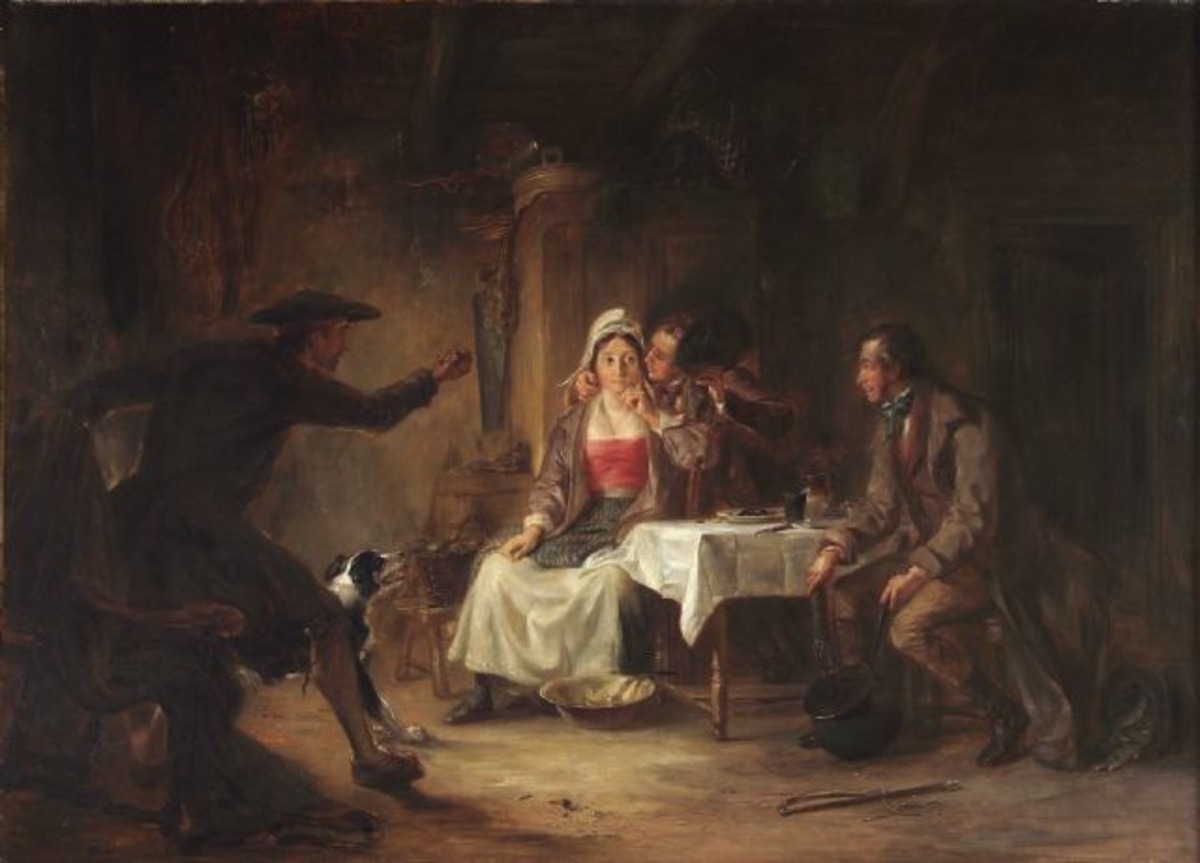
Ganzoots and bar the door: what it refers to in Scots ballad tradition
If you’ve landed on “ganzoots and bar the door”, you’re almost certainly chasing a half-remembered Scots phrase that’s been attached (often loosely) to a very specific comic ballad: “Get Up and Bar the Door.”
Picture a small Scottish household on a bitter night: the door’s unbarred, the wind is needling in, and two stubborn adults decide that silencematters more than comfort. The result is funny… until it isn’t, and that’s exactly why the story sticks.
Quick answer / key takeaways (the scan-friendly version):
- “Ganzoots and bar the door”usually points readers toward the Scots comic ballad “Get Up and Bar the Door”(Child 275 / Roud 115).
- The plot is a farce: a couple refuses to bar the door; intruders enter; the husband finally speaks-so he “gets up and bars the door.”
- Scots words are the main barrier for modern readers; using Dictionary of the Scots Languagedefinitions prevents bad guesses.
- The American idiom “Katy bar the door”means “trouble’s coming,” but its origin is debated rather than settled.
- “Ganzoots” is poorly attested in major references; below, I explain the safest interpretations and how to cite it responsibly.
You’re not just looking up a phrase-you’re stepping into a well-travelled folk narrative, and the rest of this page helps you read it accurately and cite it responsibly.
Ganzoots And Bar The Door: What This Phrase Is Pointing You Toward
You’ll get two things here: (1) what this search phrase usually means in practice(what people want), and (2) the quickest quick summary of the underlying ballad.
Why This Query Shows Up (spellings, Snippets, And Folk-memory)
“Ganzoots and bar the door” is often a search-born mash-up: a fuzzy exclamation (“ganzoots”) paired with the solid anchor “bar the door,” which leads straight to the ballad title and its best-known line. The catch is that “ganzoots” isn’t well documented in major reference works, so it’s easy for the spelling (and the meaning) to drift online.
Treat “bar the door” as the reliable breadcrumb; treat “ganzoots” as a questionable spelling until you can verify it.
Quick Answer Box (plot + Meaning + Identifiers)
- What it refers to:The traditional Scots ballad “Get Up and Bar the Door.”
- What happens:A husband and wife make a pact: whoever speaks first must get up and bar the door; chaos escalates when visitors arrive.
- Why it matters:It’s a tight folk comedy about pride, labour, and the price of “winning” an argument.
- How it’s catalogued:Child Ballad 275Aand Roud 115 (useful for finding related versions).
If you want the “real thing,” start with Child 275 / Roud 115-and you’ll immediately stop chasing bad paraphrases.
The Ballad Behind It: Get Up And Bar The Door In 90 Seconds
This section gives you a fast, accurate mental model of the story-so later interpretation (and your citations) don’t drift.
Synopsis (no Spoilers Vs With Spoilers Toggle)
No spoilers:At Martinmas, a wife is busy cooking; the husband tells her to bar the door; she refuses; they strike a pact to stay silent until someone yields-and then strangers arrive.
With spoilers:The strangers exploit the couple’s silence and push the situation toward humiliation; the husband finally blurts out a protest-meaning he loses the pact-and the wife delivers the punchline: he spoke first, so he must bar the door.
Why It’s “comic” (escalation + Punchline Mechanics)
The humour isn’t random; it’s engineered:
- A trivial trigger(a cold draught; a simple household task).
- A binding rule(“first to speak loses”) that turns normal behaviour into a trap.
- Escalation(guests enter; food and dignity are threatened) until speech becomes unavoidable.
The comedy lands because the “rule” is simple-and the consequences become absurdly large.
Where The Text Comes From (and Why “Child 275 / Roud 115” Matters)
Here you’ll learn how to cite this properly and how to find the best versions without falling into low-quality reprints.
Herd (1769) → Child (1880s–90s) → Modern Access (RPO)
A widely used online text is provided by Representative Poetry Online, which notes the ballad’s appearance in Child’scollection and traces it back to Herd.
That matters because you can cite a stable edition rather than an anonymous “poem site” transcription.
This ballad sits within a wider tradition of Scottish poemsand songs, from folk ballads to literary Scots verse.
Roud Numbers And “song Families” (VWML Pointers)
The Vaughan Williams Memorial Library hosts the Roud Indexesand related song indexes, which help you track variants and related itemsunder the same song “family.”
“Child” helps you cite the ballad as literature; “Roud” helps you trace the song as a living tradition.
Also Check Out: Traditional Scottish Music
A Scots-to-modern-English Reading Guide (the Glossary That Most Pages Skip)
This is the section that makes the whole piece usable: you’ll get a practical glossary anda method for reading Scots confidently without flattening its meaning.
The Essential Glossary (10–20 Terms)
| Scots / Ballad Term | Plain-English meaning (context) |
| Martinmas | 11 November; in Scotland, a major term day/quarter day tied to rents, contracts, and seasonal rhythms. |
| guidwife / goodwife | the wife / mistress of the household (often used as a role-title). |
| guidman / goodman | the husband / master of the household (role-title). |
| puddin | in Scots usage, commonly a boiled sausage-style pudding (often black pudding contexts). |
| bree | broth / liquid from boiling (and, separately, “bree” can mean commotion in other senses-context decides). |
| cauld | cold. |
| sae | so / thus. |
| gae / gaed / gan | go / went (common Scots forms). |
| nae | not / no. |
| hուսyeskep / hussyfskap | housekeeping; household work (the ballad’s “hands-in” labour moment). |
| paction | a pact / agreement (can also be a Scots-law term for an informal agreement). |
| tween | between. |
| twa | two. |
| wha | who |
| syne | then / afterwards (classic narrative glue-word in Scots). |
Hussyfskap (DSL-backed)
In the ballad’s domestic scene, hussyfskapisn’t a slur-it’s literally the sphere of household work. That single word is doing a lot of social storytelling.
Pudding-bree And Other “kitchen Words”
Breeis often “broth” in Scots, which makes “pudding-bree” (or pudding-broth in some versions) a vivid kitchen detail, not a random insult.
How To Read Scots Without Panic (sound + Sense Strategies)
A small method that works:
- Identify the “spine” wordsyou already know (door, cold, make, speak).
- Translate function words(sae, nae, syne) to recover sentence logic.
- Only thendecide whether a colourful noun is literal (bree = broth) or figurative (bree = commotion).
Micro-translation example (paraphrase):
Opening sense in modern English:
Around Martinmas, the wife is making boiled puddings;
the wind blows cold through the house;
the husband tells her to go bar the door;
she refuses while her hands are busy with housekeeping.
You don’t need to “know Scots” to read this-just decode structure first, flavour second.
What The Ballad Is Really Saying
This section gives you interpretive confidence-so you can explain the story’s meaning without overclaiming.
Stubbornness, Pride, And The Cost Of “winning”
The surface plot is a marital standoff; the deeper engine is pride under pressure. Each moment of silence raises the cost of backing down, until “winning” becomes self-sabotage.
Household Labour & Power (a Careful Modern Lens)
The ballad starts with work in progress-hands in the household task-then introduces a demand that assumes someone can simply drop labour to fix discomfort. That tension is part of what makes the husband’s command spark conflict.
Why This Story Travels Well Across Cultures (folk Motif Note)
The core motif-a vow of silence that invites escalation-travels easily because it’s built from universal social mechanics: ego, honour, embarrassment, and the dread of “losing face” in front of outsiders.
Read it as a comedy of pride anda snapshot of household negotiation, not as a simple “husband vs wife” cartoon.
For more stories that travelthrough Scotland’s oral tradition, see our local guides to Scottish folklore and legends.
“Katy Bar The Door” And Other Afterlives Of “bar The Door”
Here you’ll learn what modern speakers usually mean by “bar the door,” and how that differs from the ballad.
Meaning In Modern English + Common Examples
In modern idiom, “bar the door”often means: take precautions-trouble is coming.It’s a warning cry more than a literal carpentry instruction.
Example uses (modern, not the ballad):
- “The rumourmill’s spinning-Katy bar the door.”
- “If the auditors show up today, bar the door.”
Origin Theories (and What’s Actually Supported)
For “Katy/Katie bar the door”specifically, reputable phrase historians agree on the meaningbut note the origin is disputed, with multiple candidate explanations and incomplete documentation.
Use the idiom confidently for “brace yourself,” but don’t claim a single proven origin story.
So…what Is “ganzoots”? (the Evidence-first Answer)
This is where we separate satisfying storytelling from what the evidence actually supports.
What We Can Say With Confidence (and What We Can’t)
What we can say confidently:
- Your query reliably points to Get Up and Bar the Doorand its comic “bar the door” punchline.
- Scots has rich, attested “exclamation” and “commotion” vocabulary (e.g., bree= commotion in one sense).
What we can’t honestly promise:
A single, authoritative dictionary-backed definition of “ganzoots”as a traditional Scots headword (it’s more often encountered as a modern spelling online than as a documented historical form).
Possible Confusion With “gadzooks/gazooks” (minced-oath Family)
A very plausible explanation is spelling drift: “ganzoots” may be a misheard or misspelled cousin of gadzooks, an old-fashioned English interjection used as a mild oath.
Merriam-Webster defines gadzooksas a mild oath, and etymology references often connect it to “minced oath” patterns.
How To Cite “ganzoots” Responsibly If You’re Writing Academically
If you’re writing for school, a blog, or a museum label:
- Do:cite the ballad using Child 275A / Roud 115and quote “bar the door” from a stable edition. you encountered in search (unless you can document it in a primary lexicon).
- Don’t:claim “ganzoots means X in Scots” unless you can point to a dictionary entry or dated usage record.
The safest, most helpful move is to anchor your explanation in the ballad-and treat “ganzoots” as a secondary, possibly modern artefact.
Listen, Read, Cite: The Best Next Steps
This is your “go deeper” toolkit-use it for research, teaching, or just hearing the ballad the way it lives as sound.
Recommended Recordings / Spoken Versions (starter Set)
- A spoken-word recording exists in the Smithsonian Folkwayscatalogue (useful for classroom listening).
- For a stable reading text with scholarly framing, use Representative Poetry Online.
- For indexing, variants, and collecting context, use the VWML / Roudresources.
Citation Guide (MLA/Chicago Quick Templates)
- MLA (web anthology text): Anonymous. “Get Up and Bar the Door.” Representative Poetry Online. (Accessed Day Month Year).
- Chicago (index reference): Vaughan Williams Memorial Library.“Get up and bar the door / John Blunt.” Song Subject Index(Roud context). (Accessed Day Month Year).
If you cite well, you won’t need to overexplain-your sources will do the heavy lifting.
Frequently Asked Questions
What Is The Meaning Of The Poem Get Up And Bar The Door?
It’s a comic ballad about a couple whose pride keeps them silent, even as the situation escalates-until one speaks and “loses,” proving stubbornness has a cost.
What Happened In Get Up And Bar The Door?
A husband and wife make a pact that whoever speaks first must bar the door; strangers arrive, exploit their silence, and the husband finally speaks-so he must bar it.
What Causes The Husband To Speak First In Get Up And Bar The Door?
The visitors’ escalating behaviour pushes the scene toward humiliation; the husband can’t tolerate it and blurts out a protest, breaking the pact.
Is “Get Up And Bar The Door” A Scottish Ballad?
Yes-it's widely treated as a Scots traditional ballad and appears in Child’s collection (Child 275A), with a Roud number that helps track versions.
What Does “bar The Door” Mean In The Ballad?
It’s literal: fasten the door against the wind and intruders. The comedy comes from treating that simple act as a “defeat” in their silence pact.
What Is Martinmas, And Why Does It Matter In The Opening Lines?
Martinmas is 11 November and, in Scotland, a major term/quarter day tied to seasonal routines, rents, and contracts-perfect timing for food-making and winter weather in the story.
What Does Hussyfskap Mean?
It means housekeeping/household work-hands-on domestic labour-so the wife’s refusal isn’t laziness; it’s “I’m in the middle of work.”
What Is Pudding-bree?
“Bree” commonly means broth or the liquid from boiling; “pudding-bree” is the hot broth associated with boiling puddings, a vivid kitchen detail in Scots.
Is “Katy Bar The Door” The Same Thing As “Get Up And Bar The Door”?
They overlap in wording, but not cleanly in origin: “Katy bar the door” is a later idiom meaning “brace for trouble,” and its exact origin is disputed.
What Does “Katy Bar The Door” Mean Today?
It’s a warning: take precautions-trouble is coming. People use it like “uh-oh,” often playfully.
What Are “Child 275” And “Roud 115”?
Child numbers refer to ballads catalogued by Francis James Child; Roud numbers index traditional songs across collected versions, helping you find related texts and recordings.
Where Can I Read A Reliable Version Online?
Representative Poetry Online provides a stable, well-attributed text connected to Child’s edition, which is better for citation than anonymous reposts.
Where Can I Listen To It?
Smithsonian Folkways has a catalogued spoken-word track of “Get Up and Bar the Door,” useful for hearing pacing and tone.
Is “ganzoots” A Real Scots Word?
It’s often encountered as a modern spelling online rather than as a clearly attested historical dictionary headword; treat it cautiously and anchor your explanation in the ballad itself.
Could “ganzoots” Be A Misspelling Of “gadzooks”?
Possibly-gadzooksis a documented interjection (a mild oath) and spelling drift is common in folk-memory phrases.
Quick Recap
If you came for a definition, here’s the cleanest way to hold it: “ganzoots and bar the door”is best understood as a breadcrumb trail leading to “Get Up and Bar the Door”-a comic Scots ballad where pride turns a door-bar into a household disaster.
If you came for meaning, the most helpful next step is vocabulary: verify key Scots terms with the Dictionary of the Scots Language, then reread the scene and watch the humour sharpen.
And if you’re tempted to define “ganzoots”with certainty, pause. It’s stronger scholarship (and better folklore practice) to name the uncertainty, cite what you actually saw, and compare to better-attested forms only with care.
Jump to
Ganzoots and bar the door: what it refers to in Scots ballad tradition
Ganzoots And Bar The Door: What This Phrase Is Pointing You Toward
The Ballad Behind It: Get Up And Bar The Door In 90 Seconds
Where The Text Comes From (and Why “Child 275 / Roud 115” Matters)
A Scots-to-modern-English Reading Guide (the Glossary That Most Pages Skip)
What The Ballad Is Really Saying
“Katy Bar The Door” And Other Afterlives Of “bar The Door”
So…what Is “ganzoots”? (the Evidence-first Answer)
Listen, Read, Cite: The Best Next Steps
Frequently Asked Questions
Quick Recap

Callum Fraser
Author
Callum Fraser isn't just a writer about Scotland; he's a product of its rugged landscape and rich history. Born and raised in Perthshire, with the Highlands as his backyard, his love for the nation's stories was kindled by local storytellers and long walks through ancient glens.
This passion led him to pursue a degree in Scottish History from the University of Edinburgh. For over 15 years, Callum has dedicated himself to exploring and documenting his homeland, fusing his academic knowledge with essential, on-the-ground experience gained from charting road trips through the Cairngorms, hiking the misty Cuillins of Skye, and uncovering the secrets of traditional recipes in his family's kitchen.
As the Editor-in-Chief and Lead Author for Scotland's Enchanting Kingdom, Callum's mission is simple: to be your most trusted guide. He combines meticulous research with a storyteller's heart to help you discover the authentic magic of Scotland — from its best-kept travel secrets to its most cherished traditional recipes.
Latest Articles
Popular Articles