Glasgow Cathedral During Christmas - Services, Atmosphere, And Visitor Information
Combine history with holiday cheer. Plan your visit to Glasgow Cathedral this Christmas for unique insights and seasonal experiences in a historic setting.
Author:Callum FraserFeb 13, 202621.1K Shares346.6K Views
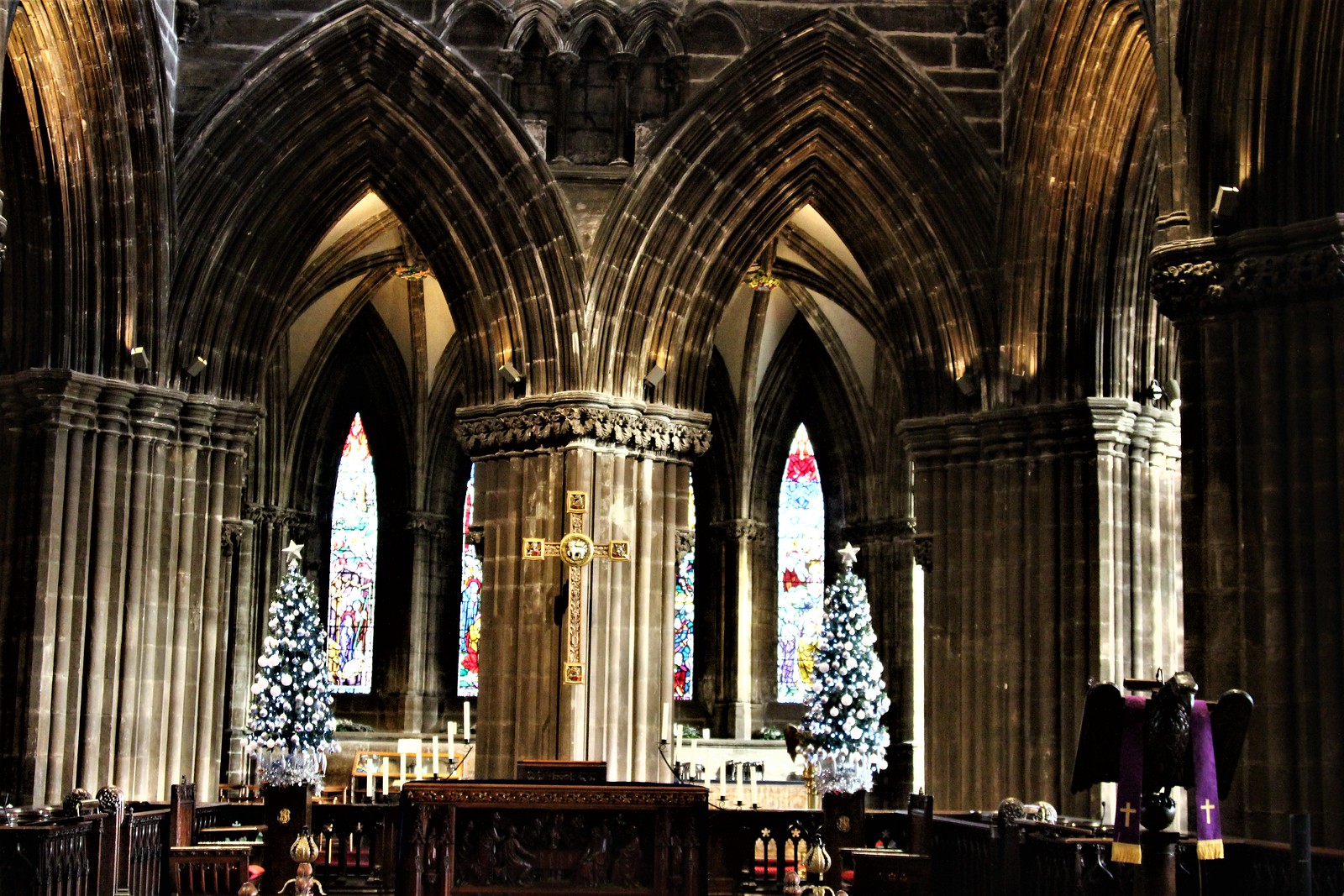
Glasgow Cathedral during the festive season offers something increasingly rare in our commercialized holiday landscape: an authentic sacred space where medieval architecture meets living tradition, where the scratch of worn stone underfoot connects you to countless generations who gathered here for the same purpose.
You might be drawn to the quiet contemplation of empty Gothic halls, curious about experiencing traditional Scottish Christmasworship, or seeking a meaningful alternative to crowded shopping districts. Glasgow Cathedral presents a distinctive seasonal destination.
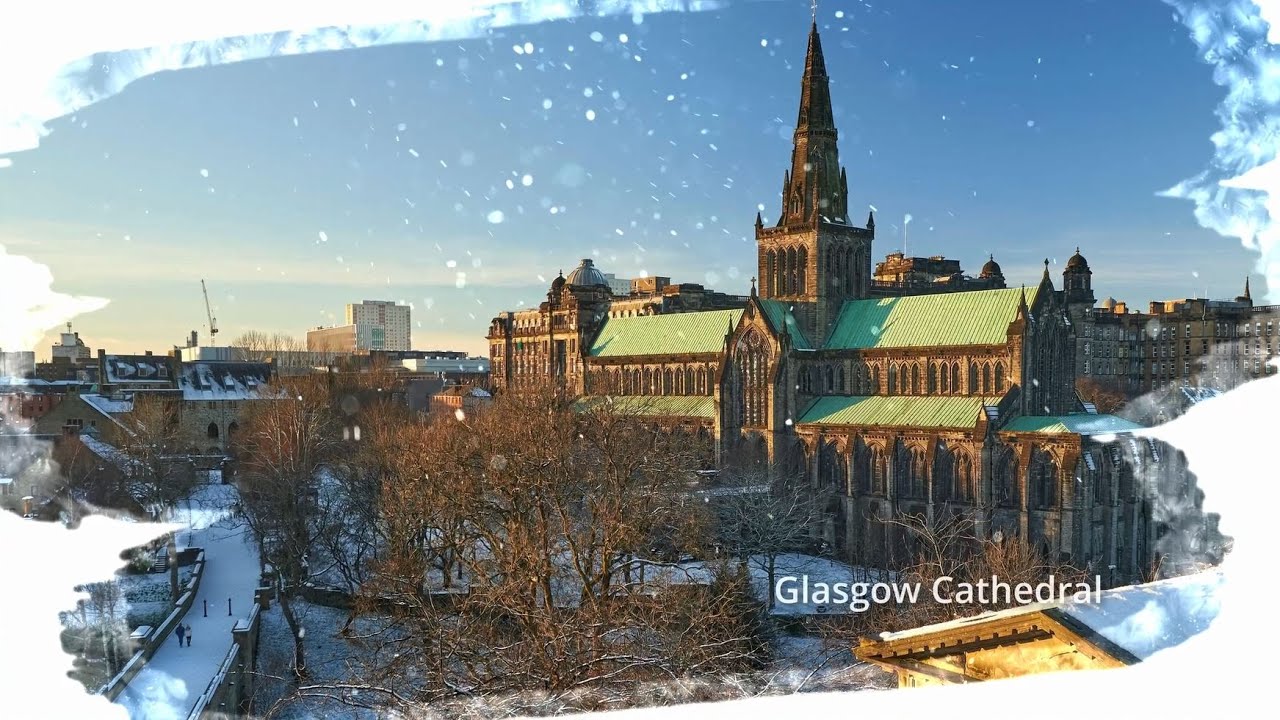
This isn't a Christmas attraction in the conventional sense; it's Scotland's only surviving medieval mainland cathedral, still functioning as an active church, where the festive season amplifies rather than decorates the building's inherent spiritual atmosphere.
Quick Facts: Glasgow Cathedral At Christmas
- Free Entry:All services and daytime visits are completely free, no tickets required
- Key Services:Watchnight (11:30 pm Dec 24), Christmas Day morning (10-11 am), plus Advent and carol services throughout December
- Arrival Strategy:Come 30-45 minutes early for popular evening services to secure seating
- Tourist-Friendly:All welcome, whether attending for worship or cultural experience, respectful behavior expected.
- Medieval Atmosphere:800-year-old Gothic architecture creates uniquely powerful acoustics and candlelit ambiance.
Glasgow Cathedral's Rich Christmas Heritage
St. Mungo's Cathedral: Scotland's Medieval Survivor
Glasgow Cathedral stands as an architectural miracle, the only medieval cathedral on the Scottish mainland to survive the Reformation intact. Built between the 12th and 15th centuries on the site where St. Mungo, Glasgow's patron saint, established a church in the 6th century, this building escaped the destruction that befell most of Scotland's great medieval churches during the religious upheavals of the 16th century.
Today, it serves dual roles that become particularly evident at Christmas. It serves as the principal church for the Church of Scotland congregation in Glasgow, hosting weekly worship throughout the year. Simultaneously, Historic Environment Scotland manages it as a nationally significant monument, welcoming thousands of visitors annually to admire its architecture and historical importsignificance dual identity shapes how Christmas unfolds here.
You're not visiting a preserved museum that stages occasional services for atmosphere; you're entering an active worship space where a real congregation celebrates the season according to centuries-old Presbyterian traditions, while also welcoming respectful visitors who simply want to experience the building's unique seasonal character.
How Christmas Transforms An Active Church
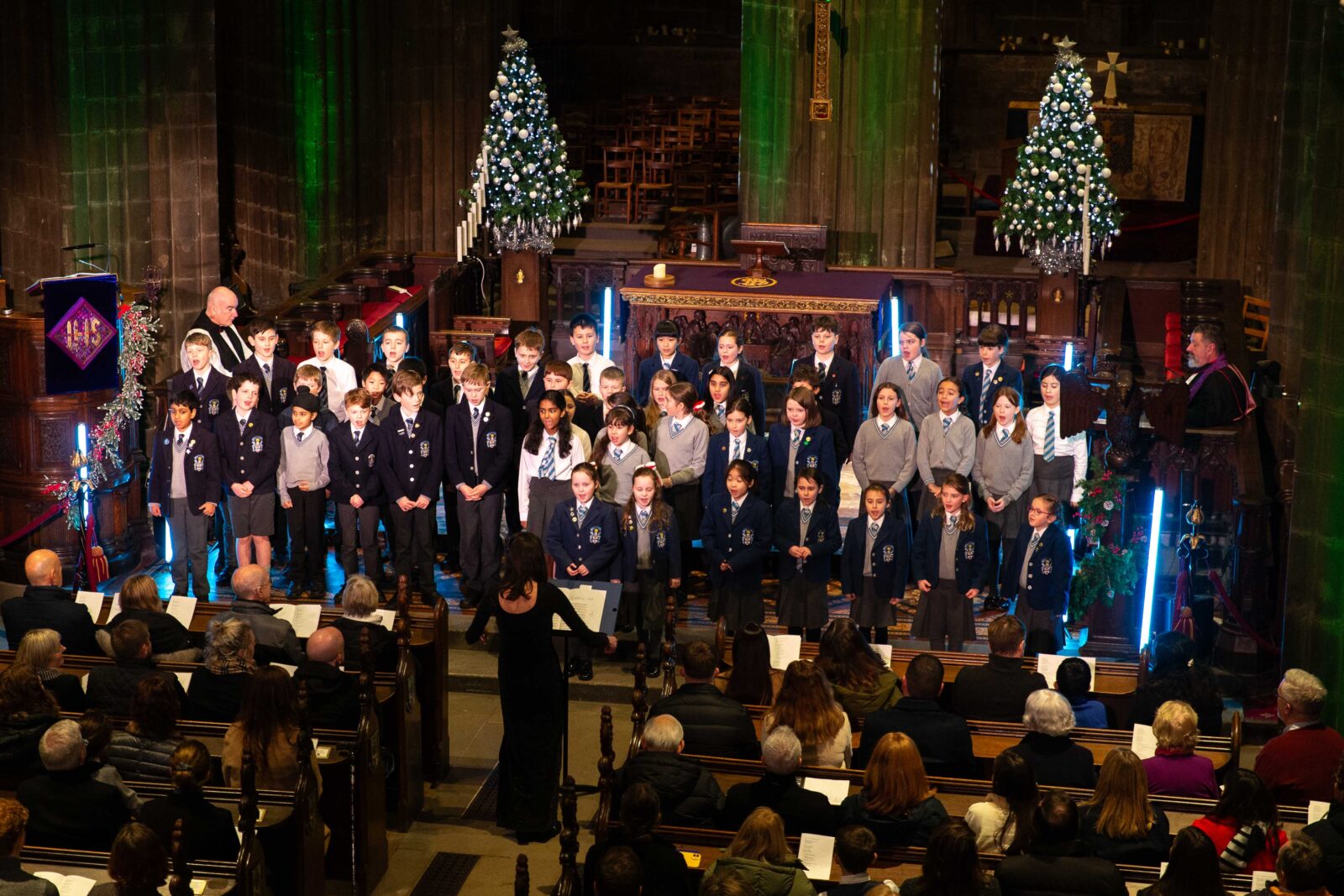
The cathedral's transformation for Christmas is subtle rather than theatrical. Unlike commercial venues that layer on elaborate decorations, Glasgow Cathedral maintains its dignified restraint. A beautifully decorated Christmas tree stands in the nave, candles multiply throughout the space, and seasonal flowers accent the choir area, but the Gothic architecture itself remains the star.
What genuinely changes is the rhythm and energy of the space. The regular Sunday services expand to include special Advent worship, candlelit carol services, and the deeply atmospheric Christmas Eve Watchnight service.
The building that might feel contemplatively quiet on a Tuesday afternoon in October becomes a gathering place filled with voices lifted in traditional hymns, the scent of candle wax mingling with cold stone, and the particular acoustics that make Gothic vaulting such a powerful amplifier of choral music.
What Makes It Different From Other Glasgow Christmas Attractions
While George Square transforms into a bustling Christmas market and Buchanan Street glows with commercial lights, Glasgow Cathedral offers a counterpoint: stillness, authenticity, and connection to something older than modern holiday traditions.
The cathedral operates on an entirely different timescale than seasonal attractions. The stone beneath your feet was laid by medieval craftsmen. The building's proportions follow sacred geometry principles.
The Lower Church, essentially a vast crypt built into the hillside, creates spaces that feel removed from contemporary Glasgow entirely. When you attend Watchnight service here, you're participating in a liturgical tradition that predates Scotland's union with England, predates the Reformation, and connects back through centuries of Christmas Eves marked in this exact location.
This historical depth provides perspective. The frantic commercial energy of the season feels less overwhelming when you've spent an hour in a space that has witnessed 800 Christmases and will witness 800 more.
You can easily combine the cathedral with Glasgow's other Christmas offerings (and we'll discuss how later), but understanding this fundamental difference in character helps set appropriate expectations. Come here for reflection, for acoustic beauty, for architectural wonder, for participation in living tradition, not for Santa's grottoor mulled wine stalls.
Christmas Services And Worship At Glasgow Cathedral
Advent Services (Late November Through December)
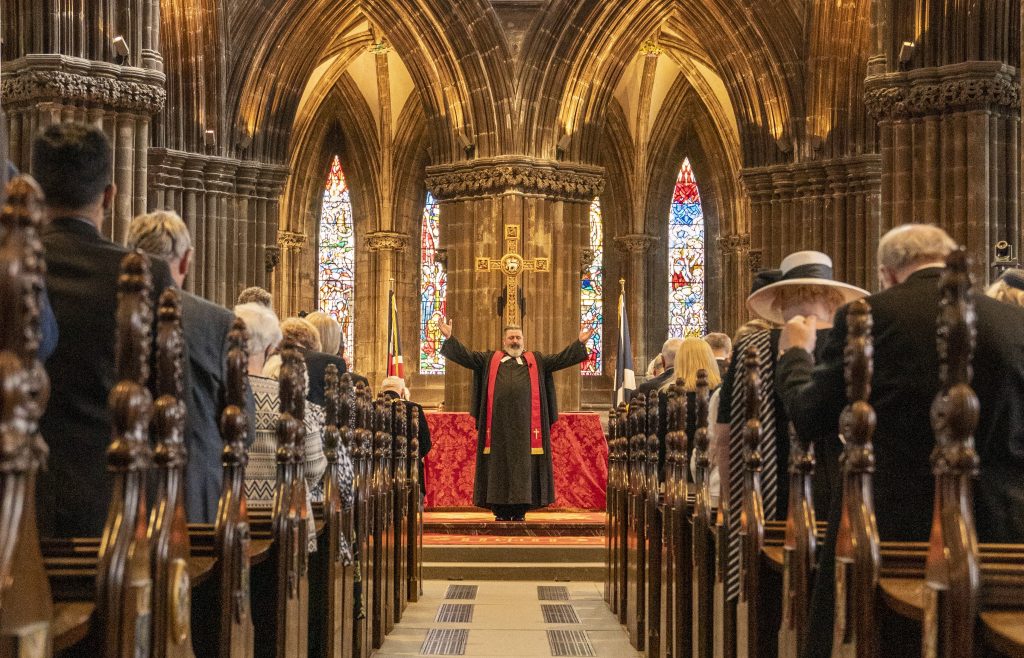
The cathedral's Christmas season begins with Advent, the four weeks of preparation before Christmas Day itself. Each Sunday in Advent features special worship services that follow the traditional liturgical calendar, with themes of hope, peace, joy, and love explored through scripture readings, sermons, and seasonal hymns.
For visitors, these Advent Sundays offer a gentler introduction to the cathedral's worship style than the more crowded Christmas Eve and Christmas Day services. The Sunday morning service typically begins around 11:00 am and lasts approximately 60-75 minutes. The atmosphere balances contemplation with anticipation; there's a sense of something approaching, building toward the celebration to come, rather than the arrival itself.
A typical Advent service includes congregational hymns (everyone in attendance is invited to sing along using provided hymnals), readings from both Old and New Testament texts, a sermon relating the week's Advent theme to contemporary life, and periods of prayer.
The Advent wreath, a circle of evergreen branches holding five candles, serves as the visual focal point, with one additional candle lit each week until all four outer candles glow, leading to the lighting of the central white Christ candle on Christmas Eve or Christmas Day.
Special Christmas Events And Concerts
The cathedral hosts many special Christmas eventsthat bring visitors from all over Scotland and beyond. The Glasgow Cathedral Choral Society puts on yearly Christmas concerts with music by Scottish composers and traditional carols.
These shows usually let the audience join in singing beloved Christmas carols, creating a shared celebration that connects performers and listeners. Candlelit classical concerts have become very popular during the Christmas season.
Events like "Vivaldi's Four Seasons at Christmas by Candlelight" turn the cathedral into a cozy concert hall, with hundreds of candles creating a warm, magical feeling. These concerts usually feature professional musicians and offer a fancy Christmas celebration for people who love classical music.
Charity Christmas Celebrations
The cathedral often hosts Christmas charity events that mix celebration with helping the community. Organizations like Beatson Cancer Charityand CrossReach hold yearly Christmas celebrations in the cathedral, with performances from local choirs and raising money for important causes. These events show how the cathedral continues to be a place for community support and kindness.
The CHAS Candlelight Service is one of the most touching Christmas events, giving families dealing with loss a place to think and remember during the holiday season. These services, often with performances by the Royal Scottish National Orchestra, show how the cathedral helps those facing hard times during what can be a difficult season.
Christmas Eve Watchnight Service
The Watchnight service stands as Glasgow Cathedral's most atmospheric Christmas offering. Beginning at 11:30 pm on December 24th (Data as of December 2025, verify current year timing on the cathedral's official website), this service continues past midnight, marking the transition from Christmas Eve into Christmas Day itself through candlelight, traditional hymns, communion, and the announcement that "Christ is born."
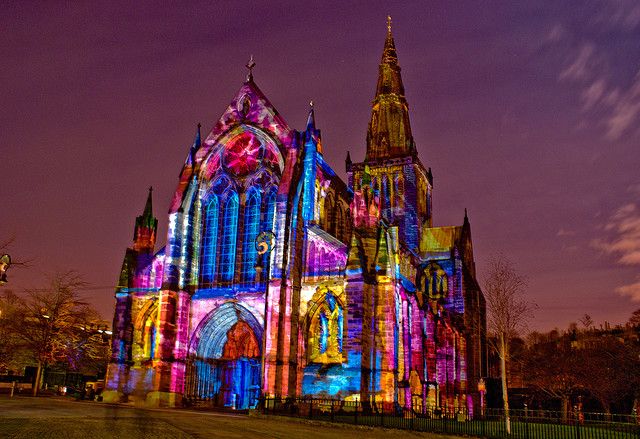
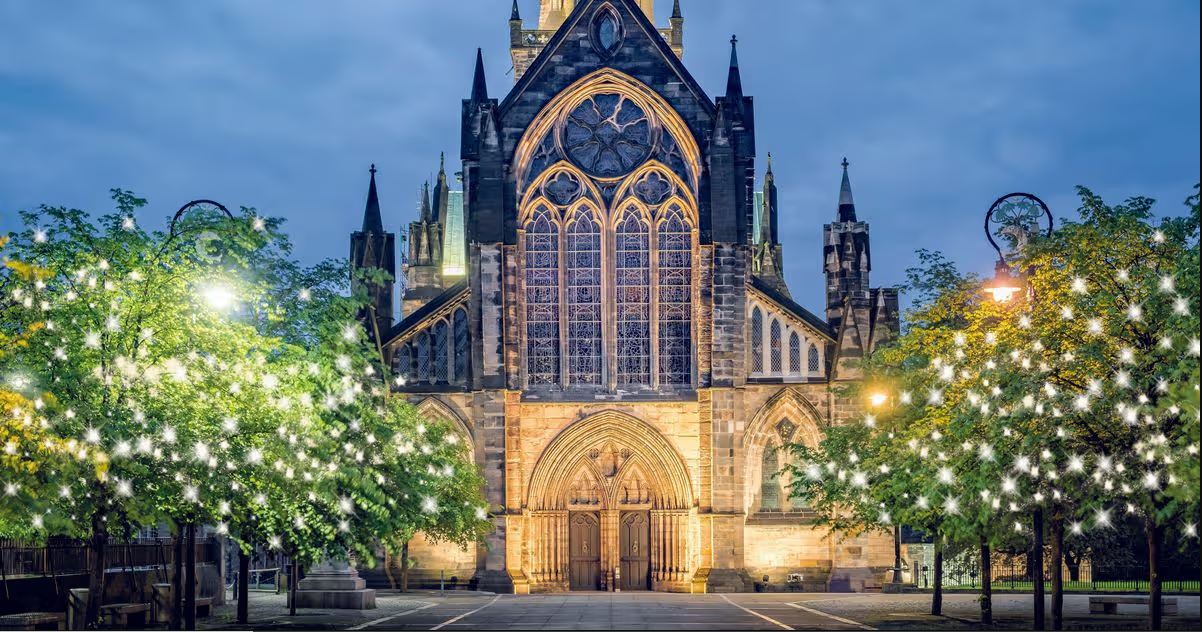
The experience of Watchnight begins before you even enter the building. Arriving in the dark winter evening, you'll often find Castle Street filled with people streaming toward the illuminated Gothic structure, local families bundled against the cold, tourists clutching folded maps, and elderly congregation members who've attended this service for decades. The building looks particularly dramatic after dark, floodlit to emphasize its vertical lines and medieval grandeur.
What Happens During Watchnight
The service follows the Presbyterian liturgy adapted for Christmas Eve. It typically includes:
- Opening Hymns and Welcome- The service begins with congregational singing and the minister welcoming everyone, explicitly including visitors and those attending for cultural rather than religious reasons.
- Scripture Readings- Key nativity passages from the gospels of Luke and Matthew, often read by different congregation members.
- Carols and Anthems- A mix of congregational carols everyone knows and more complex pieces performed by the cathedral choir. The acoustics make this musical portion particularly memorable.
- Christmas Meditation or Sermon- A relatively brief reflection on the meaning of Christmas, typically grounded in the scripture readings but accessible to those unfamiliar with theological concepts.
- Communion (The Lord's Supper)- In Presbyterian tradition, communion is offered, but participation is voluntary. If you're attending as a cultural observer rather than a worshiper, it's entirely acceptable to remain seated during this portion. No one expects or requires participation.
- The Midnight Moment- As the service moves toward midnight, there's often a period of silence, followed by the tolling of the cathedral bell, the announcement "Christ is born," and a joyful final hymn that transitions the atmosphere from anticipation to celebration.
- Closing and Dismissal- The service concludes around 12:30-12:45 am with final blessings and the invitation to greet fellow attendees as everyone exits into Christmas morning.
Arrival And Seating Strategy
The Watchnight service regularly fills to capacity, with the cathedral holding approximately 1,500 people across its nave, aisles, and galleries. To secure reasonable seating (particularly if you want to sit together as a group or need accessible areas), follow this strategy:
- Arrive by 10:45-11:00 pm:Doors typically open around 10:30 pm, and early arrivals ensure you're not relegated to standing space or straining to see over others. The wait inside the cathedral is part of the experience, watching the building fill, hearing the murmur of conversation echo off stone walls, observing the lighting of candles as the start time approaches.
- Choose your seating based on your intentions:If you're primarily there for cultural observation and photography (before the service begins), seats farther back or to the sides offer a better perspective on the full interior. If you want the full immersive experience, seats in the nave closer to the front place you amid the strongest sense of communal worship. If you have mobility concerns or might need to leave early, aisle seats near exits provide easier access.
- Bring warm layers:Medieval stone buildings retain cold, and while modern heating systems have been installed, they can't fully overcome thermal mass and high ceilings. Many attendees wear coats throughout the service, especially those seated away from heat sources.
- Expect to stand periodically:Presbyterian services include standing for hymns, prayers, and certain ritual moments. You'll have plenty of sitting time between these moments, but those with mobility challenges should be aware that this isn't entirely seated. Chairs are available in accessible areas if needed.
Christmas Day Morning Service
Christmas Day service provides a different atmosphere than Watchnight, earlier, typically shorter, and often more family-oriented. Starting around 10:00-11:00 am (December 2025 schedule, check the official website for precise timing), this service lasts approximately 60 minutes and celebrates Christmas morning in full daylight streaming through the cathedral's windows.
The liturgy follows traditional Christmas worship: hymns of joy rather than anticipation, readings focused on the nativity story and the theological meaning of the Incarnation, and a sermon that tends toward celebration and gratitude rather than the more contemplative tone of Advent or Watchnight.
Many families attend after opening presents at home, making this service feel less formal than Christmas Eve. You'll see more children, more casual attire, and more of the relaxed energy that comes from a holiday morning rather than the dramatic midnight gathering.
For visitors, Christmas Day service offers the advantage of experiencing the cathedral in daylight, when its architectural details are fully visible, and the stained glass (mostly Victorian-era replacements but still beautiful) shows its true colors. The crowd is typically smaller than Watchnight, though still substantial compared to regular Sunday services.
The building is otherwise closed for general touring on December 25th, so attending the service is your only opportunity to experience the interior on Christmas Day itself.
Family-Oriented Services (Christingle)
For families with young children, the Christingle service offers an age-appropriate introduction to the cathedral's Christmas traditions. Typically held on an afternoon or early evening in December (date varies annually, often the Sunday before Christmas), this service lasts approximately 45 minutes and centers around the Christingle tradition: oranges decorated with red ribbon, candles, and sweets or fruits, each element symbolizing aspects of Christian theology in child-friendly terms.
Children receive their own Christingle to hold during the service, and the moment when hundreds of small candles are lit simultaneously in the darkened cathedral creates genuine magic. The service includes child-friendly carols, shorter readings, and often a brief interactive talk from the minister that engages younger attendees directly. Parents appreciate that restless children are expected and accommodated here, unlike more formal evening services where decorum is emphasized.
The Christingle service also provides an excellent opportunity for children to experience the cathedral's architecture without the challenge of remaining quiet through a 75-minute adult service. Following the service, families can spend time in the cathedral examining details that caught their children's attention, making this a genuinely educational outing that doesn't feel like forced cultural enrichment.
Musical Highlights Throughout The Season
Music serves as the cathedral's greatest seasonal gift. The resident choir, supplemented during the Christmas season by additional singers, performs at both regular services and special carol events. Their repertoire spans medieval plainchant to contemporary Scottish composers, with particular strength in traditional four-part harmonies that utilize the cathedral's exceptional acoustics.
The acoustic properties of Gothic architecture transform choral music in ways that modern concert halls, despite sophisticated design, rarely match. Sound waves bounce off stone surfaces, creating natural reverberation that extends notes beyond their sung length. The high vaulted ceiling prevents sound from becoming muddy, instead creating clarity even in complex polyphonic passages. When the choir performs "O Holy Night" or launches into the descant of "Hark! The Herald Angels Sing," the building itself becomes an instrument.
Visitors with a particular interest in church music should consider attending multiple services throughout December to experience the full range of the Christmas repertoire. The Lessons and Carols service offers the most comprehensive musical program, while Watchnight typically includes the most emotionally powerful moments, particularly the transition from anticipation to celebration around midnight. Even those who wouldn't consider themselves religious frequently report that the music alone justifies attendance, providing an experience impossible to replicate through recordings.
Visiting As A Cultural Observer: What To Expect
Service Etiquette For First-Time Visitors
Many potential visitors hesitate to attend cathedral services because they worry about "doing something wrong" or standing out as unfamiliar with church customs. This anxiety is understandable but largely unnecessary at Glasgow Cathedral, where the congregation explicitly welcomes those attending for cultural appreciation rather than religious worship.
That said, understanding basic etiquette helps you feel confident and ensures you're respecting the sacred space and those who are there for worship purposes:
- You're genuinely welcome.The Church of Scotland tradition emphasizes hospitality and recognizes that exposure to beautiful worship might itself be spiritually meaningful, regardless of someone's personal beliefs. Many regular attendees appreciate that visitors care enough to experience their traditions respectfully.
- Quietness before and during services is expected.While waiting for services to begin, keep conversations low and turn mobile phones to silent. During the service, avoid talking except during designated greeting moments.
- Participation is optional.You're free to sing hymns, stand when others stand, and generally participate in the communal aspects of worship. You're equally free to remain seated during prayers if you don't share the faith being expressed, to keep silent during hymns, and to observe rather than participate. Both approaches are acceptable.
- Communion is offered, not required.If you're uncomfortable participating in communion (the Lord's Supper), simply remain seated when others go forward. No explanation needed, no one will question you or make you feel excluded. Many regular attendees choose not to take communion at every service.
- Children are welcome but expected to be reasonably quiet.Families with very young children might want to sit near exits in case a child becomes disruptive and needs to be taken out briefly. The Christingle service is the most explicitly child-friendly, while Watchnight is beautiful but long and late for young children.
- Modest dress shows respect, but there's no strict code.Think "business casual" as a baseline, avoid shorts, tank tops, or clothing with potentially offensive graphics. You don't need to wear your most formal attire, especially for morning services. Evening services like Watchnight tend toward slightly dressier, simply because people often come straight from work or holiday gatherings.
Understanding The Liturgy (What Happens When)
Presbyterian services follow a predictable structure that helps once you understand the basic flow:
1. Gathering and Welcome- The minister opens with a welcome, sometimes including notices about upcoming events. This signals the service is beginning; conversations should end.
2. Call to Worship and Opening Hymn- A short responsive reading followed by everyone standing to sing the first hymn. Even if you don't know the words, standing with the congregation is respectful.
3. Prayers- Various prayers throughout the service, some read by the minister, some offered spontaneously. People typically stand or sit based on congregation cues, just follow what others do.
4. Scripture Readings- Passages from the Bible read aloud, usually including an Old Testament reading and a New Testament reading (during Christmas, these focus on nativity prophecies and stories).
5. Sermon- The minister's reflection on the readings and their meaning for contemporary life. This is when everyone sits and listens, usually for 10-15 minutes, sometimes longer for special services.
6. More Hymns and Prayers- Services alternate between different elements to create rhythm and variety.
7. Offering- Baskets are passed for donations. Giving is voluntary. If you don't wish to contribute, simply pass the basket along; no one is watching or judging.
8. Communion(when offered) - Not at every service, but common at major celebrations like Christmas. The minister will explain the process for those unfamiliar.
9. Final Hymn and Blessing- The service concludes with everyone standing for a closing hymn, followed by the minister's blessing/benediction.
10. Recession- Often, the choir and clergy process out while a postlude plays. Most people remain standing until they've passed.
Understanding this structure means you won't be caught off-guard by transitions, and you can pace your attention appropriately. Services have contemplative moments and more energetic sections designed to provide variation over 60-90 minutes.
When To Stand, Sit, Or Participate
The basic rule: follow the congregation's lead.Watching what others do provides immediate guidance for any given moment. That said, some general patterns hold:
Stand for:
- Hymns (all of them)
- The Gospel reading (sometimes, you'll notice everyone rising)
- Certain prayers, particularly opening and closing prayers
- The blessing at the end
- The choir/clergy procession in and out
Sit for:
- Scripture readings (except sometimes the Gospel)
- The sermon
- Most prayers (though some congregations stand, follow the majority)
- Communion meditation (the period before people go forward)
- Choral anthems performed by the choir alone
Kneeling:
- Generally not practiced in Presbyterian churches, unlike Catholic or Anglican traditions
- Some individuals might kneel for personal prayer during designated prayer times, but the congregation as a whole remains seated
Singing:
- Hymn books or printed orders of service will be available in the pews
- Singing is encouraged, but optional; many visitors simply listen
- Don't worry about reading music; words are provided, and most hymns use familiar melodies
The "Passing of the Peace":
- In some services, there's a moment when the minister invites everyone to "pass the peace", which means turning to those near you and saying "Peace be with you" while shaking hands or nodding
- It's a brief, friendly moment that breaks the formality
- If you're uncomfortable with physical contact, a simple nod and smile suffice
Communion participation:
- The minister will provide instructions for those unfamiliar with the process
- Typically, people go forward row by row to receive bread and wine (or grape juice)
- If you choose not to participate, remain seated. You can use this time for personal reflection or to observe the ritual
- No one will pressure you or question your decision
The key insight: Presbyterian worship values "decent order" (things done properly) but isn't as rigidly ceremonial as high Anglican or Catholic liturgy. There's room for personal interpretation and variation. As long as you're respectful and making a genuine effort to follow along, minor uncertainties don't matter.
What To Wear And What To Bring
Clothing considerations:
For daytime services and visits, smart casual works well, think clean jeans or trousers with a collared shirt, a casual dress, or comparable attire. You're entering a place of worship and a nationally significant historical site, so slightly more care than "weekend errands" clothing shows respect.
For evening services like Watchnight, people tend to dress slightly more formally, not because there's a rule but because Christmas Eve feels special and many people come from holiday gatherings or dinners. A dress, skirt, or nicer trousers with a blouse or button-down shirt fit the atmosphere. Men sometimes wear jackets or suits, women often wear dresses, but this isn't required; plenty of people attend in smart casual attire.
Practical items for evening services:
- Warm layers:Wool sweaters, cardigans, or coats you can keep on throughout the service. The cathedral's stone construction and high ceilings mean heating systems fight a losing battle against thermal mass and drafts. Many attendees wear coats through entire services.
- Comfortable shoes:You'll be walking on stone floors and may be standing for hymns multiple times. The cathedral has stairs if you want to explore the galleries or the Lower Church. Prioritize comfort over fashion.
- Small flashlight or phone light:While the cathedral is lit, candlelit services create atmospheric but dim lighting that can make reading hymn sheets or navigating unfamiliar spaces challenging, especially for older visitors. A discreet light source helps.
- Water bottle:Services can run 60-90 minutes with substantial singing. A small bottle tucked in a bag provides relief if your throat gets dry.
- Cash for donations:While giving is voluntary, many visitors choose to contribute to the cathedral's upkeep. Having a few pounds in cash makes this easy—card readers may be available, but aren't guaranteed.
- Tissues:Cold stone buildings, winter weather, and emotional responses to beautiful music all create a potential need for tissues.
What to leave behind:
- Large backpacks or bags (security consideration and space constraint in crowded pews)
- Food or drinks that require consumption during services
- Expectations of coffee shops or gift shops inside the cathedral itself (these aren't present in the main worship space)
Photography And Recording Guidelines
Photography policies balance respect for worship with recognition that people want to remember their visit:
- During services:Photography and video recording are not permitted during worship services, including Watchnight, Christmas Day service, and all other religious services. This rule protects the spiritual space for worshipers, prevents disruption from flashes or phone screens, and maintains appropriate decorum.
- Before and after services:In the minutes before a service begins, while people are finding seats, and after the service concludes during the informal gathering period, discreet photography (no flash, no video) is generally tolerated if you're photographing architecture rather than candid shots of individuals. Use judgment. If you're about to take a photo, ask yourself if it would disrupt someone's preparation for worship.
- During daytime visiting hours:The cathedral is open for self-guided visits outside of service times (generally weekday afternoons and Saturday, hours vary seasonally and are posted at the December 2025 schedule). During these periods, photography for personal use is permitted throughout most of the building. Some restrictions apply in certain areas; signage indicates where photography is prohibited.
- Flash and tripods:Flash photography is prohibited at all times as it can damage historical materials and is disruptive. Tripods or other equipment that block pathways or create hazards aren't permitted during services or when the cathedral is busy with visitors.
- Drone photography:Prohibited without explicit written permission from Historic Environment Scotland.
- Commercial photography:Requires advance permission and typically incurs fees. This includes wedding photography, professional photoshoots, and content creation for commercial purposes.
- The practical reality:Modern smartphone cameras perform remarkably well in low light. If you're determined to capture the atmosphere of Watchnight, arrive early and photograph the building as it fills, before the service begins. The candlelit atmosphere you're imagining will be present during this time, and you'll have permission to photograph it. Once the service begins, put your phone away completely, both to respect others and to actually experience what you came for rather than viewing it through a screen.
For those serious about photography, the cathedral during December daytime visits offers stunning opportunities: winter light streaming through windows, architectural details highlighted by low-angle sun, the Christmas tree positioned in the nave, seasonal decorations against medieval stonework. These images often prove more memorable than dim, blurry photos snapped during crowded evening services.
Christmas Atmosphere And Photography At Glasgow Cathedral
Capturing The Cathedral's Christmas Magic
The inside of the cathedral during Christmas offers great chances for photos, but visitors should be polite during services and around other visitors. The mix of the old stone building and Christmas decorations makes for interesting pictures. The stained glass windows, which look especially good on shorter winter days, cast colorful patterns across the main area and choir.
Professional photographers often suggest visiting at different times of day to get different moods. Morning light coming through the east windows beautifully lights up the choir area, while afternoon light creates strong shadows in the main area. The cathedral's Gothic arches and curved ceilings make natural frames for architectural photos.
The Sensory Experience Of Christmas At Glasgow Cathedral
Beyond just looking nice, Christmas at Glasgow Cathedral uses all your senses. The way sound travels in the old stone makes choir performances and organ music sound amazing, creating a full sound experience that modern concert halls can't easily match. During candlelit events, the smell of candle wax mixes with the subtle scent of old stone and wood.
The temperature inside stays cool all year, so visitors going to Christmas events should dress warmly. This coolness actually makes the cozy feeling of candlelit services better and creates a big contrast with Glasgow's often wet December weather outside.
Christmas Decorations And Seasonal Displays
While Glasgow Cathedral keeps a simpler Protestant look, Christmas brings small but meaningful decorations that respect the building's holy nature. The decorations focus on making the cathedral's natural beauty even better, letting the Gothic architecture remain the main thing you see.
The cathedral's Christmas lighting during evening events creates especially magical moments. Candlelit services turn the space into something almost medieval, with flickering light dancing across stone columns and making warm, private spots throughout the huge inside.
Glasgow Cathedral In Context: Christmas Around The City

Three Ways To Experience Glasgow Cathedral At Christmas
Not everyone wants the same thing from a cathedral visit, and Glasgow Cathedral's dual role as active church and historical monument allows for three distinct modes of engagement. Understanding which mode aligns with your interests and preparing accordingly maximizes your satisfaction.
Mode 1 - Quiet Contemplation (Daytime Touring)
Best for:Introverts, history enthusiasts, photographers, those uncomfortable with organized worship, visitors wanting to appreciate architecture without crowds, and anyone seeking peaceful refuge from busy Glasgow streets.
What to expect:Glasgow Cathedral is open for self-guided visiting during posted hours outside of service times. December 2025 daytime hours vary but typically include weekday afternoons and Saturdays (verify current schedule at the cathedral website or Historic Environment Scotland site; hours change seasonally and for special events).
During these quiet periods, you can explore the building at your own pace. The nave stretches before you, empty of congregation, your footsteps echoing off stone. Natural light streams through the stained glass, creating pools of colored light on the floor. You can spend as long as you wish examining the ceiling bosses, tracing the lines of Gothic arches, descending to the Lower Church to stand in the forest of columns surrounding St. Mungo's shrine, and reading interpretive panels about the building's history.
The experience is meditative and personal. There's no requirement to engage with religious content beyond appreciating the building's original purpose. You can sit in a pew simply to rest, to observe light changing as clouds move past, to feel the particular silence that stone buildings hold. Many visitors report this quiet contemplation mode as surprisingly moving; the absence of crowd energy and formal liturgy allows the space itself to communicate.
Suggested duration:30-60 minutes for a thorough but unhurried visit. Architecture enthusiasts or those using the space for meditation might spend 90 minutes or more.
Practical tips:
- Visit during weekday afternoons for the fewest other visitors
- Bring a guidebook or download information in advance if you want detailed architectural context
- The Lower Church is particularly atmospheric during winter, when natural light is minimal
- Staff and volunteers are usually available to answer questions, but won't approach unless you initiate
- Consider this mode as a quiet break between visiting the Glasgow Christmas marketsand other busier attractions
Mode 2 - Cultural Observer (Attending Services)
Best for:Cultural travelers, those curious about religious traditions without personal faith commitment, visitors wanting to experience choral music in an ideal acoustic setting, and anyone interested in observing living traditions rather than museum-preserved history.
What to expect:You're attending worship services as a respectful observer rather than an active participant in the religious content. You're there to experience the atmosphere, hear the music, observe the liturgy, appreciate how the building functions as it was designed to function, but you're not personally praying, taking communion, or engaging with the theology beyond intellectual interest.
This is an entirely legitimate and welcome way to attend. The Church of Scotland understands that its Christmas services attract many "cultural Christians" and secular visitors who appreciate the tradition, beauty, and community without sharing the underlying faith commitments. As long as you're respectful, quiet during appropriate moments, not treating it as entertainment to be photographed throughout, and not talking during prayers, your presence is valued.
Suggested duration:Varies by service type, 45 minutes for Christingle, 60-75 minutes for typical services, 90 minutes for Watchnight.
Practical tips:
- Read the service type descriptions earlier in this guide to choose which service matches your interests
- Arrive early enough to feel settled and observe the space filling
- Participate in singing if you're comfortable, or simply listen; both are fine
- Don't feel obligated to take communion; remaining seated is perfectly acceptable
- Stay through the full service if possible; leaving mid-service is disruptive
- Consider attending both a daytime service (to see the architecture in natural light) and an evening candlelit service for contrasting experiences
Mode 3 - Active Worship (Full Participation)
Best for:Christians of any denomination seeking meaningful Christmas worship, Church of Scotland members or Presbyterians looking for familiar liturgy, anyone for whom Christmas has religious significance and who wants to mark it in a sacred setting, and those seeking spiritual connection within historic continuity.
What to expect:You're attending primarily for worship purposes. The architectural beauty and musical excellence are bonuses, but your core intention is participating in the communal Christian celebration of Christmas. You'll pray the prayers, sing the hymns with full voice, potentially take communion, and engage with the sermon's theological content rather than observing it as a cultural phenomenon.
Glasgow Cathedral's Christmas services follow the Presbyterian/Church of Scotland liturgy, which means:
- Less ritual formality than Catholic or high Anglican services
- Strong emphasis on scripture reading and preaching
- Congregational hymn singing is central
- Communion (when offered) uses bread and wine/grape juice, typically received by coming forward
- No required prayers or responses, you can participate as much or as little as feels authentic to your practice
- Theological content tends toward accessibility rather than specialized doctrine
For visitors who are Christian but not Presbyterian, these services offer a different flavor than you might experience in your home tradition. Presbyterian worship emphasizes word (scripture, sermon) over sacrament, values "decent order" over elaborate ceremony, and maintains a more austere aesthetic than many other traditions. If you're used to Catholic mass, Episcopal liturgy, or evangelical contemporary worship, the tone will feel different, but the core Christmas narrative and theological meaning remain consistent.
Suggested duration:Plan for the full service length plus time before (for personal preparation/prayer) and after (for fellowship with other worshipers if desired).
Practical tips:
- Familiarize yourself with Presbyterian worship patterns if they're new to you
- Arrive with enough time for a few minutes of personal prayer or preparation
- Bring your own Bible if you prefer your translation, though scripture readings are typically provided
- Consider attending more than just Christmas Eve/Day, Advent services, and Lessons and Carols, which offer different aspects of the season's spiritual journey.y
- Introduce yourself to clergy or long-time members if you want to learn more about the congregation.
- Remember, this is an active parish church, not a performance; your authentic participation matters more than perfect execution.
Planning Your Visit: Practical Information
Opening Hours During December And The Christmas Period
Glasgow Cathedral operates on a complex schedule that balances its roles as active church, tourist attraction, and historic monument. Understanding when you can visit requires distinguishing between service times (when worship is happening, and you must be a service attendee or respectful observer) and general visiting hours (when you can explore the building freely).
Regular Daytime Visiting Hours
- Monday-Saturday (December 2025):Typically open for visitors from 1:00 pm-4:00 pm on weekdays, with Saturday hours sometimes extended. These hours can be affected by special services, events, or maintenance. Always verify current hours on the cathedral's official website or Historic Environment Scotland's site before planning your visit.
- Sunday:The building is generally not open for general touring on Sundays due to worship services. However, you can attend services (see schedule below) and may be able to briefly view the interior before or after.
- Admission during these hours:Free entry. No tickets required. You can arrive anytime during posted hours and stay as long as you wish (within reason; this is a functioning church, not a museum with unlimited dwelling time).
- What's accessible:During general visiting hours, you can explore the nave, aisles, choir area, and Lower Church. Some areas may be roped off for conservation or upcoming services. Interpretive materials are available. Staff or volunteers can answer questions.
- Christmas Day and Boxing Day Schedule
- December 25th (Christmas Day):The cathedral is closed for general touring on Christmas Day. The only way to enter the building is by attending the Christmas morning service, typically beginning between 10:00 and 11:00 am. The service lasts approximately 60 minutes. After the service concludes, the cathedral closes to the public for the remainder of the day.
- December 26th (Boxing Day):Hours vary by year. Check the official website for the December 2026 Boxing Day schedule; the cathedral may maintain holiday closure or reopen for reduced hours.
- Late December (Dec 27-31):Hours typically return to the normal winter schedule, but with possible variations. Always verify before visiting.
- New Year Period:Scotland's New Year celebrations (Hogmanay) are significant, and hours around December 31-January 2 may be affected. Plan if visiting during this period.
Service Times Throughout December
While general visiting hours let you explore the architecture, attending services gives you the full cultural and acoustic experience. Key December services (Data as of December 2026, verify current year specifics on the cathedral website):
- Regular Sunday Services:Typically 11:00 am throughout Advent and December (excluding Christmas Day, which has special timing)
- Advent Sundays:Four Sundays before Christmas, with special Advent liturgy at the regular morning service time
- Lessons and Carols:Usually held on a Sunday or midweek evening in mid-to-late December, the specific date varies annually
- Christingle Service:Often scheduled for the Sunday before Christmas, early evening (around 4:00-5:00 pm) to accommodate families
- Christmas Eve Watchnight:11:30 pm on December 24th, continuing past midnight
- Christmas Day Service:10:00-11:00 am start time on December 25th
- Important note on service attendance:You don't need tickets or reservations for regular services, including Christmas services. Simply arrive, find a seat, and participate as you're comfortable. For very popular services like Watchnight, arriving 30-45 minutes early ensures you won't be relegated to standing room only.
Location And How To Get There
Glasgow Cathedral sits on the east side of central Glasgow, on Castle Street in the area historically known as Glasgow Cross. The building occupies high ground overlooking the modern city center, reflecting its medieval origins when churches were built on prominent elevations.
Full Address:Glasgow Cathedral, Castle Street, Glasgow G4 0QZ, Scotland
The cathedral's location places it slightly away from the main shopping and commercial districts (Buchanan Street, Argyle Street) but within comfortable walking distance of central Glasgow. This separation is actually pleasant - you're escaping the busiest tourist zones into a quieter historic precinct.
Public Transport Options
Glasgow's public transport system makes reaching the cathedral straightforward, and using public transport is strongly recommended over driving, especially for evening services when parking is scarce, and you might have wine at communion or nearby restaurants.
By Bus:
Multiple bus routes serve stops within 5 minutes' walk of the cathedral:
- Routes 18, 19, 38, 57, and several others stop on High Street
- From the stop, walk east along Duke Street or Cathedral Street
- Journey time from central Glasgow (George Square, Queen Street Station): 5-10 minutes
- Bus service during the day is frequent; evening service (relevant for Watchnight) is reduced but still available
- For real-time schedules and route planning: Use the SPT (Strathclyde Partnership for Transport) journey planner or apps like Traveline Scotland
By Train:
The nearest train station is High Street Station, approximately 0.5 kilometers (about 6-7 minutes' walk) from the cathedral. High Street Station is on the North Clyde Line, connecting to Queen Street Station in central Glasgow.
Alternative: Queen Street Station (Glasgow's main station for northern services) is about 15 minutes' walk from the cathedral through the city center. This walk takes you through the Merchant City, which is pleasant during the daytime and well-lit in the evening.
By Subway:
Glasgow's small underground system (locally called "the Subway" or "Clockwork Orange" due to its distinctive orange trains and single circular line) doesn't have a station immediately adjacent to the cathedral. The nearest stations are:
- Buchanan Street Station: 15-minute walk
- St. Enoch Station: 20-minute walk
The Subway is useful for reaching central Glasgow, from which you can walk or take a bus to the cathedral.
By Taxi/Ride-Share:
Taxis and ride-shares (Uber operates in Glasgow) provide door-to-door service, particularly valuable for late-night Watchnight service when walking might feel less comfortable. Fares from central Glasgow hotels typically range from £5 to £ 8. Request pickup at "Glasgow Cathedral, Castle Street" to ensure drivers know the destination.
Walking from Central Hotels:
Many Glasgow city center hotels are a 15-25 minute walk from the cathedral. The walk is straightforward:
- Head east from the central shopping districts toward High Street
- Follow High Street north, which becomes Castle Street
- The cathedral's distinctive Gothic profile becomes visible as you approach
Walking during daylight is pleasant, taking you through the Merchant City with its historic buildings and interesting architecture. The route passes near the Tolbooth Steeple and provides a sense of Glasgow's layered history.
For Watchnight service, factor in that you'll be walking back around 12:30-1:00 am. Groups of people will be heading the same direction toward the city center and public transport, providing safety in numbers. Glasgow is generally safe, but as with any city, remain aware of your surroundings during late-night travel.
Parking Considerations
Driving to Glasgow Cathedral is possible but challenging, particularly for popular services. Medieval Glasgow wasn't planned for automobile traffic, and the cathedral's historic surroundings limit parking infrastructure.
On-Street Parking:Limited street parking exists on surrounding roads (Castle Street, Cathedral Square, John Knox Street). Most is pay-and-display during daytime hours (free evenings/Sundays, but check signage). Spaces are scarce, and the area can be confusing to navigate if you're unfamiliar with Glasgow's one-way systems and narrow historic streets.
Parking Lots/Car Parks:The closest significant parking facility is on Duke Street (several blocks away), about a 10-minute walk. Additional car parks exist in the city center, a 15-20 minute walk from the cathedral. For evening services, especially Watchnight, when you'll return to your car past midnight, consider how comfortable you are walking through unfamiliar areas in the dark.
Recommendations:
- Use public transport if possible, especially for evening services
- If you must drive, arrive very early for popular services (parking fills quickly)
- Consider parking at your hotel or a central car park and taking a taxi/bus to the cathedral
- Never leave valuables visible in parked cars—break-ins can occur in any urban area
- GPS coordinates for navigation: 55.8626° N, 4.2337° W
Accessibility Considerations
Glasgow Cathedral predates modern accessibility standards by several centuries, and its status as a protected historic building limits the modifications possible to improve access. However, efforts have been made to maximize accessibility within these constraints.
- Wheelchair Access:The main entrance on Castle Street has level access into the cathedral nave. Once inside, the main level (nave, aisles, choir area) is wheelchair accessible, though some floor areas have slight level changes where medieval construction created steps. Staff can assist in navigating these areas.
- The Lower Church (Crypt) Challenge:The Lower Church is down stone staircases with no elevator access. This remarkable space is unfortunately inaccessible to wheelchair users and those unable to manage stairs. The cathedral has created a virtual tour option to partially address this limitation, but it's not equivalent to experiencing the space in person.
- Accessible Seating During Services:Designated accessible seating areas exist near the back of the nave with space for wheelchairs and companions. For crowded services like Watchnight, arriving early ensures access to these spaces before the cathedral fills.
- Accessible Toilets:Available near the entrance/visitor area, designed to accommodate wheelchair users.
- Hearing Assistance:An induction loop system assists visitors with hearing aids during services. Ask staff about activation if you're not picking up the signal.
- Visual Impairments:Large-print service sheets and hymn books are available upon request. Guide dogs are welcome. The building's scale and acoustic properties actually help with navigation—sound gives spatial cues in ways that flat, acoustically dead spaces don't.
- Mobility Aids:Canes, walkers, and wheelchairs are all welcome. Be aware that stone floors can be slippery, especially if wet from winter weather tracked in by visitors. Some pews have more legroom than others; staff can guide you to more spacious seating if needed.
Service Length Considerations:If you have conditions that make sitting for extended periods difficult, consider:
- Choosing shorter services (Christingle at 45 minutes vs. Watchnight at 90 minutes)
- Sitting in aisle seats near exits so you can step out briefly if needed
- Bringing cushions for hard wooden pews (perfectly acceptable)
- Advising staff of your needs—they can often accommodate with alternate seating or arrangements
Sensory Sensitivities:For visitors with autism or sensory processing challenges, be aware that services involve:
- Sudden loud music (organ, full congregation singing)
- Crowd density during popular services
- Low lighting during candlelit services
- Incense is not typically used in Presbyterian services, but candle smoke may be present
- Periods of required silence contrast with loud musical moments
Daytime quiet visits during off-peak hours provide a more controlled sensory environment than services.
Contact for Specific Needs:If you have accessibility requirements not covered above, contact the cathedral office in advance. Staff are generally helpful and will do what they can within the building's limitations. Phone and email contact information is available on the official cathedral website.
Admission Costs (It's Free) And Donations
Christmas at Glasgow Cathedral
One of Glasgow Cathedral's most visitor-friendly aspects: admission is completelyfree. No tickets, no booking fees, no "suggested donation" that's actually required entry. You can visit during open hours or attend any service without paying anything.
This free access reflects both the cathedral's status as a Church of Scotland congregation (which doesn't charge for worship) and its management by Historic Environment Scotland as a national monument open to the public. The combination means you experience one of Scotland's finest medieval buildings and most significant Christmas worship opportunities without a financial barrier.
- Why donations matter:While entry is free, the cathedral's preservation and operation cost significant money. Heating a medieval stone building through Scottish winter, maintaining 800-year-old stonework, funding the music program that makes Christmas services so powerful, and staffing the building during visiting hours all require funding.
- How to contribute:Donation boxes are placed at exits and other locations throughout the cathedral. Many visitors contribute £2-5 as they leave, understanding that their free visit has value and wanting to support preservation. During services, an offering is collected, and baskets are passed along pews for voluntary donations. Giving is genuinely voluntary; if your budget is tight, you can pass the basket along without contributing, and no one will judge.
- Cash donations are simplest, but contactless payment options have been introduced in some locations within the cathedral (check current availability, as this technology is gradually being added to historic sites).
- Gift Aid for UK Taxpayers:If you're a UK taxpayer, you can complete a Gift Aid declaration that allows the cathedral to reclaim tax on your donation, increasing its value by 25% at no cost to you.
- Special Collections:During Christmas services, special collections might support particular needs, maintenance projects, the cathedral's outreach programs, or seasonal charity partners. These are announced during services and are separate from the general offering.
Your donation directly supports what you're experiencing. The more visitors contribute, the better the cathedral can maintain its building, support its musical excellence, and continue welcoming future generations to mark Christmas in this remarkable space.
Visiting With Children
Glasgow Cathedral welcomes families, but the experience varies significantly depending on the age of your children and which mode of engagement you're choosing.
Best Options for Young Children (Ages 3-8):
The Christingle Serviceis explicitly designed for families with young children. At approximately 45 minutes, it's shorter than standard services. The inclusion of oranges decorated with candles (the Christingles themselves) that children hold gives them something tangible to focus on. The service includes child-friendly language, interactive elements where the minister addresses children directly, and an understanding that some fidgeting and quiet talking is inevitable with young attendees.
Daytime quiet visitsalso work well with younger children if you frame it as exploration rather than forced culture. The Lower Church's forest of columns becomes a medieval maze to carefully navigate. The height of the Gothic arches becomes a counting game (how many arches can you see?). Keep visits shorter—20-30 minutes—and have a treat or playground visit planned afterward as a reward.
What to Avoid with Young Children:
The Watchnight Service starts at 11:30 pm, well past most young children's bedtimes, and runs 90 minutes. Even if your child can stay awake, expecting them to sit relatively quietly through a lengthy service in a cold building is unrealistic for most children under 8-9 years old. The late timing also means you'll be navigating Glasgow transport past midnight with a tired child, which adds stress.
Regular Christmas Day or Advent services run 60-75 minutes with sustained periods of sitting. Children accustomed to church might manage this, but those unfamiliar with worship service structure often struggle.
Considerations for Tweens and Teens (Ages 9-16):
Older children can attend any service if they understand expectations:
- This is a real worship service, not entertainment
- Quiet, respectful behavior throughout
- Participation in standing/sitting as the congregation does
- No phone use during services
- If they're bored, they must still sit quietly
For families with teenagers interested in history or architecture, the cathedral offers educational value beyond religious content. Discussing medieval construction techniques, the historical context of Christmas traditions, or the acoustics of Gothic design can engage analytically minded young people.
Practical Family Tips:
- Bring quiet activities:For services longer than 30 minutes, small quiet items (a soft toy, a book) can help younger children manage. Avoid anything noisy (tablets, crinkly snack bags, toys with sounds).
- Sit near exits:Aisle seats toward the back give you escape routes if a child becomes disruptive and needs to be taken out briefly.
- Bathroom before entry:Encourage children to use the toilets before the service begins. Leaving mid-service is possible but disruptive.
- Set clear expectations:Explain before entering what the experience will involve and what behavior you expect. "This is a special, quiet place where people are praying. We need to use our whisper voices and sit still."
- Dress warmly:Children feel colder than adults. Bundle them up since the cathedral is drafty.
- Snacks for after:Having treats to look forward to helps motivate good behavior, but don't bring food into the cathedral.
- Educational framing:Before or after the visit, connect the experience to what children are learning about history, architecture, or traditions. Having context helps them appreciate rather than endure the experience.
Stroller/Pram Access:Strollers are allowed in the cathedral and can navigate the main level (though tight spaces between pews during crowded services make maneuvering challenging). The Lower Church is not accessible with strollers due to the staircases.
Best Times To Visit For Different Experiences
Timing your visit strategically makes the difference between a frustrating, crowded experience and a memorable, satisfying one.
For Peaceful Architecture Appreciation:
- Weekday afternoons in early December (Dec 1-15):The Christmas season is beginning, but hasn't reached peak tourist flow. The building is relatively quiet, the staff have time for questions, and you can photograph without crowds in your frame.
- Early opening time:Arriving right when daytime visiting hours begin (typically 1:00 pm) gives you the quietest experience before tour groups and afternoon visitors arrive.
For Maximum Christmas Atmosphere Without Service Attendance:
Late afternoon in mid-December (around 4:00-4:30 pm):Winter darkness arrives early in Scotland, and the cathedral begins transitioning from daylight visiting to evening. The building takes on a different character as natural light fades and interior lighting becomes more prominent. The Christmas tree and decorations show to advantage. You'll catch the tail end of visiting hours before closing.
For Experiencing Services with Manageable Crowds:
- Early Advent Sundays (first two Sundays of Advent):Christmas hasn't peaked yet, so services have their seasonal liturgy but haven't swelled to capacity.
- Midweek carol or Lessons services:Often scheduled on weekday evenings, these draw serious music lovers and regular congregation but lack the "must attend on Christmas Eve" pressure that packs Watchnight.
For the Full Traditional Christmas Experience (Crowds Expected but Worth It):
Watchnight Service (Dec 24, 11:30 pm):This is the cathedral's signature Christmas service. Yes, it's crowded. Yes, it's late. Yes, it's long. It's also magnificent—the building at its most atmospheric, the liturgy at its most powerful, the sense of communal marking of Christmas Eve at its strongest. Arrive 45 minutes early, dress warmly, accept that you'll be packed in with others, and embrace the experience.
For Family-Friendly Experience:
Christingle Service (typically one Sunday in mid-December, early evening):If you're visiting with children, build your schedule around attending this service rather than trying to squeeze them into adult-oriented worship.
Times to Avoid if You Want to Actually See the Cathedral:
- December 26-31 between 2:00-4:00 pm:Many tourists visiting Scotland for Christmas have this window between Christmas Day and New Year activities, creating peak crowding during daytime visiting hours.
- Christmas Day:Unless you're attending the morning service, the cathedral is closed; don't plan a visit.
Weather Considerations:Glasgow weather in December is cold, often wet, with short daylight hours (sunset around 3:45 pm). Plan indoor cathedral visits for rainy periods. If you're combining with outdoor Christmas markets or walking tours, check forecasts and schedule the cathedral during the worst weather window of your day.
Combining Glasgow Cathedral With Other Christmas Activities

Glasgow Vacation Travel Guide | Expedia
Before Or After The Christmas Markets
George Square Christmas Market and the St. Enoch Christmas Village rank as Glasgow's primary festive attractions, drawing crowds for rides, food stalls, gift shopping, and the general buzz of commercialized Christmas. The cathedral offers a perfect counterpoint to this energy, combining both in a single outing creates a satisfying contrast.
The Walking Route:From George Square (city center), the cathedral is approximately a 15-minute walk east through the Merchant City. The route takes you past handsome Victorian and Georgian architecture, across the High Street, and up the gentle rise toward the cathedral's distinctive Gothic towers. Walking this route at dusk during early December lets you experience the Christmas lights of central Glasgow, gradually giving way to the quieter, historic precinct around the cathedral.
Suggested Timing Combinations:
- Afternoon Pattern:Visit the cathedral during daytime hours (1:00-4:00 pm), experiencing the architecture in natural light and the peaceful atmosphere of off-hours. Afterward, walk back toward the city center as daylight fades and Christmas lights begin showing to advantage. Arrive at the markets around 5:00-6:00 pm when they're illuminated but not yet peak-crowded. This order means you're moving from quiet to energetic, ending your evening with dining and drink options near the markets.
- Evening Pattern:If you're attending an evening service (Lessons and Carols, Watchnight), visit the markets first while they're at their busiest and most atmospheric. Have dinner at one of the market food stalls or nearby restaurants, then walk to the cathedral for the service. The market energy will have tired you slightly, making the transition into the quiet cathedral more striking and the opportunity to sit for a service more welcome.
- Morning/Early Afternoon Pattern:For families with young children, visit the cathedral during late morning or early afternoon (if special opening hours exist, or attend a Sunday service), then reward children with market rides and treats afterward. This order means children are less tired during the cathedral visit when good behavior is required.
- What Works About This Combination:The commercial and sacred aspects of Christmas, rather than competing, illuminate each other through contrast. The market reminds you of gift-giving, family fun, and festive indulgence—legitimate parts of the season. The cathedral reminds you of older meanings, spiritual depth, and traditions that predate modern consumerism. Experiencing both in proximity creates a richer understanding of how Christmas functions culturally, religiously, and personally.
- Practical Note:The walk between the cathedral and markets is manageable but not trivial; factor in time if you're on a schedule, wear comfortable shoes, and check the weather. If mobility is a concern, the bus routes mentioned earlier connect the two areas quickly.
Creating A Cathedral District Walking Route
The area around Glasgow Cathedral rewards exploration beyond the cathedral itself, with several sites clustered within a small radius that together tell the story of medieval and Victorian Glasgow.
- The Necropolis (Glasgow's Victorian Cemetery):Immediately adjacent to the cathedral, up the hill to the east, the Necropolis sprawls across a dramatic hillside. This Victorian cemetery (opened 1832) contains elaborate monuments, mausoleums, and grave markers for Glasgow's 19th-century wealthy and notable citizens. The high ground offers excellent views back over the cathedral and modern Glasgow beyond.
- Provand's Lordship:Glasgow's oldest house (built 1471), located across Castle Street from the cathedral, operates as a museum of medieval domestic life. While not explicitly Christmas-themed, it's occasionally decorated for the season and provides context for understanding what Glasgow was like when the cathedral was newly completed. Entry is free.
- St. Mungo Museum of Religious Life and Art:Adjacent to the cathedral, this museum explores world religions through art and artifacts. Its collection includes pieces from Christianity, Islam, Buddhism, Hinduism, Judaism, and Sikhism. The museum helps place Glasgow Cathedral within the broader context of human religious expression and offers a more intellectually engaged complement to the experiential cathedral visit. Entry is free (donations welcome). Allow 45-60 minutes for a thorough visit.
- Cathedral Square and Merchant City:The broader area around the cathedral formed Glasgow's medieval heart. While modern development has transformed much of the landscape, walking south toward the city center takes you through the Merchant City—Georgian and Victorian warehouses converted to restaurants, apartments, and shops—that represents Glasgow's 18th-19th century commercial boom.
Suggested Half-Day Route:
- Start at Glasgow Cathedral (60-90 minutes including Lower Church)
- Walk through the Necropolis (30-45 minutes)
- Visit Provand's Lordship (20-30 minutes)
- Quick stop at St. Mungo Museum (45 minutes) OR walk south through Merchant City toward the city center (15-20 minutes)
- End at a café or pub for lunch/refreshment before continuing to markets or other Glasgow attractions.
This route combines sacred space, death memorials, social history, and urban evolution into a coherent narrative about Glasgow's identity across centuries. For visitors with limited time who want to understand Glasgow beyond its commercial Christmas appeal, this concentration of heritage sites provides efficient cultural immersion.
Nearby Dining And Refreshment Options
The immediate cathedral vicinity has limited dining options—you're in a historic, primarily institutional area rather than a restaurant district. However, several choices exist within short walking distance, and part of your planning should include where you'll eat before or after your cathedral visit.
Closest Options (5-minute walk or less):
Several cafés and pubs exist along Castle Street and the High Street area. These tend toward casual pub fare, coffee shops, and quick lunch spots rather than fine dining. They're functional for grabbing soup and a sandwich before an afternoon visit or warming up with coffee afterward, but they're not destinations themselves.
Better Options (10-15 minute walk toward city center):
The Merchant City, south and west of the cathedral, offers considerably more choice. This regenerated historic district now hosts numerous restaurants, bistros, cocktail bars, and cafés. Options range from casual to upscale, covering various cuisines. Walking this direction post-cathedral means you're heading back toward central Glasgow naturally.
For Pre-Watchnight Dining:
If you're attending the 11:30 pm Watchnight service, you'll want dinner beforehand, but not so early that you're hungry again by midnight. Consider:
- 7:00-8:00 pm dinner window:Eat in the city center (Merchant City or near George Square), allowing time for digestion before the service. You can walk leisurely to the cathedral around 10:30-10:45 pm.
- Light dinner + late snack strategy:Have a light meal around 6:00-7:00 pm, then a warm drink and biscuit around 9:30-10:00 pm before heading to the cathedral. This prevents the discomfort of attending a 90-minute service on a very full or very empty stomach.
- Post-service options:Few restaurants remain open past 1:00 am when Watchnight concludes. If you're hungry after the service, research 24-hour or late-night options in advance (some city center establishments, kebab shops, or your hotel room service) or plan to make do with snacks you've brought.
Alcohol Considerations:While communion at Presbyterian services uses wine (or grape juice), that's a symbolic sip. If you're having dinner before Watchnight, moderate your alcohol consumption—sitting through a 90-minute service with a full bladder from multiple pints is uncomfortable, and arriving noticeably intoxicated to a worship service is disrespectful. Similarly, if you're driving post-service, obviously don't drink.
Family Dining:For families attending Christingle or daytime visits, several chain restaurants in central Glasgow offer reliable kid-friendly menus within 10-15 minutes' walk of the cathedral. Using these as treats before or after the cathedral visit helps motivate children's good behavior.
Other Glasgow Christmas Highlights Worth Your Time
Glasgow offers numerous Christmas experiences beyond the cathedral and markets. Depending on the length of your stay and your interests, consider:
Kelvingrove Art Gallery and Museum:One of Scotland's finest museums, free entry, usually includes Christmas events and exhibits in December. The building's architecture is magnificent, and collections range from art to natural history. About 3-4 kilometers west of the cathedral (20-minute bus ride).
Buchanan Street Christmas Lights:Glasgow's main shopping thoroughfare decorates elaborately for Christmas. Walking its length (15-20 minutes from north to south) provides the quintessential British Christmas shopping experience, complete with street performers, crowded stores, and festive atmosphere.
Glasgow Science Centre:For families with children, the Science Centre often hosts Christmas-themed science demonstrations and planetarium shows. Located on the south bank of the Clyde, requiring deliberate travel but worthwhile for children aged 6-14.
Hogmanay (New Year) Preparations:If you're visiting during late December, Glasgow's preparations for Hogmanay (Scotland's massive New Year celebration) will be evident. Scotland historically emphasized New Year over Christmas (due to Reformation-era suppression of Christmas), and this cultural pattern persists. Experiencing both Christmas and New Year in Glasgow provides insight into Scottish festive traditions.
Day Trips from Glasgow:For visitors staying several days, Glasgow's central location allows day trips to Loch Lomond, Stirling Castle, Edinburgh, or other Scottish highlights. While not Christmas-specific, these excursions break up urban sightseeing and provide a broader Scottish context.
Rangers or Celtic Football Matches:Scottish football (soccer) continues through December with traditional Boxing Day fixtures. If you're a sports fan, experiencing Glasgow football culture—arguably the world's most intense club football rivalry—adds a memorable dimension to your visit. Check fixtures in advance; tickets for Old Firm matches (Rangers vs. Celtic) are notoriously difficult to obtain.
The key to successful trip planning: don't try to do everything. Glasgow Cathedral deserves genuine attention rather than being rushed through as one item on an overpacked itinerary. Choose a few highlights that match your interests, leave buffer time for unexpected discoveries or weather adjustments, and remember that sometimes the most memorable travel experiences are unplanned—a conversation with a local, a beautiful side street, a pub you stumble into for shelter from rain.
Frequently Asked Questions About Glasgow Cathedral During Christmas
Do I Need Tickets For Christmas Services At Glasgow Cathedral?
Regular Sunday worship services at Glasgow Cathedral are free and open to everyone. Special Christmas concerts and events might need tickets, especially candlelit shows or concerts by visiting musicians. Charity events often ask for donations, but rarely require buying tickets in advance.
What Should I Wear To Christmas Services At Glasgow Cathedral?
Glasgow Cathedral welcomes visitors in whatever clothes they feel comfortable in, though some people choose to dress more formally for Christmas services. The building stays cool all year, so warm clothes are recommended, especially for evening events. There are no strict dress rules, and the focus is on making everyone feel welcome, no matter what they wear.
Are Children Welcome At Christmas Events In Glasgow Cathedral?
Yes, children are welcome at all Glasgow Cathedral services and most Christmas events. The cathedral specifically mentions welcoming families and advises parents attending with children. Some events, especially those put on by outside concert organizers, might have age limits for very young children, but these are clearly stated in event descriptions.
Can I Attend Christmas Services If I'm Not Religious?
Glasgow Cathedral welcomes all visitors to attend services regardless of their faith. The cathedral provides service books with clear instructions, and ministers guide people through each part of the service. Many visitors come for the music, the building's beauty, or the cultural experience rather than specifically for worship.
Is Glasgow Cathedral Wheelchair Accessible For Christmas Events?
Yes, Glasgow Cathedral offers great access options, including a stair lift at the west door and staff help for visitors who need assistance with mobility. Visitors can contact the cathedral at 0141 552 6891 for help, and the building has been changed to make sure everyone can take part in Christmas celebrations.
What's The Difference Between Glasgow Cathedral And St. Andrews Cathedral For Christmas?
Glasgow Cathedral is a Church of Scotland (Protestant) cathedral that offers morning worship services and special Christmas events. St Andrews Cathedral in Glasgow is a Roman Catholic cathedral that offers traditional Christmas masses, including the midnight mass. Both offer different Christmas experiences reflecting their different traditions.
Final Thoughts
Christmas at Glasgow Cathedral offers something truly special in Scotland. It's not just about going to another holiday service or concert – it's about connecting with almost nine centuries of continuous Christian worship in one of Scotland's most beautiful old buildings.
The cathedral surviving religious changes, political shifts, and city growth makes every Christmas celebration here a small miracle of preservation and continuity. The magic of Christmas at Glasgow Cathedral is its ability to make the old feel fresh and personal.
When you hear the choir's voices filling the Gothic arches during a Christmas service, or watch candlelight dance across old stonework during an evening concert, you're experiencing something that connects you directly to countless generations of Scottish Christians who found hope and joy in this same place.
Related: St Andrews Cathedral
Jump to
Quick Facts: Glasgow Cathedral At Christmas
Glasgow Cathedral's Rich Christmas Heritage
Christmas Services And Worship At Glasgow Cathedral
Visiting As A Cultural Observer: What To Expect
Christmas Atmosphere And Photography At Glasgow Cathedral
Glasgow Cathedral In Context: Christmas Around The City
Three Ways To Experience Glasgow Cathedral At Christmas
Planning Your Visit: Practical Information
Combining Glasgow Cathedral With Other Christmas Activities
Frequently Asked Questions About Glasgow Cathedral During Christmas
Final Thoughts

Callum Fraser
Author
Callum Fraser isn't just a writer about Scotland; he's a product of its rugged landscape and rich history. Born and raised in Perthshire, with the Highlands as his backyard, his love for the nation's stories was kindled by local storytellers and long walks through ancient glens.
This passion led him to pursue a degree in Scottish History from the University of Edinburgh. For over 15 years, Callum has dedicated himself to exploring and documenting his homeland, fusing his academic knowledge with essential, on-the-ground experience gained from charting road trips through the Cairngorms, hiking the misty Cuillins of Skye, and uncovering the secrets of traditional recipes in his family's kitchen.
As the Editor-in-Chief and Lead Author for Scotland's Enchanting Kingdom, Callum's mission is simple: to be your most trusted guide. He combines meticulous research with a storyteller's heart to help you discover the authentic magic of Scotland — from its best-kept travel secrets to its most cherished traditional recipes.
Latest Articles
Popular Articles