An Ode To A Thistle - The Quiet Strength Behind Scotland’s National Symbol
Learn the true meaning of an ode to a thistle. See how the thistle became Scotland’s national symbol and what its quiet strength represents.
Author:Callum FraserNov 12, 20254.8K Shares90.4K Views
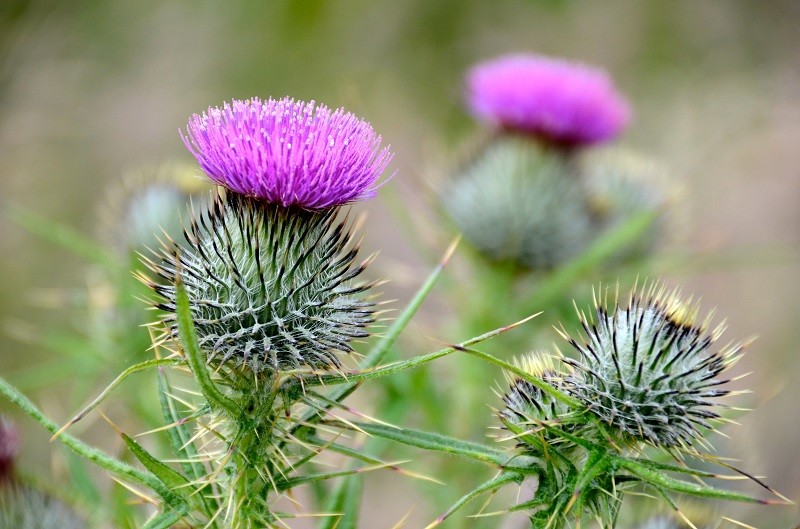
An Ode To A Thistle And The Strength It Represents
The thistle is a symbol of resilience, protection, courage, and hidden beauty. It grows in harsh places, survives strong winds, and protects itself with sharp spines while carrying a bright purple bloom. An ode to a thistlecelebrates this mix of toughness and grace, making it a powerful image in poetry, culture, art, and history.
This tough little flower has inspired poets, shaped traditions, and carried deep meaning for many generations. People searching for an ode to a thistleoften want to understand why this plant matters, what it stands for, why it appears in poems, and how its story speaks to strength and resilience. Others simply want ideas to help write or appreciate an ode of their own.
The pages ahead bring together the thistle’s nature, its history, its place in art, and the emotions it has stirred over time. With these pieces in view, the thistle becomes more than a thorny plant. It becomes a symbol worth praising and a reminder of the beauty that can grow in hard places.
Why People Search For An Ode To A Thistle
People look for “ode to a thistle” because they want to know:
- What the thistle symbolizes
- Why it appears in poems and legends
- Its meaning in Scottish heritage
- How to write their own ode
- Examples of thistle poems or quotes
The Thistle As A Poetic Symbol
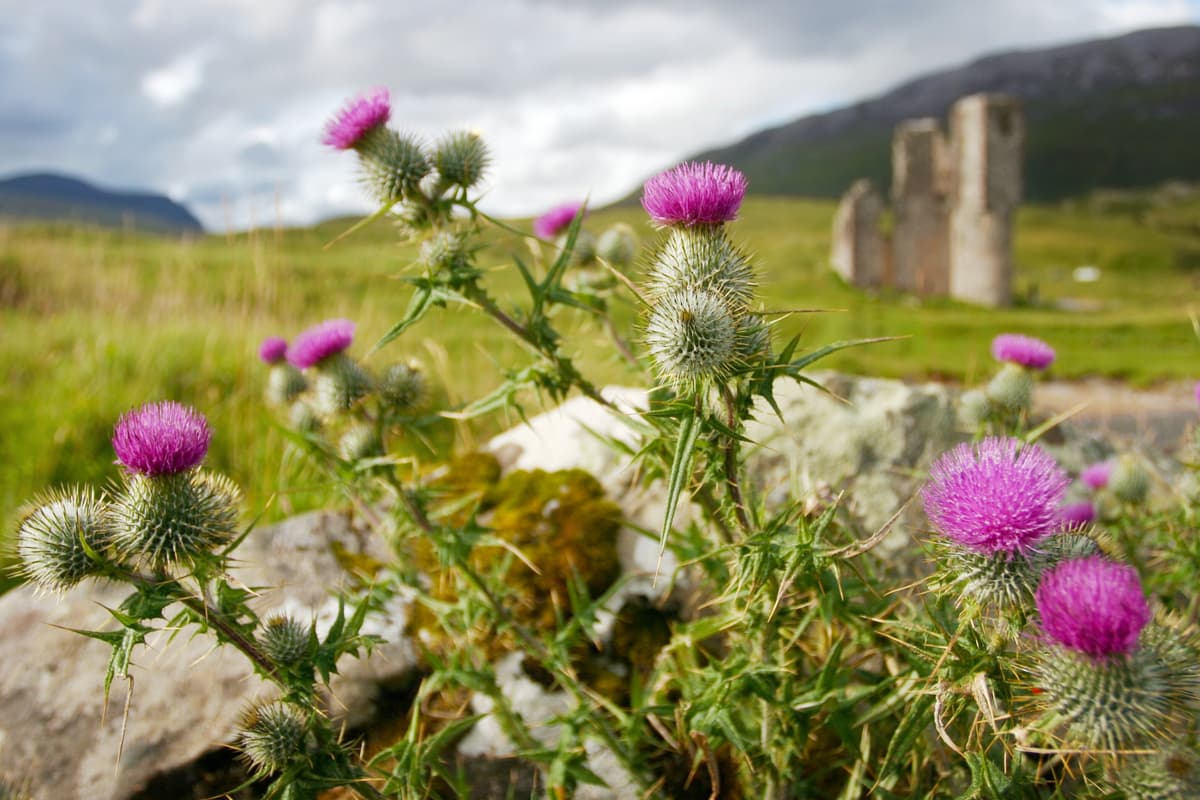
Resilience And Defiance
Poetry about thistles consistently emphasizes their unyielding nature. Ted Hughes' poem "Thistles" depicts the relentless flowers as an invasion of unyielding nature, inspiring comparisons to the cycle of age-old human conflicts. The plant becomes a metaphor for persistence in the face of opposition.
The thistle refuses to be tamed. Farmers may cut it down, cattle may avoid it, but it springs back season after season. This stubborn survival speaks to something fundamental in the human experience, the determination to endure despite adversity.
Writers find in the thistle a mirror for human struggles. Its ability to thrive in poor soil and harsh conditions makes it a natural symbol for anyone facing difficult circumstances. The plant doesn't need perfect conditions; it makes do with what it has.
Beauty Hidden Behind Protection
The striking purple flowers of the thistle present a fascinating contrast to its defensive spines. This combination of attraction and repulsion creates rich symbolic territory for poets. The message is clear: worthwhile things often require effort and sometimes pain to reach.
Contemporary poet Nathan Heintz's recent ode captures this duality, describing the thistle "purpling the day-lit hours in repose" while simultaneously acknowledging its formidable nature. The flower commands respect through its defenses while offering visual rewards to those who look past the thorns.
Connection To Place And Heritage
The thistle's association with Scotland dates back to ancient times, with legends and historical accounts that highlight its importance. For Scottish poets, the thistle represents homeland, identity, and cultural pride. Robert Burnsreferenced it as "Scotland's rough, honest thistle," capturing both its rugged character and authentic nature.
Hugh MacDiarmid's epic poem "A Drunk Man Looks at the Thistle" uses the plant as a lens to examine Scottish identity, history, and character. The thistle becomes a vehicle for exploring what it means to belong to a place and people.
The Scottish Legend Behind The National Emblem
The Norse Invasion Story
Legend says a group of Scots warriors were saved from a surprise Norse attack when one invader stepped on a thistle and shouted in pain. The cry woke the sleeping Scots, who fought back and won. Whether or not the story is fully accurate, it shows why the thistle is so deeply respected a small plant providing big protection.
The tale is usually tied to the Battle of Largs in 1263, a chapter often mentioned alongside tales of famous Scots in history, adding to Scotland’s long tradition of bravery and resilience.
From Legend To National Symbol
Silver coins in Scotland featuring a thistle date back to as early as 1474, issued by King James III. This marks the thistle's formal recognition as a symbol of Scottish sovereignty and identity. The plant moved from folklore to official heraldry.
The Order of the Thistle, established as an order of chivalry, is the highest honour Scotland can bestow on an individual. Its motto, "Nemo me impune lacessit" (No one provokes me with impunity), perfectly captures the thistle's defensive nature beautiful but not to be trifled with.
The symbol appears everywhere in Scottish culturetoday on rugby jerseys, police badges, and countless business logos. It has become shorthand for Scottish identity, instantly recognizable worldwide. This transformation from wildflower to national emblem demonstrates the power of symbolic thinking.
Ted Hughes’ “Thistles” - A Powerful Metaphor
A Dark, Vivid Vision
Hughes uses strong words “spike,” “burst,” “splintered weapons” to compare thistles to warriors. The plant becomes a metaphor for:
- Conflict
- Human struggle
- Repeated battles
- Cycles of violence
Layers Of Meaning
The poem shows the thistle growing, dying, and rising again. This mirrors how human conflicts return generation after generation.
The message is clear: Nature keeps going. Humans repeat their battles.
The plant becomes a symbol of unstoppable life.
What A Thistle Really Is: Botanical Facts
Physical Features
The common spear thistle (Cirsium vulgare) likely inspired Scotland’s emblem.
Most thistles share these traits:
- Long spiny leaves
- Purple or pink flower heads
- Tall, straight stems (up to 5 feet)
- A tough, sharp outer layer
- A surprising, delicate bloom on top
How Thistles Grow
Thistles are usually biennial:
- Year 1:Grow roots and leaves
- Year 2:Grow tall and bloom
They have deep taproots that reach water other plants cannot, helping them survive poor soil.
Their seeds are light and feathery, allowing wind to carry them far distances.
The Thistle's Ecological Importance
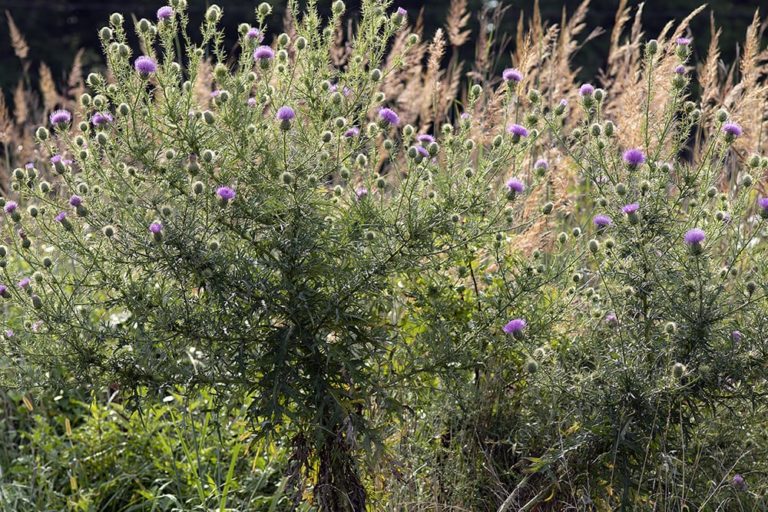
Supporting Pollinators
Thistles provide incredible resources for pollinators, and their seeds are nutritious wildlife food. The flowers produce abundant nectar, attracting bees, butterflies, and other pollinators when many other blooms have finished.
Monarch butterflies visit native thistle flowers more than any other wildflowers in some regions during migration. The timing of thistle blooms in late summer coincides with butterfly migration periods, making them crucial refueling stations.
Over thirty percent of insects recorded on thistles are flies, including specialized species whose larvae depend on the plant. This ecological web extends beyond obvious pollinators to include numerous less-visible species that contribute to ecosystem health.
Feeding Birds And Wildlife
Thistle seeds make up one-third of the diet of the American goldfinch. These oil-rich seeds provide essential fats and proteins that help birds survive and thrive. American goldfinches even nest a little later than many other songbirds, apparently so they can feed thistle seeds to their young.
Birds also use the soft, fluffy thistledown as nesting material. The fine fibers insulate nests while being lightweight and easy to shape. Hummingbirds particularly favor this material for constructing their tiny, delicate nests.
The spent stalks were found to be the most popular plant nesting sites for cavity-nesting bees. Even after death, the thistle continues supporting wildlife. Hollow stems provide winter shelter for insects, which in turn feed birds during lean months.
Conservation Challenges
Native thistles have been a direct casualty of habitat loss, suffering from loss of native plant communities to agriculture, urbanization, and development. Ironically, efforts to control invasive thistle species often harm native varieties that provide significant ecological benefits.
Expansive biocontrol programs have released alien thistle-eating insects that devour invasive and native thistles alike. These well-intentioned interventions demonstrate the complexity of ecosystem management and the difficulty of targeting specific species.
Some rare thistle species now face extinction. Pitcher's thistle, found along Great Lakes sand dunes, is federally threatened. Conservation groups work to educate the public about distinguishing beneficial native thistles from problematic invasive species.
Writing Your Own Ode To A Thistle
1. Start By Observing The Plant
Look closely:
- Its color
- The patterns of its spines
- How it moves in the wind
- What insects visit it
- How it grows from tough ground
Good poems come from real details.
2. Choose Your Style
You can write:
- A traditional ode (formal, lyrical)
- A modern ode (simple, free verse)
Either style can celebrate the thistle’s strength and beauty.
3. Use Sensory Language
Describe:
- What the thistle looks like
- How its spines feel
- The sound of wind through its leaves
- The soft look of its purple bloom
Then compare these to human experiences:
- Pain
- Protection
- Growth
- Endurance
- Identity
Example Ode To A Thistle (Original Poem)
"O Thistle, crowned with purple fire,
You rise where gentler flowers fall.
Your thorns stand guard like quiet shields,
Yet still your beauty conquers all.
You flourish where the soil is thin,
Where storms blow hard and seasons bite.
Still, through the wind, your colors lift
A stubborn bloom, a stubborn light.
O symbol of the rugged land,
Proud emblem of the steadfast heart,
You teach us how to guard our hope,
And bloom again when worlds fall apart."
Thistles In Literature Beyond Poetry
Symbolic Uses In Prose
Writers employ thistles symbolically in fiction and non-fiction. The plant often represents characters who are prickly but valuable, difficult to approach but worth the effort. This shorthand communicates complex personalities efficiently.
Contemporary Scottish authorsmight use the thistle symbolically, such as Ian Rankinin his detective novels set in Edinburgh, where the resilience of the thistle can parallel the gritty endurance of the protagonist. The plant connects characters to place and cultural heritage.
Historical novels set in Scotland frequently reference thistles to establish setting and atmosphere. The plant grounds stories in specific geography while carrying symbolic weight that resonates with readers familiar with Scottish culture.
Folk Tales And Legends
Beyond the famous invasion legend, numerous folk stories feature thistles. Some traditions held that thistles could ward off evil spirits or bring good luck. These beliefs reflect the plant's powerful presence in the human imagination.
Traditional medicine occasionally used thistle species for various ailments. Milk thistle particularly has documented liver-supporting properties. These practical applications coexisted with symbolic and spiritual significance, making the plant valuable on multiple levels.
Folk wisdom about thistles often centers on respect the plant demands careful handling and rewards those who approach it properly. This practical advice carries metaphorical weight about respecting boundaries and recognizing that protection mechanisms serve valid purposes.
What Does The Thistle Mean In Literature And Culture?
In literature and culture, the thistle is a powerful symbol of strength, protection, identity, and beauty hidden behind hardship. Writers, poets, and artists use it to express human emotions, cultural pride, and the struggle to endure difficult conditions. It appears often in Scottish literature, where it represents national identity, resilience, and the rugged beauty of the landscape.
1. A Symbol Of Strength And Survival
The thistle often stands for resilience. It grows in rocky soil, survives storms, and protects itself with sharp spines. Because of this, authors use it to represent:
- Staying strong during hard times
- Rising again after being knocked down
- Quiet courage
- Toughness that comes from experience
Characters who are stubborn, proud, or quietly brave are sometimes compared to thistles.
2. Beauty Behind Defenses
Many stories and poems use the thistle to show that beauty can exist even in harsh places. Its bright purple bloom rises from a spiky, uninviting stem. This contrast symbolizes:
- Hidden softness or kindness
- Beauty that requires effort to understand
- People who protect themselves but still have gentle hearts
- The idea that value is not always obvious at first glance
The thistle is often a metaphor for someone who seems tough but is worth getting to know.
3. National Identity And Cultural Pride
In Scotland, the thistle is a national emblem. In literature, it represents:
- Scottish strength and independence
- Pride in one’s homeland
- Loyalty to land, culture, and people
- A rugged spirit shaped by a rugged landscape
Scottish poetslike Robert Burnsand Hugh MacDiarmid used the thistle to explore what it means to be Scottish.
4. A Protector In Legends And Folklore
Across cultures, thistles are seen as protective plants. Folklore gives them roles such as:
- Guarding sleepers (as in the Scottish invasion legend)
- Warding off evil spirits
- Marking boundaries between safe and dangerous places
- Bringing courage or luck to travelers
Because of this, literature often uses the thistle as a symbol of warning, awareness, and protection.
5. Nature’s Message About Endurance
Environmental writers and poets use the thistle to show nature’s persistence. It is a reminder that:
- Life continues even in poor conditions
- Nature adapts and survives
- Strength can be quiet and uncelebrated
A thistle growing out of a crack in stone or concrete often symbolizes hope and endurance.
The Thistle In Art And Design
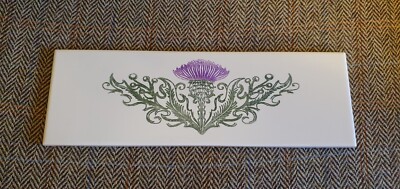
Heraldic Traditions
The thistle is found in numerous Scottish symbols, including the Order of the Thistle, which is one of the highest honors in Scotland, symbolizing chivalry and nobility. Heraldic thistles appear on coats of arms, flags, and official seals, rendered in stylized forms that emphasize their crown-like flowers.
The Royal Arms of Scotland feature a prominent thistle alongside other national symbols. This placement in official insignia demonstrates the plant's central role in national identity. The design has remained remarkably consistent over centuries.
Military regiments, particularly Scottish units, incorporate thistles in their badges and insignia. This connects service members to national heritage while invoking the defensive symbolism appropriate for armed forces protection without aggression, strength without compromise.
Contemporary Artistic Interpretations
Modern artists continue finding inspiration in thistles. Some create hyper-realistic botanical illustrations that reveal the plant's intricate structure. Others abstract the form into patterns that capture its essence while departing from literal representation.
Scottish jewelers craft exquisite pieces featuring the thistle, transforming the flower's natural form into elegant silver and gold pieces. These wearable artworks allow people to carry the symbol's meaning with them, expressing identity and values through design.
Textile designers incorporate thistle motifs into traditional and contemporary fabrics. The plant's distinctive silhouette translates well into repeat patterns for everything from tartan accessories to modern home furnishings. These applications keep the symbol relevant across generations.
Cultural Significance Beyond Scotland
Universal Themes Of Resilience
While strongly associated with Scotland, the thistle's symbolic meanings resonate universally. People worldwide recognize the metaphor of beauty behind defensive barriers, of thriving despite difficult circumstances, of refusing to be dismissed or diminished.
Immigrant communities sometimes adopt the thistle as a symbol of their own resilience in new environments. The plant's ability to establish itself in challenging conditions mirrors the immigrant experience of taking root in unfamiliar soil.
Environmental movements occasionally use thistle imagery to represent nature's persistence in the face of human development. The plant that grows through concrete cracks becomes a symbol of hope that nature will endure despite threats.
Thistles In Global Folklore
Various cultures have their own thistle traditions. Some European folk beliefs held that carrying thistle flowers brought courage or protected against lightning. These associations, while differing in specifics, share the common thread of the thistle as a protective force.
In some traditions, thistles mark boundaries or threshold spaces between cultivated and wild, known and unknown. This liminal quality makes them symbolically rich, representing transitions and transformations.
Asian cultures growing certain thistle species sometimes use them in traditional medicine or cuisine. These practical applications demonstrate how the plant's value extends beyond symbolism to tangible utility in daily life.
People Also Ask
What Does The Thistle Symbolize?
The thistle symbolizes resilience, protection, courage, and hidden beauty.
Why Is The Thistle Scotland’s National Emblem?
A legend says a thistle helped save Scottish warriors from a surprise attack when an invader stepped on it and cried out. Over time, it became a symbol of Scottish bravery.
What Makes The Thistle A Good Poem Subject?
Its mix of sharpness and beauty makes it a strong metaphor for human strength, boundaries, and growth.
How Do You Write An Ode To A Thistle?
Focus on its traits its toughness, its bloom, and the way it grows where others cannot. Use sensory details and simple comparisons.
Is A Thistle A Weed Or A Symbol?
It can be both. Some thistles are weeds in farmland, but culturally they symbolize strength, pride, and endurance.
How Is The Thistle Used In Art And Literature?
Thistles appear in poems, paintings, jewelry, emblems, and folklore. They often represent identity, struggle, and quiet beauty.
Final Thoughts
The thistle shows that strength and beauty can grow in the toughest places. Its sharp edges protect a bloom that appears only to those willing to look past the thorns. This contrast is what has made the thistle a lasting symbol in poetry, culture, and personal reflection.
To understand an ode to a thistle is to value resilience, quiet courage, and the kind of beauty that doesn’t try to impress. The thistle teaches simple lessons stand firm, protect what matters, and rise even when the ground is rough.
Seen through nature, history, or art, the thistle becomes more than a weed. It becomes a reminder that meaning often hides in unexpected places.
If this helped the thistle feel a little more alive, sharing it with others may help them notice its strength too.
Jump to
An Ode To A Thistle And The Strength It Represents
Why People Search For An Ode To A Thistle
The Thistle As A Poetic Symbol
The Scottish Legend Behind The National Emblem
Ted Hughes’ “Thistles” - A Powerful Metaphor
What A Thistle Really Is: Botanical Facts
The Thistle's Ecological Importance
Writing Your Own Ode To A Thistle
Example Ode To A Thistle (Original Poem)
Thistles In Literature Beyond Poetry
What Does The Thistle Mean In Literature And Culture?
The Thistle In Art And Design
Cultural Significance Beyond Scotland
People Also Ask
Final Thoughts

Callum Fraser
Author
Callum Fraser isn't just a writer about Scotland; he's a product of its rugged landscape and rich history. Born and raised in Perthshire, with the Highlands as his backyard, his love for the nation's stories was kindled by local storytellers and long walks through ancient glens.
This passion led him to pursue a degree in Scottish History from the University of Edinburgh. For over 15 years, Callum has dedicated himself to exploring and documenting his homeland, fusing his academic knowledge with essential, on-the-ground experience gained from charting road trips through the Cairngorms, hiking the misty Cuillins of Skye, and uncovering the secrets of traditional recipes in his family's kitchen.
As the Editor-in-Chief and Lead Author for Scotland's Enchanting Kingdom, Callum's mission is simple: to be your most trusted guide. He combines meticulous research with a storyteller's heart to help you discover the authentic magic of Scotland — from its best-kept travel secrets to its most cherished traditional recipes.
Latest Articles
Popular Articles