Highland Games: Complete Guide To Events & Schedule (2026)
Discover the Highland Games: a guide to heavy athletics, traditional dancing, and the 2026 calendar. And get practical advice for your first visit.
Author:Callum FraserJan 20, 202611K Shares148.9K Views
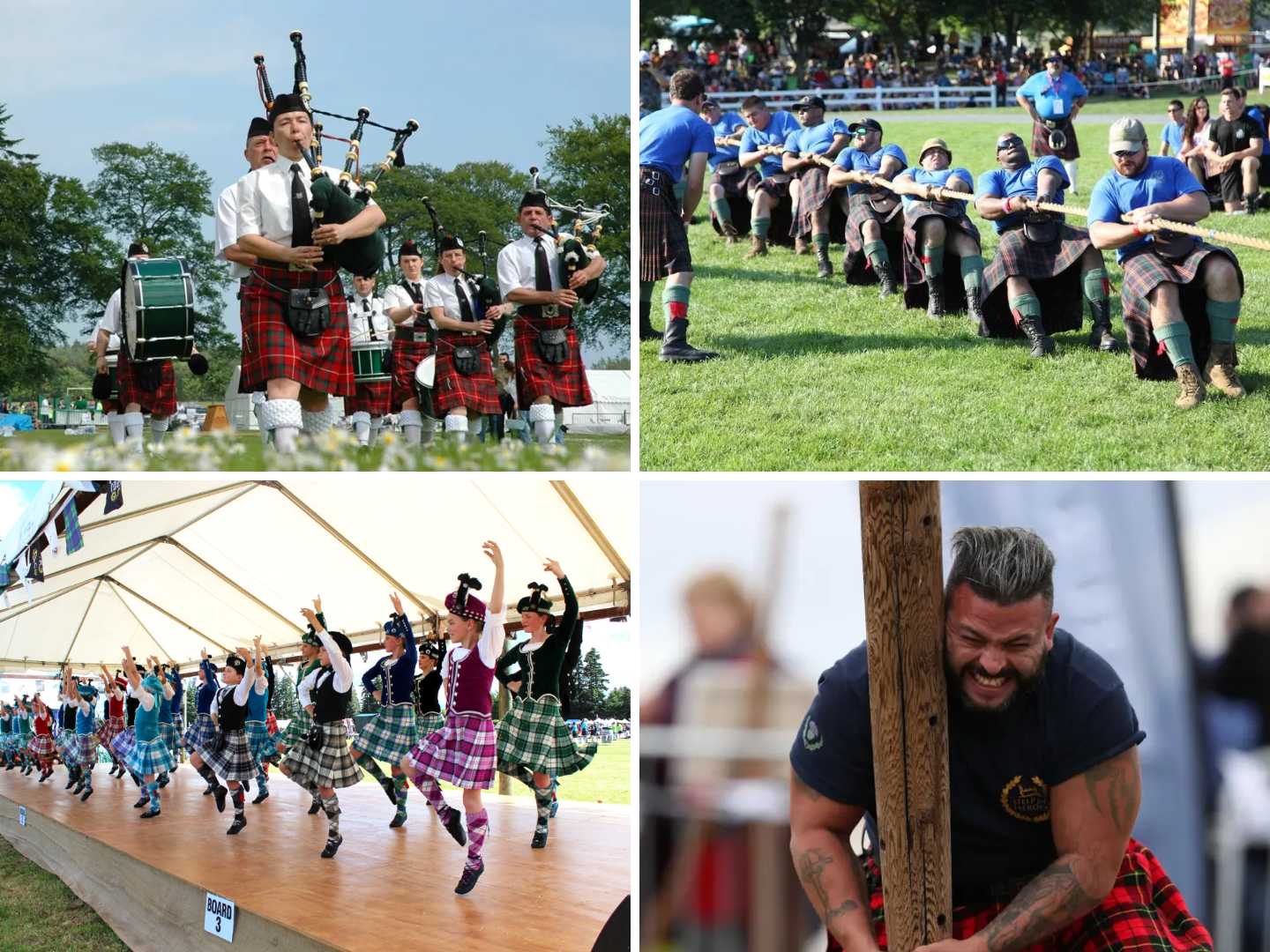
Highland Games in Scotland: The Complete Guide
The Highland Gamesare traditional Scottish festivalsfeaturing heavy athletics, pipe band competitions, and Highland dancing, held across Scotland and worldwide between May and September each year.
Key Takeaways
- Best quick definition:A sports-and-culture festival (athletics + music + dance + community).
- When in Scotland:Most Scottish Highland Games run May–September (Data as of January 2026).
- Location:Primarily Scotland, with major international events in the USA, Canada, and Australia.
- What you’ll see: Heavy events (caber/stone/hammer/weights), plus piping, drumming, and Highland dancing-plus stalls and food.
- Most important planning rule:Always verify dates/times on the official event page (even “big” games can change details).
- Rules vary:Scotland vs diaspora events can differ (especially “extra” activities and athletics rule sets).
Below you will find the historical origins, a complete breakdown of every athletic and cultural event, the 2026 master schedule, and spectator logistics.
What Are The Highland Games?
Think of the Highland Games as a sports day and cultural festival happening at the same time. In Scotland, they usually include field/track events, piping, and Highland dancing, plus traditional “heavy events” like tug-o-war, hammer throw, and caber tossing.
They’re called traditional Scottish gamesbecause many of the best-known events (like caber toss and hammer throwing) are closely linked with Highland culture and are still run as formal competitions today.
The Highland Games are also a living snapshot of Scottish culture-sport, music, dance, and community all sharing the same field.
History Of The Highland Games
The Highland Games are often explained as “old clan tests of strength,” but the honest story is: older traditions + later decline + a well-documented 1800s revival + global spread.
Ancient Origins And Clan Gatherings (11th Century)
The “King Malcolm III race” at Craig Choinnich near Braemar is often cited as an early root, but it’s best treated as “tradition says” rather than hard proof. Early gatherings likely included athletic tests, but the modern “Games format” is much more clearly documented from the 1800s onward.
The 1746 Act Of Proscription And The Victorian Revival
After the Jacobite era, Highland cultural life faced major restrictions, and traditional gatherings declined-helping explain why the Games faded in some areas before later revivals.
The post-1745 legislation included restrictions on Highland dress for men and boys (often discussed via the Dress Act provisions), as part of broader efforts to control the Highlands.
However, during the 19th-century Victorian era, Queen Victoria’s interest in Highland culture helped fuel a revival, and Games events became more structured and ceremonial.
The Modern Global Expansion
Today, Highland Games are held far beyond Scotland. VisitScotland describes Games taking place across countries including the USA, Canada, Australia, New Zealand, and South Africa.
For Scotland, a key accredited body is the Royal Scottish Highland Games Association (RSHGA), which lists member events and provides an official calendar.
These historical roots help explain why kilts, pipes, and dancing remain central to the field experience.
Highland Games Categories
This is the simplest way to understand what you’ll see when you arrive.
- Heavy events:Caber, stones, hammers, weights, tug o’ war (core “Highland athletics” feel).
- Track & field / running:Sprints, relays, hill races, jumps (varies by Games).
- Piping & drumming:Solo competitions and pipe bands; massed bands at some events.
- Highland dancing:Judged competitions-precision and timing matter more than “big gestures.”
- Clans & community:Clan tents, local societies, heritage displays (varies).
- Food & stalls:Market-style lanes, local vendors, family activities (varies).
Events In The Scottish Highland Games
Heavy Athletics (The "Heavies")
The heavy events are the core of the games, focused on throwing strength and technique. In these events, a "Toss" usually means throwing for height, while a "Throw" means throwing for distance.
Tossing The Caber
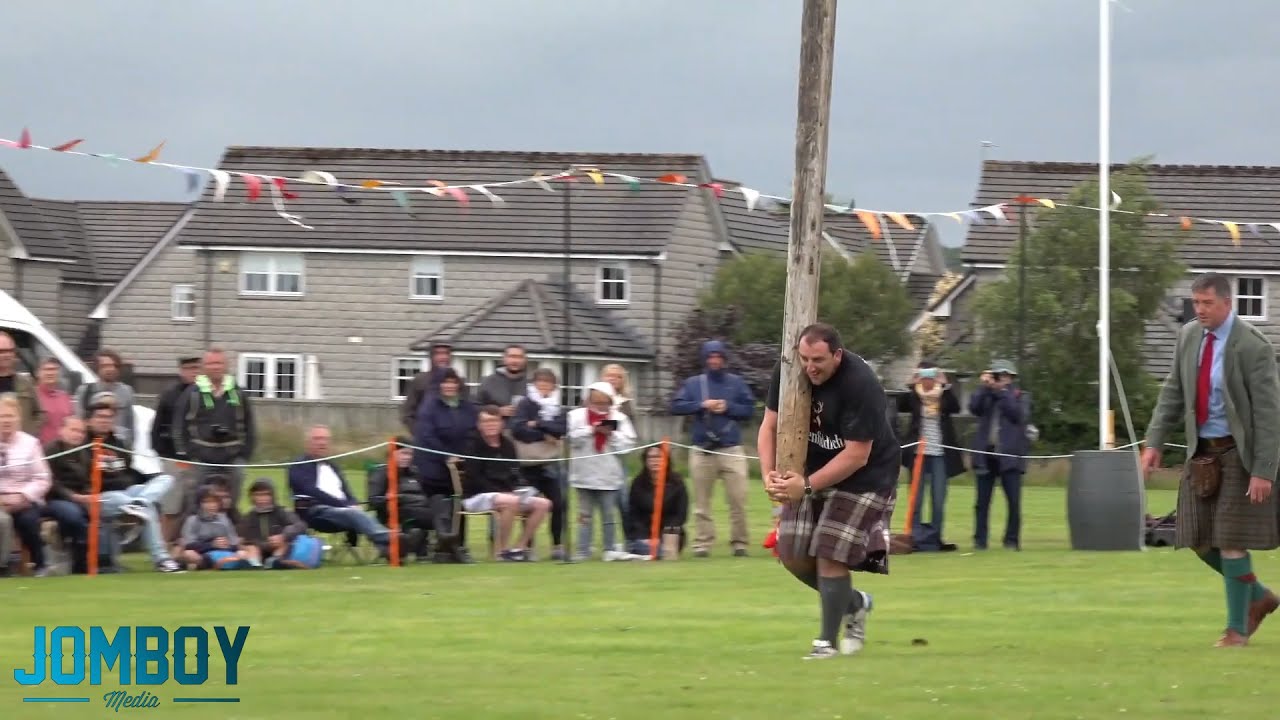
Lukasz Wenta Wins the 2019 Caber Toss, a breakdown
This is the most famous event. The caber is a tapered log, typically made from Larch or Scots Pine, used in a traditional Scottish athletic event. It is long and heavy, with one end noticeably thicker than the other. The athlete balances the narrow end in their palms, runs to build momentum, and heaves the log upward.
The goal is for the heavy end to hit the ground so the caber flips 180 degrees. Scoring is based on accuracy: a perfect toss lands in a straight line relative to the athlete's path, known as the 12 o'clock position.
Sheaf Toss
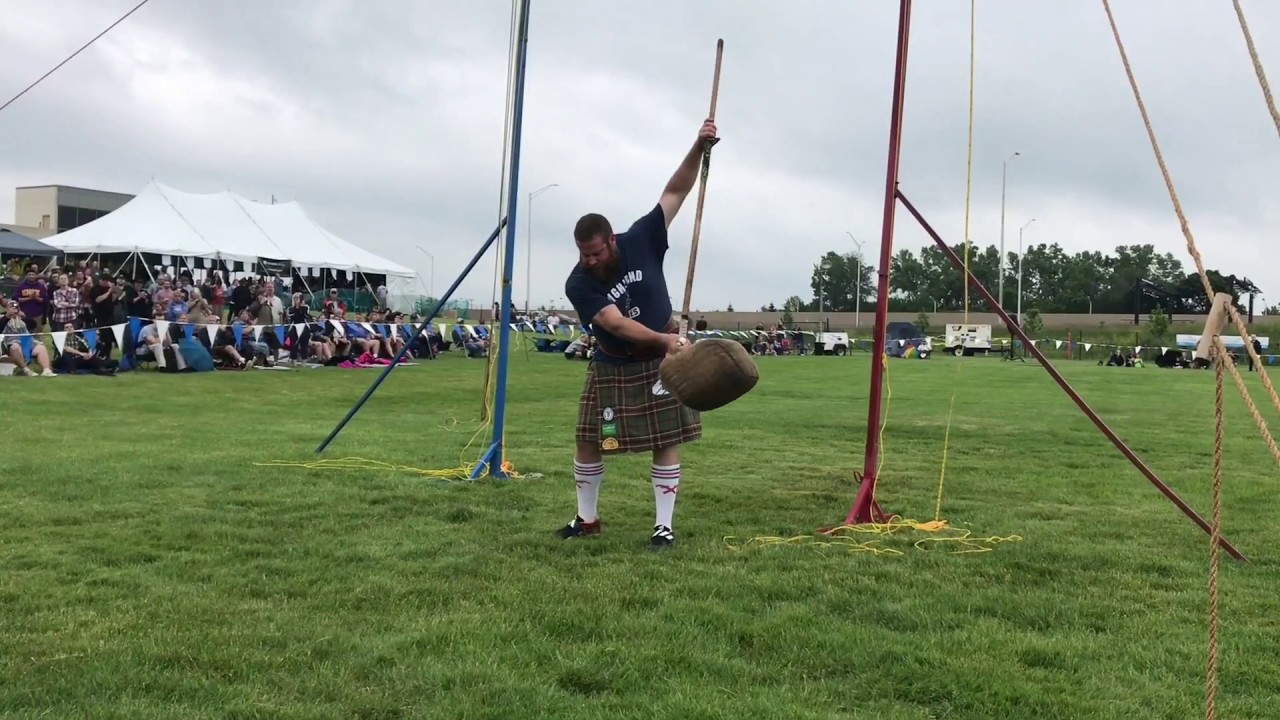
World record sheaf toss 37’-1” slow-mo
Athletes use a traditional three-pronged pitchfork to hurl a burlap bag stuffed with straw or mulch over a horizontal crossbar. Typical weight for the bag is 16 or 20 lb. Each competitor gets three attempts to clear the bar at a specific height; if successful, the bar is raised until only one athlete remains.
Weight Throws (Weight For Distance)
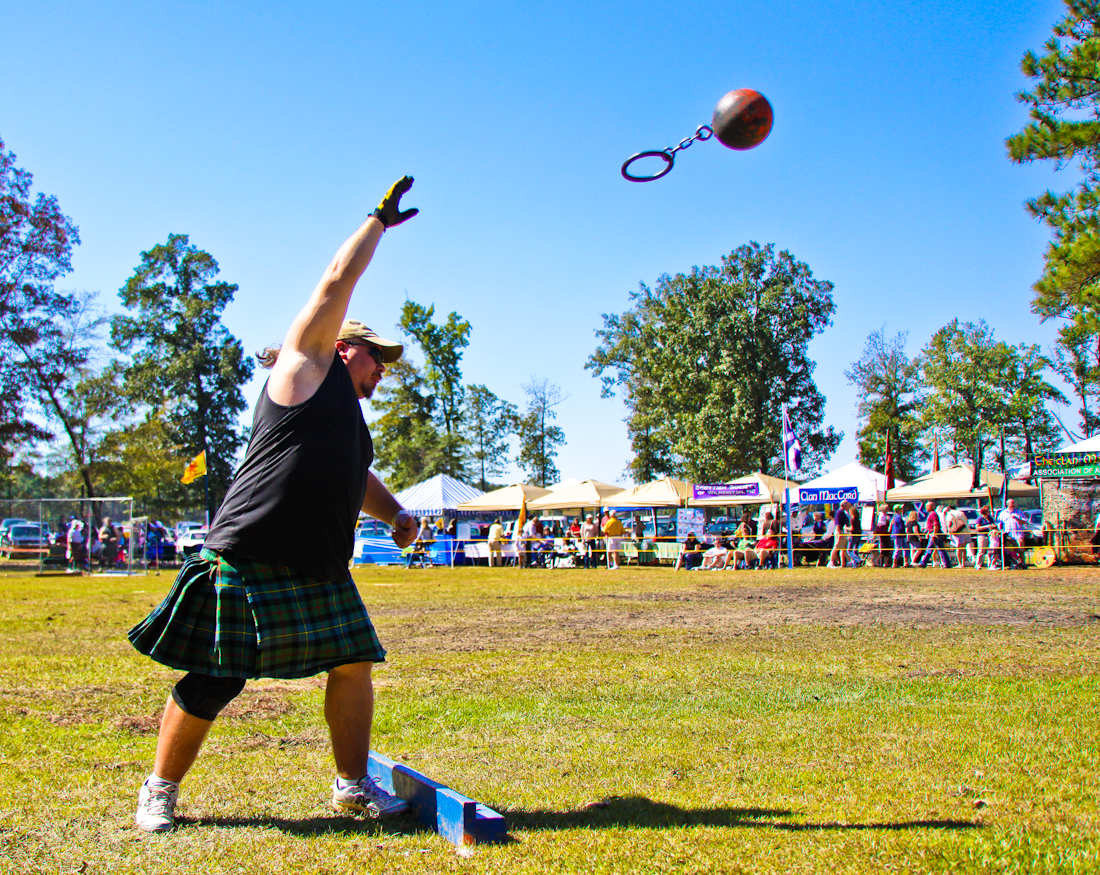
This event involves throwing a metal weight attached to a handle and a short chain. Men throw weights of 28 lbs (light) and 56 lbs (heavy), 14 lb (light) and 28 lb (heavy) for women.
The athlete stands within a limited throwing area, holds the weight with one hand, and performs a series of spinning rotations-similar to a discus thrower-to generate centrifugal force before releasing the weight for maximum distance.
Weight Toss (Weight For Height)

Highland Games - How to weight for height
Also known as "Weight over Bar," this event uses a 25.4kg (56lb) object with a ring handle. Standing directly under a crossbar, the athlete swings the weight between their legs and lofts it vertically with one hand.
The weight must clear the bar without knocking it down. This event requires immense explosive vertical power and precise timing of the release.
Stone Throw (Clach Neart)
The "Stone of Strength" uses a naturally rounded river stone rather than a manufactured metal ball. Athletes are permitted to use a "glide" or "spin" technique within the designated throwing box. It is considered the traditional Highland ancestor of the modern Olympic shot put.
Braemar Stone
The Braemar Stone is a more difficult variation of the stone throw using a significantly heavier stone (usually 20 to 26 lbs). The critical rule is that the athlete must remain stationary; no gliding or spinning is allowed. It is a pure test of raw upper-body "standing" power, as the stone must be pushed directly from the shoulder.
Hammer Throw
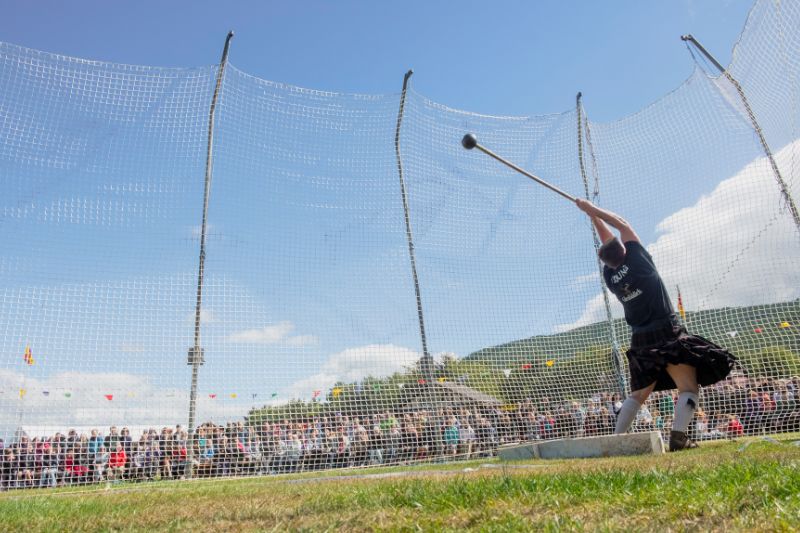
This is not the Olympic wire hammer. The Scottish hammer is a metal ball on a rigid handle(often wood, rattan, or similar), thrown for distance.
Many rulesets use 22 lb for men, and 16 lb for women attached to a handle.
The athlete stands with their back to the field, feet planted firmly (often using "blades" on their boots to dig into the turf), and whirls the hammer around their head before releasing it over their shoulder.
Farmer’s Walk
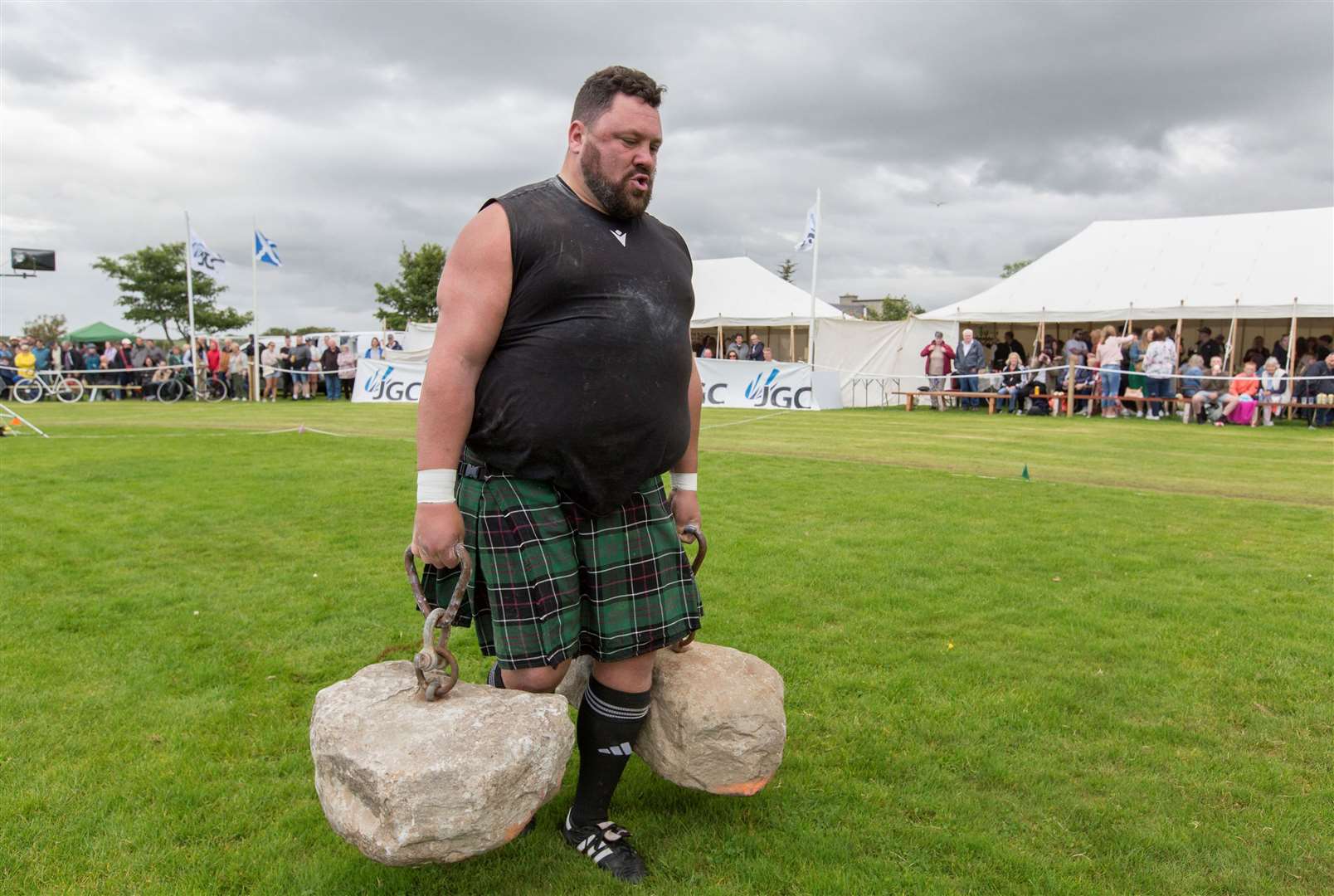
This event tests grip strength, posture, and endurance. The athlete picks up two heavy, oblong weights (one in each hand) that can weigh up to 150 lbs each. They must walk a set course around pylons for as long as possible without dropping the weights. The winner is determined by the total distance covered before the grip fails.
Traditional Track And Field
Often called "light athletics," these events are held on natural turf or rough hills.
The Fell Race
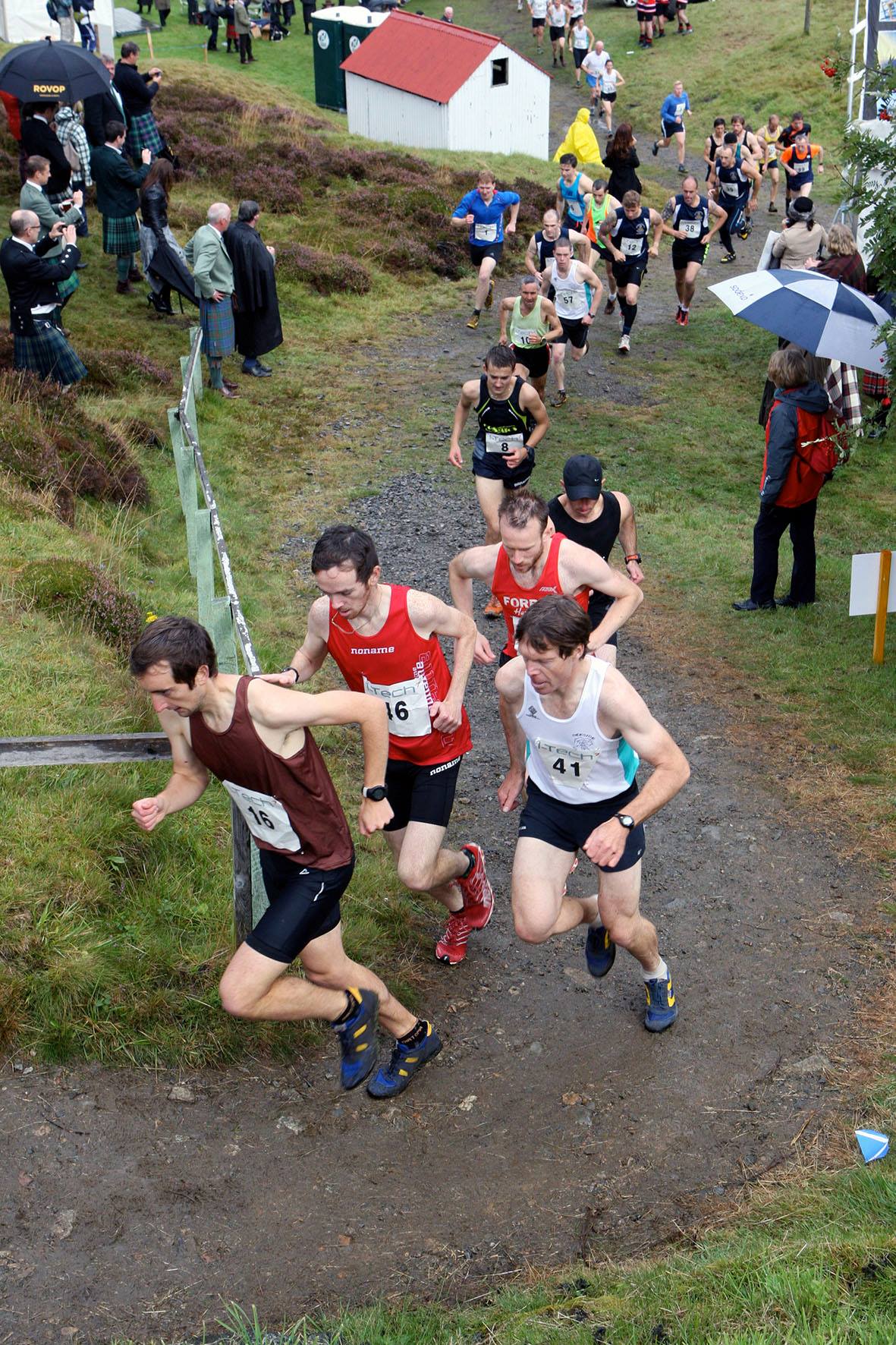
A "fell" is a high hill or mountain, and the Fell Race is a grueling endurance test that combines cross-country running with mountain climbing. Competitors navigate rough, unmarked natural terrain that often includes steep vertical ascents, bogs, and rocky descents.
In many games, man-made barriers like 18-inch hurdles are added to the start or finish to test the athlete’s remaining agility. It is a pure test of stamina and "mountain sense."
Kilted Mile
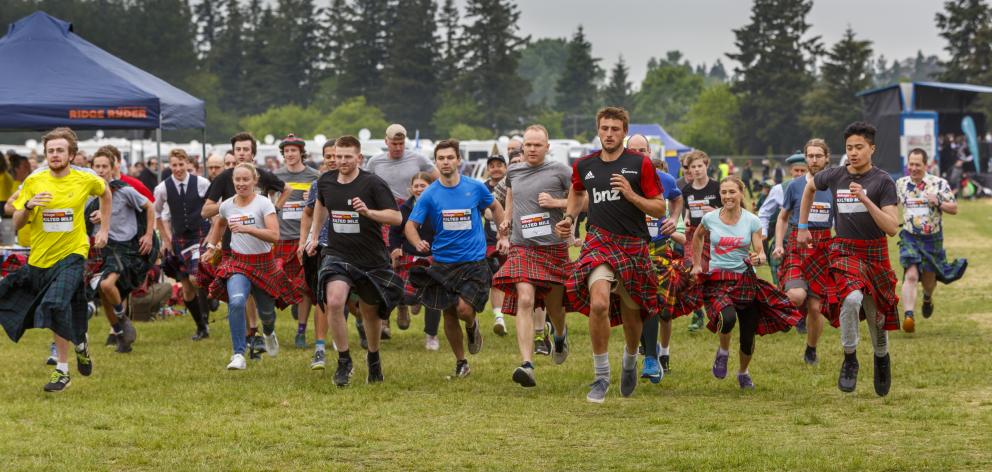
The Kilted Mile is a standard one-mile race with a strict traditional requirement: every runner must wear a full kilt. This adds approximately 10 to 12 pounds of weight and introduces significant wind resistance and restricted leg movement.
Because the race takes place on the grass perimeter of the main arena, traction is limited, making it a high-energy spectator favorite that combines tradition with genuine athletic challenge.
Hill Races
Distinct from the longer Fell Race, the Hill Race is often a high-intensity sprint to a specific local peak and back. The most famous example is the race to the top of Craig Choinnich during the Braemar Gathering.
These races are historically significant, as they are believed to be the original method used by King Malcolm III to select the fastest royal messengers in the 11th century.
Jumping Events
Standard track and field jumps are also represented, but with traditional adaptations.
- Long Jump and Triple Jump:Performed on a grass runway into a sand pit. The uneven footing makes it difficult to achieve the same speeds as rubber-track athletes.
- High Jump:Competitors must clear a bar using any style, though many still use the classic "scissors" kick due to the soft, natural landing pits often used in rural games.
Musical Competitions
Music is a fierce competitive discipline judged on technical precision and expression.
Solo Piping
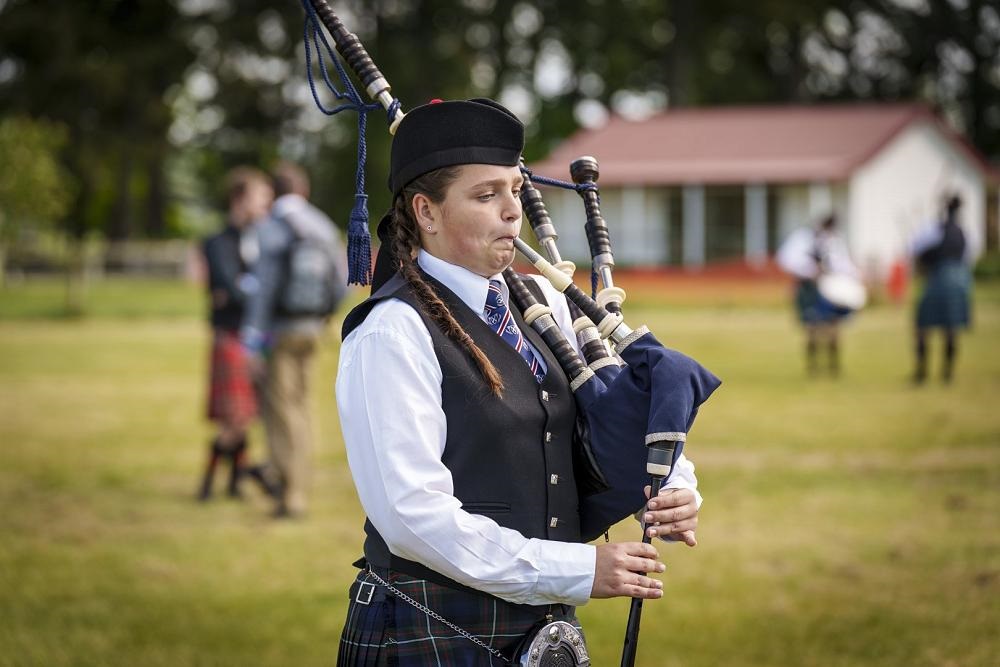
Individual bagpipers compete across several skill levels, from beginners to professional grades. They are judged on the tuning of their pipes, the tempo of the music, and "musical expression." Competitions are divided into two main styles:
- MSR:A set consisting of a March, a Strathspey, and a Reel.
- Piobaireachd (pibroch):The "classical" music of the Great Highland Bagpipe, characterized by a slow, complex theme followed by increasingly intricate variations.
Pipe Bands
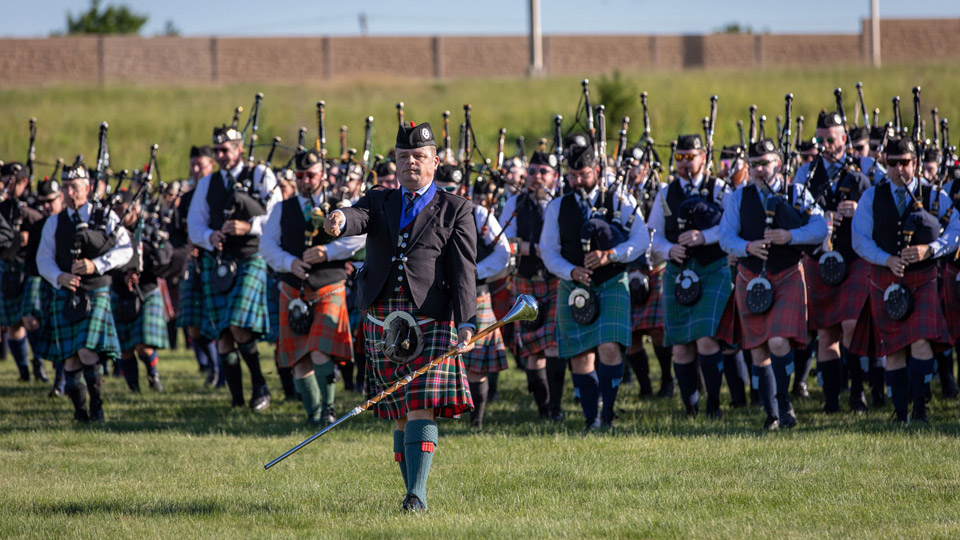
A pipe band competition is a team event requiring a specific minimum number of pipers and drummers. Each band plays a "medley" (a mix of different tunes) or a set MSR. Judges evaluate the band as a single unit, looking for unison in the fingering of the pipers and the "lift" or rhythmic drive provided by the drum corps.
Drumming
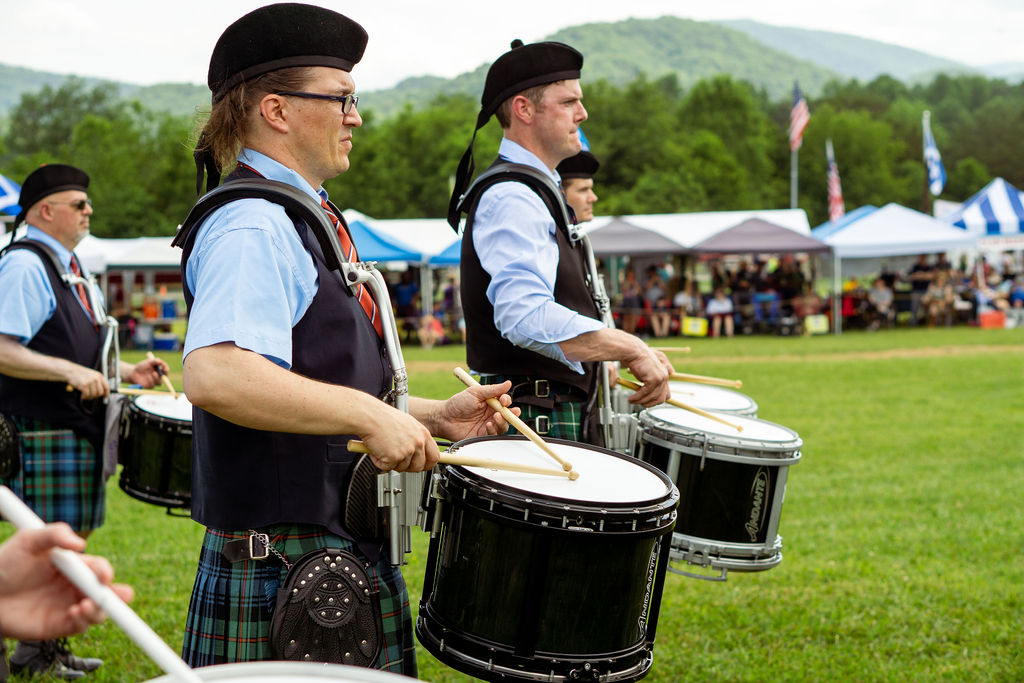
Solo drumming is a distinct athletic and musical discipline focused on the snare, tenor, or bass drum. Snare drummers are judged specifically on the quality of their rolls, the crispness of their "taps," and how well their rhythm develops throughout a piece. Performers must demonstrate mastery of complex rudiments while maintaining a steady tempo.
Drum Major
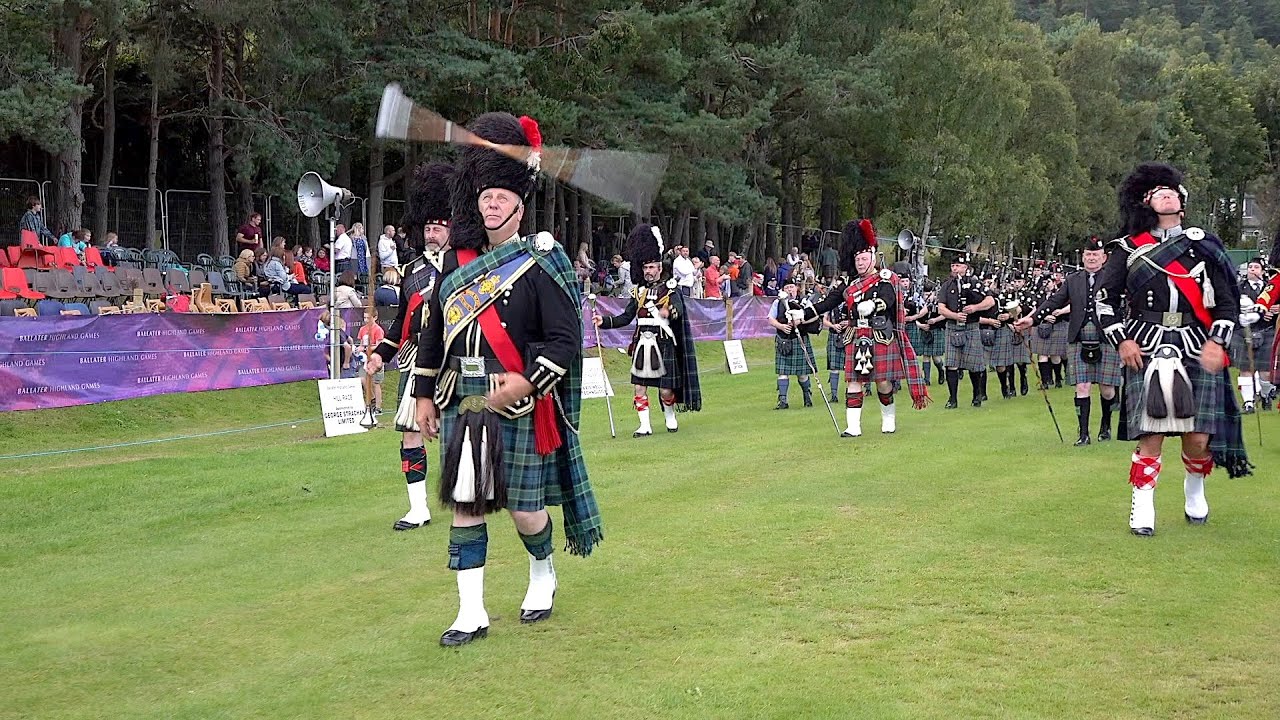
Drum Major Bill Barclay proving he's Master of the Mace flourish at Scottish Highland Games
The Drum Major is the ceremonial leader of the pipe band. In this solo competition, the individual is judged on three specific areas:
- Dress:The immaculate condition of their full ceremonial uniform.
- Deportment:Their posture and military-style conduct while marching.
- Flourish:The technical skill and "showmanship" involved in manipulating their mace (staff) to signal tempo changes to the band.
Massed Pipes And Drums (Massed Bands)
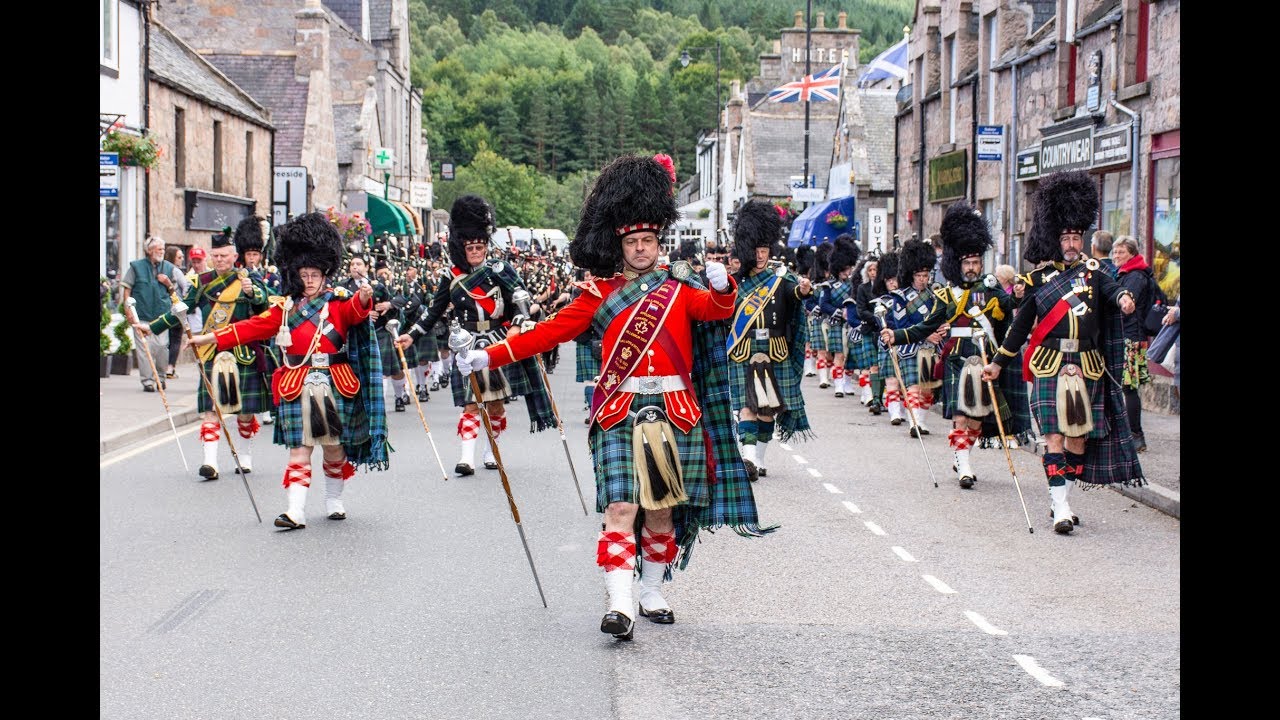
Massed Pipes & Drums parade through Deeside town to start the Ballater Highland Games 2018
This is the big “goosebumps” moment when multiple bands play together as one huge group.
The Massed Band is a non-competitive ceremonial highlight that typically marks the opening or closing of the games. Every participating band enters the arena simultaneously to form one giant ensemble. They play well-known traditional tunes like "Scotland the Brave" or "Amazing Grace" while performing simple, synchronized marching movements.
The rigorous judging in these categories ensures that the traditional standards of Scottish music are preserved and passed down through generations of performers.
Dancing Events
Highland dancing requires immense athletic stamina and precision. Judges look for control and correct arm/leg placement.
Highland Fling
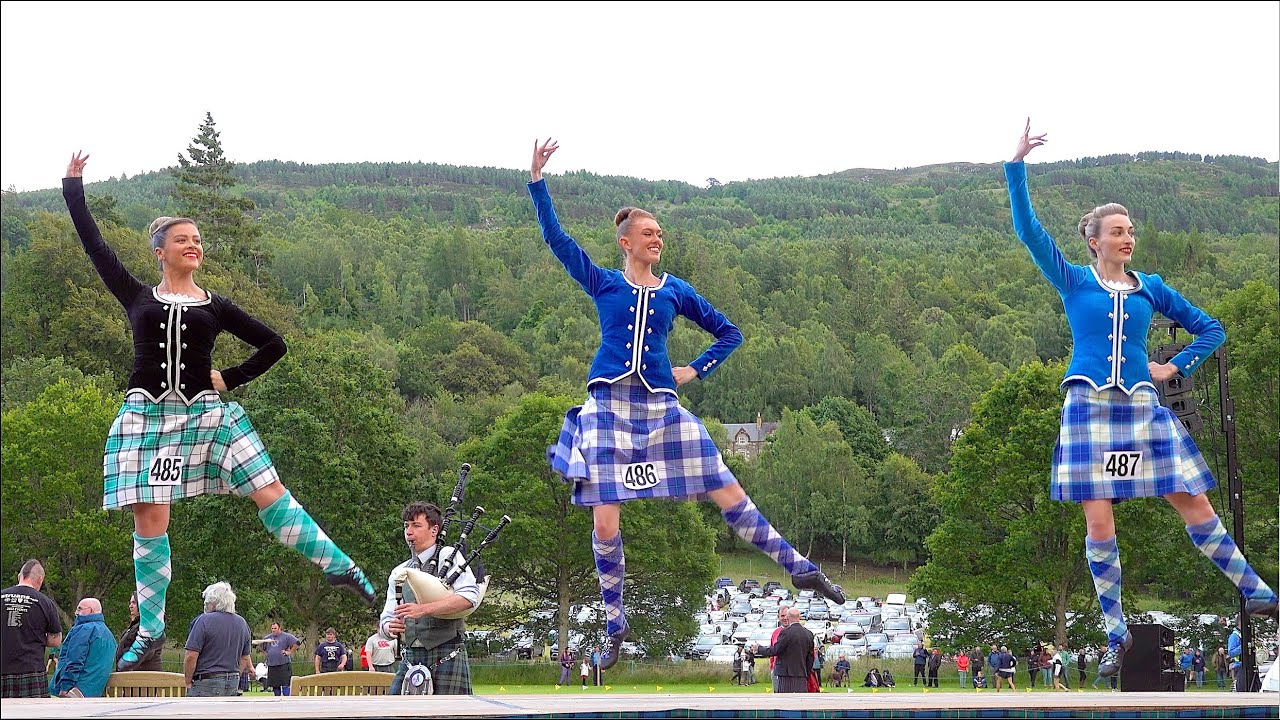
Highland Fling Scottish Highland Dance competition during 2022 Kenmore Highland Games in Scotland
Believed to be the oldest of the traditional dances, the Highland Fling was historically a victory dance performed by a warrior atop his spiked shield (targe). For this reason, the dance is performed entirely in one spot.
Dancers must keep their heels off the floor at all times, using their arms to mimic the antlers of a stag. It is considered one of the most grueling tests of balance and calf strength.
Sword Dance (Ghillie Callum)
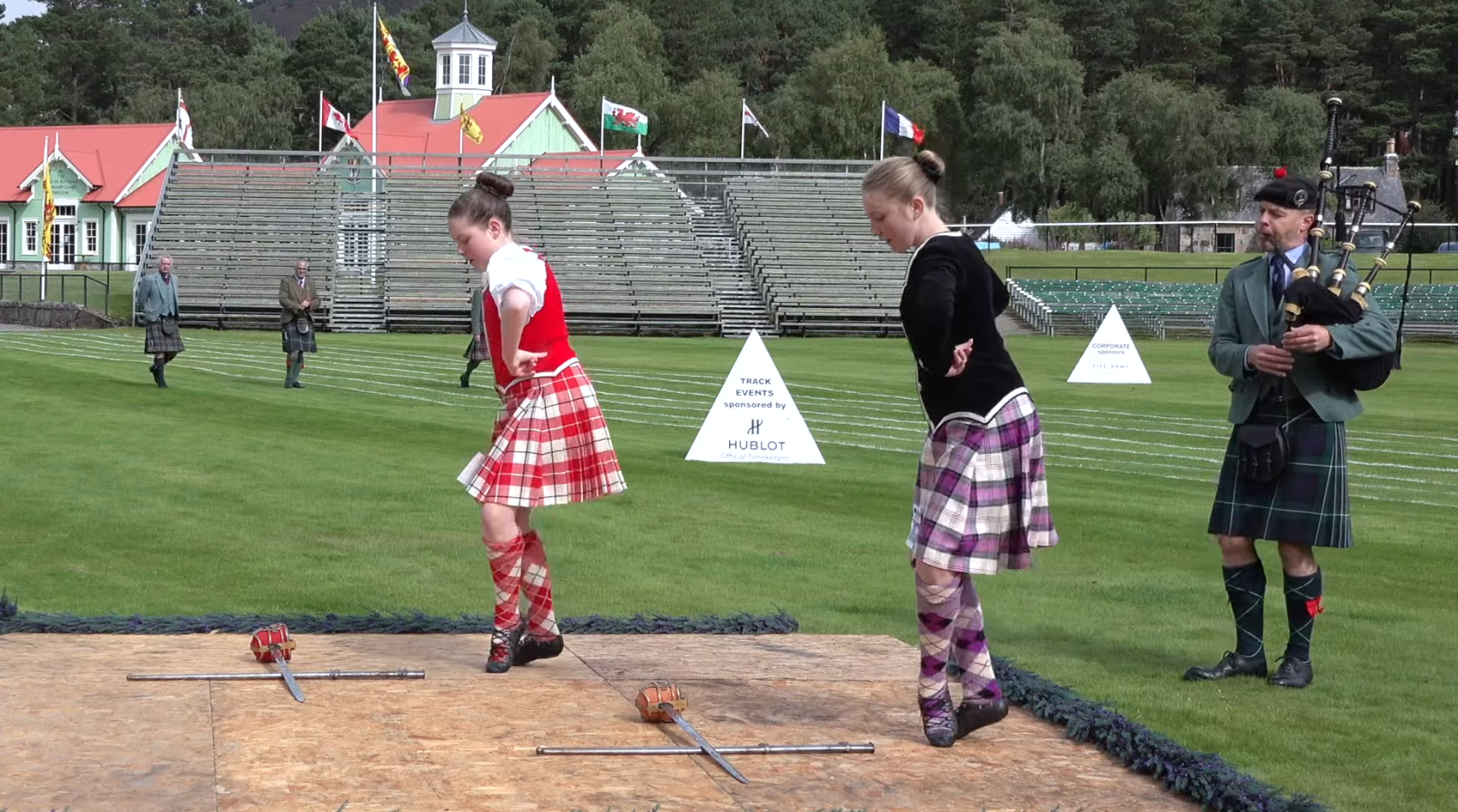
The Sword Dance dates back to the 11th century and was traditionally performed on the eve of battle. This dance is performed over two crossed swords on the ground. The dancer must stay within the “box” created by the swords.
Legend suggests that if a warrior touched the blade during the dance, it was an omen of injury or death in the coming fight. Today, if a dancer’s foot touches or displaces the swords, they face significant point deductions or immediate disqualification.
Seann Triubhas
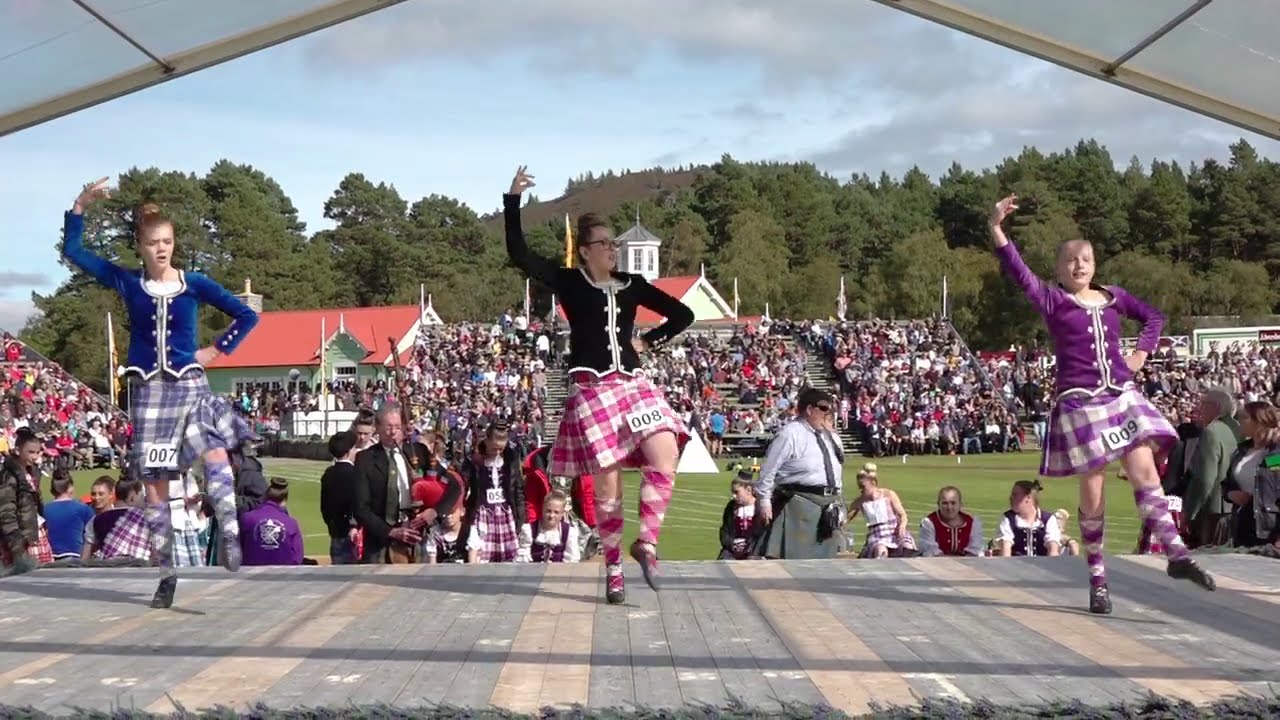
Seann Triubhas (Shawn Trews) Scottish Highland dance competition during the Braemar Gathering 2019
Pronounced "shawn trews," this Gaelic term translates to "old trousers." The dance is a historical celebration of the lifting of the Act of Proscription in 1782, which finally allowed Scots to wear the kilt again after it had been banned.
The opening movements involve a graceful, shaking motion of the legs, symbolizing the act of kicking off the "hated trousers" to return to the freedom of traditional Highland dress.
National Dances
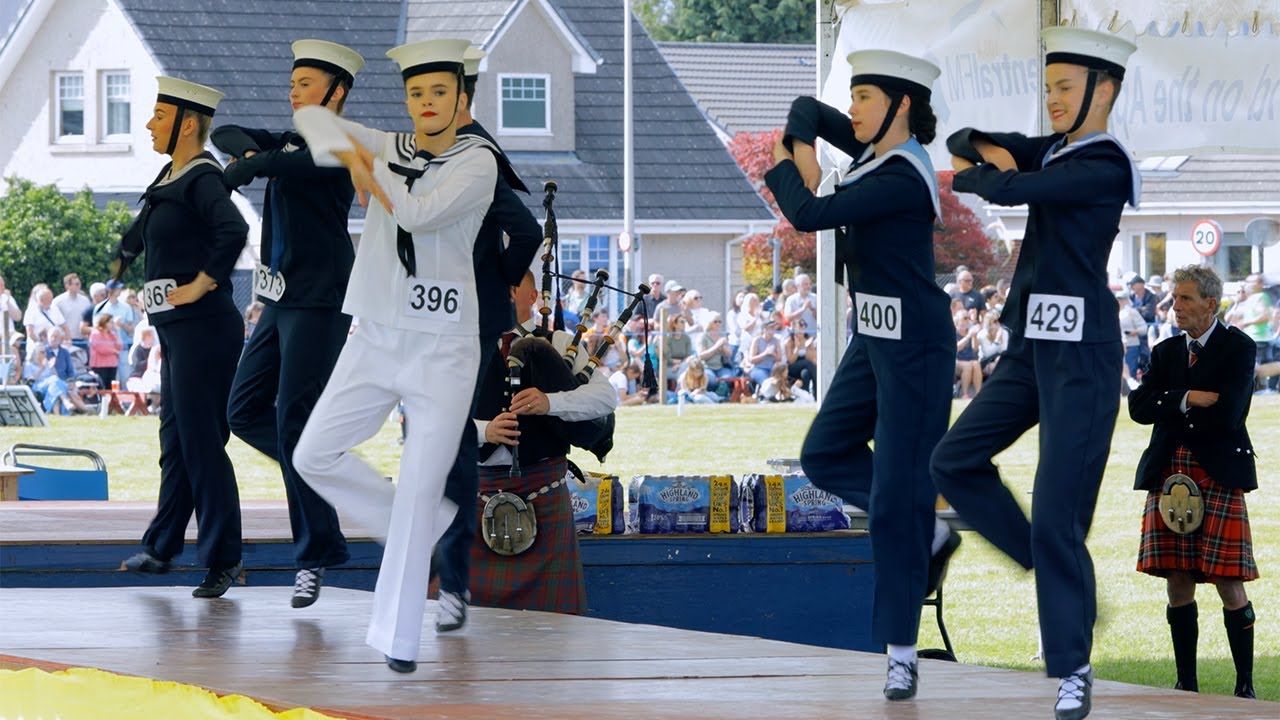
Unlike the powerful Highland dances, National dances are typically more fluid and balletic, often featuring female performers in the "Aboyne" dress rather than kilts.
- Sailor’s Hornpipe:A character dance that tells a story through movement, mimicking shipboard tasks like hauling ropes, climbing rigging, and saluting.
- Strathspey and Highland Reel: A group dance for four people that combines slow, stately movements with the fast, driving tempo of a reel. It is judged on the individual’s ability to transition between these speeds while maintaining formation.
Heritage And Team Events
Tug-of-War
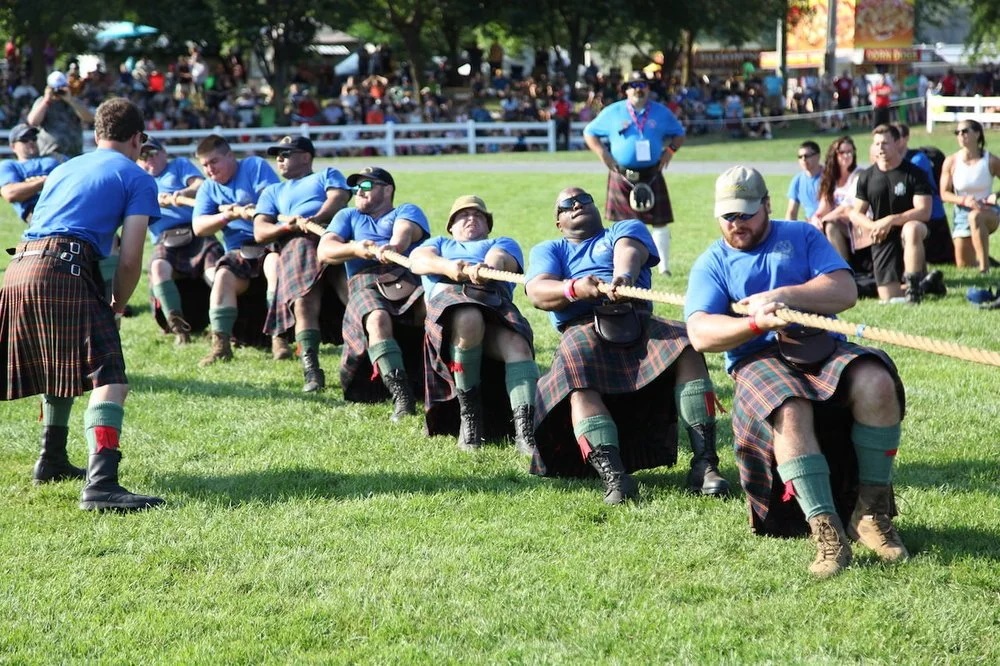
The Tug-of-War is a classic test of synchronized power and endurance. Two teams, typically consisting of eight pullers each, compete in a best-of-three format.
In many Scottish games, competitors must wear kilts and sturdy boots, digging their heels into the turf for leverage. It is often the most vocal event of the afternoon, as coaches and crowds shout instructions to "heave" in unison.
Maide-Leisg (The Lazy Stick)
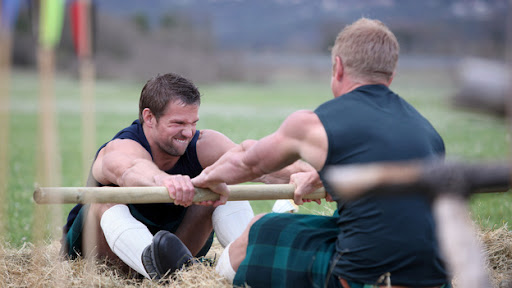
This ancient Celtic test of strength is deceptively simple but physically demanding. Two competitors sit on the ground facing each other with the soles of their feet pressed together.
They both grip a sturdy wooden stick (the maide) between them. The goal is to pull the opponent off the ground or force them to let go. It requires immense lower back strength and a powerful grip.
Rugby 7s
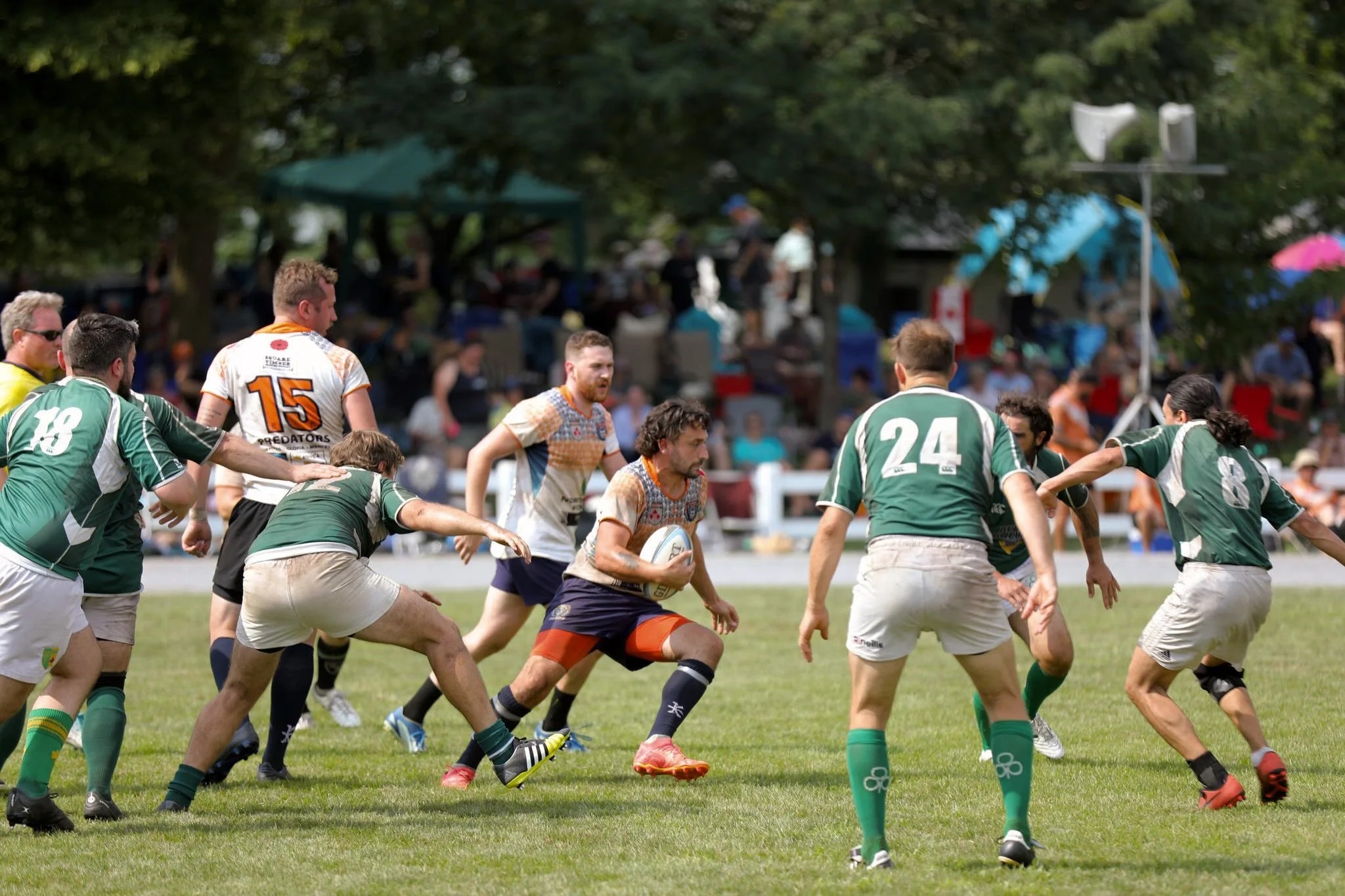
Seven-a-Side Rugby is a high-speed, open version of the traditional game, famously originating in the Scottish Borders town of Melrose in 1883.
Because there are only seven players on a full-sized pitch, the game is incredibly fast and requires elite cardiovascular fitness. Many Highland Games host "Sevens" tournaments as a secondary attraction to the heavy events.
Battle Axe Throw
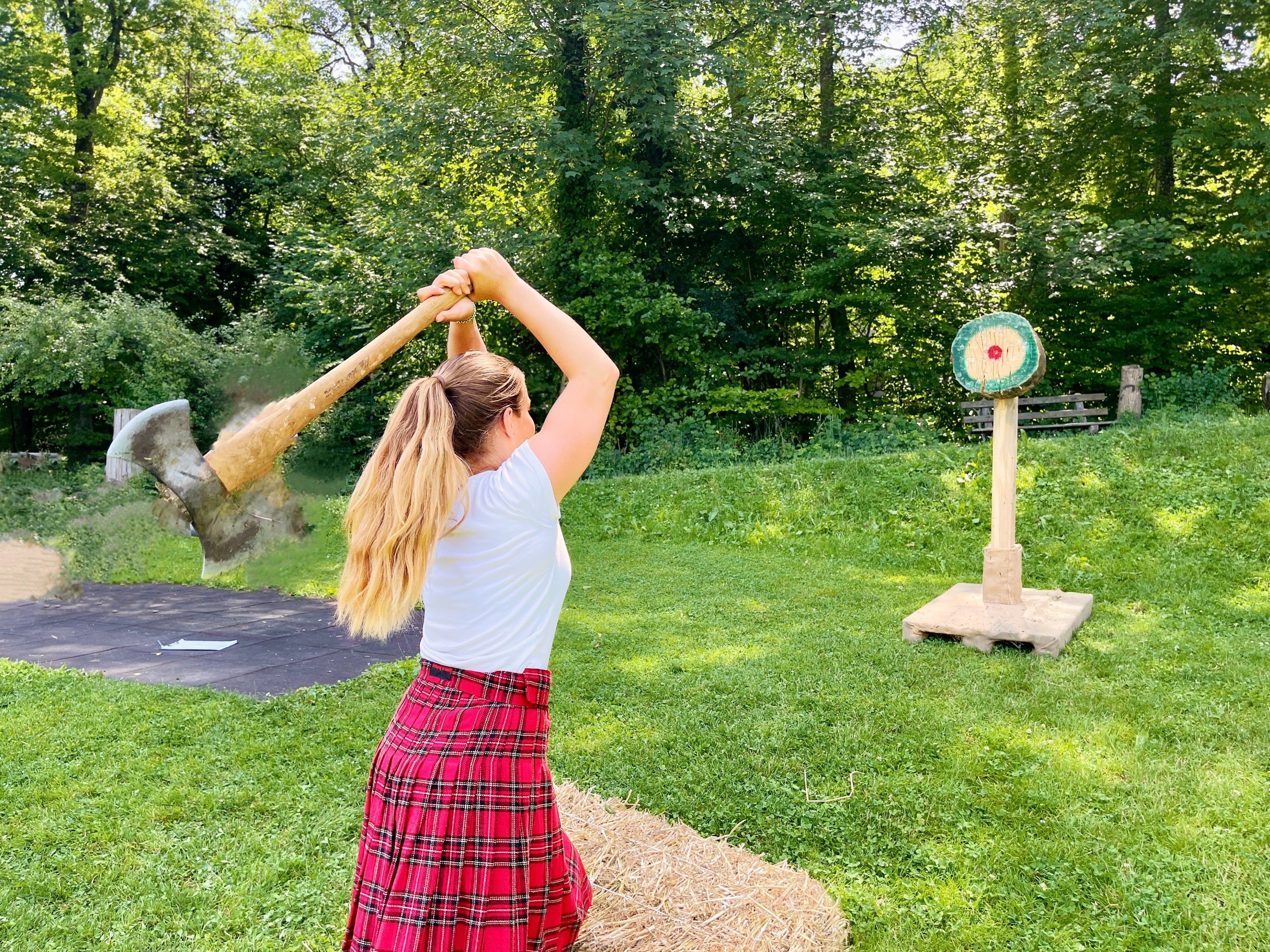
This event uses replicas of the lightweight axes carried by the 78th Fraser Highlanders in the 18th century. Competitors throw the axe at a wooden target from increasing distances.
The winner is the individual who can strike the center of the target with the blade first from the furthest distance. It is a precise skill that balances arm strength with a keen eye for rotation.
Fly Casting
Reflecting Scotland's deep connection to salmon and trout fishing, Fly Casting is a competition of accuracy and distance. Participants use a traditional fly-fishing rod to cast a line toward a specific target on the grass or in a nearby pond. Judges look for the "loop" of the line and the precision of the landing, rewarding technique over brute force.
Kilted Golf
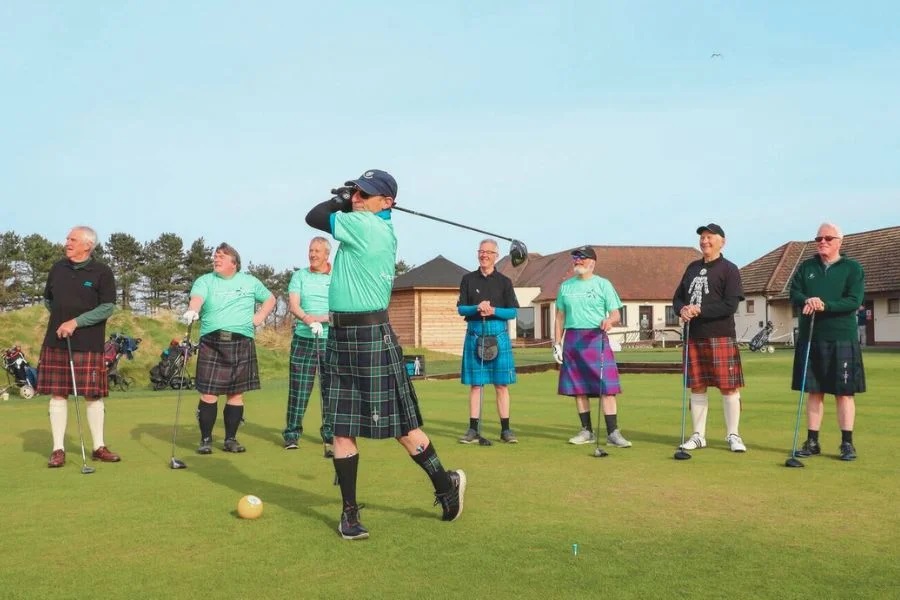
In some regional games, a "Kilted Golf" tournament is held as a peripheral event. Players compete in full Highland dress, often using traditional hickory-shafted clubs to honor the game's 15th-century Scottish origins.
While the rules follow standard golf, the requirement to play in a kilt adds a layer of cultural pageantry and a unique physical challenge to the swing.
If you’re curious about the wider “game night” side of Scotland beyond the arena, see exploring Scottish game traditions from ceilidhs to cards.
When And Where Are The Highland Games In Scotland?
- When:Mostly during the warmer months (often late spring through early autumn).
- Where:All over Scotland-town parks, local fields, and regional venues (Highlands, islands, and beyond).
Not sure which part of the Highlands you’re looking at? See the Scottish Highlands Map Guidefor a quick region-by-region view.
2026 Highland Games Calendar
The following table lists the major games scheduled for the 2026 season. Please note that while major dates are stable, smaller village games may adjust their schedule based on local conditions.
Highland Games Events In 2026
| Date | Event Name - Location |
| May 10, 2026 | Gourock Highland Games - Gourock |
| May 17, 2026 | Gordon Castle Highland Games - Gordon Castle |
| May 24, 2026 | The Atholl Gathering - Blair Castle |
| May 30, 2026 | Blackford Highland Games - Games Park |
| June 6, 2026 | Cornhill Highland Games - Cornhill Playing Field |
| June 6, 2026 | Helensburgh & Lomond Highland Games - Helensburgh Rugby Club |
| June 6, 2026 | Braemar Junior Highland Games - Princess Royal and Duke of Fife Memorial Park |
| June 7, 2026 | Markinch Highland Games - John Dixon Park |
| June 13, 2026 | Bressuire Highland Games (Affiliate) - Chateau de Bressuire |
| June 14, 2026 | Strathmore Highland Games - Glamis Castle |
| June 20, 2026 | Lesmahagow Highland Games - Glebe Park |
| June 20, 2026 | Oldmeldrum Sports & Highland Games - Oldmeldrum Pleasure Park, Park Crescent |
| June 21, 2026 | Aberdeen Highland Games - Hazlehead Park |
| June 27, 2026 | Ceres Games - The Bow Butts |
| June 27, 2026 | Drumtochty Highland Games - Drumtochty Castle Grounds |
| July 1, 2026 | Kenmore Highland Games - Kenmore Sports Field |
| July 4, 2026 | Glengarry Highland Games - Craigard Park |
| July 4, 2026 | Luss Highland Games - Luss Village |
| July 11, 2026 | Alva Games - Johnstone Park |
| July 18, 2026 | Lochcarron Highland Games - Attadale Estate |
| July 18, 2026 | Tomintoul & Strathavon Highland Games - Public Park |
| July 19, 2026 | Stonehaven Highland Games - Mackie Academy Playing Fields |
| July 20, 2026 | Burntisland Highland Games - Burntisland Links |
| July 21, 2026 | Inveraray Highland Games - Winterton Park |
| July 23, 2026 | Mull Highland Games - Erray Park |
| July 24, 2026 | Durness Highland Gathering - Shore Park |
| July 25, 2026 | Airth Highland Games - North Greens Park |
| July 25, 2026 | Balquhidder, Lochearnhead & Strathyre Highland Games - Lochearnhead |
| July 25, 2026 | Dufftown Highland Games - Mortlach School Sports Field |
| July 25, 2026 | Halkirk Highland Games - Halkirk Recreation Park |
| July 26, 2026 | St. Andrews Highland Games - Station Park |
| Aug 1, 2026 | Newtonmore Highland Games - The Eilan |
| Aug 1, 2026 | Aboyne Highland Games - Aboyne Green |
| Aug 1, 2026 | Aberlour Strathspey Highland Games - Alice Little Memorial Park |
| Aug 1, 2026 | Mey Highland Games - John O'Groats Showground |
| Aug 2, 2026 | Bridge Of Allan Highland Games - Strathallan Games Park |
| Aug 5, 2026 | Isle Of Skye Highland Games - The Lump |
| Aug 5, 2026 | Killin Highland Games - Breadalbane Park |
| Aug 7, 2026 | Dornoch Highland Gathering - The Meadows Park |
| Aug 8, 2026 | Aberfeldy Show & Games - Wades Park |
| Aug 8, 2026 | Brodick Highland Games - Ormidale Park |
| Aug 8, 2026 | Inverkeithing Highland Games - Inverkeithing |
| Aug 8, 2026 | Strathpeffer Highland Gathering - Castle Leod |
| Aug 9, 2026 | Perth Highland Games - North Inch |
| Aug 9, 2026 | Tain Highland Gathering - Glenmorangie Ground |
| Aug 13, 2026 | Ballater Highland Games - Monaltrie Park |
| Aug 14, 2026 | Assynt Highland Games - Culag Park |
| Aug 15, 2026 | Helmsdale Highland Games - Helmsdale Highland Games |
| Aug 15, 2026 | Stirling Highland Games - Stirling Sports Village |
| Aug 16, 2026 | Crieff Highland Gathering - Market Park |
| Aug 22, 2026 | Lonach Highland Gathering & Games - Bellabeg Park |
| Aug 22, 2026 | Strathardle Highland Gathering - Bannerfield. Kirkmichael |
| Aug 22, 2026 | Glenurquhart Highland Games - Blairbeg Park |
| Aug 27, 2026 | Argyllshire Gathering (Oban Games) - Mossfield Stadium |
| Aug 29, 2026 | Birnam Highland Games - Little Dunkeld |
| Sep 5, 2026 | Braemar Highland Gathering - Braemar |
| Sep 6, 2026 | Blairgowrie & Rattray Highland Games - Bogles Field |
| Sep 12, 2026 | Pitlochry Highland Games - Recreation Ground |
| Sep 13, 2026 | Bowhill Highland Games - Wallsgreen Park |
Your First Highland Games Game Plan
What To Bring (weather, Footwear, Seating)
Many Games are outdoor, often full-day events, so pack like you’re going to be outside longer than you think.
Bring:
- Layers + a rain layer(even on a “nice” forecast)
- Comfortable shoesyou don’t mind showing grass and dust
- A small seat or blanketif you prefer not to stand for finals
- Ear protection for kidsif you’ll be close to drums/pipes
Where To Stand For The Best View (and Why)
A quick field strategy:
- Heavy events:stand where you can see the landing sector andthe official boundary markings (for context).
- Piping and marching:don’t plant yourself in the obvious lane-leave the “path” clear.
- Massed bands:pick a spot where you can see the front line and the depth of the formation.
If you’re unsure, watch the locals. They’ve already solved the geometry.
What To Wear
Traditional dress is common but not required. Focus on utility and comfort to ensure you can enjoy the full program.
Spectator Outfit Rules of Thumb
- Functional Clothing:Choose hands-free carrying options like a small backpack or crossbody bag.
- The Kilt as Gear:If you choose to wear a kilt, remember it is outdoor wear. You will be sitting on grass and walking through dust; choose durable wool or contemporary utility kilts.
Tartan Etiquette And Clan Tents
Tartanis a symbol of identity, but the etiquette on the field is welcoming rather than restrictive.
- Connection:Wear your family or regional tartan if you have one.
- Discovery:If you don't know your lineage, visit the Clan Tents. These are heritage hubs where experts can help you find geographical or ancestral links to specific patterns.
- Respect:The goal is cultural appreciation; when in doubt, a simple tartan scarf or tie is a respectful nod to the tradition.
If you decide you’d like to wear one, here’s a practical guide to the best places to buy Scottish tartans and kilts.
Food, Stalls, And Kids’ Activities
Most games offer a mix of local catering, craft markets, and specific activities for families.
- Typical Food:Expect Scotch pies, haggis, and local dairy products. Most vendors now accept cards, but carry cash for smaller village stalls.
- Pacing Your Visit: I recommend doing one full "vendor loop" early in the morning to see the crafts, then focusing on the athletics during the peak afternoon hours.
- Children’s Events:Look for the "Junior Heavies" or sack races, which usually take place in a designated family zone away from the heavy throwing implements.
The key takeaway for any spectator is to plan for the weather, pick your viewing angles early, and use the official program to guide your day rather than wandering aimlessly between tents.
Frequently Asked Questions
What Are The Traditional Highland Games?
The Highland Games are festivals celebrating Scottish and Celtic culture through heavy athletics, piping, drumming, and Highland dancing, held throughout the summer months.
When And Where Are The Highland Games Held?
Games occur across Scotland and the world from May to September. In Scotland, they are held in nearly every region, from village greens to large arenas like those in Braemar or Dunoon.
Where Are The Highland Games Held In The US?
Major games are held across the United States, including the Grandfather Mountain Highland Games (North Carolina), the New Hampshire Highland Games (Loon Mountain), and the Scottish Highland Gathering and Games (Pleasanton, California).
Where Are The Best Highland Games In Scotland?
The "best" depends on your interest: The Braemar Gathering is the most famous (attended by the Royal Family), The Cowal Highland Gathering is the largest globally, and the Stirling Highland Games offers a spectacular historic backdrop.
What Is The Most Popular Highland Game?
The Caber Toss is the most iconic and popular event to watch, where athletes flip a long log to land at a "12 o'clock" position.
What Is A Kilt, And Why Wear It?
A kilt is a knee-length non-bifurcated skirt-type garment with pleats at the rear, originating in the traditional dress of Gaelic men and boys. It is worn to honor Scottish heritage, clan affiliation, and as the mandatory uniform for Highland Games competitors.
Are The Highland Games Irish Or Scottish?
While both cultures share Celtic roots and Ireland has its own "Tailteann Games," the modern format of the Highland Games is uniquely Scottish, originating from clan gatherings in the Highlands.
Final Thoughts
The Highland Games offer a rare opportunity to see ancient customs performed with modern athletic precision. To succeed as a spectator in 2026, prioritize your "Game Plan": dress for the Scottish climate, understand the 12 o'clock rule of the caber, and use the master calendar to secure your tickets early.
By following these steps, you move beyond being a tourist and become part of a tradition that has defined the Highlands for centuries.
Jump to
Highland Games in Scotland: The Complete Guide
What Are The Highland Games?
History Of The Highland Games
Highland Games Categories
Events In The Scottish Highland Games
When And Where Are The Highland Games In Scotland?
2026 Highland Games Calendar
Your First Highland Games Game Plan
Frequently Asked Questions
Final Thoughts
Callum Fraser
Author
Callum Fraser isn't just a writer about Scotland; he's a product of its rugged landscape and rich history. Born and raised in Perthshire, with the Highlands as his backyard, his love for the nation's stories was kindled by local storytellers and long walks through ancient glens.
This passion led him to pursue a degree in Scottish History from the University of Edinburgh. For over 15 years, Callum has dedicated himself to exploring and documenting his homeland, fusing his academic knowledge with essential, on-the-ground experience gained from charting road trips through the Cairngorms, hiking the misty Cuillins of Skye, and uncovering the secrets of traditional recipes in his family's kitchen.
As the Editor-in-Chief and Lead Author for Scotland's Enchanting Kingdom, Callum's mission is simple: to be your most trusted guide. He combines meticulous research with a storyteller's heart to help you discover the authentic magic of Scotland — from its best-kept travel secrets to its most cherished traditional recipes.
Latest Articles
Popular Articles