The Tay Bridge Disaster | Faulty Materials Or Faulty Designs?
Tay Bridge Disaster of 1879 claimed 75 lives and changed engineering forever. Analysis reveals the engineering flaws, weather conditions, and human errors behind this historic tragedy.
Author:Callum FraserNov 17, 202522K Shares441.5K Views
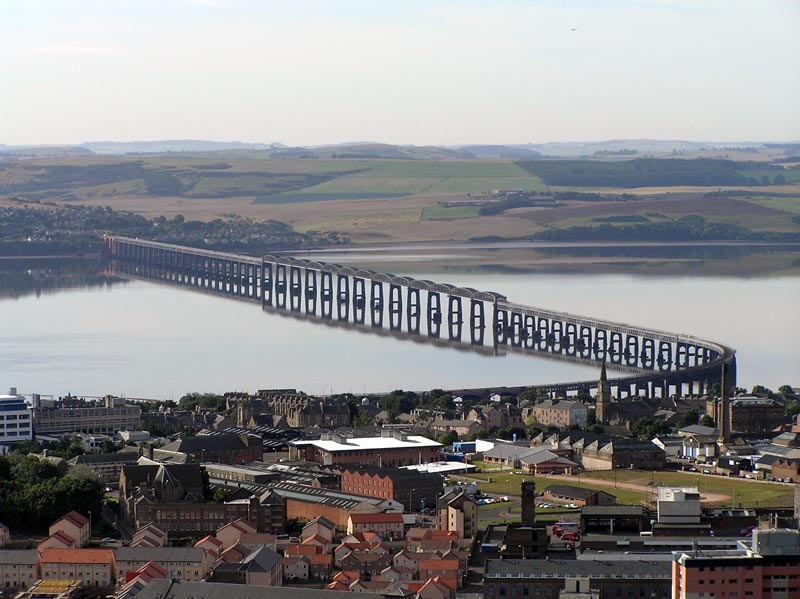
The night of December 28, 1879, remains a stark reminder of unchecked ambition and the unforgiving power of nature. As a furious gale lashed across the Firth of Tay, the grand iron railway bridge, a marvel of its age, buckled and collapsed, plunging a passenger train and all its occupants into the icy depths below.
The Tay Bridge Disasterwas more than just an engineering failure; it was a national tragedy that shook Victorian Britain's faith in its relentless technological progress and irrevocably altered the course of civil engineering.
The Fateful Night: December 28, 1879
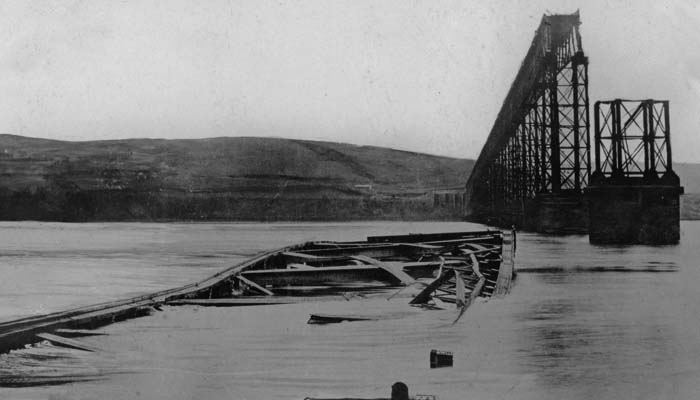
On a stormy Sunday evening in December 1879, strong winds hit the Firth of Tay in Scotland. Around 7:15 PM, the central parts of the Tay Rail Bridge collapsed as a passenger train was crossing from Wormit to Dundee. The train, carrying about 75 people, fell into the cold water below. No one survived this disaster, which became one of the worst bridge failures of the Victorian era.
The train was pulled by North British Railway Engine 224, driven by David Mitchell and fireman John Marshall, traveling from Edinburgh to Dundee. As the train entered the high girders section of the bridge, witnesses saw sparks and a sudden flash of light before everything went dark. Communication with the signal cabin at the north end was lost. News spread quickly through Dundee that "the Tay Bridge has blown down."
This happened during what meteorologists call a Beaufort force 10/11 gale, with winds up to 70-80 mph blowing across the bridge. The storm also damaged other places in Scotland, like the high tower at Kilchurn Castleon Loch Awe and many house roofs.
The Bridge: Design And Construction
Thomas Bouch's Vision
The Tay Bridge was designed by Sir Thomas Bouch, a respected railway engineer known for building many bridges in Britain. His design used a lattice-grid made of cast and wrought iron, similar to the Crumlin Viaduct in South Wales. The bridge stretched nearly two miles across the Firth of Tay, making it the longest railway bridge in the world when completed.
Construction began in 1871 after getting approval in 1870. The original plan was to have brick piers on bedrock, with the rail track on top of girders at both ends. In the central section, called the "high girders," the railway ran inside the girder to let sailing ships pass underneath on their way to Perth.
Design Changes And Compromises
During construction, they found the bedrock was much deeper than they thought. This forced Bouch to change the design, reducing the number of piers and increasing the span of the girders. Instead of reaching bedrock, pier foundations were built using brick-lined wrought-iron caissons on the riverbed.
Further compromises included replacing brick piers with lighter iron ones and using cast iron columns with wrought iron cross-bracing. These changes, mainly for cost reasons, were later questioned as possible causes of the disaster.
Completion And Initial Success
Despite these issues, the bridge was finished in February 1878, costing over £300,000 and employing six hundred men, twenty of whom died during construction. The bridge opened officially on September 26, 1877. It was celebrated as an engineering marvel, attracting attention from many, including General Ulysses Grant in 1877. Queen Victoria crossed it in 1879 and knighted Thomas Bouch shortly before the disaster. The bridge cut traveltime between Edinburgh and Dundee by an hour, transforming travel in eastern Scotland.
Engineering Failures: Why Did The Bridge Collapse?
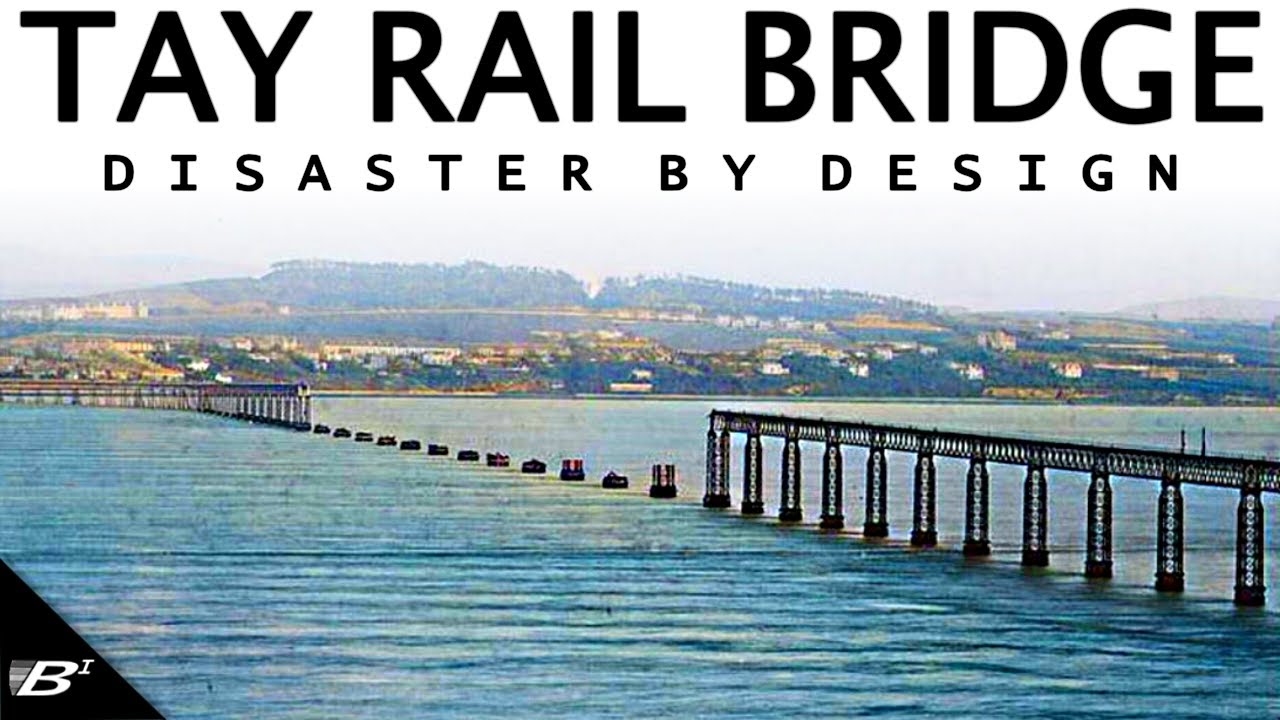
Disaster by Design: The Tay Bridge Collapse
Wind Loading Miscalculations
One major issue was not considering wind properly in the design. Bouch sought advice on wind loading for a proposed Forth Bridgebut didn't account for it in the Tay Bridge. This mistake was catastrophic when the bridge faced strong winds.
Later investigations showed that open lattice girders were affected by wind, contrary to earlier beliefs. Modern studies show the bridge would have collapsed even without a train on it. After this, future British bridge designs had to handle wind loads up to 56 pounds per square foot.
Material And Construction Defects
Besides design flaws, there were serious problems with materials and construction quality. The cast iron used for lugs (holding bracing bars) was a weak point. Tests showed these housings failed at around 24 tons, though they should have handled about 200 tons.
Evidence showed poor-quality castings, sometimes cracked when leaving the foundry. Surprisingly, modern analysis suggests weaker ties might have allowed the bridge to deform rather than collapse suddenly.
Quality Control And Supervision
Poor quality control and supervision further weakened the bridge. Contractors weren't properly supervised, leading to defects going unnoticed.
Recent digital microscope analysis confirmed that lugs connecting bridge columns failed progressively, causing a chain reaction that led to complete collapse. This explains why the high girders were found near the piers, with twelve pier platforms almost swept off.
Human Cost: The Victims And Survivors
Confirming The Death Toll
The exact number of deaths is debated. William McGonagall's poem claimed "ninety lives have been taken away," but official records confirm 59 victims. The Board of Inquiry estimated 74 or 75 people were on board.
Only 46 bodies were recovered; the rest were never found, likely swept away by strong currents. Recovery efforts were difficult due to river conditions. Driver David Mitchell's body was found later and buried in an unmarked grave until a headstone was placed in 2011.
The Passengers' Stories
Passengers came from different backgrounds. One recovered body was David Neish, a schoolmaster and registrar, married to Ann Law, living at 51 Coupar Street, Lochee, Dundee. Many were returning home after holiday visits or planning New Year celebrations in Dundee. None survived to tell what happened as the bridge gave way.
Recovery Of The Train
Recovering the train took months. Engine 224, built in 1871, was somewhat protected by the falling bridge girders. The first recovery attempt in April 1880 failed when the chains broke. A second try raised it, but it fell back. Finally, it was successfully recovered a week later.
Remarkably, after repairs, Engine 224 returned to service. Robert Marshall drove the recovered engine at Tayport, an emotional moment since his brother John, the fireman, had died in the disaster.
The Aftermath: Investigation And Blame
The Court Of Inquiry
A Court of Inquiry started five days after the disaster. Led by the Board of Trade, it interviewed railway employees, engineers, and witnesses. They examined design, construction, maintenance, and events of that night.
Determining the exact number of passengers was hard due to ticket practices then. Uncertainty contributed to varying death toll estimates.
Bouch's Downfall
The inquiry blamed Sir Thomas Bouch entirely for faulty design and poor construction, maintenance, and inspection. His reputation was ruined, and he died less than a year later on October 30, 1880, aged 58.
Some historians argue Bouch was unfairly blamed. Historian David Swinfen claimed Bouch was scapegoated. While wind stress received little attention until this disaster, Bouch had sought the latest information available.
Scientific Analysis
Modern analysis shows that cast iron, which is brittle, caused lug failure. Increasing stresses led to progressive failure. Dr. Peter Lewis and Dr. Guy Jones studied digitized photographs, confirming that each failing lug added extra load to the next, causing a complete "unzipping" effect.
Legacy And Lessons Learned
The Second Tay Bridge
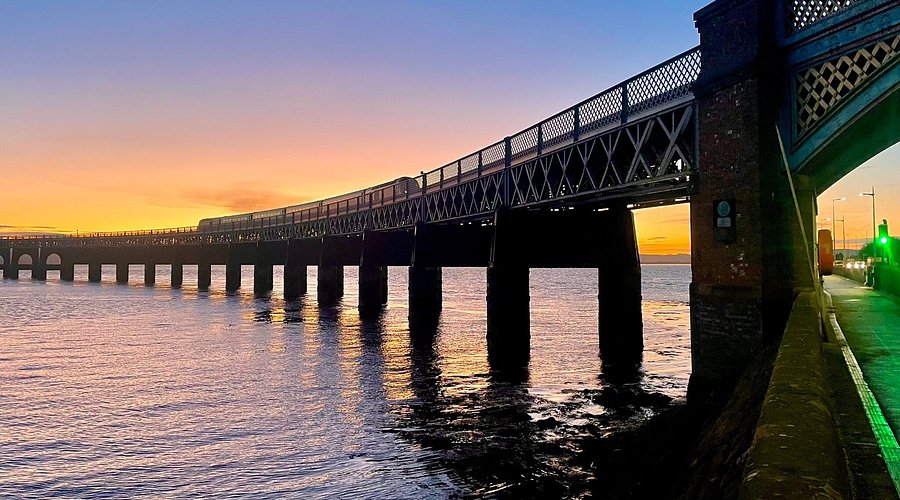
Almost immediately, rebuilding the Tay Bridge was decided. Engineer William Barlow redesigned it, built by William Arrol and Company. The new double-track bridge was safer, with stronger foundations and reduced height for stability. Old girders were reused economically.
Original piers were kept as breakwaters, still visible today. The new bridge opened in July 1887, restoring rail communications and water supply.
Impact On Engineering Standards
The disaster profoundly impacted engineering standards. Future British bridges had to handle wind loads up to 56 pounds per square foot. Bouch's Forth Bridge design was abandoned for a more robust one by Benjamin Baker and John Fowler.
It highlighted the need for quality control, rigorous material testing, and proper supervision. Modern bridges now include comprehensive wind calculations, careful material selection, effective drainage, and seismic design elements—all lessons from the Tay Bridge disaster.
Cultural Impact And Memorialization
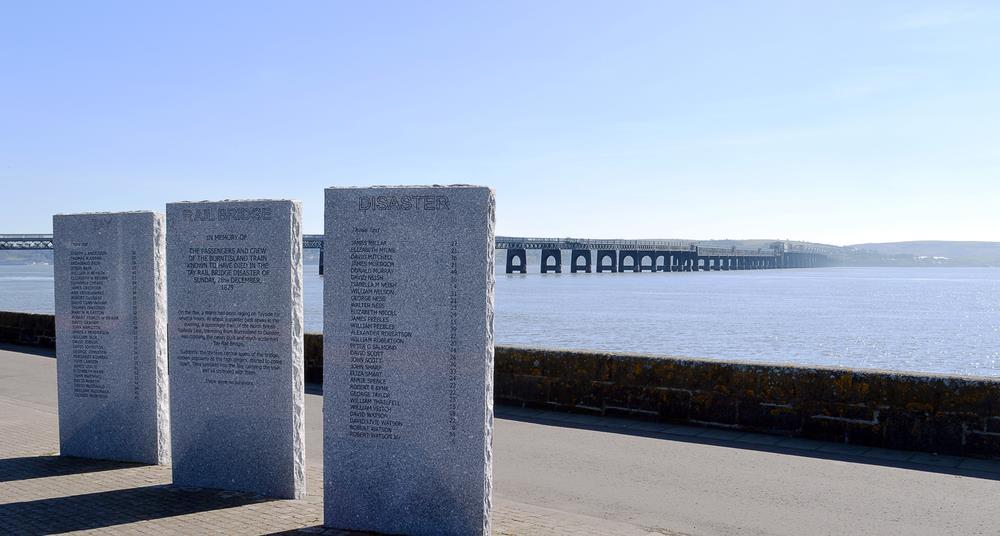
The disaster left a lasting mark on Scottish culture. William McGonagall's poem "The Tay Bridge Disaster" immortalized it, despite being considered one of the worst poems. Proper memorials were established only in 2013, with granite cairns listing victims' names on both river sides.
You Might Like: Bridges To The Kingdom
Engineering Analysis: Understanding The Collapse
Structural Weaknesses
Modern analysis shows several design flaws. Narrower piers and less robust cross-bracing compromised lateral stability. The high girder section was particularly vulnerable due to height and wind exposure.
Computer analysis indicates the collapse would have happened without the train. The bridge couldn't withstand the storm's forces, effectively being blown down.
The Role Of Cast Iron
Using cast iron for critical parts was a major factor. Cast iron is brittle, lacking ductility. Lugs holding bracing bars failed dramatically under stress.
Tests showed these housings failed at about 24 tons, far below the theoretical 200 tons. Evidence indicated poor casting quality, sometimes already cracked from the foundry.
Surprisingly, weaker ties might have allowed plastic deformation instead of sudden failure, potentially preventing the disaster.
Wind Loading And Calculations
Not accounting for wind loading was a crucial oversight. Modern wind load calculations involve complex formulas considering speed, structure height, terrain, and shape.
Today, design codes specify minimum wind loads based on expected maximum speeds over 50 years. These standards stem directly from lessons learned from the Tay Bridge collapse.
The Victorian Railway Era: Context And Significance
Railway Expansion In Scotland
The disaster occurred during rapid railway expansion in Scotland. When Queen Victoria began her reign in 1837, few railways existed, mainly for industrial use. By the turn of the century, nearly all Scottish railways were built, linking major towns and villages.
This transformed travel, reducing journey times from days to hours. Early railways transported coal; advances soon enabled passenger travel. The Edinburgh and Glasgow line opened in 1842, becoming very popular.
A rivalry developed between the Caledonian Company, serving Glasgow, and the North British Company, linking Edinburgh to Carlisle. The North British Railway expanded rapidly after 1846, becoming the largest Scottish railway by the mid-1860s, stretching from Newcastle to Aberdeen and Silloth to Fort William and Mallaig.
The North British Railway
Formed in 1842, the North British Railway aimed to link Edinburgh with Berwick. Incorporated in 1844, it opened in 1846 and was connected to the York, Newcastle & Berwick Railwayin 1850, making it part of the east coast route from London to Edinburgh.
To compete with the Caledonian Company north of the River Tay, the North British Company planned an east coast route bridging both the Tay and the Forth. The Tay Bridge aimed to reduce travel time between Edinburgh and Dundee.
The ill-fated train was a North British Railway passenger train on the Edinburgh to Aberdeen Line, pulled by Engine 224, built in 1871. It was called to work a mail train after the regular engine failed.
Victorian Engineering Practices
The disaster occurred during a period of ambitious Victorian engineering, characterized by innovation and sometimes overconfidence. Engineers pushed boundaries with available materials and knowledge.
Victorian engineering often relied on basic principles and natural forces. Buildings used buoyancy to move air without electric fans. This approach had merits but could oversimplify complex problems like wind effects on structures.
The disaster highlighted the need for rigorous testing and quality control. It emphasized understanding material properties and limitations, contributing to evolving engineering practices and robust safety standards.
The Tay Bridge Disaster Poem
Beautiful Railway Bridge of the Silv’ry Tay!Alas! I am very sorry to say that ninety lives have been taken away on the last Sabbath day of 1879, which will be remember’d for a very long time.
’Twas about seven o’clock at night, And the wind it blew with all its might, And the rain came pouring down, And the dark clouds seem’d to frown, And the Demon of the air seem’d to say—“I’ll blow down the Bridge of Tay.”
When the train left Edinburgh, the passengers’ hearts were light and they felt no sorrow, but Boreas blew a terrific gale, which made their hearts for to quail, and many of the passengers with fear did say—“I hope God will send us safe across the Bridge of Tay.”
But when the train came near to Wormit Bay, Boreas he did loud and angry bray, And shook the central girders of the Bridge of TayOn the last Sabbath day of 1879, Which will be remember’d for a very long time.
So the train sped on with all its might, and Bonnie Dundee soon hove in sight, And the passengers’ hearts felt light, Thinking they would enjoy themselves on the New Year, With their friends at home they lov’d most dear, And wish them all a happy New Year.
So the train mov’d slowly along the Bridge of Tay, until it was about midway. Then the central girders with a crash gave way, and down went the train and passengers into the Tay! The Storm Fiend did loudly bray, Because ninety lives had been taken away, On the last Sabbath day of 1879, Which will be remember’d for a very long time.
As soon as the catastrophe came to be, the alarm from mouth to mouth was blown, and the cry rang out all o’er the town, Good Heavens! The Tay Bridge is blown down, And a passenger train from Edinburgh, which fill’d all the people’ hearts with sorrow, And made them for to turn pale, because none of the passengers were sav’d to tell the taleHow the disaster happen’d on the last Sabbath day of 1879, Which will be remember’d for a very long time.
It must have been an awful sight, To witness in the dusky moonlight, While the Storm Fiend did laugh, and angry did bray, Along the Railway Bridge of the Silv’ry Tay, Oh! Ill-fated Bridge of the Silv’ry Tay, I must now conclude my layBy telling the world fearlessly without the least dismay, That your central girders would not have given way, At least many sensible men do say,Had they been supported on each side with buttresses, At least many sensible men confesses,For the stronger we our houses do build, The less chance we have of being killed.
FAQs About The Tay Bridge Disaster
What Caused The Tay Bridge To Collapse?
The Tay Bridge collapsed because of inadequate design for wind resistance, poor materials, and insufficient construction supervision. Designer Sir Thomas Bouch didn't account for wind loading despite the exposed location. Modern analysis shows that cast iron lugs failed progressively under storm stress, causing a domino effect. High winds, estimated at Beaufort force 10/11, applied forces that the bridge couldn't handle.
How Many People Died In The Tay Bridge Disaster?
The exact death toll is debated, but reliable evidence indicates 75 people died. Official records confirm 59 known victims, but the Board of Inquiry estimated 74 or 75 people were on board. Only 46 bodies were recovered; the rest were never found, likely swept away by strong currents. William McGonagall's poem incorrectly stated, "ninety lives have been taken away."
Who Was Responsible For The Tay Bridge Disaster?
The Court of Inquiry primarily blamed Sir Thomas Bouch, the bridge's designer, for faulty design, lack of wind loading calculations, and poor construction, maintenance, and inspection. However, some argue Bouch was unfairly blamed. Other factors, like poor contractor materials and inadequate supervision, also contributed significantly. Bouch's reputation was ruined, and he died less than a year later on October 30, 1880.
What Happened To The Train That Fell From The Bridge?
The train was North British Railway Engine 224 pulling six carriages. It plunged into the River Tay when the central section collapsed. Recovery began months later, and in April 1880, after several attempts, the engine was finally raised. After repairs in Glasgow, Engine 224 returned to service. Robert Marshall, whose brother John was the fireman who died, first drove the recovered engine at Tayport. All carriages were eventually recovered.
How Did The Tay Bridge Disaster Change Engineering Practices?
The disaster profoundly impacted engineering standards. Future British bridges had to handle wind loads up to 56 pounds per square foot, responding directly to the first Tay Bridge's failure. It highlighted the importance of quality control, rigorous material testing, and proper supervision. It emphasized the dangers of compromising safety for cost.
When Was The Second Tay Bridge Built?
The second Tay Bridge was built between 1883 and 1887. Work started on July 6, 1883, and it opened in 1887, restoring rail communications and water supply. Designed by William Barlow and built by William Arrol and Company, it was a double-track bridge parallel to the first. With stronger foundations and reduced height for stability, the original piers were kept as breakwaters, still visible today.
Conclusion
The Tay Bridge disaster stands as one of the most significant engineering failures of the Victorian era and continues to serve as a powerful reminder of the consequences of design flaws, material deficiencies, and inadequate quality control.
The collapse of the bridge during a violent storm on that fateful December night in 1879 claimed 75 lives and shattered public confidence in the engineering marvels that had come to symbolize Britain's industrial might.
As of 2024, the disaster remains the fifth-deadliest railway accident in the history of the United Kingdom and the second-deadliest rail accident in Scottish history. Its impact on engineering standards and practices has been profound and enduring, influencing how bridges are designed, built, and maintained to this day.
Jump to
The Fateful Night: December 28, 1879
The Bridge: Design And Construction
Engineering Failures: Why Did The Bridge Collapse?
Human Cost: The Victims And Survivors
The Aftermath: Investigation And Blame
Legacy And Lessons Learned
Engineering Analysis: Understanding The Collapse
The Victorian Railway Era: Context And Significance
The Tay Bridge Disaster Poem
FAQs About The Tay Bridge Disaster
Conclusion

Callum Fraser
Author
Callum Fraser isn't just a writer about Scotland; he's a product of its rugged landscape and rich history. Born and raised in Perthshire, with the Highlands as his backyard, his love for the nation's stories was kindled by local storytellers and long walks through ancient glens.
This passion led him to pursue a degree in Scottish History from the University of Edinburgh. For over 15 years, Callum has dedicated himself to exploring and documenting his homeland, fusing his academic knowledge with essential, on-the-ground experience gained from charting road trips through the Cairngorms, hiking the misty Cuillins of Skye, and uncovering the secrets of traditional recipes in his family's kitchen.
As the Editor-in-Chief and Lead Author for Scotland's Enchanting Kingdom, Callum's mission is simple: to be your most trusted guide. He combines meticulous research with a storyteller's heart to help you discover the authentic magic of Scotland — from its best-kept travel secrets to its most cherished traditional recipes.
Latest Articles
Popular Articles