Scottish Birthday Traditions - Customs, Songs, And Celebrations That Makes The Birthdays Unique
Clootie dumpling, Gaelic birthday songs, whisky toasts, and ceilidh dancing: Scottish birthday traditions are richer than most people know. Here is what they involve and where they come from.
Author:Callum FraserMay 20, 2026
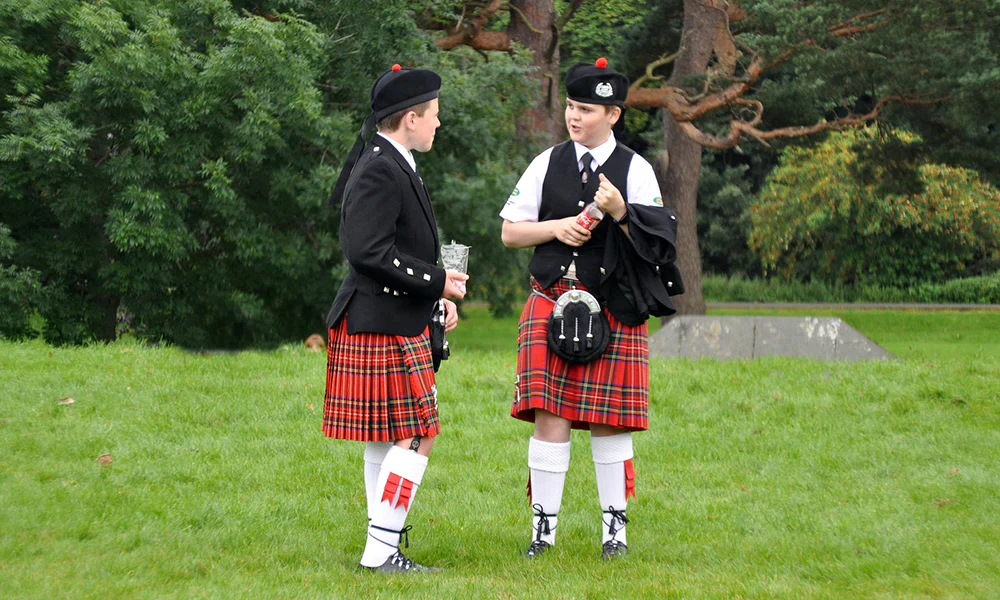
Ancient Roots And Modern Revelry Of Scottish Birthday Traditions
There is something about a Scottish birthday that feels different from the first moment you walk through the door. The smell of clootie dumpling warming on the stove, the sound of a fiddle being tuned in the back room, and a glass of single malt already waiting on the table before you have even taken off your coat.
Scotland has always known how to mark an occasion, and birthdays are no exception. What draws me to Scottish birthday customs, after more than a decade of documenting them across the Highlands, the islands, and the cities, is how deeply they resist being reduced to a party format.
These are not decorations layered onto a generic celebration. They are a distinct cultural grammar, one that draws on the Gaelic oral tradition, clan identity, folk music, and a genuine communal understanding of what it means to honour someone's life.
What You Will Learn
- The specific customs that make Scottish birthday celebrations distinct from the rest of Britain
- The Gaelic language traditions, songs, and blessings used to mark birthdays in Scotland
- What foods and drinks appear at traditional Scottish birthday gatherings, and what each one means
- How milestone birthdays, especially the 21st, 40th, and 50th, are observed in Scottish culture
- How Scottish diaspora communities worldwide keep these traditions alive
- The difference between Highland, Lowland, and island birthday customs
- How Scottish birthday traditions have evolved in the modern era while keeping their cultural core
What Makes Scottish Birthday Traditions Genuinely Different
Before exploring specific customs, it helps to understand why Scottish birthday traditions developed so differently from those found elsewhere in Britain. The answer lies in the particular texture of Scottish cultural life: the Gaelic language, the clan system, the oral tradition, and a communal instinct that shapes celebration in ways most visitors never fully appreciate.
The Cultural Roots That Set Scotland Apart
Scotland's birthday traditions draw from two broad streams. The first is Gaelic oral culture, which was richest in the Highlands and the Western Isles. The second is the broader Scots folk tradition of the Lowlands. Together, they produced a birthday culture that feels more ritually textured than almost anywhere else in Britain.
Gaelic culture placed enormous importance on blessings, spoken verse, and the ritual marking of life events through words and song. Being well-wished at a birthday was not merely a pleasantry. It carried genuine spiritual and social weight in communities where oral tradition was the primary medium of cultural life.
The clan system added another layer entirely. In Highland communities, a birthday touched the whole kinship network. Elders offered formal blessings, music was communal rather than performed, and food came from a shared table. That spirit of collective, generous celebration has never fully left Scotland.
How Scotland's Celebration Culture Differs From The Rest Of Britain
The most obvious difference is the role of tradition itself. In much of England, birthday customs have largely standardised around a universal template: cake, candles, presents, dinner with friends. Scottish celebrations, particularly outside major cities, layer specific ritual elements onto that template in ways that feel neither forced nor nostalgic but simply natural.
Whisky occupies a ceremonial role at Scottish birthdays that has no real equivalent elsewhere. Gaelic songs and blessings are used in communities where they would feel entirely out of place in an English setting. The ceilidh is a standard party format in Scotland, in a way that a barn dance rarely is in Birmingham or Bristol.
None of this means Scottish birthdays are uniform. Urban celebrations in Edinburgh and Glasgow look very different from a croft birthday in the Outer Hebrides. But the traditions covered here are alive and practiced. They are not museum pieces dusted off for heritage tourism.
The Birthday Bumps And Other Physical Customs
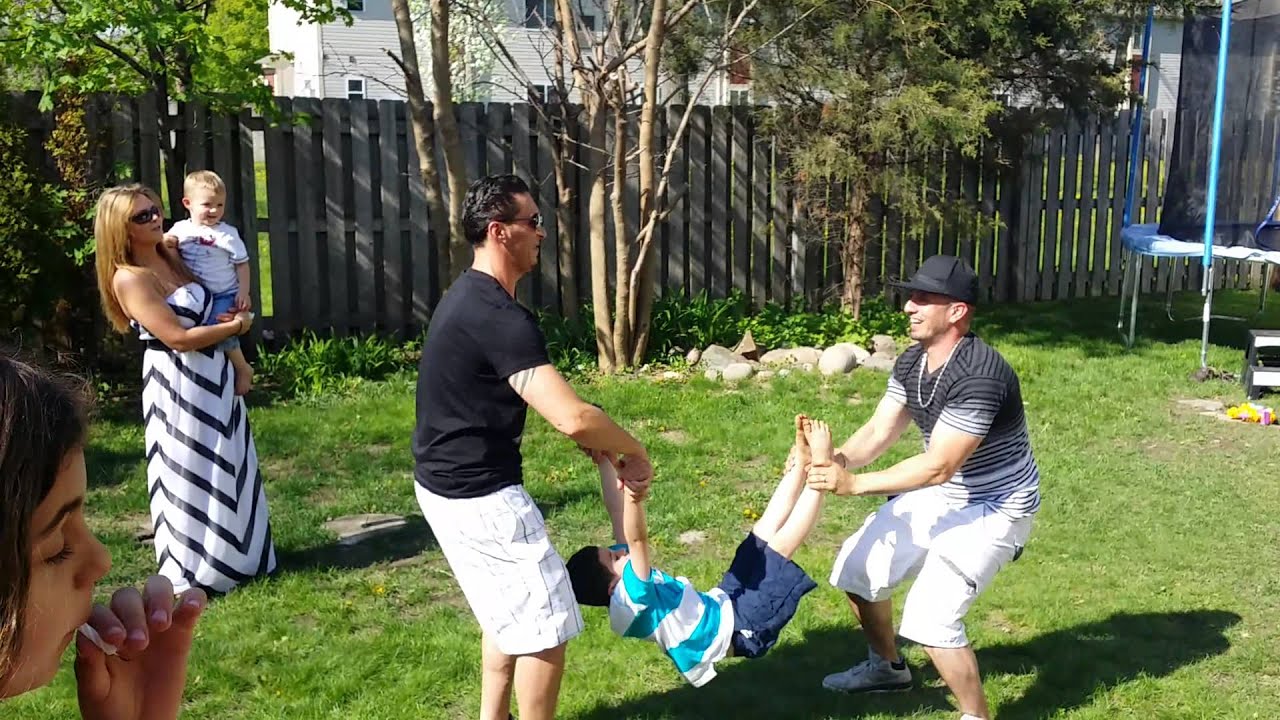
Birthday bumps
Physical birthday customs, the rituals involving the birthday person's body rather than songs or food, are among the most enduring and most fondly remembered traditions in Scottish life. They are also among the most misunderstood by outsiders, who sometimes mistake their exuberance for roughness without appreciating the affection underneath.
What The Birthday Bumps Tradition Actually Involves
The birthday bumps are exactly what the name suggests. Friends or family lift the birthday person, typically by their arms and legs, and gently bump them against the floor once for each year of their age. The sequence always ends with one extra bump for luck, sometimes followed by a second for good measure.
Children's birthday parties are where the tradition is most visible, but it is not limited to childhood. I have watched a 50-year-old being bumped with considerable ceremony at a ceilidh birthday party in Perthshire, to great laughter and entirely genuine warmth.
The origins of the bumps are debated among folklorists. One school of thought connects them to older European traditions of lifting the birthday person as a symbolic gesture of communal support, the idea that the community literally bears you up on your special day. Whatever the origin, the bumps are universally understood in Scotland as an expression of affection, not aggression.
Other Physical Rituals And Lucky Charms
Beyond the bumps, Scottish birthday culture has a rich tradition of luck-seeking physical customs. The most widespread is the practice of being first-footed on your birthday morning. Borrowed from Hogmanay, Scotland's famous New Year celebration, it holds that the first person to cross your threshold on your birthday sets the tone for the year ahead.
It remains customary in many Scottish households to ensure that the first visitor is someone warm-spirited and carrying a small gift. Lucky charms are also woven throughout birthday culture, most explicitly in the clootie dumplingtradition covered in the food section, but they appear in other forms too:
- A sprig of white heather, Scotland's traditional lucky charm, is still given as a birthday gift across the Highlands and Islands
- Finding a silver coin in your birthday pudding is considered good fortune for the year ahead
- In older tradition, the birthday person was encouraged to touch a piece of iron, connecting to the widespread Scottish belief in iron as a protective substance against ill fortune.
Gaelic Birthday Songs, Blessings, And The Language Of Celebration
Language is at the heart of Scottish birthday tradition in a way that distinguishes it sharply from most modern Western birthday culture. In Scotland, particularly in the Gaelic-speaking communities of the Highlands and Islands, birthdays are marked not just with song but with formal spoken blessings and a rich oral literature that has survived centuries of cultural pressure.
Co-latha Breith Sona Dhuibh: The Gaelic Happy Birthday
CO LATHA BREITH SONA DHUIBH
The Scottish Gaelic phrase for happy birthday to you is co-latha breith sona dhuibh, pronounced roughly as caw-la-a breh sona ghoot. For plural or more formal use, the phrase becomes co-latha breith sona dhuibh, pronounced caw-la-a breh sona ghweev.
In Gaelic-speaking communities of the Western Isles and parts of the Highlands, this is not a novelty phrase. It is the natural language of birthday greeting, sung or spoken with the same ease that English speakers reach for Happy Birthday.
The Gaelic birthday song shares the same melodic structure as the English version but carries a different emotional register. In Gaelic culture, sung words were understood to carry blessing-power. The song was not just a gesture. It was an act.
Traditional Birthday Blessings And Oral Customs
Formal birthday blessings, delivered by an elder or respected community figure, were once a standard element of Highland birthday celebrations. These were not improvised well-wishes but structured spoken pieces drawing on traditional Gaelic blessing formulas.
A well-known traditional Gaelic birthday blessing translates roughly as: may you live long, may you be healthy, may the road rise to meet you, and may the sun shine warm upon your face. The Scottish Gaelic versions are specifically adapted to the Scottish landscape and communal values, often referencing mountains, sea, or the strength of kinship.
In contemporary Scotland, formal spoken blessings are less common outside Gaelic-speaking communities, but the impulse survives. It is not unusual, even at a modern Edinburgh birthday dinner, for the eldest person present to offer a few words before the meal, a secularised echo of an older tradition most participants would not consciously identify as Gaelic in origin.
Robert Burns, Poetry, And The Birthday Recitation Tradition
Robert Burns, Scotland's national poet, has left his fingerprints on virtually every aspect of Scottish celebratory culture, and birthdays are no exception. Burns wrote several poems that have entered birthday tradition, most notably A Man's A Man for A' That, which is sometimes recited at milestone birthdays as a statement of egalitarian values.
Burns Night, celebrated every January 25th, has itself provided a template that many Scots borrow for significant personal birthdays. The format of a formal meal, toasts, recitations, and live music appears regularly at 50th and 60th birthday dinners across Scotland.
For many Scottish families, the birthday recitation, a poem, a verse of Burns, or a specially composed piece read aloud at the table, remains a living tradition. It treats the birthday as an occasion worthy of literary attention, and that instinct is one I find quietly extraordinary.
The Food And Drink Of A Scottish Birthday
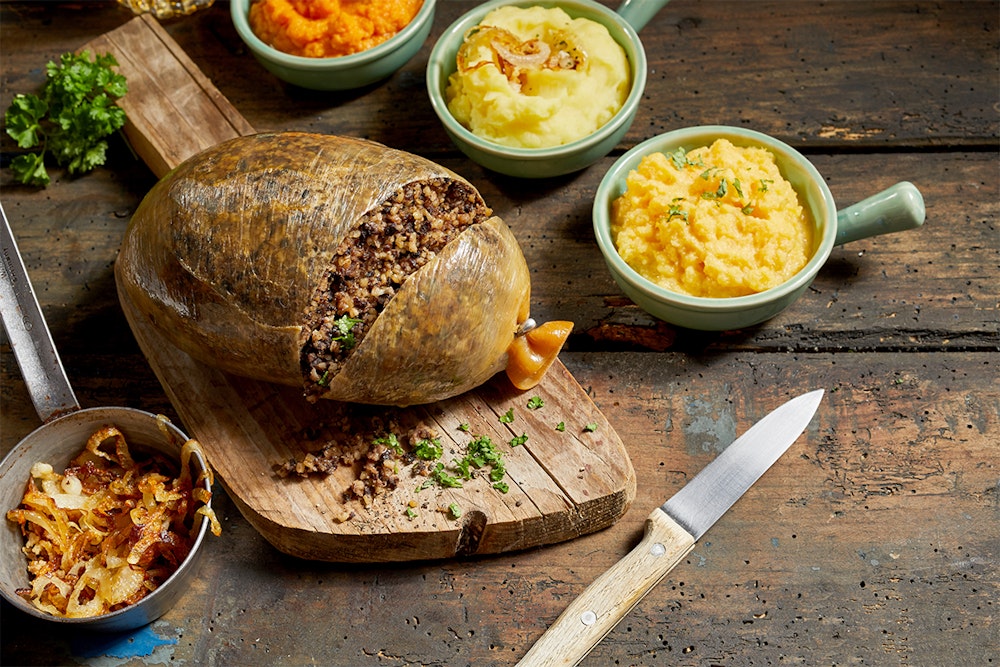
Scottish birthday food is serious business. While much of the world has standardised on sponge cake and candles, Scotland brings a spread of specific dishes and drinks to the birthday table that carry genuine cultural meaning. Each one has a story, and understanding those stories makes the food taste, if possible, even better.
Clootie Dumpling: Scotland's Most Iconic Birthday Dish
A clootie dumpling is a dense, dark, heavily spiced fruit pudding made with dried fruit, oatmeal, breadcrumbs, flour, and suet. It is wrapped in a floured cloth, the cloth, and boiled for several hours until firm, slightly sticky, and richly flavoured. It has been a birthday centrepiece in Scottish households for at least two centuries.
What makes it uniquely Scottish as a birthday dish is the tradition of baking charms inside. Before the pudding is wrapped and cooked, small objects in greaseproof paper are tucked into the mixture. Each charm carries a fortune for the person whose slice contains it:
- A coin predicts prosperity in the coming year
- A button traditionally signals a life of independence
- A thimble suggests the finder will be skilled and industrious
- A ring foretells marriage or a deepening of romantic partnership
- A wishbone promises that a cherished wish will come true
- A horseshoe brings general good luck throughout the year
Finding a charm in your slice is greeted with genuine excitement. I have seen a man of sixty genuinely moved to find the ring charm in his birthday dumpling, because it was the same charm his mother had placed inside it when he was a child in Argyll decades before.
Shortbread, Tablet, And The Sweet Spread
Beyond the clootie dumpling, a traditional Scottish birthday spread includes several other distinctively Scottish confections. Shortbread, that buttery and crumbling staple of Scottish baking, often appears home-baked and pressed into decorative moulds for the occasion. Shop-bought shortbread has nothing on a warm, just-out-of-the-oven version dusted with caster sugar.
Scottish tablet is the other essential presence. Harder and grainier than fudge, sweeter than most people expect the first time, it is made from sugar, condensed milk, and butter cooked to a precise temperature before being poured into trays to set. A birthday table without a plate of tablet in many Scottish households would feel meaningfully incomplete.
Other elements of the traditional birthday spread vary by region and family, but commonly include:
- Bridies or small savoury pastries for contrast against the sweetness
- Oatcakes with good Scottish cheese, particularly in more formal Highland settings
- Cranachan, a dessert of cream, whisky, honey, and toasted oats, which works beautifully as a lighter alternative to the dumpling
The Birthday Dram: Whisky As Ritual
The birthday dram is one of the most distinctly Scottish birthday customs and one of the least understood by outsiders. It is not simply offering a guest a glass of whisky. It is a specific, ceremonial first drink offered to the birthday person, chosen with care and accompanied by a short spoken tribute.
In families with a strong whisky culture, which describes a significant portion of Scottish families, the choice of whisky communicates something personal. Offering someone a dram from a distillery connected to their home region, their clan, or a shared memory is a gesture of intimacy. A 40-year-old from Islay receiving a glass of Laphroaig on their birthday understands that the person pouring it genuinely knows them.
The toast that accompanies the birthday dram is typically short and personal. The Gaelic Slàinte mhath, pronounced slanj-uh vaand meaning good health, is the standard closing word. It is one of the Gaelic phrases that has remained in common use even among Scots who speak no Gaelic otherwise.
Music, Dance, And The Ceilidh Birthday Party
If there is a single element of Scottish birthday culture I would most want an outsider to experience, it is the ceilidh birthday party. Nothing else conveys the particular spirit of Scottish celebration, its warmth, its physicality, its refusal to separate the generations, quite as vividly.
What A Ceilidh Birthday Party Looks And Feels Like
A ceilidh, pronounced kay-lee, is a social gathering built around traditional Scottish and Irish folk music and communal dancing. At a birthday ceilidh, a live band plays, a caller instructs the room in the dances, and everyone participates regardless of age, ability, or prior experience. The key distinction from a conventional party is that a ceilidh has no audience. Everyone is on the floor.
Picture a village hall in Perthshire on a Saturday evening. Tables are pushed to the walls, the floor is cleared, and a five-piece band is tuning up at one end. The birthday person is turning 60, and four generations of their family fill the room. When the caller announces the first dance, grandchildren grab grandparents, and the set forms without anyone needing to be persuaded.
Insider Note from Fiona: I once attended a ceilidh birthday for a woman turning 70 in a small community hall in Harris. There were perhaps 80 people, none of whom left before midnight. The birthday person danced every set. The last dance, a slow waltz played by the fiddle player alone, reduced several of us to tears. That is what Scottish birthday music can do when it is working as it should.
The Dances You Will Find At A Birthday Ceilidh
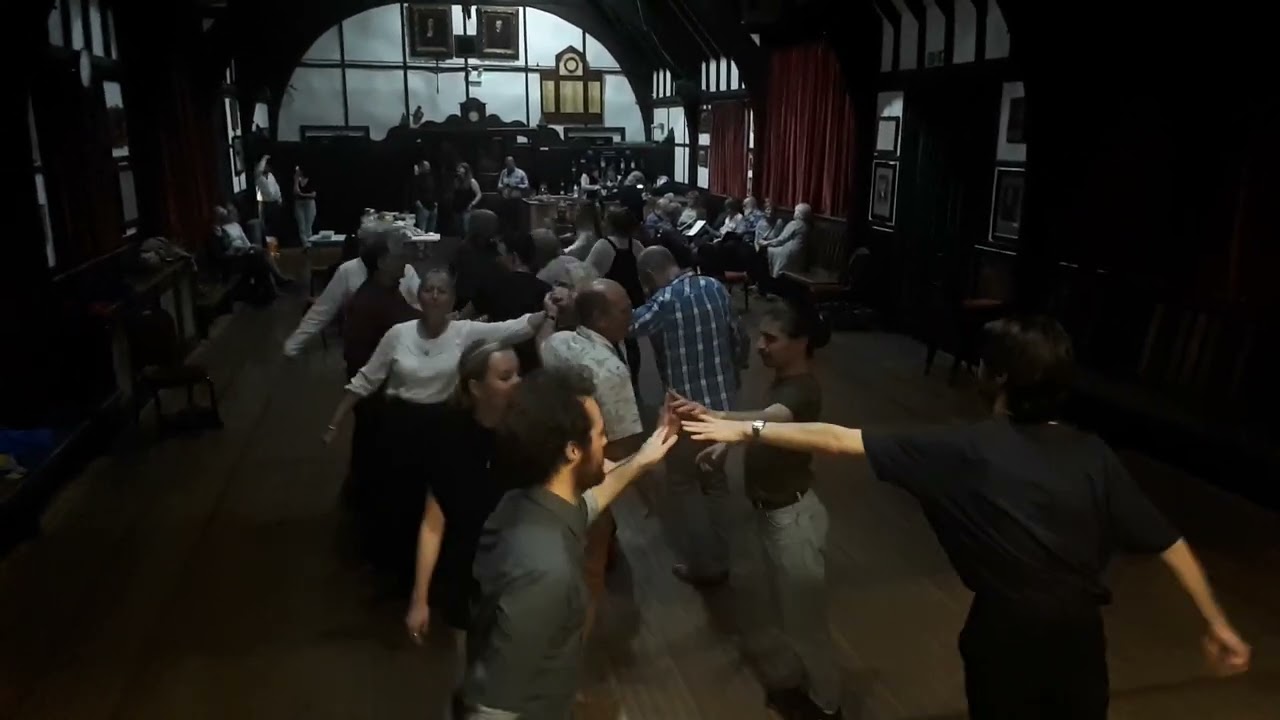
Birthday Party Ceilidh
The dances at a birthday ceilidh follow traditional Scottish country dance formats, most of which are accessible to complete beginners because the caller explains each one before the music starts. Common dances include:
- The Gay Gordons, a simple progressive march-and-turn that is usually the opener because everyone can manage it within thirty seconds of instruction
- Strip the Willow, an energetic reel in which couples spin up and down a long set at increasing speed, generating considerable laughter and occasional chaos
- The Dashing White Sergeant, a formation dance in threes that moves around the room and mixes guests who do not know each other
- Canadian Barn Dance, which is gentler in pace and particularly accessible for older guests
- The Eightsome Reel, the most exhilarating of the standard repertoire, is usually reserved for when the room has fully warmed up.
Live Music And The Role Of The Caller
The caller is the unsung hero of any ceilidh birthday party. Their job is to teach dances to a room full of people who may never have done them, maintain the evening's pace, and keep the energy high without letting it tip into chaos. A skilled caller reads the room constantly, adjusting instruction speed for the crowd and knowing exactly when to call a slow song.
Live music is essential to the format. Recorded music does not work for ceilidh dancing the way it works for club dancing, because the tempo needs to respond to the room. A good ceilidh band accelerates through a reel as the dancers find their feet, and that conversation between musicians and dancers is what creates the experience.
The birthday person's musical preferences are often honoured with a specific song or set, and it is common for family members to have quietly requested a favourite tune in advance. That small act of forethought is entirely characteristic of how Scottish birthday culture works.
Highland, Lowland, And Island: Regional Differences In Birthday Customs
Scotland is not a culturally uniform country, and treating it as one misses much of what makes it interesting. Birthday traditions vary meaningfully between the Highlands, the Lowlands, and the island communities, and those variations are worth understanding if you want an accurate picture of how birthdays are actually celebrated across the country.
Highland And Clan-Connected Birthday Traditions
In the Highlands, particularly in areas with strong Gaelic heritage, birthday customs retain the closest connection to older oral and clan traditions. Gaelic birthday songs and blessings are used in their original form. The birthday dram is chosen with reference to regional distilleries, and the choice carries explicit meaning.
Clan-connected milestone birthdays sometimes include the gifting of clan tartan items: a length of tartan in the recipient's family sett, a clan badge, or a piece of Highland dress. In communities where clan identity remains meaningful, receiving tartan in your family's pattern on a significant birthday is a gesture of belonging and continuity.
Outdoor elements also feature more prominently in Highland birthday celebrations than elsewhere. A birthday walk to a significant landscape, a hill, a loch, a family-connected glen, is a recognised part of how some Highland families mark important ages. The landscape is not a backdrop. It is a participant.
Lowland And Urban Birthday Celebrations
In the cities of Edinburgh, Glasgow, Dundee, and Aberdeen, birthday customs are more closely aligned with broader British norms while still retaining Scottish-specific elements. The ceilidh birthday party is as common in Glasgow as in the Highlands. Clootie dumpling appears on Edinburgh birthday tables with regularity. The birthday dram is observed regardless of urban or rural setting.
What differs is the explicit cultural framing. Urban Scots are less likely to invoke Gaelic blessings in their original form, more likely to celebrate milestone birthdays in restaurants or bars rather than community halls, and more connected to contemporary British pop culture in their party planning.
A 30th birthday in Glasgow might open with a ceilidh set, transition to a contemporary playlist, and end with a whisky toast. All three elements belong equally to the occasion. That blend of tradition and modernity is itself a genuine cultural expression, not a dilution.
Island Communities And Their Distinct Approach
The island communities of the Outer Hebrides, Orkney, and Shetland each have distinct birthday cultures that reflect their specific histories. In the Outer Hebrides, where Gaelic remains the community language for many residents, birthday traditions are most fully expressed in Gaelic and most closely connected to the religious and seasonal rhythms of island life.
Shetland birthdays carry Norse as well as Scottish influence, reflecting the islands' historical connections to Scandinavia. Shetland folk music uses different scales and structures from mainland Scottish music, giving Shetland birthday ceilidhs a noticeably distinctive sound.
Orkney birthday culture sits between the two, with strong agricultural roots that shape the seasonality of celebration. A summer birthday in Orkney feels genuinely different from a winter one, because the long northern light and the patterns of the agricultural community both influence what a gathering looks and feels like.
Milestone Birthdays In Scottish Culture
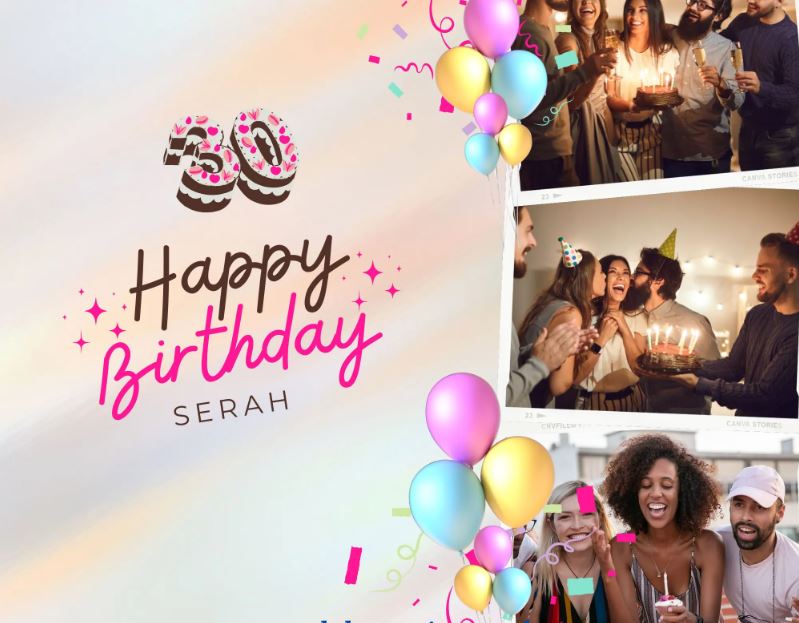
All birthdays matter in Scotland, but certain ages carry specific cultural weight that shapes how the celebration is structured, who attends, and what symbolic gestures are made. Understanding the milestone system is key to understanding why a 21st birthday in Fife looks so different from a 30th birthday in London.
The 21st Birthday And The Key To The Door
The 21st birthday is the most ritually significant in Scottish culture. The central symbol is the key to the door: a large, often ornate key given to the birthday person to symbolise formal entry into adult independence. This key is sometimes functional, such as a first house key gifted by parents, but more often decorative and engraved with the birthday person's name and date.
The celebration itself is typically the largest and most formal birthday event most people will have before their 50th. It usually involves an evening event with a formal meal, speeches from family elders, a significant whisky toast, and frequently a ceilidh. The birthday person is expected to make a speech in return, and the quality of that speech is taken seriously.
In some Highland families, the 21st birthday is also the occasion for gifting clan-connected items that acknowledge adult status within the family heritage. A young man might receive his grandfather's sgian-dubh, the small ceremonial knife worn in the stocking with Highland dress, marking his formal recognition as an adult member of the kinship group.
The 40th, 50th, And The Big Round Number Celebrations
The 40th birthday is culturally understood in Scotland as the milestone at which the community takes a proper account of a person's life and contributions. Where the 21st is about arrival, the 40th is about recognition. Celebrations are larger than the 30th, more likely to involve formal speeches, and more likely to draw guests from across the full arc of the birthday person's life.
The 50th carries even more weight. It is at 50 that the Burns Night-influenced format, formal dinner, toasts, recitations, and live music, is most consciously employed. Whisky gifting also becomes most significant at this milestone. A bottle of whisky aged to match the birthday person's years is a recognised and deeply appreciated gift in Scottish culture.
The 60th, 70th, and 80th birthdays are marked with increasing gratitude and community warmth. Scottish culture does not encourage retreat from public celebration at older ages. The older the birthday person, the more the community gathers, and the ceilidh format remains entirely appropriate at every milestone because it physically includes rather than excludes the guest of honour.
Children's Birthdays And Early Traditions
Children's birthdays carry the full weight of Scotland's physical traditions in their most vivid form. The bumps, the clootie dumpling charms, the lucky heather, children receive all of these with the uncomplicated delight that adults often suppress. A child's birthday in a Scottish household typically places the bumps at the centre of the ritual, generating shrieks and laughter in equal measure.
The birthday morning first-foot tradition is most commonly observed for children, with parents or grandparents ensuring they are the first through the door bearing a small gift and a sung greeting. In Gaelic-speaking families, this greeting is delivered in Gaelic.
Many Scottish families maintain the Gaelic greeting even when they no longer speak the language fluently, using the phonetic sound of the phrase as a form of cultural continuity. The tradition keeps the language present in family life long after it might otherwise have faded.
Scottish Birthday Traditions In The Diaspora
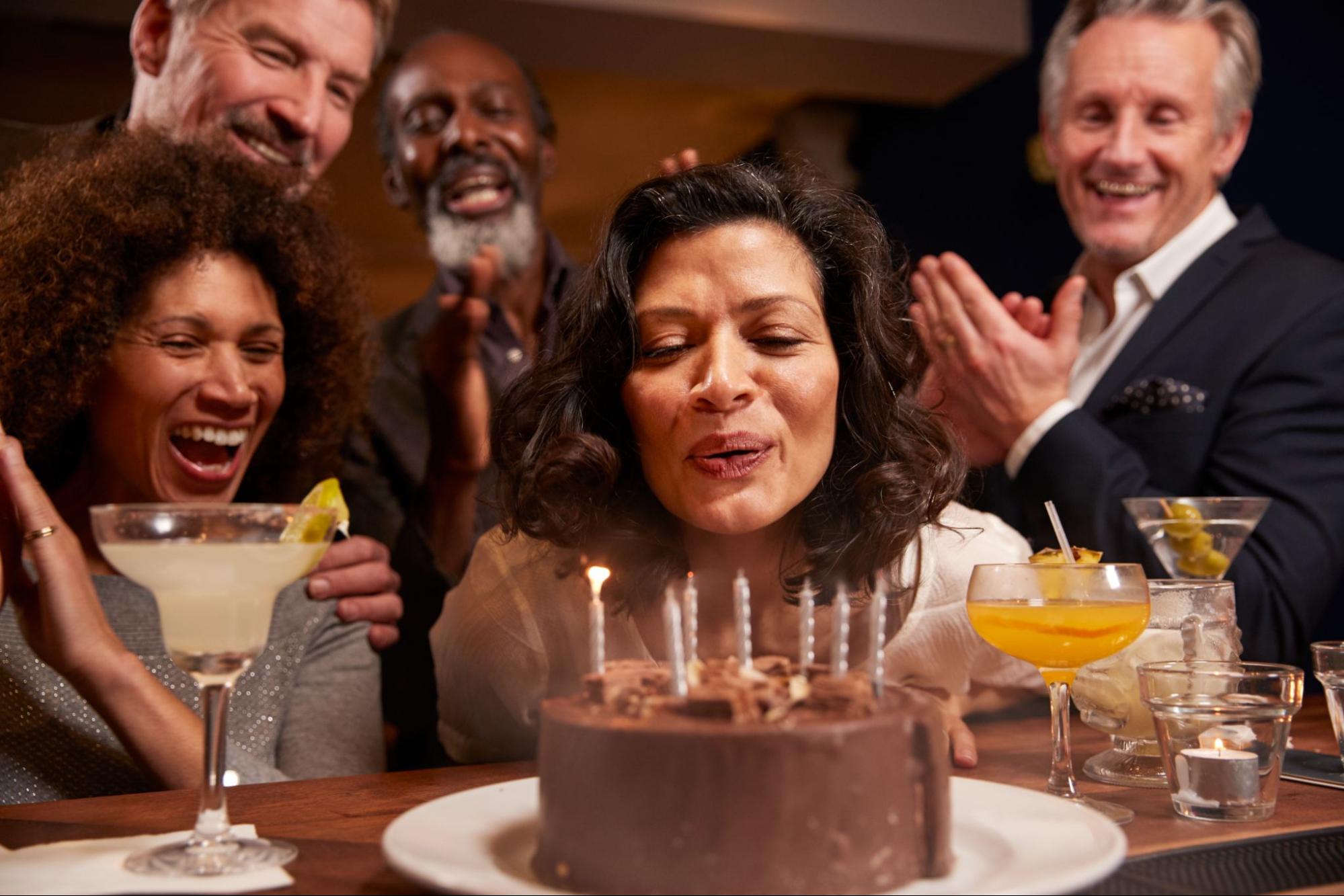
The Scottish diaspora is one of the largest in proportion to the national population of any country in the world. Scottish communities have been established in North America, Australia, New Zealand, South Africa, and across Europe for generations, and many of those communities have maintained birthday traditions with a fidelity that sometimes surprises even native Scots.
How Scottish-Americans And Scottish-Canadians Celebrate
In North America, Scottish diaspora birthday cultureis most visibly expressed through the network of Scottish cultural societies, Highland Games organisations, and Burns Clubs found in every major city. Birthday celebrations within these communities regularly incorporate ceilidh dancing, Gaelic toasts, clootie dumpling when someone knows how to make it, and the gifting of tartan and clan-connected items.
What strikes me about North American Scottish birthday culture is the degree of conscious intentionality involved. Where a Scot in Edinburgh might observe these traditions automatically, a Scottish-American in Boston is making a deliberate choice to maintain a cultural inheritance. That deliberateness gives diaspora celebrations a particular emotional quality; they are acts of cultural memory as much as acts of celebration.
Tartan is more explicitly worn at diaspora birthday celebrations than in contemporary Scotland itself, where Highland dress is typically reserved for formal events. In North America, tartan signals cultural identity in a context where that identity needs visible expression, and the signal is understood by everyone present.
Australia, New Zealand, And The Southern Hemisphere Scots
Scottish communities in Australia and New Zealand face the particular challenge of celebrating traditions rooted in northern European seasonality from the opposite end of the calendar. A Scottish winter birthday feels different, celebrated in Brisbane in July than in Inverness in January, and diaspora communities have adapted accordingly.
Australian and New Zealand Scottish societies are particularly active in preserving birthday music traditions. Ceilidh bands are well-established in Melbourne, Sydney, and Auckland, and the standard repertoire of birthday dances is maintained with genuine fidelity. The food traditions travel less easily, but clootie dumpling recipes have been adapted to southern hemisphere conditions with worthy results.
What persists most strongly across all southern hemisphere Scottish communities is the toasting culture. The birthday dram and the Slàinte mhathtoast require nothing more than a bottle of Scotch whisky and the will to use it correctly, and both are available regardless of geography.
Keeping The Traditions Alive Far From Home
The single most effective mechanism for keeping Scottish birthday traditions alive in the diaspora, based on everything I have observed and documented, is intergenerational transmission. A custom without a story is just a habit.
A custom with a story, your great-grandmother made clootie dumplings with a thimble inside it for every birthday in the family since she left Skye, is a cultural inheritance with emotional weight. Digital tools have created new possibilities for diaspora communities.
Gaelic birthday songs shared via video, online ceilidh dance instruction, and virtual birthday toasts connecting families across continents have all become part of how the traditions survive today. They are imperfect substitutes for a kitchen in Harris or a village hall in Perthshire. But they are genuinely nothing.
Modern Scottish Birthdays: What Has Changed And What Has Stayed
Scottish birthday culture is not frozen in amber. It is a living tradition that has adapted to urban life, changing demographics, and contemporary sensibilities while retaining a core of customs that prove remarkably durable. Understanding what has changed and what has held tells you something important about what Scottish culture values most.
Urban Scotland And The Contemporary Birthday Landscape
In contemporary Edinburgh and Glasgow, birthday celebrations reflect the full complexity of modern Scottish life. International influences sit comfortably alongside traditional ones. A birthday dinner might be at a Thai restaurant followed by a ceilidh in a city bar. The birthday dram might come from a Japanese whisky as readily as a Scottish one, though the toast will still be Slàinte mhath.
Clootie dumpling may give way to an artisan cake, but a plate of tablet on the side connects the occasion to something older. That small gesture, keeping one traditional element present even within a thoroughly contemporary celebration, is characteristic of how urban Scots navigate their cultural identity.
What contemporary urban Scots have largely retained is the communal instinct. The sense that a birthday is an occasion the community gathers for rather than an event one person hosts continues to shape the tone of even the most modern Scottish celebration.
The Traditions That Have Survived Into The 21st Century
Some Scottish birthday traditions have proven almost entirely resistant to modernisation, and understanding which ones have survived tells you what Scottish culture values most deeply.
The birthday dram has not only survived but grown in cultural significance as the global prestige of Scotch whisky has increased. The ceilidh birthday party is, if anything, more popular among young urban Scots in their 20s and 30s than it was a generation ago, a deliberate reclamation of cultural identity rather than a passive inheritance. Gaelic birthday greetings are used by a growing number of Scots who have no ancestral Gaelic connection, driven by a renewed interest in the language sparked by Gaelic-medium education.
The clootie dumpling occupies an interesting position. It is less likely to be the primary birthday cake at a contemporary Scottish birthday than it was fifty years ago, but it is more likely to appear as a meaningful secondary element, made by an older family member who is explicitly passing on a skill. Its presence at a birthday table now carries the added meaning of continuity, of someone having chosen to connect the present celebration to older ones.
Frequently Asked Questions About Scottish Birthday Traditions
How Do You Say Happy Birthday In Scottish Gaelic?
The phrase is co-latha breith sona dhut, pronounced roughly as caw-la-a breh sona ghoot. In Gaelic-speaking communities, it is sung to the same melody as the English version and carries genuine blessing-weight beyond mere convention.
What Is The Birthday Bumps Tradition In Scotland?
Friends or family lift the birthday person and bump them gently against the floor once for each year of their age, finishing with one extra bump for luck. It is a gesture of affection practiced across all ages, not just at children's parties.
What Food Is Traditionally Served At A Scottish Birthday?
Traditional Scottish birthday food includes clootie dumpling with hidden charms, shortbread, tablet, and cranachan. A whisky dram is the standard adult drink, always accompanied by the toast Slàinte mhath.
What Is A Ceilidh Birthday Party?
A ceilidh is a social gathering built around traditional Scottish folk music and communal dancing led by a caller. It is one of Scotland's most popular birthday party formats, welcoming to all ages and requiring no prior dance experience.
What Happens At A Scottish 21st Birthday?
The 21st is Scotland's most ceremonially significant birthday. It typically includes the gifting of a key to the door, a formal dinner with speeches, a whisky toast, and often a ceilidh. In Highland families, clan items are sometimes gifted to mark adult status.
What Is Clootie Dumpling?
Clootie dumpling is a dense Scottish spiced fruit pudding boiled in a cloth, traditionally made with hidden charms inside. Each charm predicts a fortune for the person who finds it in their slice.
Are Scottish Birthday Traditions Different From English Ones?
Yes. Scotland has distinct customs, including Gaelic songs and blessings, the clootie dumpling, the birthday dram, and the ceilidh party format. The communal approach to celebration also differs meaningfully from the more individualised English party culture.
How Do Highland Birthday Traditions Differ From Urban Ones?
Highland traditions retain more Gaelic language, clan symbolism, and outdoor elements. Urban celebrations in Edinburgh and Glasgow are more cosmopolitan but still incorporate the ceilidh, whisky toast, and Scottish food traditions as a natural baseline.
Final Thoughts
Scottish birthday traditions are not a collection of quaint customs preserved for the benefit of tourists. They are a living system of celebration built on centuries of Gaelic blessing culture, clan community, oral tradition, and a deeply Scottish understanding that marking a person's birthday well is a form of respect for their existence.
What I find most valuable about these traditions, having spent years documenting them, is what they assume about a birthday: that it belongs to the community as much as to the individual, that it deserves ritual as well as revelry, and that food, music, language, and blessing are all equally valid instruments of celebration. That assumption is not uniquely Scottish, but Scotland expresses it with a particular warmth and texture that is worth knowing.
Whether you are planning a celebration, tracing your heritage, or simply paying attention to how different cultures honour the people they love, Scottish birthday customs are an invitation. Scotland's birthday culture has always been generous by nature. You do not have to be Scottish to appreciate it. You only have to show up.
Jump to
Ancient Roots And Modern Revelry Of Scottish Birthday Traditions
What You Will Learn
What Makes Scottish Birthday Traditions Genuinely Different
The Birthday Bumps And Other Physical Customs
Gaelic Birthday Songs, Blessings, And The Language Of Celebration
The Food And Drink Of A Scottish Birthday
Music, Dance, And The Ceilidh Birthday Party
Highland, Lowland, And Island: Regional Differences In Birthday Customs
Milestone Birthdays In Scottish Culture
Scottish Birthday Traditions In The Diaspora
Modern Scottish Birthdays: What Has Changed And What Has Stayed
Frequently Asked Questions About Scottish Birthday Traditions
Final Thoughts
Callum Fraser
Author
Callum Fraser isn't just a writer about Scotland; he's a product of its rugged landscape and rich history. Born and raised in Perthshire, with the Highlands as his backyard, his love for the nation's stories was kindled by local storytellers and long walks through ancient glens.
This passion led him to pursue a degree in Scottish History from the University of Edinburgh. For over 15 years, Callum has dedicated himself to exploring and documenting his homeland, fusing his academic knowledge with essential, on-the-ground experience gained from charting road trips through the Cairngorms, hiking the misty Cuillins of Skye, and uncovering the secrets of traditional recipes in his family's kitchen.
As the Editor-in-Chief and Lead Author for Scotland's Enchanting Kingdom, Callum's mission is simple: to be your most trusted guide. He combines meticulous research with a storyteller's heart to help you discover the authentic magic of Scotland — from its best-kept travel secrets to its most cherished traditional recipes.
Latest Articles
Popular Articles