Scottish Grace Before Meals | Words Of Thanks For Every Table
There’s something meaningful about taking a moment to pause before eating. In Scotland, many people do this through a tradition called "Grace Before Meals." It’s a simple way to stop, say thank you and make the meal feel more thoughtful.
Author:Callum FraserJul 31, 2025

In Scotland, offering thanks before a meal is a cherished tradition that blends history, language, and faith. Perhaps the most famous example is the Selkirk Grace - a brief Scots-language prayer recited at Burns Suppers and other gatherings.
But Scots of Gaelic heritage also have long-standing altachaidhean(blessings) of their own. This article explores the rich tapestry of Scottish table graces: their origins, texts (in Scots and Gaelic), and how they’re used today.
Origins Of Scottish Meal Blessings
Giving thanks for food is an age-old Christian custom, and Scotland’s table graces reflect both faith and local heritage. For centuries, Scots have uttered short prayers of gratitude (“grace”) at meals. One early form was known as the “Galloway” or “Covenanters’ Grace.”
It appears in 17th-century records and was used by Presbyterian covenanting Scots. Later folklore mistakenly credited Robert Burns, but he actually popularized an existing prayer. According to historical accounts, Burns recited this grace at a dinner held by the Earl of Selkirkin 1794, which gave the prayer its modern name.
By the 18th century Burns was well-known for reciting it at social meals, leading people to associate the blessing with him. Over time Burns used a more modern English phrasing, but the older Scots/Lallans version prevailed at Burns Suppers and celebrations. Indeed today, the Selkirk Grace(below) is recited at Burns Night, weddings, birthdays and Christmas gatherings across Scotland.
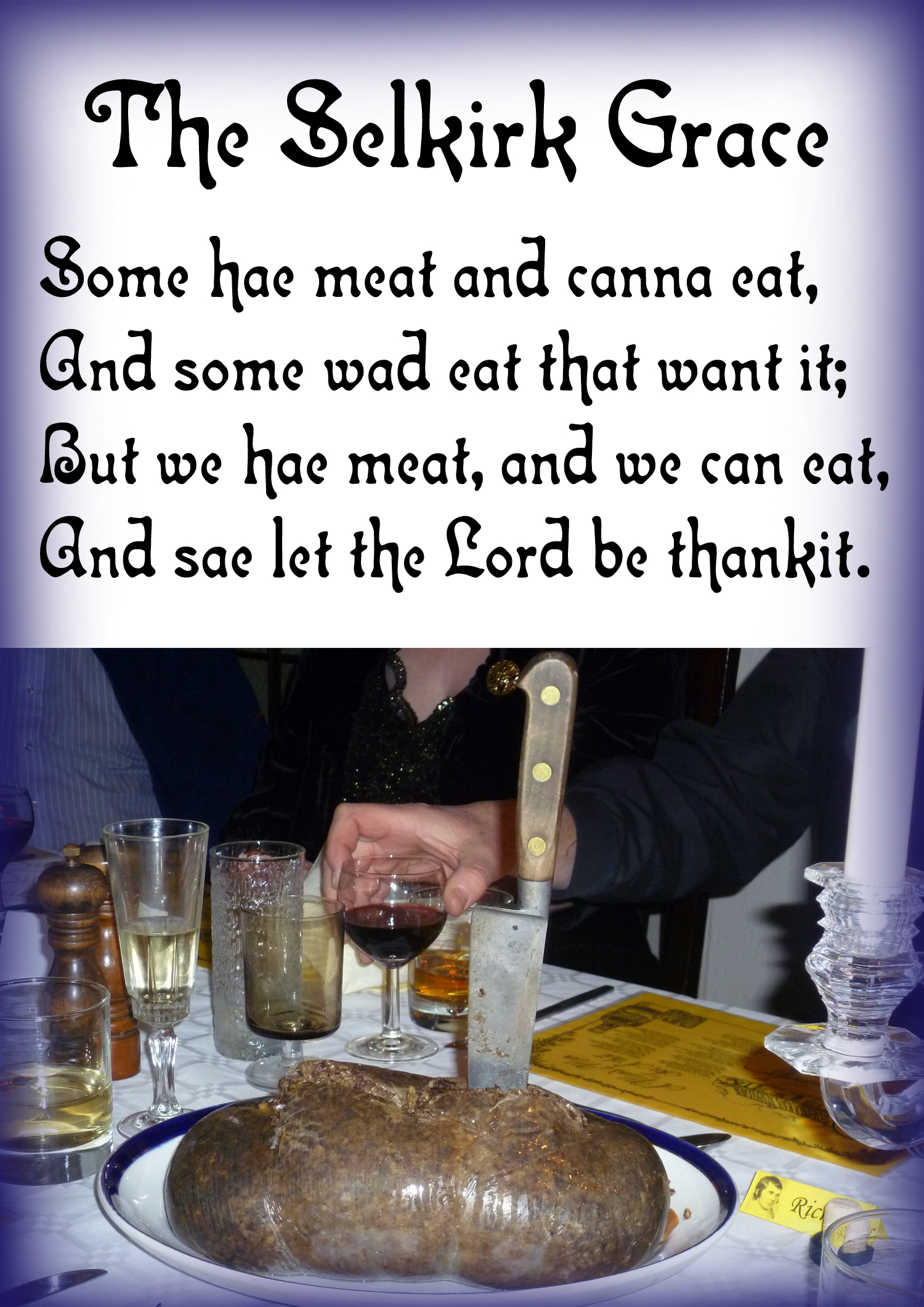
The Selkirk (Covenanters’) Grace
The most famous Scottish mealtime prayer is the Selkirk Grace. In the Scots dialect (Lallans), it goes:
“Some hae meat an canna eat
And some wad eat that want it;
But we hae meat, and we can eat,
And sae the Lord be thankit.”
In modern English that means:
“Some have meat but cannot eat,
Some have none that want it;
But we have meat and we can eat,
So let the Lord be thanked.”
The simple four lines express gratitude by contrasting those who lack food with the fortunate who do have food. As The Scotsman notes, the Selkirk Grace is “a short prayer of thanks, delivered before a meal”.
Over generations it has become the standard blessing at a Burns supper. In practice, the host welcomes guests and, just before serving the haggis and fare, recites these lines aloud.
Although Burns popularized it, the prayer’s origins go back to 17th-century Covenanters. It was recited in Ayrshire and Galloway long before Burns’s time. After Burns used the Lallans dialect form in the late 1700s, it became known as the Selkirk Grace (named for the Earl of Selkirk’s table where Burns first said it).
Variations of the wording developed, but the heartfelt message remains the same. Today even secular Scots still know these lines by heart, and they often deliver it with a distinctive Scots accent and pace, usually ending with “Amen” or a nod of thanks.
Gaelic Meal Blessings (Altachaidhean)
Scotland’s Gaelic-speaking Highlands and Islands have their own venerable mealtime prayers. In Scottish Gaelic “grace” (before meals) is altachadh(a masculine noun), literally a “prayer of blessing.” (By contrast, gràsis a general word for grace or favor.) In Gaelic culture, mealtime blessings often invoke the Virgin Mary or God’s providence, and they can be quite poetic. Here are two traditional examples:
Altachadh Dhail-na-Càbaig (The Laird Of Dail-na-Càbaig’s Grace)
This 19th-century Gaelic blessing, collected in Turners’ Gaelic songbook, begins:“Fhir a mheudaich am bolla…” - “Thou who gave increase to the meal… ”. In full it asks that God double the feast’s blessing, lower the cost of food, bring the sea’s bounty, and grant peace among neighbors.
It goes on to pray:
“Bless my wife and my children, the yellow hen and the birds, Little Christina and the youngsters…
All I would ask of this world’s joy
Is potatoes of Dail-na-Cruinn
And water from the black waterfall…”
A humble wish for everyday provisions. The grace concludes by thanking God for these simple gifts. The Gaelic lines and their English translation are found in Carmichael’s Carmina Gadelica, a key source of Highland prayers.
Mary’s Meal Blessing (from Carmina Gadelica)
Another traditional prayer invokes Mary:
“A Mhoire Mhàthair nam feart, cobhair oirnn, cobhair do neart; Beannaich am biadh, beannaich am bord, beannaich an dias, an t-iodh, ’s an iòn.”
Translated, this means roughly:
“O Mary, Mother of miracles, grant us Thy help and strength: bless the food, bless the table, bless the dish, the bread and the salt.”.
In other words, it asks the Virgin’s aid and then literally “Bless the food and board (table)”. The corresponding English lines in Carmina Gadelicaread: “O Mary Mother of wondrous power… Bless the provision, bless the board, bless the ear, the corn, the food.”
These Gaelic graces are often richly allusive - mentioning farms, rivers, people’s names and local places - reflecting the rural world of Highland families. But they share the common purpose of thanking God (and saints like Mary) for sustenance. Note the Gaelic word “beannaich” used above - it means “bless” or “pray a blessing.” Many Gaelic blessings begin “Beannaich…”(Bless…), underlining their intent.
Other Scottish Graces And Variations
Beyond these, Scottish tradition has a few other mealtime prayers. For example, the Barony of the Isles and some church families have used a rendering of the common Catholic table prayer:
“Beannaich sinn, a Thighearna, agus seo am biadh a tha Thu a’ toirt dhuinn bho do phailteas… Amen.”(“Bless us, O Lord, and this food which You give us from Your bounty through Christ our Lord. Amen.”)
This Gaelic version simply adapts the familiar “Bless us, O Lord…”prayer to Gaelic, and many Highland Catholics know it. It shows that ordinary Christian graces have been used in Gaelic-speaking communities too.
Robert Burns himself composed a couple of more elaborate graces. One famous humorous example is “O LORD, when hunger pinches sore…”from his poem Grace before and after Meat.
In it he writes:
“O LORD, when hunger pinches sore, Do thou stand us in stead, And send us, from thy bounteous store, A tup or wether head! Amen.”.
(A tupor wetheris a male sheep. In other words, he playfully prays for a sheep’s head if no other food is at hand.)
Immediately following that, he adds an after-meal grace:
“O Lord, since we have feasted thus… Let Meg now take away the flesh,
And Jock bring in the spirit! Amen.”
Meaning, “Let someone remove the (heavy) food and bring in a drink for good cheer.” These lines show the lighter side of Burns and how even at a Scots table, humor could join devotion.
Daily Blessings In Scottish Homes
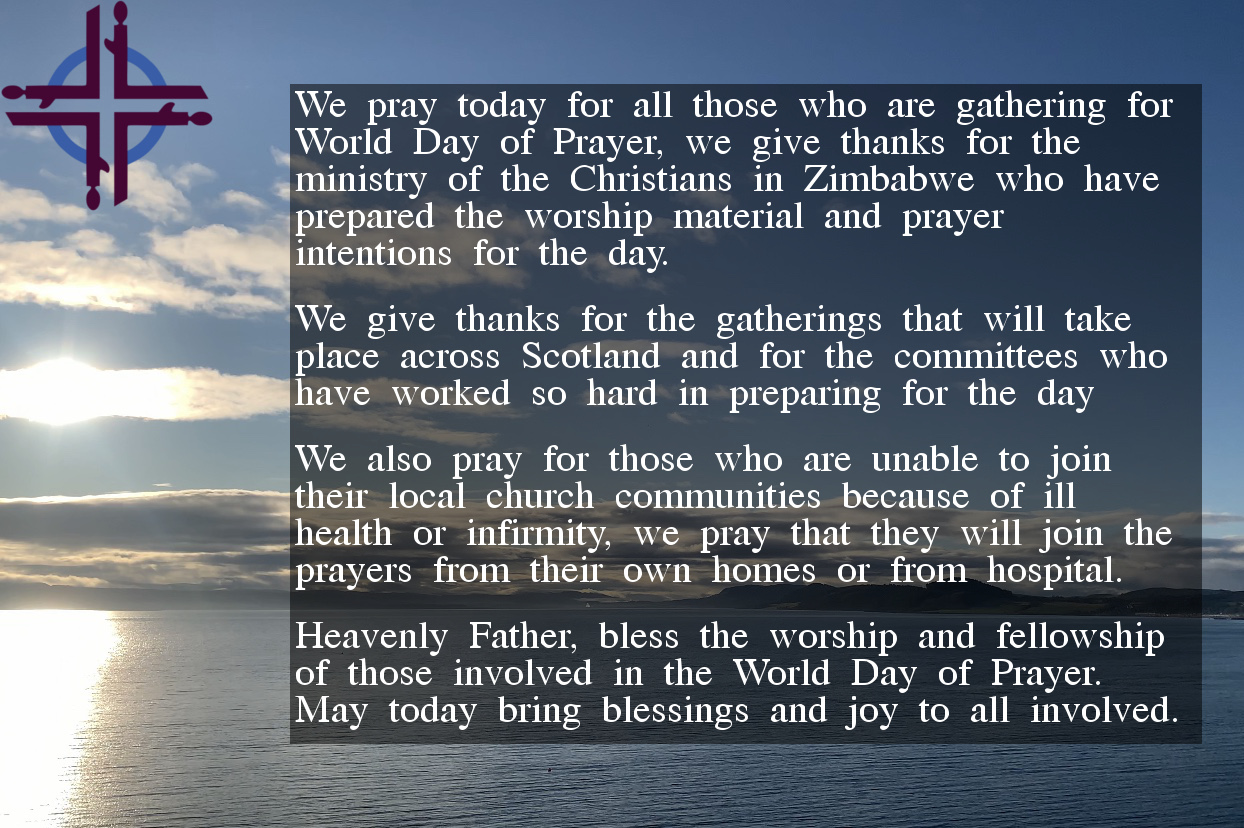
In Scotland, many families still honor traditions like the Selkirk Grace for holidays or big meals, a practice that underscores gratitude and connection. But for everyday dinners, mealtime prayers have grown more flexible and personal, often adapting to modern rhythms like busy schedules or diverse beliefs.
It encourages mindfulness, fosters appreciation for nourishment, and strengthens bonds with loved ones, all of which contribute to emotional and physical well-being. Just as Scottish grace traditions evolve without losing their essence, prioritizing gratitude and presence at mealtimes offers a timeless way to nurture both body and spirit.
Today, families often use brief, heartfelt prayers focused on thankfulness. A common example might be, “Thank you, Lord, for this food and the people around this table. Amen.” These prayers skip complex religious language and instead highlight sincere appreciation for what’s on the plate and who’s sharing the meal.
With diverse beliefs now common, many Scottish households adapt blessings to suit everyone. Some take a quiet moment to reflect, while others let each person share their own thanks.
Related Reading: Scottish Prayers - Traditional Blessings And Wisdom
The Heart Of Scottish Hospitality
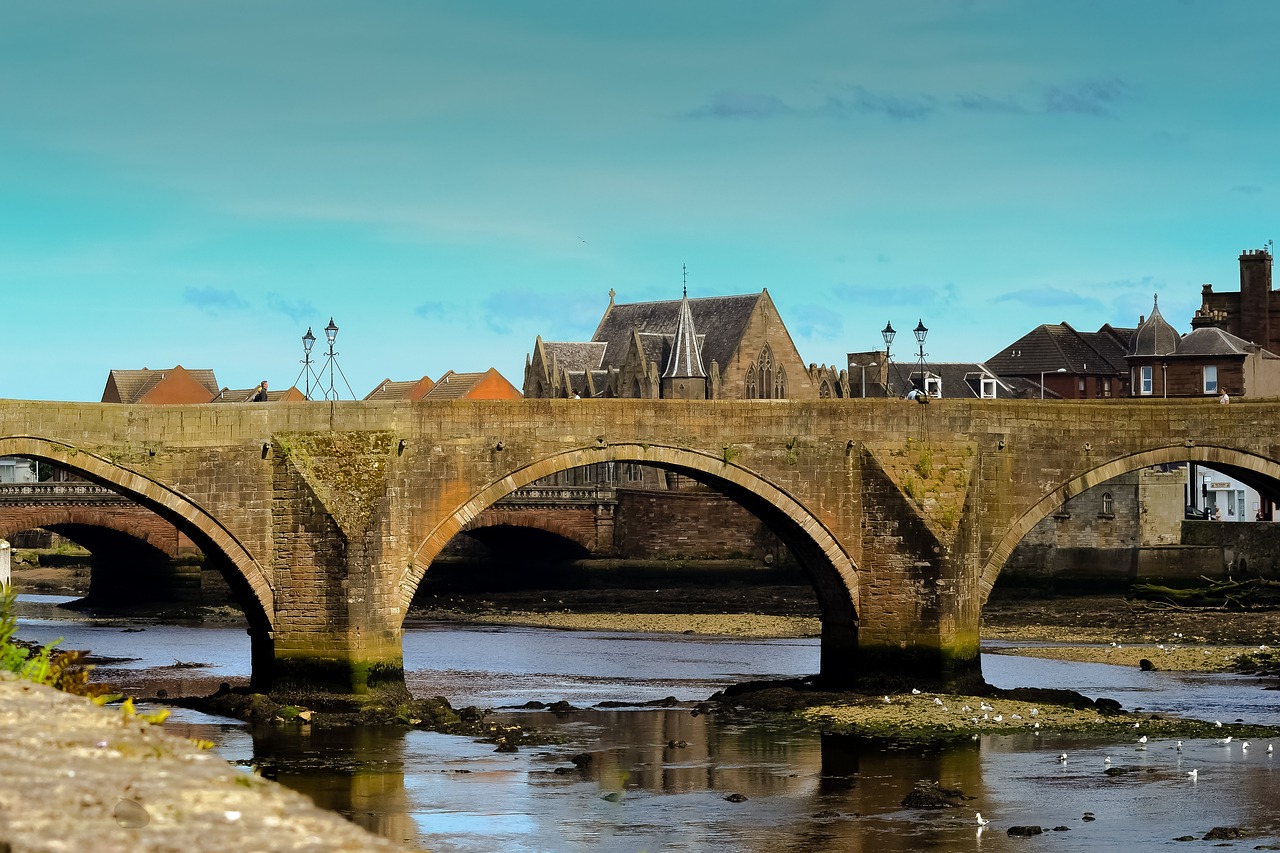
Saying grace before meals in Scotland isn’t just a quick prayet, it’s a meaningful tradition that connects history, language, and cultural values. From the well-known Selkirk Grace, linked to Robert Burns, to ancient Celtic blessings and modern family customs, each prayer reveals a piece of Scotland’s character.
At its heart, Scottish grace focuses on deep thankfulness for food and humility, no matter life’s ups and downs. This reflects a history of hardship and a real appreciation for simple necessities, shaped by centuries of relying on the land.
Even as religious practices change, these traditions endure, especially at events like Burns Suppers, passing down shared values, language, and identity through generations. The act of saying grace itself not just the words keeps cultural ties strong.
Mealtime blessings also strengthen community bonds, turning ordinary gatherings into shared experiences. Reciting graces, especially those tied to Robert Burns, honors heritage and keeps traditions alive. They act as a bridge to the past and a lively celebration of what it means to be Scottish.
FAQs About Scottish Graces Before Meals
What Is The Most Famous Scottish Grace, And Why Does It Matter?
The most well-known Scottish grace is the Selkirk Grace. It’s famous largely because Robert Burns, Scotland’s national poet, made it popular after reciting it at a dinner in 1794. The grace is short but meaningful, it thanks God for food while also remembering those in need. Its mix of gratitude and kindness has made it a beloved part of Scottish culture, used not just on Burns Night but at many gatherings.
Did Robert Burns Create The Selkirk Grace?
No, he didn’t write it. Though Burns is often linked to the Selkirk Grace, older versions of it existed in Scotland long before his time. It was sometimes called the “Galloway Grace” or “Covenanter’s Grace.” Burns helped make it famous by sharing it widely, but he wasn’t its original author.
When Else Are Scottish Graces Used Outside Burns Night?
Scottish graces aren’t just for Burns Night. They’re said at weddings, birthdays, Christmas dinners, and even regular family meals. Many Scots still say a short prayer or blessing before eating to teach appreciation for food and bring people closer. It’s a small ritual that keeps traditions alive in daily life.
Are There Scottish Graces In Gaelic?
Yes. While many graces are in English, Gaelic blessings have long been part of Scottish life. Phrases like “Beannachd Dia dhuit” (God’s blessings be with you) show how faith and gratitude are woven into Gaelic culture. Though specific mealtime prayers aren’t always recorded, they likely existed as part of everyday traditions.
What Values Do Scottish Graces Highlight?
Scottish graces stress gratitude, humility, and community. They thank God or nature for food, acknowledge struggles others might face, and remind people to be generous. They also celebrate togetherness sharing a meal and a moment of thanks strengthens bonds between friends and family.
Can People Without Religious Beliefs Join In Scottish Grace Traditions?
Absolutely. While many graces mention God, the act of pausing to appreciate food and company can be meaningful for anyone. Non-religious folks might take a quiet moment to reflect on the meal, the people around them, or the effort that went into preparing it. The focus on gratitude and connection works for all beliefs.
Final Thoughts
Scottish mealtime graces are more than just quick prayers, they’re traditions that mix history, language, and culture. Take the Selkirk Grace, linked to Robert Burns, or old Celtic blessings and the personal touches families use today. Each one gives a deep insight into Scottish life and values.
These traditions last because they tap into basic human needs: thanking, sharing, being present, and recognizing where our food comes from. They’ve adapted over time but stay rooted in genuine gratitude and togetherness.
What makes them special is how they turn a everyday meal into a moment of connection, reflecting Scotland’s strong, warm-hearted character.
Also Check Out: The Best Scottish Festivals For Families

Callum Fraser
Author
Callum Fraser isn't just a writer about Scotland; he's a product of its rugged landscape and rich history. Born and raised in Perthshire, with the Highlands as his backyard, his love for the nation's stories was kindled by local storytellers and long walks through ancient glens.
This passion led him to pursue a degree in Scottish History from the University of Edinburgh. For over 15 years, Callum has dedicated himself to exploring and documenting his homeland, fusing his academic knowledge with essential, on-the-ground experience gained from charting road trips through the Cairngorms, hiking the misty Cuillins of Skye, and uncovering the secrets of traditional recipes in his family's kitchen.
As the Editor-in-Chief and Lead Author for Scotland's Enchanting Kingdom, Callum's mission is simple: to be your most trusted guide. He combines meticulous research with a storyteller's heart to help you discover the authentic magic of Scotland — from its best-kept travel secrets to its most cherished traditional recipes.
Latest Articles
Popular Articles