The Scottish Highlands: What To See, Do & Experience
What makes the Highlands such a compelling destination, and how do you make the most of a visit? Here's everything you need to know.
Author:Callum FraserJun 30, 20261.3K Shares28.5K Views
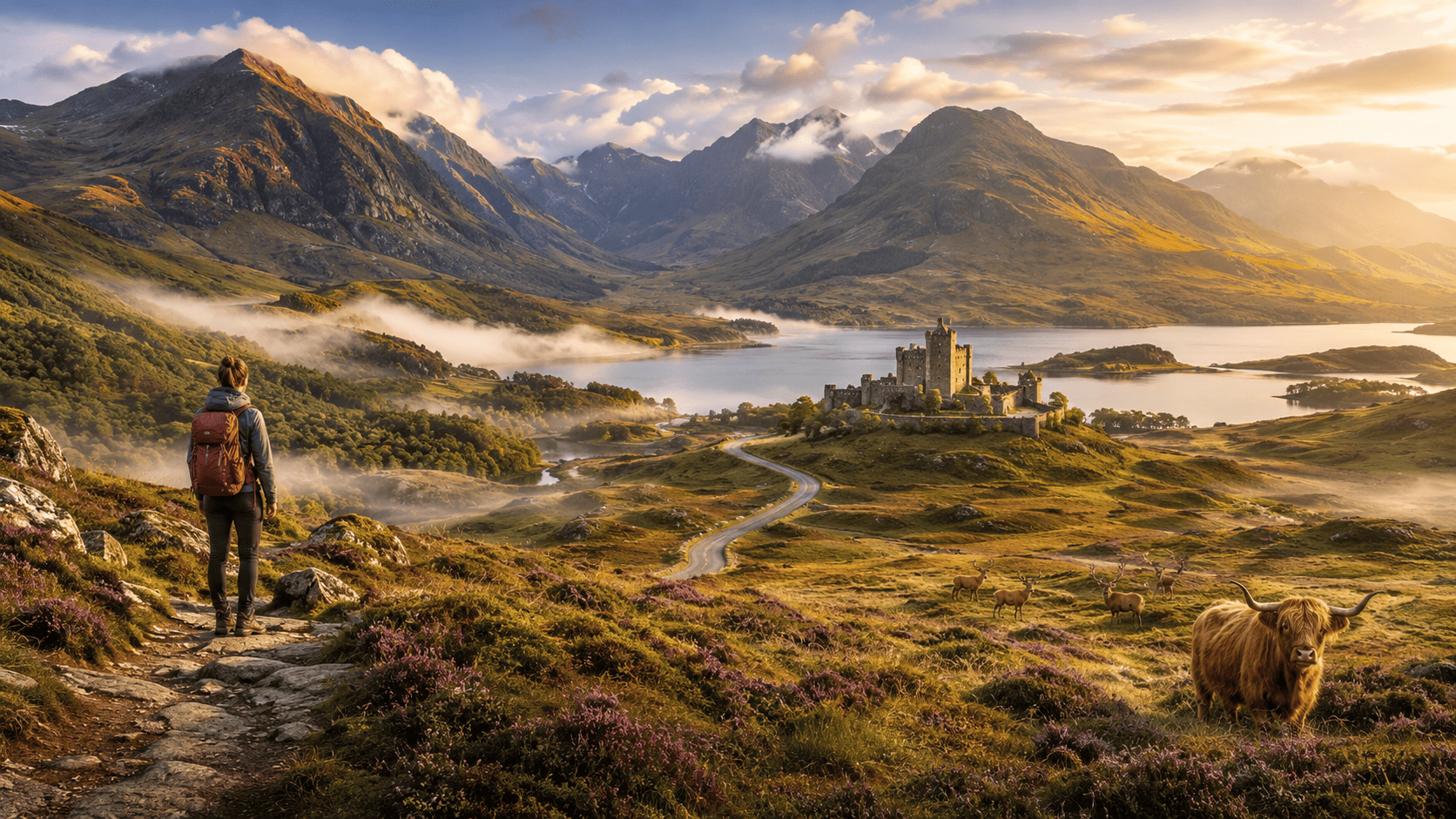
There's nowhere quite like the Scottish Highlands. Stretching across the northern half of Scotland, this vast and dramatic landscape is one of the last great wildernesses in Europe — a place of ancient mountains, glittering lochs, ruined castles, and skies that seem to go on forever. Whether you're a first-time visitor or returning for another look, the Highlands have a way of getting under your skin.
So what makes the Highlands such a compelling destination, and how do you make the most of a visit? Here's everything you need to know.
Getting There
Most visitors to the Highlands begin their journey in either Edinburgh or Glasgow — Scotland's two major cities, both with excellent transport links. From Edinburgh, you can head north through Perthshire and into the heart of the Highlands. From Glasgow, the stunning western route through Loch Lomond and Glencoe is hard to beat. A guided tour departing from either city is one of the best ways to experience the Highlands without the stress of navigating unfamiliar roads — companies like Discover Scotland Toursoffer departures from both cities.
Glencoe: Scotland's Most Dramatic Glen
No trip to the Highlands is complete without passing through Glencoe. This deep, brooding valley was carved by glaciers thousands of years ago and is now one of the most photographed landscapes in Scotland. It also carries a dark history — the site of the infamous 1692 massacre of the MacDonald clan — which adds a layer of poignancy to its already haunting beauty. Walking the valley floor or looking down from the ridgeline above, it's easy to understand why Glencoe leaves such a lasting impression.
Loch Ness and the Mystery of Nessie
Head northeast from Glencoe and you'll eventually reach Inverness and the famous Loch Ness. At 23 miles long and over 750 feet deep, Loch Ness holds more fresh water than all the lakes in England and Wales combined. It also, of course, holds the legend of the Loch Ness Monster — a story that has captivated the world since the 1930s. Whether you believe in Nessie or not, a boat cruise on the loch is a genuinely magical experience, and the ruins of Urquhart Castle on the western shore make for a dramatic backdrop.
The Isle of Skye
Arguably Scotland's most spectacular island, Skyesits just off the northwest coast and is accessible by a short bridge from the mainland. The island is famous for its other-worldly landscapes — the jagged Cuillin mountain range, the bizarre rock formations of the Quiraing, and the Old Man of Storr, a towering pinnacle that features on countless Scottish postcards. The fairy pools near Glenbrittle are another highlight: crystal-clear pools fed by waterfalls, perfect for a (very cold) wild swim.
Ben Nevis and Fort William
At 1,345 metres, Ben Nevis is the highest mountain in the British Isles. It towers above the town of Fort William on the western edge of the Highlands, and draws thousands of walkers every year. You don't need to be an experienced mountaineer to reach the summit — the main mountain path is challenging but manageable for anyone reasonably fit — though it's worth checking the weather before you set off. Fort William itself is a good base for exploring the surrounding area, including the nearby Commando Memorial at Spean Bridge and the spectacular views along the Road to the Isles.
Eilean Donan Castle
Few images capture the romance of Scotland quite like Eilean Donan Castle— a medieval fortress sitting on a small island where three sea lochs meet, connected to the mainland by a stone bridge. Located near the village of Dornie, it's one of the most photographed castles in the world and has appeared in numerous films. The castle was largely rebuilt in the early 20th century after being destroyed in a Jacobite uprising in 1719, but its dramatic setting makes it an unmissable stop on any Highland tour.
The Cairngorms National Park
While the northwest Highlands tend to grab the headlines, the Cairngorms National Parkin the central Highlands is equally rewarding. It's the largest national park in the UK, home to ancient Caledonian pine forest, red squirrels, ospreys, red kites, and even wild reindeer. The market town of Aviemore is the main gateway, and the surrounding area offers excellent walking, cycling, and wildlife spotting year-round.
When to Visit
The Highlands are genuinely beautiful at any time of year. Summer (June to August) offers the longest days, greenest landscapes, and the famous Highland midges — tiny biting insects that are a minor nuisance but worth preparing for. Autumn transforms the hillsides into a tapestry of red and gold, and the lower visitor numbers make it one of the most peaceful times to visit. Winter brings snow to the high peaks and a stark, elemental beauty that's hard to match. Spring is perhaps the most underrated season — the heather isn't yet in bloom, but the waterfalls are at their fullest and the wildlife is particularly active.
Making the Most of Your Visit
The Scottish Highlands are vast — much larger than most visitors expect — and it's easy to underestimate the time needed to get between places. A guided tour in Scotlandis often the most practical and enjoyable way to experience the region, particularly for first-time visitors. Local guides bring the landscape and its history to life in a way that's hard to replicate independently, and you won't have to worry about navigating single-track roads or finding parking at busy viewpoints.
Whether you're drawn by the landscapes, the history, the wildlife, or simply the sense of space and freedom that the Highlands provide, one thing is certain: a trip to this corner of Scotland is an experience that stays with you long after you get home.

Callum Fraser
Author
Callum Fraser isn't just a writer about Scotland; he's a product of its rugged landscape and rich history. Born and raised in Perthshire, with the Highlands as his backyard, his love for the nation's stories was kindled by local storytellers and long walks through ancient glens.
This passion led him to pursue a degree in Scottish History from the University of Edinburgh. For over 15 years, Callum has dedicated himself to exploring and documenting his homeland, fusing his academic knowledge with essential, on-the-ground experience gained from charting road trips through the Cairngorms, hiking the misty Cuillins of Skye, and uncovering the secrets of traditional recipes in his family's kitchen.
As the Editor-in-Chief and Lead Author for Scotland's Enchanting Kingdom, Callum's mission is simple: to be your most trusted guide. He combines meticulous research with a storyteller's heart to help you discover the authentic magic of Scotland — from its best-kept travel secrets to its most cherished traditional recipes.
Latest Articles
Popular Articles