What Makes A Wildlife Encounter Unforgettable?
Some moments are exciting at the time — the jeep halts, cameras lift, someone whispers — and yet, a few months later, the memory has softened around the edges. You remember that you saw something, but not quite how it felt.
Author:Callum FraserFeb 22, 2026
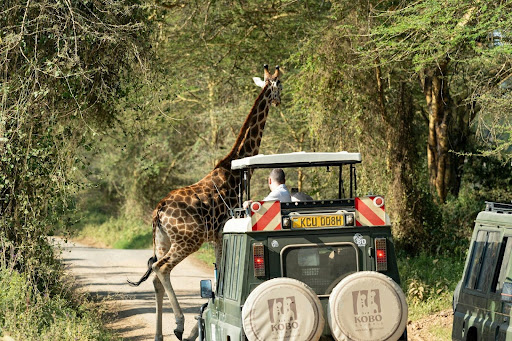
Not every wildlife sighting becomes a story.
Some moments are exciting at the time — the jeep halts, cameras lift, someone whispers — and yet, a few months later, the memory has softened around the edges. You remember that you saw something, but not quite how it felt.
Other encounters stay with you. They surface unexpectedly years later. A particular light. A stillness before movement. The way everyone fell silent without being asked to.
Travellers who set out on thoughtfully curated journeys with specialists such as Wildfoot Travel, known for designing considered luxury wildlife holidays, often discover that the difference between a pleasant sighting and an unforgettable one is rarely about proximity alone. It is something more layered than that. And sometimes, something quieter.
So what actually makes a wildlife encounter unforgettable?
The Difference Between Spotting And Witnessing
There’s a distinction worth making early on: spotting is not the same as witnessing.
Spotting is quick. It satisfies expectation. It answers the question, Did we see one? Witnessing is slower. It has texture. It carries context.
You might see a lion from twenty metres away and feel only mild satisfaction. You might watch one from much farther off, barely distinguishable at first, and feel something far deeper — because you’ve been there long enough to understand what is unfolding.
Unforgettable moments rarely arrive as dramatic declarations. They build. They ask you to stay.
Context Changes Everything
The same animal, in a different setting, can feel entirely different.
Understanding behaviour transforms an encounter. Knowing why a herd is restless. Recognising a change in wind direction. Hearing from a guide that what you are witnessing is rare not because of the species, but because of the behaviour.
Context creates meaning.
Without it, wildlife can become a catalogue of images. With it, each sighting becomes part of a larger narrative — migration patterns, seasonal rhythms, territorial disputes, subtle hierarchies.
It is here that expertise quietly matters. A knowledgeable guide doesn’t narrate every movement; they interpret when necessary, then allow the moment to breathe. That balance — between information and silence — often determines how deeply something lands.
You begin to see not just the animal, but the ecosystem around it.
Patience As An Invisible Ingredient
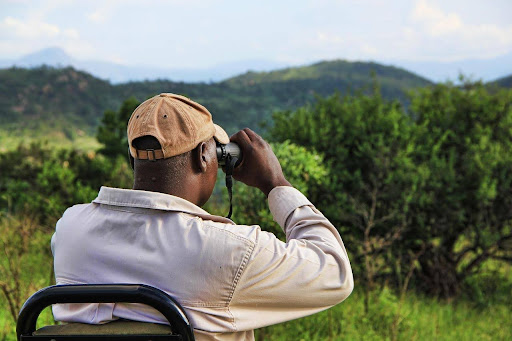
Wildlife does not perform on cue. And that is precisely the point.
There is a peculiar tension in waiting. The quiet hope that something might happen. The acceptance that it might not. Modern travel rarely allows this kind of uncertainty. We are used to itineraries that promise delivery.
In wildlife environments, you wait. You listen. You adjust.
When something finally unfolds — a hunt beginning, a bird taking flight, a whale surfacing in a rhythm you did not predict — the effort invested in waiting amplifies the impact. The memory carries the weight of time.
Oddly, the waiting itself often becomes part of what you remember. The hush in the vehicle. The shared glance when movement is spotted. The collective intake of breath.
It’s rarely rushed. And that slowness is not a flaw; it is an ingredient.
Environment: The Setting Shapes The Story
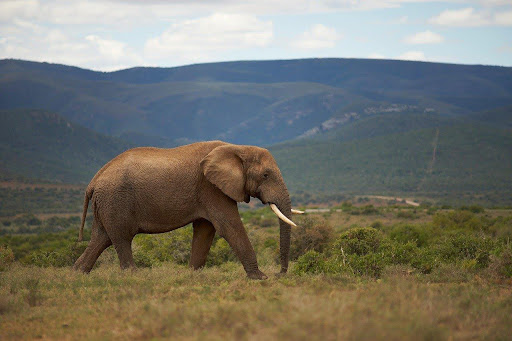
Remove the landscape, and the memory weakens.
Light filters differently across savannah grass at dawn than it does across polar ice at dusk. Humidity clings to rainforest air in a way that sharpens every sound. Wind over desert plains carries a certain loneliness.
Wildlife encounters are inseparable from their environment. The terrain frames them. The weather complicates them. The remoteness intensifies them.
Sometimes, it isn’t the animal that lingers in memory at all. It is the feeling of being there — the vastness, the quiet, the subtle sense of insignificance that wild places gently impose.
That sense of scale can be disorienting at first. Then it becomes grounding.
Timing: When The Moment Chooses You
People often speak about “being in the right place at the right time” as though it were luck alone. In wildlife travel, timing is part preparation, part unpredictability.
Seasonal rhythms matter. Migration routes shift. Calving seasons alter behaviour. Rain changes landscapes and visibility.
Yet even the most carefully timed journey cannot manufacture a perfect encounter. And perhaps that is why the moments that do unfold feel so powerful — they are not guaranteed.
You might spend hours watching nothing more dramatic than grazing. Then, without warning, something shifts. A sudden run. A flock lifting. A ripple in still water.
The unpredictability heightens awareness. You begin to pay attention not only to what is happening, but to what might.
What You Bring With You
Two travellers can stand side by side and experience the same sighting entirely differently.
Fatigue dulls perception. Overexcitement can rush appreciation. Expectation sometimes narrows focus — when you are intent on seeing one particular animal, you may overlook something equally compelling nearby.
There is a certain openness required to truly absorb a wildlife moment. A willingness to let go of what you hoped for and accept what is present.
Interestingly, many travellers find that by the middle of a wildlife journey, their mindset shifts. The need to “see everything” fades. Curiosity replaces ambition. Attention sharpens.
And with that shift, encounters deepen.
The Quiet Role Of Expertise
Behind the scenes of any well-run wildlife journey is a framework of experience.
Understanding where to position a vehicle. Knowing when to stay and when to move. Reading animal behaviour accurately enough to avoid intrusion. Respecting distance without diminishing experience.
On luxury wildlife holidays designed with care, this expertise operates almost invisibly. Travellers feel relaxed, not managed. Supported, not directed.
That ease creates space. And space allows moments to unfold without pressure.
It is perhaps no coincidence that many of the most memorable wildlife encounters occur when travellers feel unhurried and safe enough to simply observe.
Why Fewer Encounters Often Feel Richer
There is a temptation to measure wildlife travel by quantity. The number of species seen. The checklist completed.
Yet volume can blur memory.
When encounters are too frequent, they begin to compete. One sighting overlaps the next. The extraordinary becomes routine.
In contrast, staying longer in one region, returning to the same landscape across several days, allows familiarity to build. Subtle changes become visible. Behaviour patterns emerge.
Depth replaces breadth.
It may feel counterintuitive, but fewer, more immersive encounters often prove more enduringthan a rapid succession of dramatic ones.
What Travellers Remember Years Later
Ask someone about a wildlife journey years after it ends, and they rarely begin with statistics.
They remember the sound of insects at dusk. The colour of the sky before sunrise. The feeling of cold air on their face as a whale surfaced nearby.
They remember silence.
They remember the shared experience — a look exchanged, a collective stillness, the sense that everyone present understood something unspoken.
Photographs fade. Details soften. But the feeling of being fully attentive in a wild place remains surprisingly intact.
Redefining “unforgettable”
An unforgettable wildlife encounter is not necessarily the rarest animal or the closest sighting.
It is a convergence.
Of context and patience. Of environment and timing. Of expertise and openness. Of expectation softened just enough to allow surprise.
In the end, what makes a wildlife moment unforgettable may have less to do with the animal itself and more to do with the way we were present when it appeared.
And perhaps that is the quiet gift of wildlife travel. It teaches us — gently, without announcement — how to pay attention again.
Jump to
The Difference Between Spotting And Witnessing
Context Changes Everything
Patience As An Invisible Ingredient
Environment: The Setting Shapes The Story
Timing: When The Moment Chooses You
What You Bring With You
The Quiet Role Of Expertise
Why Fewer Encounters Often Feel Richer
What Travellers Remember Years Later
Redefining “unforgettable”

Callum Fraser
Author
Callum Fraser isn't just a writer about Scotland; he's a product of its rugged landscape and rich history. Born and raised in Perthshire, with the Highlands as his backyard, his love for the nation's stories was kindled by local storytellers and long walks through ancient glens.
This passion led him to pursue a degree in Scottish History from the University of Edinburgh. For over 15 years, Callum has dedicated himself to exploring and documenting his homeland, fusing his academic knowledge with essential, on-the-ground experience gained from charting road trips through the Cairngorms, hiking the misty Cuillins of Skye, and uncovering the secrets of traditional recipes in his family's kitchen.
As the Editor-in-Chief and Lead Author for Scotland's Enchanting Kingdom, Callum's mission is simple: to be your most trusted guide. He combines meticulous research with a storyteller's heart to help you discover the authentic magic of Scotland — from its best-kept travel secrets to its most cherished traditional recipes.
Latest Articles
Popular Articles