Why Palau Feels Like A Turning Point For Underwater Explorers
Palau doesn’t ease you in. There’s no gradual warm-up, no gentle introduction that lets you believe you’re still in familiar territory.
Author:Callum FraserJan 19, 2026
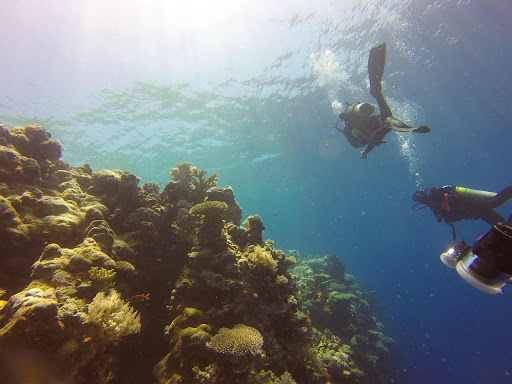
Palau doesn’t ease you in.
There’s no gradual warm-up, no gentle introduction that lets you believe you’re still in familiar territory. Even before you enter the water, there’s a sense that this place operates by different rules. Fewer flights. Fewer resorts. A kind of intentional friction that quietly filters who arrives — and perhaps more importantly, why.
For underwater explorers, that difference matters.
Palau often comes up later in conversations. Not as someone’s first great dive destination, but as the place they talk about after they’ve already seen a lot. The tone shifts when they mention it. Slower. More precise. Less about what they saw, more about how it felt.
A destination shaped by restraint, not access
One of the reasons Palau feels like a turning point is its relationship with restraint.
Long before sustainability became a marketing phrase, Palau made deliberate choices about what kind of tourism it wanted. Large-scale development was never the goal. Marine protectionwasn’t treated as an add-on. Entire areas were closed. Rules were enforced. Limits were accepted.
That approach reshaped how scuba diving in Palauevolved. Instead of focusing on volume or convenience, the experience became centered on preservation and awareness. You’re not there to conquer a site or collect it. You’re there to move through it carefully, knowing that access is conditional.
That alone changes the mindset of the diver — especially one who’s spent years in places where reefs feel increasingly compromised.
Density over drama
Palau doesn’t rely on constant spectacle, even though the spectacle is there.
What stands out instead is density. Life layered upon life. Reefs that feel structurally complex rather than visually staged. Sharks that don’t feel like rare sightings, but part of the ecosystem’s background rhythm.
For explorers who’ve spent time underwater elsewhere, this density registers differently. It’s not the rush of a single moment, but the sustained awareness that something is working here — ecologically, not theatrically.
You begin to notice smaller interactions. Subtle shifts in behavior. The way currents bring energy rather than chaos. It’s immersive in a way that doesn’t demand attention, but quietly holds it.
Currents that teach, not intimidate
Palau’s currents are often mentioned with a hint of reverence. Not fear, exactly — more respect.
They’re strong in places, yes. Unpredictable at times. But they’re also purposeful. They feed the reefs. They attract pelagic life. They shape how dives are planned and how divers move.
For underwater explorers, this is part of the appeal. Currents here aren’t obstacles to be avoided; they’re features to be understood. You don’t rush through them. You read them. You adjust.
That process creates a subtle shift. Diving becomes less about control and more about participation. You’re not imposing yourself on the environment — you’re responding to it.
The moment expectations quietly change
Many divers describe Palau as the place where their expectations recalibrated.
Not because everything else suddenly felt disappointing, but because Palau introduced a different baseline. A sense of what’s possible when protection is taken seriouslyover decades, not seasons. When limits are enforced even when they’re inconvenient.
After Palau, phrases like “untouched” or “pristine” start to sound vague. You become more critical. More observant. Less impressed by surface-level claims.
That shift is subtle, but lasting. It’s one of the reasons Palau is often framed not as a highlight, but as a reference point.
Above water, the message stays consistent
What’s interesting is how consistent Palau feels above water too.
There’s no rush to entertain. No pressure to compress the experience. Things move at their own pace. Conversations with local guides often drift toward responsibility rather than excitement. Pride, not promotion.
This consistency reinforces the underwater experience. It tells you that what you’re seeing below the surface isn’t accidental. It’s the result of long-term thinking and collective agreement.
For explorers, that coherence matters. It adds credibility. It makes the experience feel earned rather than curated.
Why Palau stays with people
Palau doesn’t try to be everything. And that’s exactly why it lingers.
It asks something of the diver — patience, respect, attentiveness — and gives something back in return. Not always in dramatic moments, but in quiet realizations. In the sense that you’ve glimpsed what underwater environments can look like when given time and protection.
That’s why Palau feels like a turning point.
Not because it’s the final destination, but because it subtly changes how you see all the others that follow.

Callum Fraser
Author
Callum Fraser isn't just a writer about Scotland; he's a product of its rugged landscape and rich history. Born and raised in Perthshire, with the Highlands as his backyard, his love for the nation's stories was kindled by local storytellers and long walks through ancient glens.
This passion led him to pursue a degree in Scottish History from the University of Edinburgh. For over 15 years, Callum has dedicated himself to exploring and documenting his homeland, fusing his academic knowledge with essential, on-the-ground experience gained from charting road trips through the Cairngorms, hiking the misty Cuillins of Skye, and uncovering the secrets of traditional recipes in his family's kitchen.
As the Editor-in-Chief and Lead Author for Scotland's Enchanting Kingdom, Callum's mission is simple: to be your most trusted guide. He combines meticulous research with a storyteller's heart to help you discover the authentic magic of Scotland — from its best-kept travel secrets to its most cherished traditional recipes.
Latest Articles
Popular Articles