Balgonie Castle | History, Hauntings, Outlander & Visiting Info
Balgonie Castle, the Laird's home in Fife. Get verified info on opening times, chapel dates, costs, Outlander scenes, and wedding capacities. Plan your visit!
Author:Callum FraserDec 02, 202510.2K Shares201.6K Views
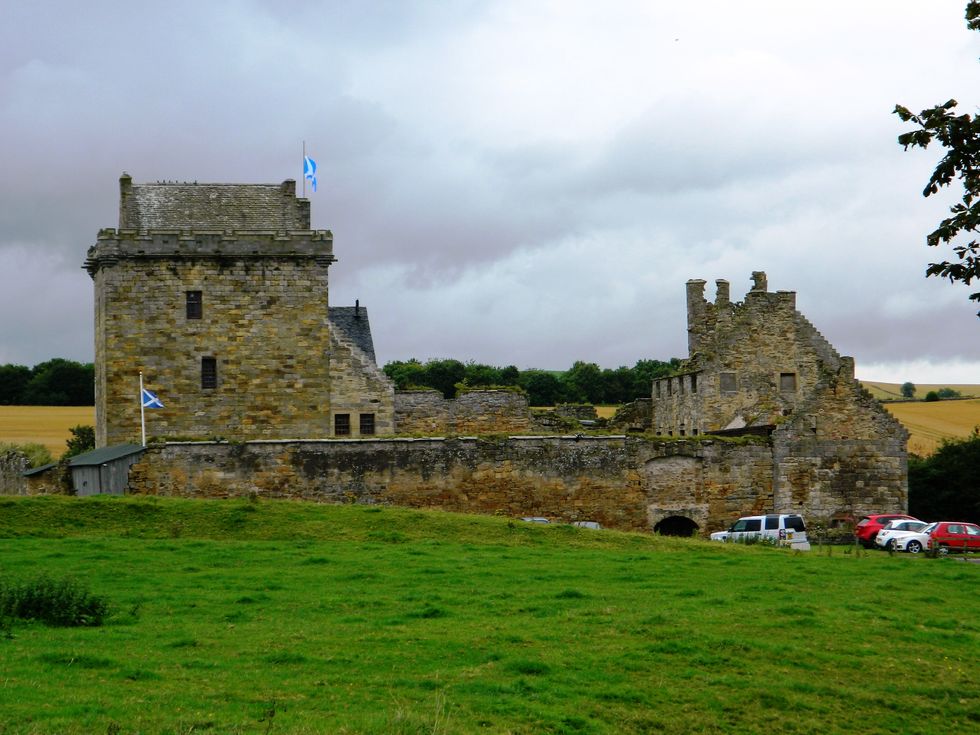
Balgonie Castle - Scotland's Most Authentically Preserved Medieval Fortress
Balgonie Castle, majestically situated on the south bank of the River Leven near Milton of Balgonie, is a magnificent testament to resilience. Unlike many grandly homogenous Scottish castles, Balgonie is a striking, powerful composite.
Its core is a formidable 14th-century keep, surrounded by a tapestry of additions woven over four centuries. Crucially, its present-day status as a celebrated events venue and home-rescued from the brink of ruin by its dedicated owner-underscores its unique historical value.
Balgonie's story is exceptional. It encapsulates not only the strategic military and aristocratic history of Fife but also a profoundly personal tale of restoration that began in the 1970s.
The challenge of integrating the original medieval keep, the roofless ranges, and the atmospheric chapel into a functioning home while preserving its status as a Scheduled Ancient Monument is an extraordinary demonstration of expertise and passion.
Balgonie is Category A listed (LB16664) and also has scheduled elements (SM6411); importantly, the occupied tower is excluded from scheduling-hence it can be lived in while other areas remain archaeologically protected.
This guide goes beyond the surface stories to give a full picture of the castle's complicated history, from its military beginnings to its current use as a movie set and one of Scotland's most haunted places.
Balgonie Castle History Through Its Families
The castle's remarkable architectural diversity is a direct result of its succession of powerful and influential owners, each leaving an indelible mark on its structure.
Sibbald Beginnings: A Tower For Royal Service (14th Century)
The castle’s foundation was laid by the Sibbald family, whose lairds appear in records as early as the 13th century and were linked to royal service as treasurers.
- The Tower of Balgonie:The oldest masonry is the great tower, built in the mid-1300s. Its construction of finely dressed sandstone ashlar and its immense walls (over 10 feet thick) establish it as a key example of a vertical, fortified home.
- Original Layout:Inside, storage and service spaces sit below a vaulted first-floor hall, with two residential chambers above, linked by a tight turnpike stair. The hall was unusual for Fife: no grand wall fireplace-heat likely came from braziers, with small ventilation shafts handling smoke.
Lundies And Royal Visitors (15th Century)
The lands and tower passed to Sir Robert Lundiethrough marriage. He undertook the first major expansion to enhance comfort and accommodation.
- The East Range: Around 1496, Sir Robert added a range along the east side of the courtyard, including a long hall and an upper solar. This section incorporated the original 14th-century chapel.
- Underlining Status: King James IVvisited in August 1496, rewarding the masons with a cash gift, a sign that the works were significant. Mary, Queen of Scots is also recorded as a later visitor.
Leslie Era: From War To Grandeur (17th Century)
The most transformative period began in 1635 with the purchase by Sir Alexander Leslie, a professional soldier who became Field Marshal in the Swedish army and later commanded the Covenanters.
- Extensive Modernization:Leslie added a two-storey block at the south-east corner and raised the north range by an extra storey. His initials (FSAL) and those of his wife, Dame Agnes Renton (DAR), are found inscribed in the south-east block, dating this work prior to his elevation as 1st Earl of Leven in 1641.
- The master mason’s link:The defensive gap between the keep and the north range was permanently bridged in 1666 by a scale-and-plattstair built by John Mylne of Balfarg, the King’s Master Mason. The original stone stair suffered vandalism in the 1960s and was later rebuilt in timber.
Jacobites, Balfours, And Decay (18th–19th Centuries)
After passing to the Melvilles (Earls of Leven), the castle suffered a famous raid by Rob Roy MacGregor and approximately 200 clansmen in 1716.
Rates and Ruin:In 1824, the castle was sold to James Balfour of Whittingehame, ancestor of future Prime Minister Arthur Balfour. He was unable to arrest its decay, and the roofs were deliberately removed mid-century to avoid property taxes/rates, accelerating decades of decay and vandalism.
The Modern Rescue: The Current Owner's Restoration Effort
The narrative of Balgonie Castle transitions from decline to determined survival with its modern custodianship, highlighting one of the most significant private restoration projects in Scotland since the 1970s.
Decades Of Dedicated Restoration
Restoration began modestly in 1971 under David Maxwell, but the major phase of work, transforming the keep from a "near ruin" to a sound structure, has been undertaken by the current family.
Who owns Balgonie Castle?The current owner and resident custodian is Raymond Morris, the Laird of Balgonie and Eddergoll, and his family, who purchased the castle in 1985.
Raymond Morris, an artist and craftsman, has led the hands-on restoration. His son, Stuart Morris, continues this work and is a member of the Council of the Stewart Society, demonstrating the family’s authoritative and committed involvement in Scottish heritagebeyond just ownership.
Deliberate Mix of Habitable and Ruinous:The family has focused on fully restoring spaces they actively use-the Tower House, the chapel, and the Great Hall-while leaving other sections, such as the east and south ranges, stabilized but roofless, preserving the evocative "living ruin" aesthetic.
Unique Architectural Spaces For Hire
The painstaking restoration allows the castle to function as a premier event venue, utilizing its most atmospheric rooms.
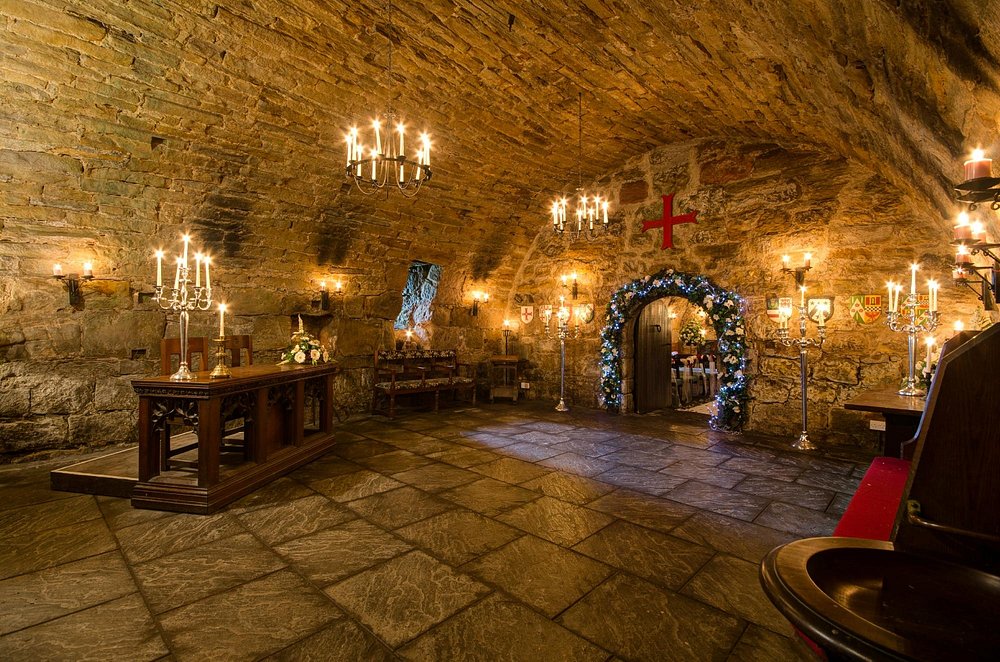
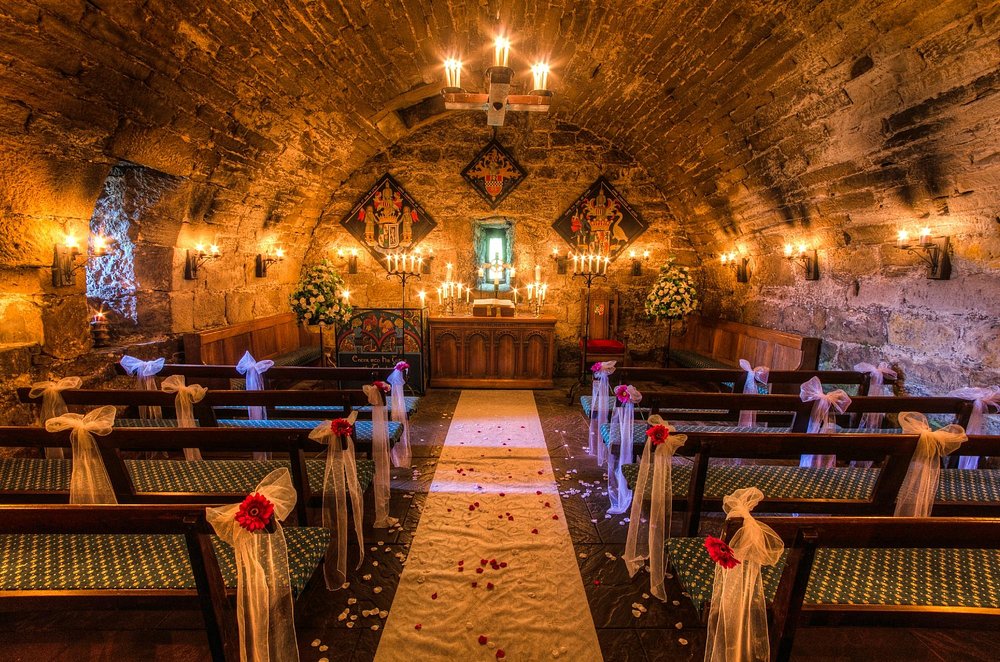
- The Medieval Chapel:A rare medieval castle chapel still in active use, it is used for ceremonies and is intentionally lit only by candlelight, creating a uniquely authentic atmosphere. A public chapel service is usually held on the third Sunday of each month-always confirm dates before travelling.
- The Great Hall:Used for weddings and banquets, the original hall on the first floor of the keep is a key feature, famous for its excellent acoustics, and is notable for its medieval design that originally lacked a large wall fireplace. Capacities that matter. The Chapel seats ~70, with an additional ~30in the Chapter Hall. The Great Hall seats up to 58for banquets-intimate by design, and all the better for it.
- Ceremony licensing:The castle is licensed for civil as well as religious ceremonies.
What The Castle Looks Like Today
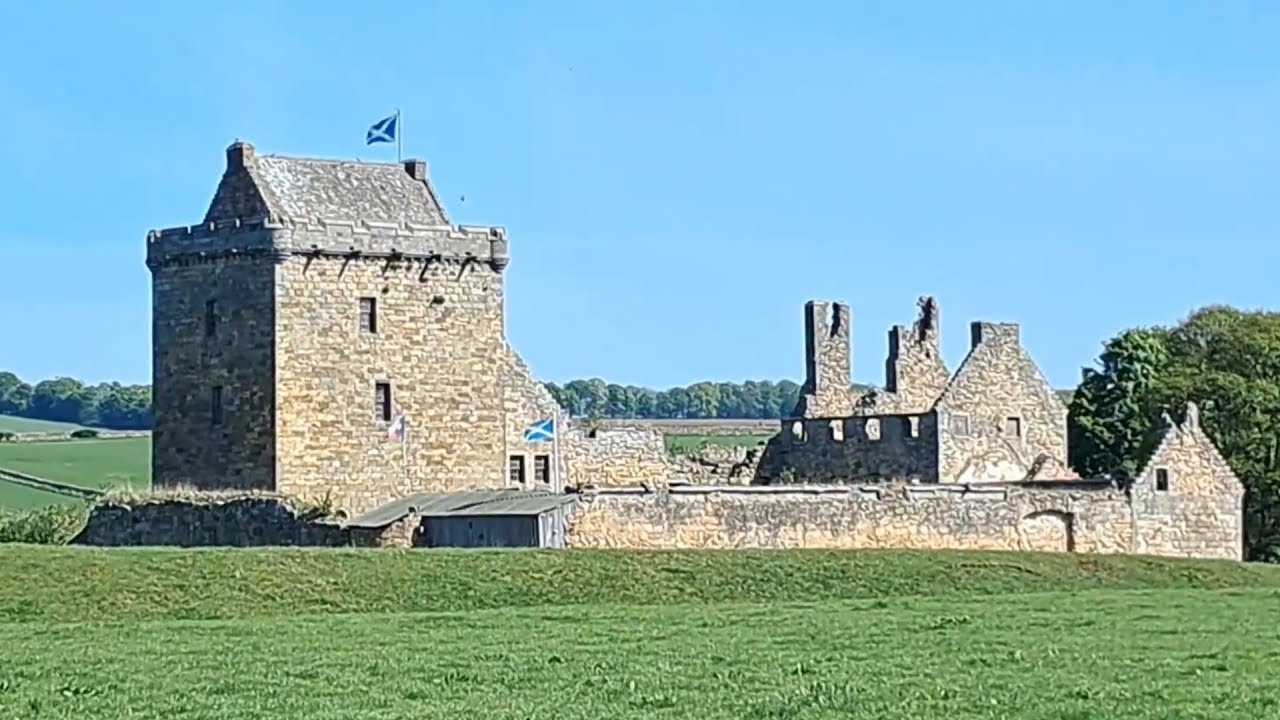
BALGONIE CASTLE, SCOTLAND
The Sandstone Tower
The tower is built of hard sandstone ashlar and currently stands five storeys high, about 75 feet to the parapets.
- Vaulted ground floor for storage and service use.
- A first-floor hall which originally lacked a big wall fireplace, likely heated by braziers.
- Two further upper floors with fireplaces and a tight spiral stair running between them.
- A parapet walk with 17th-century cannon spouts and crow-stepped gables.
- Surviving cusped/trefoil windows alongside later enlarged openings show the keep’s layered evolution.
Courtyard, Leslie Block And Chapel
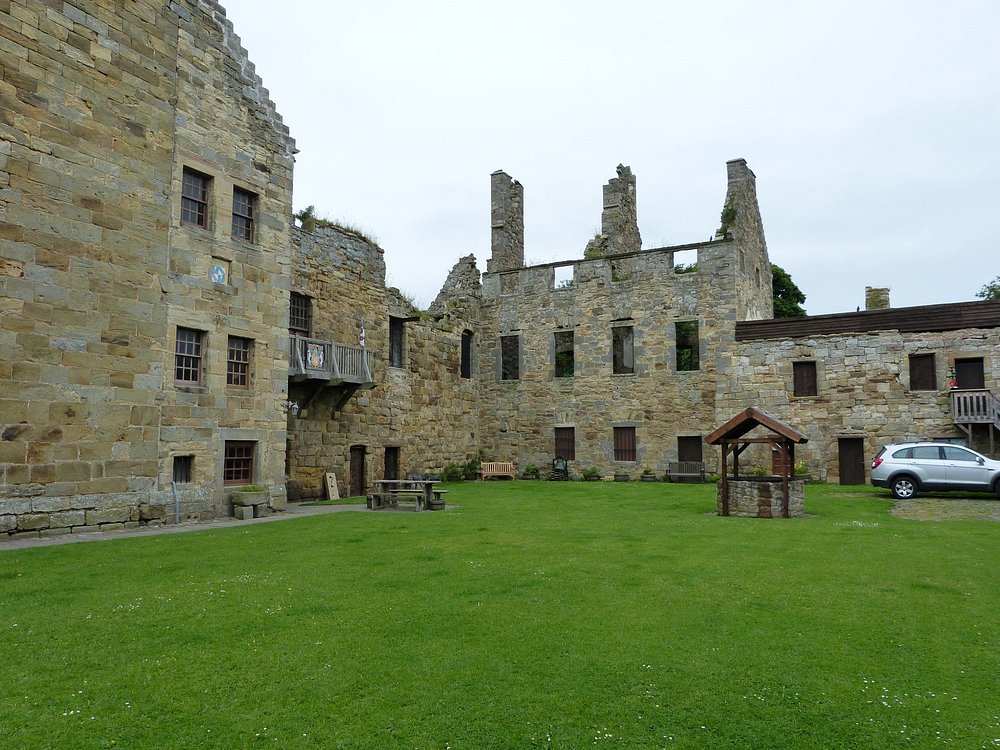
The tower stands at the north-west corner of a courtyard entered through a 15th-century gatehouse. The gate passage still contains a guardroom and a small prison cell, then opens onto a yard with a central well.
Guided tours often start in the three vaults of the 17th-century Leslie block:
- The west vaultwas once a kitchen and now serves as a workshop.
- Two linked vaults to the east form a chapel fitted out with salvaged pews.
- The upper floors of this block remain roofless, reinforcing the “living ruin” feeling.
Elsewhere in the courtyard, you’ll see:
- The restored great hallused for weddings and banquets.
- Roofless east and south ranges with intact chimneys and wall lines marking where earlier buildings once stood.
- Archaeology & grounds:1978 excavations revealed earlier buildings cleared during 17th-century remodelling; outside the walls, parts of the deer-park boundary survive.
A Deliberate Mix Of Habitable And Ruinous Spaces
The laird’s family has focused on restoring spaces they actively use - tower rooms, chapel, great hall - while leaving other parts stabilised but unrestored.
For visitors, that means you can:
- Step into functioning interiors with lighting, seating and displays.
- Immediately contrast them with raw stone shells open to the sky, which show how close Balgonie came to complete collapse.
Essential Visitor Information And Address
Planning a visit requires understanding the castle's unique operational status as a private home and event venue.
Balgonie Castle Address And Location Details
The castle offers a convenient stop for travelers exploring the historic Kingdom of Fife.
- Geographic Context:Balgonie Castle is located just 3.5 kilometres (2.2 miles) east of Glenrothes, near the parish of Markinch. It sits on a bluff above the River Leven, offering a natural defensive line.
- Official Address:Balgonie, Glenrothes, Fife, Scotland, KY7 6HQ.
- Coordinates:56°11′38″N 3°06′33″W / 56.1938°N 3.1092°W.
Balgonie Castle Opening Times And Accessibility
The most common confusion for visitors is the variable accessibility.
- Can you visit Balgonie Castle?Yes, but access is typically pre-arranged. It is not a walk-up attraction with fixed daily hours.
- Why is Balgonie Castle closed?General travelplatforms often flag the castle as "closed" because it doesn't run a daily ticketed operation. It is closed to general visitors when booked for private events (weddings, filming) or during off-peak seasons.
- How Public Access Works:Visitors gain entry via: 1) Pre-booked guided tours, 2) Public events (such as the regular monthly chapel service or medieval re-enactment days), or 3) Private hire. Always contact the castle directly to confirm opening times for your chosen date.
Visitor Prices And Duration
There is no single "ticket price" for Balgonie Castle.
- Costs: Fees are charged per person for small group tours. Weddings and corporate events are quoted as bespoke packages. Always confirm the current prices directly with the castle office.
- Duration:A typical guided visit lasts approximately 1 to 2 hours, covering the courtyard, chapel, vaults, hall, and the stories of the tower.
Related Reading: Scotland Castles Map Guide
Balgonie Castle Haunted By Green Jeanie
Its long history is rife with reports of paranormal activity, establishing Balgonie as one of the most authentically haunted Scottish castles.
- The Green Lady:The famed spectre is Green Jeanie (or the Green Lady), believed to be linked to the Lundie family. Sources as early as the 1840s refer to her as a "well-known phantom."
- Other Hauntings:Reports include a 17th-century soldier spotted in the courtyard, a hooded figure, and disembodied voices in the Great Hall. The finding of a skeleton under the Great Hall floor in 1912 adds a grim physical element to the castle's ghostlore.
- Modern Investigations:Balgonie is a regular venue for organized paranormal investigations, with teams reporting Electronic Voice Phenomena (EVPs) and repeated sightings of Green Jeanie.
Also Check Out: 15 Most Haunted Castles In Scotland
Balgonie And Outlander
Balgonie Castle is recognized globally for its appearance in the television adaptation of Diana Gabaldon's beloved series.
- Filming Location:It served as the setting for the home of Sir Fletcher MacRannoch in OutlanderSeason 1, Episode 15. The castle’s rugged courtyard and hall provided the perfect moody backdrop for the scenes prior to the attempt to free Jamie from Wentworth Prison.
- Screen-Tour Fit:Due to its proximity to Falkland (which stood in for 1940s Inverness), Balgonie slots neatly into a single-day Outlander-themed loop through Fife.
Weddings And Events In The Chapel And Great Hall
Why Couples Are Drawn To It
Several strong points keep Balgonie high on the list for couples who want a small, atmospheric Scottish castle wedding:
- A medieval chapel, restored in 1989, with stone vaulting and candlelight.
- A barrel-vaulted great hallpromoted as one of the oldest and finest preserved halls in Fife, ideal for feasts and speeches.
- A real courtyard inside the main walls, which works brilliantly for photographs.
- The fact that the Morris family were the first in Fife to secure a civil marriage licence for their castle, so both religious and civil ceremonies are possible.
Because the laird and his family live on site and are directly involved, the overall feel is much more “hosted in a private home” than “processed through a wedding factory”.
Practical Planning Notes
When you’re in early discussions, it helps to clarify:
- Capacitiesfor chapel and hall (seated vs. standing), especially if you want a banquet rather than a simple drinks reception.
- Accessibilityfor older or less mobile guests, given the presence of stone steps and uneven surfaces.
- Schedule- when you can get access for decorating, photography and breakdown.
- Supplier policies- whether you’re free to bring your own caterers, musicians and florists or are expected to use regular collaborators.
Most couples arrange accommodation in nearby Glenrothes, Markinch or St Andrews and travel in on the day, since the castle doesn’t market itself as a hotel.
Frequently Asked Questions (FAQs)
Who Is The Laird Of Balgonie Castle?
The current Laird of Balgonie and Eddergoll is Raymond Morris. He holds the courtesy style of laird as the landowning head of the estate and has been the castle’s resident custodian and restorer since 1985.
Can You Stay Overnight In Balgonie Castle?
The castle does not typically offer standard B&B services; it functions as a family home and an event venue. Most visitors and wedding parties arrange accommodation in nearby towns like Glenrothes or St Andrews.
What Is The Balgonie Castle Address?
The official address is Balgonie, Glenrothes, Fife, Scotland, KY7 6HQ. It is located near the village of Milton of Balgonie.
How Do I Book A Tour If The Website Says It’s Closed?
You must bypass generic travel listings and contact the castle directly via their official website or phone number. Ask specifically about current dates for pre-booked guided tours, public events, or the monthly chapel service.
Is Balgonie Castle Featured In Outlander?
Yes, Balgonie Castle was used as a filming location in OutlanderSeason 1, where its courtyard and great hall served as the exterior and interiors of MacRannoch’s home.
How Long Should I Allow For A Tour?
Most visitors who join a pre-arranged tour report that the visit lasts approximately 1 to 2 hours, covering the main restored areas and historical commentary.
When Is The Chapel Service?
A public service is usually held on the third Sunday of each month. Always confirm the specific date and time before travelling.
Is Any Part Of The Castle A Private Residence?
Yes-the toweris lived in. That’s one reason access is scheduledrather than daily, and why the tower is excluded from schedulingin heritage terms.
A Quick Recap
Balgonie Castle is not a passive museum; it is a dynamic, living piece of Scottish heritage. Its profound authenticity-a mix of the fully restored, fortress-like 14th-century keep and the windswept 17th-century ruins-is its greatest asset.
The tireless dedication of the Morris family, the castle's rich history stretching from King James IV to Field Marshal Leslie, and its captivating ghostlore make it a truly unique destination.
If you are planning to experience the raw history of Scotland or seek the perfect atmospheric backdrop for an event, approach Balgonie Castle not as a standard attraction, but as a remarkable private home you are privileged to visit. Confirm your arrangements directly, and prepare to immerse yourself in one of Fife's most resilient stories.
Continue Reading: 50 Most Beautiful Scottish Castles
Jump to
Balgonie Castle - Scotland's Most Authentically Preserved Medieval Fortress
Balgonie Castle History Through Its Families
The Modern Rescue: The Current Owner's Restoration Effort
What The Castle Looks Like Today
Essential Visitor Information And Address
Balgonie Castle Haunted By Green Jeanie
Balgonie And Outlander
Weddings And Events In The Chapel And Great Hall
Frequently Asked Questions (FAQs)
A Quick Recap
Callum Fraser
Author
Callum Fraser isn't just a writer about Scotland; he's a product of its rugged landscape and rich history. Born and raised in Perthshire, with the Highlands as his backyard, his love for the nation's stories was kindled by local storytellers and long walks through ancient glens.
This passion led him to pursue a degree in Scottish History from the University of Edinburgh. For over 15 years, Callum has dedicated himself to exploring and documenting his homeland, fusing his academic knowledge with essential, on-the-ground experience gained from charting road trips through the Cairngorms, hiking the misty Cuillins of Skye, and uncovering the secrets of traditional recipes in his family's kitchen.
As the Editor-in-Chief and Lead Author for Scotland's Enchanting Kingdom, Callum's mission is simple: to be your most trusted guide. He combines meticulous research with a storyteller's heart to help you discover the authentic magic of Scotland — from its best-kept travel secrets to its most cherished traditional recipes.
Latest Articles
Popular Articles