Religion In Scotland - No Religion, Christianity And Minority Faiths
Religion in Scotland has moved from Protestant dominance to a ‘no religion’ majority. See how history, census data and diverse faiths shape modern Scottish society.
Author:Callum FraserDec 05, 202531.7K Shares962.8K Views
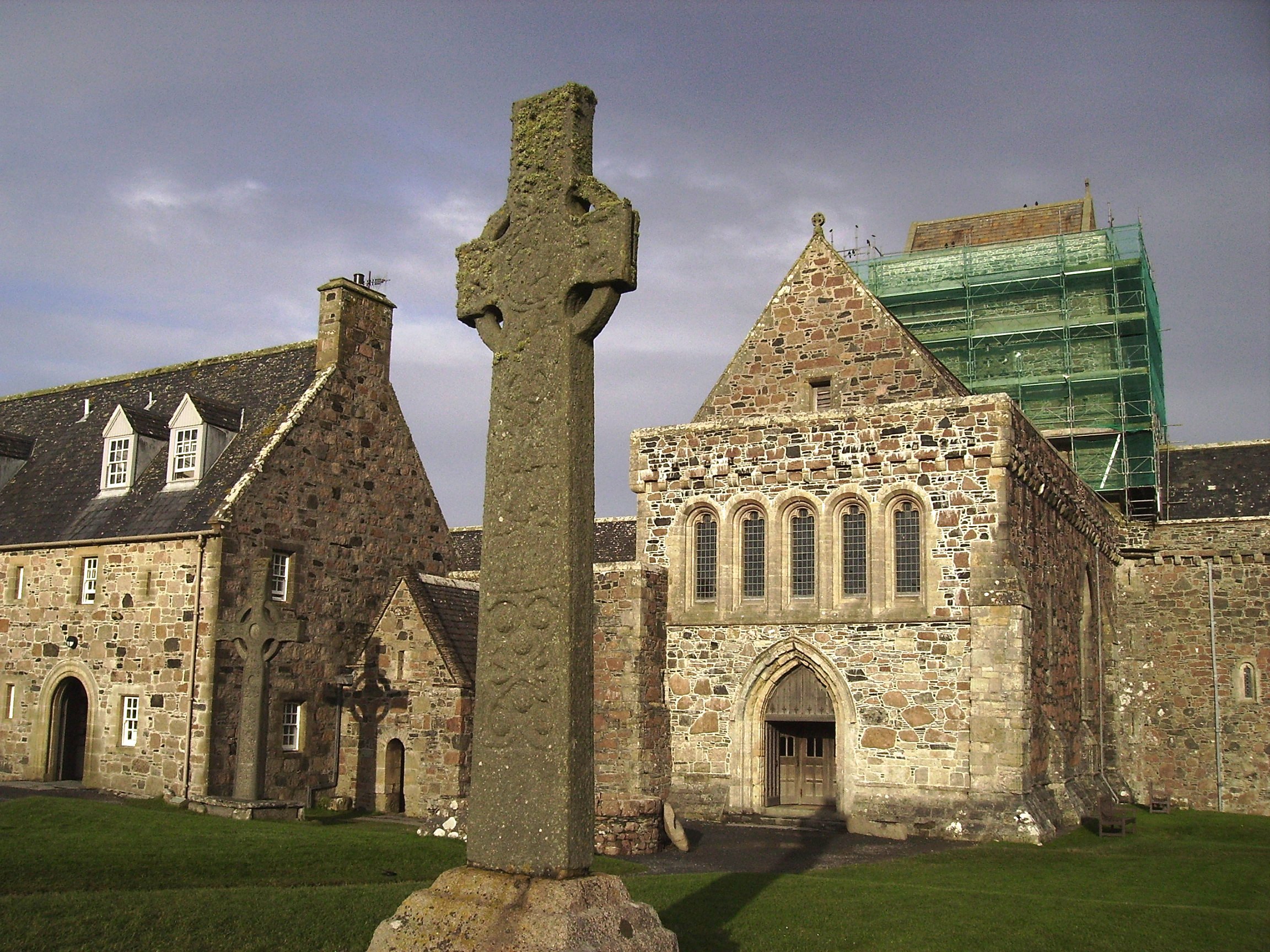
Religion In Scotland Today: From ‘No Religion’ Majority To Multi-Faith Society
For centuries, the story of religion in Scotlandwas defined by two powerful forces: the Catholic Church and the Presbyterian Church of Scotland. This historical narrative shaped everything from national identity to architecture.
However, modern Scotland is experiencing a profound shift, one that challenges popular assumptions and requires a completely new lens for understanding its social fabric.
Religion in Scotland today is best described as a majority “no religion” society, with a shrinking but still significant Christian presence and small but established minority faiths.
We see the same questions again and again: “What is Scotland’s main religion?”, “Is it safe for Muslims?”, “What was Scottish religion before Christianity?” This guide pulls those threads together so you can understand where Scotland has come from, what religion looks like now, and what that means for everyday life and travel.
Religion In Scotland Today: Key Facts At A Glance
You’ve come with concrete questions, so this section gives you the short, data-backed answers firstbefore we walk through the history that shaped them.
- As of Scotland’s Census 2022, the majority of people said they have no religion.
- Christianity is the largest overall religious group, encompassing the Church of Scotland, Roman Catholic Church, and other denominations.
- Islam and other minority faiths are established, primarily in Scotland's major cities.
- Scotland’s historic identity is strongly Protestant and Presbyterian, yet today it is religiously mixed and majority non-religious.
- Freedom of religion and belief is legally protected, and public debate increasingly focuses on how both faith and non-faith sit within schools and civic life.
Taken together, these points show why simple labels like “Protestant Scotland” no longer fit.
Religion By The Numbers: Scotland’s Census 2022
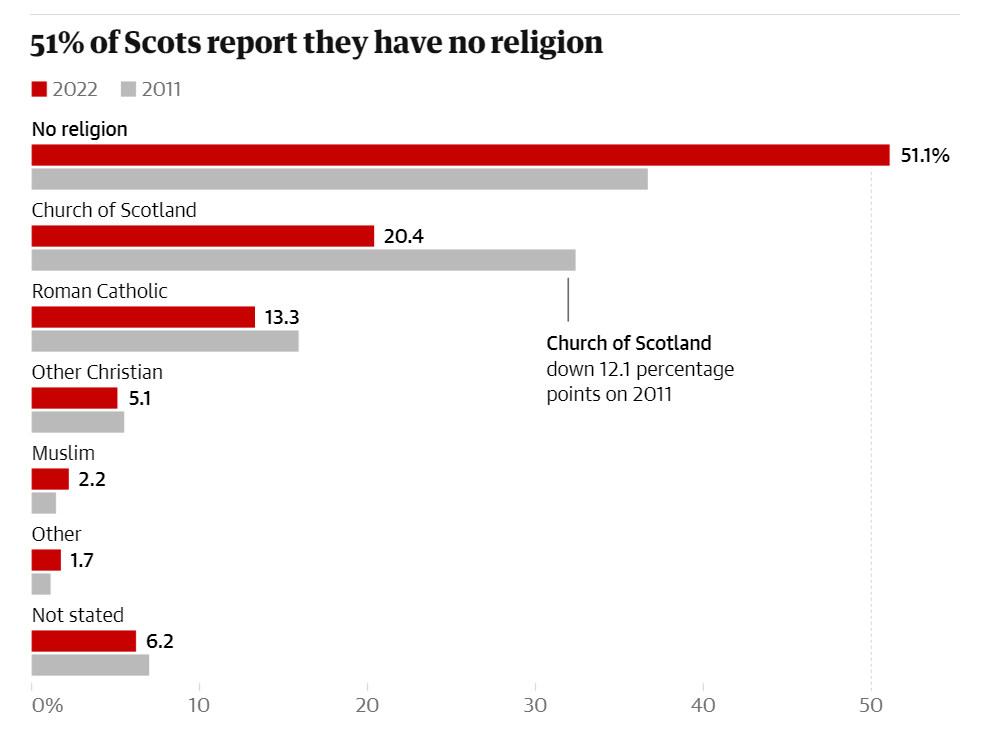
If you want to understand religion in Scotland today, the 2022 censusis your best starting point. It’s the first time a modern Scottish census shows more people with no religion than with any religion at all.
According to National Records of Scotland, the headline figures are:
- No religion - ~51.1%: A narrow majority of people see themselves as non-religious.
- Christian (all) - ~38.8%: Still the largest overall religious group, but now a minority.
- Church of Scotland - ~20%: Historically dominant national church, now much reduced.
- Roman Catholic - ~13%: Especially strong in parts of the west and central belt.
- Other Christian - ~6%: Includes Episcopalian, Baptist, Pentecostal and other denominations.
- Muslim - ~2.2%: Growing, mainly urban communities.
- Hindu, Sikh, Buddhist, Jewish, other religions - small fractions each: Present, established, but tiny minorities overall.
To see how quickly things have shifted, Christianity has fallen from about 65.1% of the population in 2001 to 53.8% in 2011 and 38.8% in 2022, while “no religion” has risen from 27.6% to 36.7% to 51.1% over the same period (Data as of May 2024).
Over that period, Islam grew from 0.8% to 1.4% to 2.2%, and Hinduism from 0.1% to 0.3% to 0.6%, with smaller increases in Buddhism, Sikhism and other faiths (Data as of May 2024).
Figures are drawn from National Records of Scotland’s 2001, 2011 and 2022 census releases. (Data as of May 2024.)
These numbers show two big stories: Secularisation (the steady growth of people ticking “no religion”) and Pluralisation (a slow but clear increase in minority faith communities).
How “no Religion” Became The Largest Category
The rise of “no religion”is not a sudden fashion; it’s the result of several decades of change.
Researchers point to a few key drivers:
- Generational replacement:younger Scots are far more likely to report no religion than older generations, and they gradually become a larger share of the population.
- Cultural liberalisation:attitudes on issues like gender, sexuality and family life have shifted, and many feel less connection to traditional churches.
- Institutional decline:church attendance has dropped, congregations have merged, and many church buildings have closed or been repurposed.
- Migration patterns:immigration has brought in new faiths, but numerically the biggest change is the growth of non-religious identityamong people born in Scotland.
National Records of Scotland notes that “no religion” is now the most common census response in almost every council area, with Na h-Eileanan Siar (where Church of Scotland remains largest) and Inverclyde (where Roman Catholic is largest) as key exceptions (Data as of May 2024).
Long-running surveys such as the Scottish Social Attitudes Survey also find that younger and middle-aged adults are much more likely to describe themselves as non-religious than older generations, reinforcing the sense that secularisation will continue (Data as of May 2024).
The result is a Scotland where Christian institutions remain visible, but religious affiliation is no longer the default. That context is essential when someone asks, “So is Scotland Protestant or Catholic?”
Is Scotland Protestant, Catholic - Or Neither?
For centuries, outsiders have thought of Scotland as solidly Protestant. That reputation comes from the 16th-century Reformation, which entrenched a Presbyterian, non-bishop model of church government and shaped national identity.
At the same time, Roman Catholic communities- especially in the Highlands and Western Isles, and later in cities such as Glasgow - remained strong, particularly after Irish immigration in the 19th century.
In everyday language, people still talk about “Protestant Scotland” and “Catholic Scotland”, especially around football rivalries. But neither label captures today’s reality, where:
- Most people say they have no religion.
- Christians are divided across several denominations.
- Minority faiths and non-Christian spiritualities are part of the picture.
A useful way to think about it is this: Scotland’s institutions grew up Protestant; its people today are a mix of non-religious, Christian and minority faiths. That perspective sets us up to go back to the beginning: what came before Christianity at all?
That perspective sets us up to go back to the beginning: what came before Christianity at all?
Before Christianity: Ancient Beliefs In Scotland
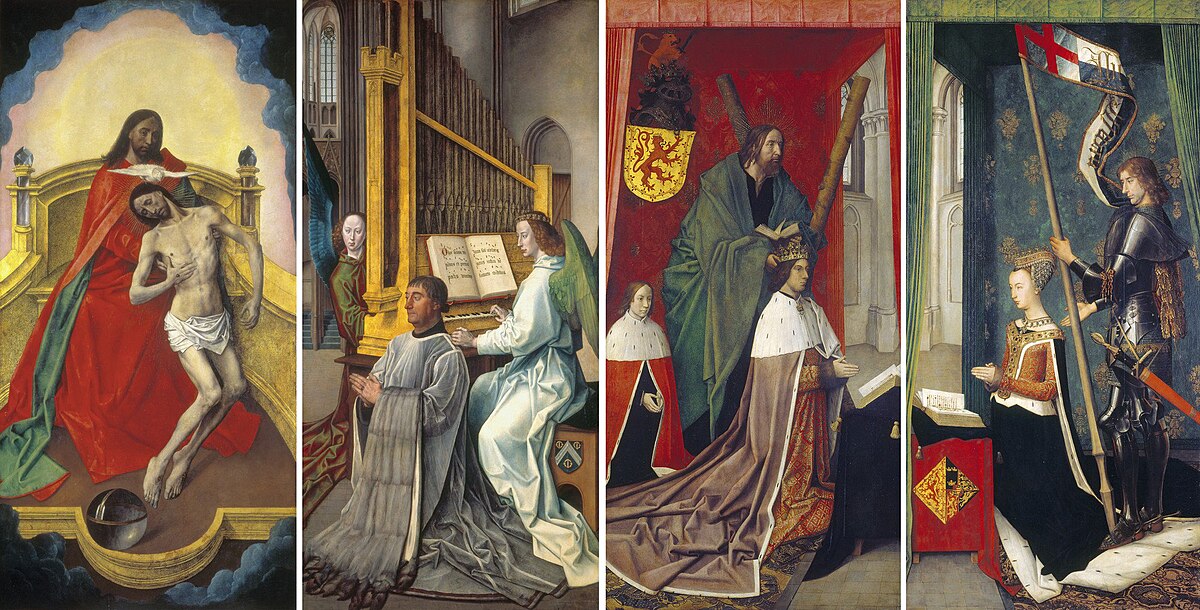
To understand how strong the Christian story once was, it helps to know what it replaced. This section lifts the curtain on pre-Christian Scotlandand shows how some of those older beliefs lingered.
Pictish Religion And Celtic Polytheism
Before Christian missionaries arrived, the peoples of what we now call Scotland – Picts, Gaels, Britons and others - practised forms of Celtic polytheism.
While evidence is fragmentary, archaeologists and historians point to:
- Multiple gods and goddesses, often linked with natural forces like rivers, hills and war.
- Sacred landscapes, including stone circles, standing stones and burial cairns, used for rituals and seasonal observances.
- Ancestor venerationand belief in otherworldly beings, hinted at in later folklore.
Written sources are scarce, so scholars piece this together from place-names, Roman accounts, material remains and comparison with other Celtic regions. It’s more a mosaic than a complete picture.
Sacred Sites, Wells And Folk Practices That Lingered Into Christian Times
Christianity did not arrive in a vacuum. Missionaries often built on existing sacred places:
- Holy wells and springsassociated with pre-Christian deities were re-framed as “St so-and-so’s well”.
- Hilltops and stone circlesgained crosses or chapels nearby, overlaying new meaning on old sites.
- Seasonal festivalssuch as Samhain, Beltane and Imbolc were reinterpreted rather than erased, contributing to later folk customs.
Even well into the Christian era, folk healing, charms and local saints’ cultsshow how older and newer beliefs interwove. For heritage travellers, that’s why some Scottish landscapes still feel deeply “spiritual” even without active churches.
From Ancient Beliefs To Modern Neopaganism And Spiritual Revivals
In recent decades, some Scots have reclaimed or reimagined pre-Christian traditions, often under labels like Pagan, Druid or Wiccan. These communities are tiny in census terms but symbolically significant.
They reflect a broader trend:
- A search for earth-centred spirituality.
- Interest in Celtic heritagebeyond church history alone.
- A desire for ritual and meaningoutside mainstream religions.
Modern Pagan paths are particularly visible in recent statistics, rising to about 19,000 people or 0.4% of the population in 2022 from much smaller numbers in 2011 (Data as of May 2024).
The key takeaway here is continuity: even when official religion changes, older layers of belief never disappear completely. That pattern repeats when Christianity arrives.
How Christianity Came To Scotland
This section traces how Christianity moved from new ideato dominant framework, laying the foundations for later conflicts and reforms.
St Ninian And The First Recorded Christian Communities
The earliest written hints of Christianity in Scotland mention St Ninian, traditionally a 4th or 5th-century missionary associated with Whithornin Galloway. Whether every legend about him is accurate is debated, but he symbolises early Christian influence coming from the Roman world and northern England.
By late Roman times and just after, there were likely:
- Small Christian communities in the south and east, linked to Roman Britain.
- Missionaries reaching out to local elites for patronage and protection.
It was a slow, patchy beginning, not an overnight conversion.
St Columba, Iona Abbey And The Spread Of Celtic Christianity
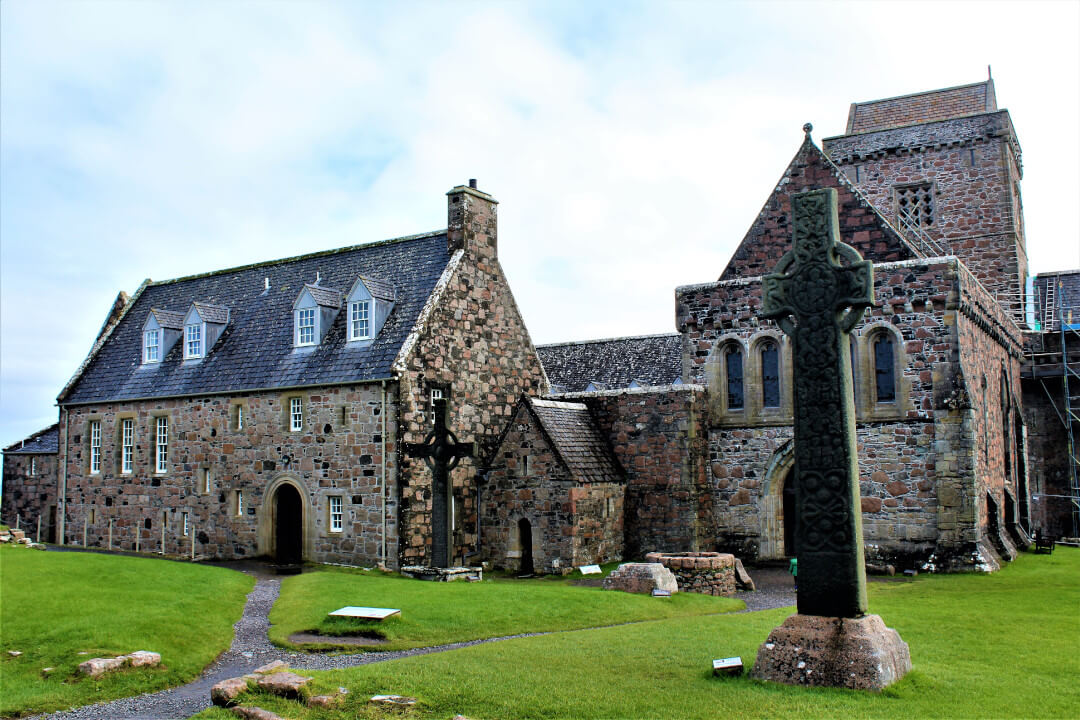
The most famous early figure is St Columba, an Irish monk who, according to tradition, arrived on the island of Ionain 563 CE. From the monastery he founded there, Columba and his companions:
- Evangelised the Pictsin the north and northeast.
- Established monasteries that became centres of learning, art and manuscript production.
- Helped integrate Christian ideas with local kingship and politics.
The Iona tradition, sometimes labelled “Celtic Christianity”, is known for its monastic focus, distinctive practices and art (think carved high crosses and illuminated manuscripts). It’s one of the reasons Iona Abbey remains a magnet for pilgrims and tourists today.
Medieval Catholic Scotland And The Cult Of Saints
By the Middle Ages, Scotland was firmly part of Latin Christendom, with:
- A network of parish churches, monasteries, and cathedral chapters.
- The Pope recognised as the head of the Church.
- A rich cult of saints, including St Andrew (Scotland’s patron) and local saints.
This Catholic order is what the Scottish Reformation would later upend – but that revolution only makes sense against this deeply embedded background. The deep religious framework saturated daily life, shaping everything from legal courts to annual festivals.
The Scottish Reformation And Presbyterian Identity
Here we follow the 16th-century upheavalthat reshaped Scotland’s religious and political landscape and left a lasting Presbyterian stamp.
John Knox And The Break With Rome
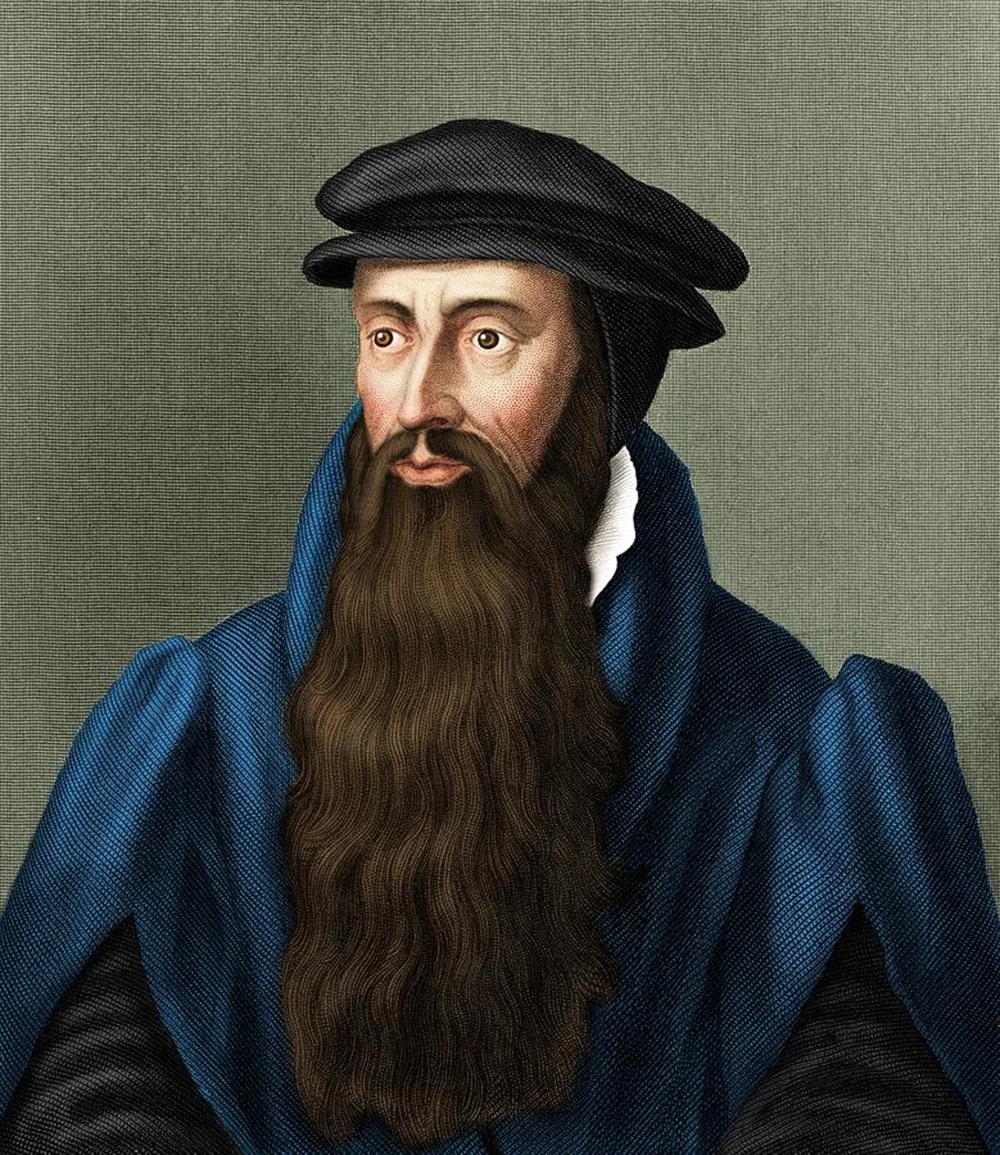
From the 1540s onward, Protestant ideas – especially influenced by John Calvin– spread through parts of Scotland.
John Knox, a fiery preacher and former galley slave, emerged as the Reformation’s most famous leader. He and others argued for:
- Scripture in the vernacular, so ordinary people could read the Bible.
- Rejection of papal authorityand key Catholic doctrines.
- Simple, non-ornate worship focused on preaching and psalm-singing.
In 1560, the Scottish Parliamentapproved a Protestant confession of faith and effectively severed ties with Rome. The new Church aimed to be thoroughly Reformed - both theologically and in its structures.
The Birth Of The Church Of Scotland (the Kirk)
The Reformation set the stage for what became the Church of Scotland, often simply called “the Kirk”. Over time, it developed a distinctive identity:
- Presbyterian governance: decisions made by elected elders and ministers in kirk sessions, presbyteries and the General Assembly, rather than by bishops.
- Emphasis on preaching and teaching, with long sermons and serious engagement with Scripture.
- Suspicion of elaborate ritual and imagery, leading to plainer church interiors.
This Presbyterian model didn’t just shape worship; it influenced wider Scottish values like education, literacy and a sense of collective responsibility, as parish schools spread across the country.
Covenanters, Civil Wars And The Struggle Over Bishops
The 17th century was turbulent. Scottish Presbyterians signed National Covenants to defend their religious settlement against attempts by kings to impose bishops and more Anglican-style practices. The underlying issue was who should control the Church: kings and bishops, or presbyterian assemblies? That tension kept resurfacing.
Schisms, The Disruption And The Growth Of Free Churches
Even after Presbyterianism was formally established, the 18th and 19th centuries saw repeated splitswithin the Church of Scotland.
The most famous was the Disruption of 1843, when about a third of ministers walked out to form the Free Church of Scotland, protesting state interference in church affairs.
Over time, some churches reunited, others stayed separate, and sometimes split again. The details are complex, but one takeaway is clear: Scottish Protestantism has never been monolithic.
This history matters because it helps explain the variety of Presbyterian and Free Church congregationsyou still see today – especially in the Highlands and Islands – just as Catholic and minority faith communities have their own stories.
Christianity In Scotland Today: From Dominance To Decline
Here we move from history to the current Christian landscape, showing how major churches have adapted-or struggled-to recent changes.
The Church Of Scotland In The 21st Century
The Church of Scotlandis still the largest Christian denomination but has experienced a sharp fall in membership over recent decades.
Key trends:
- Many congregations have merged, and the Church is implementing large-scale reorganisation plans.
- Historic buildings are being sold, repurposed, or closed.
- Resources are being consolidated into fewer, more sustainable parishes.
Census data suggest that identification with the Church of Scotland has fallen from about 42.4% of the population in 2001 (around 2.15 million people) to 20.4% in 2022 (around 1.1 million), a loss of roughly one million adherents in two decades (Data as of May 2024).
Church leaders and commentators often describe these figures as “sobering”, and they are a major driver behind current restructuring and mission-planning efforts (Data as of May 2024).
At the same time, the Kirk continues to play a role in state occasions and civic ceremonies and supports social justice and community projects. In towns and cities, you increasingly see former kirks turned into flats, cafés, or arts venues, reflecting both financial reality and demographic change.
Roman Catholicism: Immigration, Persistence And Change
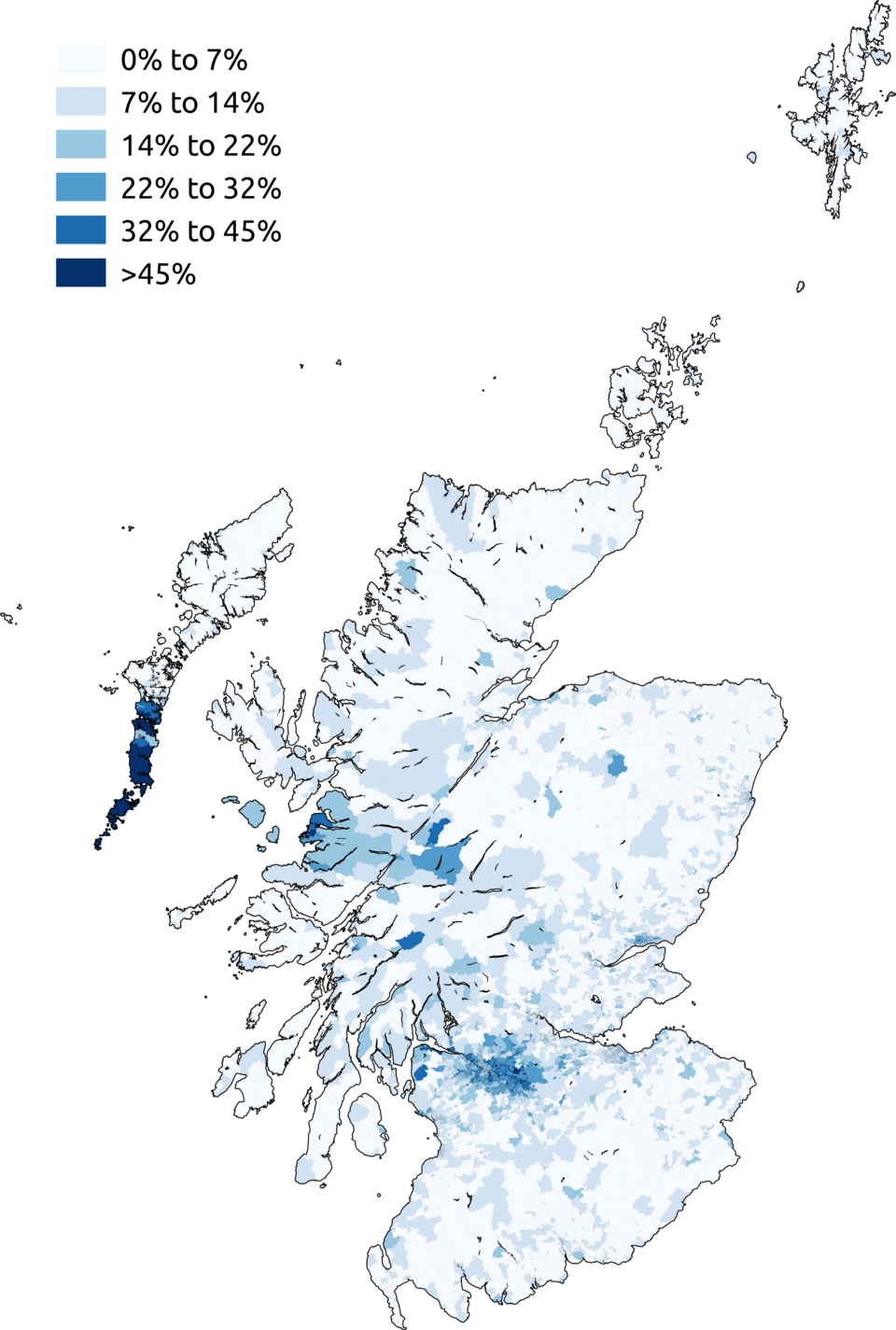
Roman Catholicism follows a different trajectory:
- Major growth in the 19th century through Irish immigration, particularly to Glasgow and the central belt.
- Newer waves of migration from Poland and other parts of Europe.
Catholic parishes often have relatively higher attendance, and Catholic schools remain significant in some areas. Yet Catholicism faces similar themes of aging congregations and navigating a majority-secular society.
Other Protestant And Christian Traditions (Episcopalian, Baptist, Pentecostal, Etc.)
Beyond the Kirk and Catholic Church, Scotland hosts a variety of Christian traditions:
- The Scottish Episcopal Church, part of the Anglican Communion, with a more liturgical style.
- Baptist, Methodist and Congregationalchurches rooted in local communities.
- Pentecostal and charismaticcongregations, sometimes very small, sometimes large and dynamic, especially in cities.
Many of these churches emphasise informal worship, contemporary music and small group communities, appealing to people who prefer a less formal style.
Sectarianism: Football, Identity And How Things Are Changing
Religion in Scotland cannot be separated entirely from sectarian tensions, especially around football clubs like Celtic and Rangers. Historically, this was tied to Irish immigration and political differences.
Today:
- Overt violence is lower than in earlier decades.
- Laws target sectarian and hate-related behaviour.
- Campaigns promote anti-sectarian and anti-racist messages.
Religion here often acts as a marker of identity rather than a statement of belief, but it remains a sensitive theme the nation works to overcome.
Minority Faiths And Growing Diversity
We now turn to non-Christian religions, which, though small in number, are central to Scotland’s contemporary religious landscape.
Islam In Scotland: Communities, Mosques And Demographics
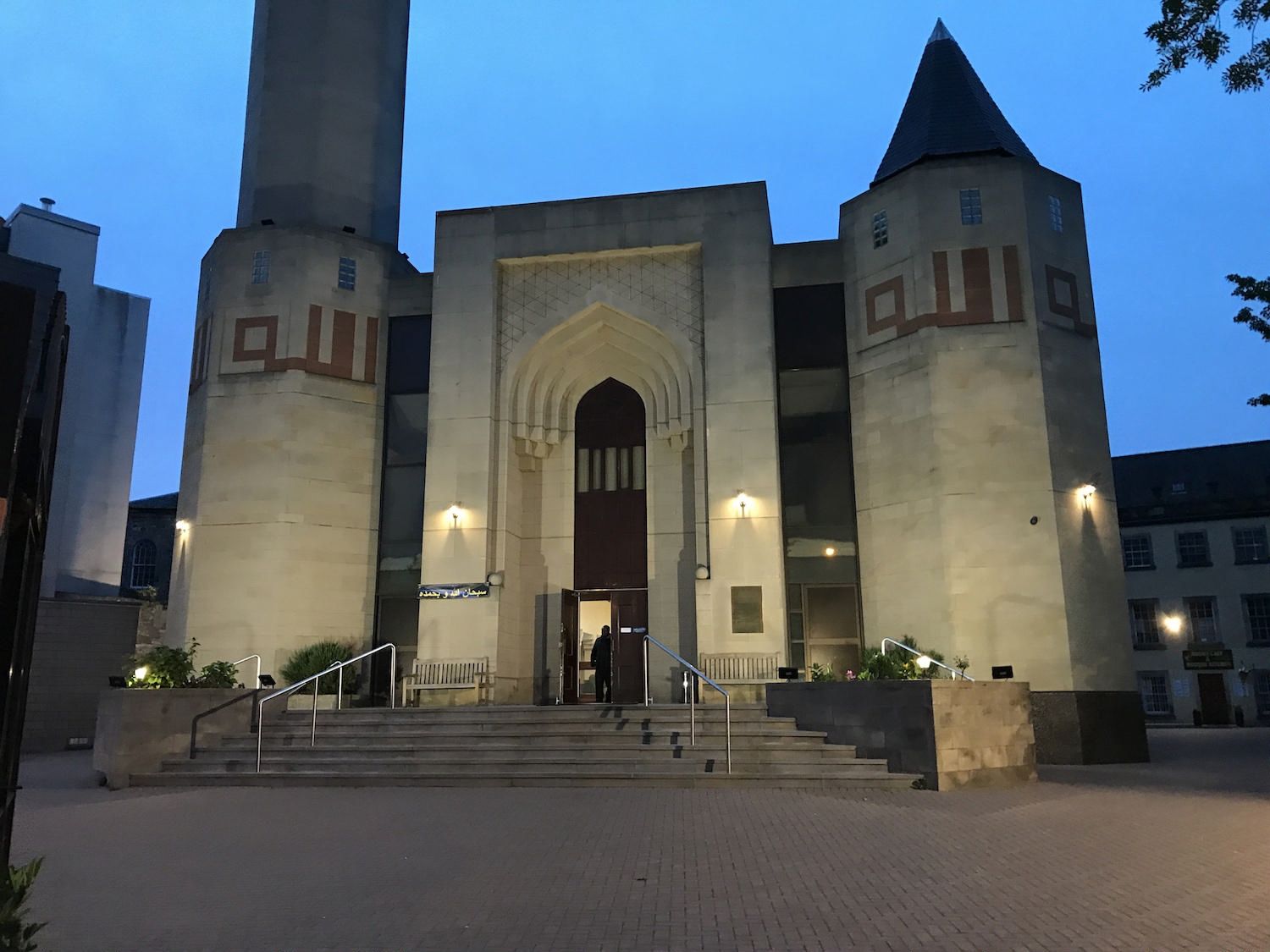
Islamis the largest non-Christian faith in Scotland. Muslims make up roughly 2.2%of the population according to the 2022 census. (Data as of May 2024.)
Communities are concentrated in:
- Glasgow, with significant Muslim populations in areas like Pollokshields.
- Edinburgh, particularly around central and southside districts.
- Other cities such as Aberdeen and Dundee.
Mosques, Islamic centres and halal businesses all signal how embedded these communities have become.
Glasgow Central Mosque, Edinburgh Central Mosque And Regional Patterns
Two particularly prominent mosques are:
- Glasgow Central Mosque, near the River Clyde, serving a large and diverse community.
- Edinburgh Central Mosque, close to the university area and home to an Islamic cultural centre.
Elsewhere, smaller mosques and prayer rooms meet local needs, often in converted buildings. The map of mosques broadly follows migration patterns, urban growth and higher education hubs.
Experiences Of Inclusion And Islamophobia
Research in Scotland reports a mixed experience for Muslims:
- Many describe strong local ties and supportive neighbours, especially in multi-ethnic urban areas.
- Interfaith initiatives and open mosque days help build understanding.
A 2021 report, Scotland’s Islamophobia, produced for the Scottish Parliament’s Cross-Party Group on Tackling Islamophobia, documented widespread experiences of anti-Muslim racism and set out detailed recommendations for education, media and policy change (Data as of 2021–2024).
Survey findings in that inquiry indicated that large majorities of respondents saw Islamophobia as a regular problem in Scottish society and reported direct experience of anti-Muslim prejudice (Data as of 2021–2024).
At the same time, studies and inquiries document Islamophobia, including verbal abuse, discrimination and anxiety around visibly Muslim dress.
Islamophobia is widely recognised as a problem, and there are active efforts from community groups, interfaith networks and public bodiesto address it. Visitors generally experience Scotland as welcoming, while acknowledging that prejudice exists.
Also Check Out:Halal Travel To Scotland
Hindu, Sikh And Buddhist Communities
Hindu, Sikhand Buddhistcommunities are small but established, mainly in the central belt:
- Hindu temples in Glasgowand Edinburghserve communities with South Asian and East African roots.
- Sikh gurdwaras provide worship, langar (shared meals)and cultural activities.
- Buddhist groups range from Tibetan and Zen centresto lay meditation circles and rural retreat centres.
In the 2022 census, Hindus made up about 0.6% of the population (around 29,900 people), Buddhists about 0.3% (around 15,500), and Sikhs about 0.2% (around 11,000), each showing growth since 2001 (Data as of May 2024).
In census terms each group is well under 1%of the population, yet they contribute significantly to Scotland’s cultural and spiritual diversity.
Judaism In Scotland: Small, Historic Communities In Glasgow And Edinburgh
Scotland’s Jewish communitiesare longstanding but numerically small:
- The main centres are in Glasgow, with synagogues and communal institutions, and a smaller community in Edinburgh.
- Jewish Scots have been active in business, academia, culture and public life.
The 2022 census records just over 5,800 Jews in Scotland, around 0.1% of the population, a figure that has remained broadly stable in recent decades (Data as of May 2024).
Concerns about antisemitismexist, especially during periods of international tension, but there are also strong inter-community efforts to promote solidarity and safety.
Newer And Smaller Faiths: Baha’i, Pagan, Rasta And Others
Scotland also contains a mosaic of smaller or newer religious movements:
- Baha’i communities, emphasising unity and global justice.
- Rastafarian groups, often tied to Caribbean heritage.
- Neopagan and Druid circles, some drawing explicitly on Scottish landscapes and folklore.
These groups remain tiny in census terms, but the growth in self-described Pagans to around 19,000 people illustrates the wider shift toward diverse, often nature-based spiritualities alongside more familiar world faiths (Data as of May 2024).
These groups are tiny in census terms but underline a broader reality: belief in Scotland now ranges from structured religion to very individual spiritual paths.
Humanism, Secularism And “no Religion”
This section looks more closely at the category that now accounts for over half the population: people who report no religion.
What “no Religion” Actually Means In Scotland
On a census form, “no religion” covers a wide range of positions:
- People who are agnostic or atheist.
- Those who believe in “something” but prefer not to join a religious institution.
- Individuals who once belonged to a church or mosque but now feel disconnected.
- People for whom religion simply doesn’t feel relevant.
The common thread is that institutional religion is not central to identity, even if private beliefs or practices exist.
Humanist Organisations And Secular Campaigns (education, Ceremonies)
Alongside private non-belief, Scotland has visible humanist and secular organisations:
- Humanist Society Scotlandcampaigns on issues such as inclusive education and equal treatment of religious and non-religious views.
- Humanist celebrants conduct non-religious weddings, funerals and naming ceremonies, now a significant part of the ceremonies landscape.
- Secular groups raise questions about religious representation in schools and civic institutions.
Humanist weddings have been legally recognised in Scotland since 2005, and by 2016 they had overtaken Church of Scotland ceremonies; by 2022 there were more humanist marriages than all religious weddings combined (Humanist Society Scotland / National Records of Scotland; Data as of May 2024).
These organisations give shape and voice to the large “no religion” population.
Individual Spirituality Outside Traditional Institutions
Many people who avoid formal religion still describe themselves as spiritualin some way. That might involve:
- Meditation, yoga or mindfulnesspractices.
- Personal rituals connected to nature, ancestry or big life events.
- Occasional visits to places like Iona Abbey or ruined kirks, seeking atmosphere rather than doctrine.
The result is a landscape where non-religion in official statistics coexists with varied, often informal forms of belief and practice.
Religion, Law And Public Life In Scotland
To round out the picture, we need to see how religion is woven into laws, schools and civic rituals, even as personal affiliation changes.
Religious Freedom And Equalities Law
In Scotland, as in the wider UK, freedom of religion and belief is protected by:
- The Equality Act 2010, which treats religion or belief as a protected characteristic.
- Human rights frameworks that guard the right to hold, change or reject religious beliefs, and to manifest them within certain limits.
This legal structure underpins the right to establish places of worship and protection from discrimination. In practice, this means Scotland is formally neutral, even if historic churches still have visible roles.
The Church of Scotland is recognised in law as Scotland’s national church, although it is not an established church and remains independent of the state; its Moderator of the General Assembly often has a symbolic role at major civic and royal events (Data as of May 2024).
Religion And Education: Schools, Chaplaincy And Religious Observance
Religion intersects with Scottish education in nuanced ways:
- State schools are expected to offer Religious and Moral Education (RME)and opportunities for religious observance or reflection, though both are evolving.
- In some areas, Catholic schoolsexist within the state system, reflecting historical agreements and community demand.
- Schools often have chaplains or visiting faith representatives, including from non-Christian traditions, especially in multi-faith areas.
The rise in “no religion” has sparked debate about ensuring non-religious and minority perspectives are fairly represented in teaching, and parents usually have the right to withdraw children from certain activities.
Religion In Public Ceremonies, Politics And Social Debates
Religion still appears in public life, though often in symbolic ways:
- Church servicesmay accompany major national events or local Remembrance ceremonies.
- Religious leaders sometimes speak out on issues like poverty, climate change or migration, contributing to public debate.
- In the Scottish Parliament, there is a tradition of “Time for Reflection”, which includes speakers from many faiths and none.
At the same time, many political debates - on independence, Brexit or economic policy - are not framed primarily in religious terms, reflecting the broader secularisation of public life.
The overarching pattern is one of legal protection and residual visibility, combined with a gradual shift towards more inclusive, plural ways of marking shared civic moments.
Regional And Everyday Variations In Religious Life
Religion in Scotland looks different in a Hebridean village than on a Glasgow shopping street. This section helps you picture those contrasts.
The Western Isles: Strong Sabbath Observance And Catholic–Presbyterian Contrasts
In the Western Isles(Outer Hebrides), religion remains highly visible:
- The northern islands(Lewis and Harris) have strong Presbyterian traditions, including strict Sunday observance with limited commercial activity.
- The southern islands(Benbecula, South Uist, Barra) have a stronger Catholic heritage, reflected in shrines and parish life.
Visitors often encounter quiet Sundays and churches that still sit at the heart of community identity. The islands demonstrate how historic faith patterns still shape local rhythms.
Urban Scotland: Multi-faith Streetscapes In Glasgow, Edinburgh, Aberdeen And Dundee
In cities, the pattern is more clearly multi-faith and secular side by side:
- In Glasgow, a short journey can take you past a kirk, a Catholic church, a mosque, a gurdwara and a temple.
- Edinburghmixes historic kirks and cathedrals with mosques, synagogues and Buddhist centres.
- Aberdeen and Dundeesupport active multi-faith chaplaincies driven partly by student populations.
You see former religious buildings turned into homes or arts venues alongside active churches and mosques. Public spaces host religious, cultural, and secular events.
Rural Kirks, Heritage Churches And Community Life
In rural areas and small towns, churches often function as community hubseven when numbers are modest:
- Buildings host coffee mornings, toddler groups, food banks and local meetings.
- Congregations share ministers or buildings across wide areas.
- Redundant churches become museums, performance spaces or homes, raising questions about heritage and conservation.
Here, religion is closely tied to continuity and social connection, regardless of doctrinal detail.
Across these regions, the common thread is variety: statistics set the outline, but local history fills in the colour.
Related Reading: Scottish Traditions
Visiting Religious And Spiritual Sites In Scotland
If you’re visiting Scotland, this section offers practical guidanceon entering churches, mosques and other places of worship with confidence and respect.
Churches, Cathedrals And Abbey Ruins: Architecture And Etiquette
Scotland’s landscape is dotted with kirks, cathedrals and ruinssuch as St Giles’ Cathedral, Iona Abbeyand Melrose Abbey.
When you visit:
- Check whether the building is an active churchor a heritage sitewith admission times and charges.
- Dress modestly and keep noise down, especially during services or private prayer.
- Ask before photographing peopleor during worship.
- If you attend a service, expect a structure of readings, sermon, prayers and hymns; following others’ lead on standing and sitting is sufficient.
These sites offer insight into architecture, art, music and local stories, even if you are not religious.
Visiting Mosques, Temples And Other Places Of Worship Respectfully
Mosques, temples and gurdwaras generally welcome visitors, especially on open days or by prior arrangement.
Quick visitor etiquette checklist
- Dress modestly; bring a scarf in case head-covering is appropriate.
- Remove shoes where requested (common in mosques and temples).
- Respect gender-segregated areasif they are in place.
- Avoid photographing people or prayer without clear permission.
- Accept or decline offered food or drink courteously.
Simple courtesy and a willingness to follow local custom usually go a long way.
What To Expect On Sundays And Major Religious Festivals
Religious calendars subtly shape local life:
- In more observant areas, especially the Western Isles, Sundays may feel quieter, with more visible churchgoing and some closures.
- In cities, Sunday often looks like a normal trading day, though church services still anchor certain neighbourhoods.
- Islamic festivals such as Eid, Hindu festivals like Diwali, and other events are celebrated within communities and sometimes in wider cultural programmes.
Paying attention to local rhythms and asking a quick question at your accommodation or visitor centre is often enough to stay in step.
How Scotland Compares To The Rest Of The UK
This section positions Scotland’s religious profile alongside England and Wales, highlighting what is distinctive.
Side-by-side Comparison: Scotland Vs England & Wales Religion Stats
Recent census data show that Scotland has:
- A higher proportion of people with no religionthan England and Wales.
- A slightly lower share of Christiansoverall.
- Comparable patternsof growth in minority faiths, particularly Islam and Hinduism, though exact percentages differ.
In broad terms, while Christianity is the largest group in both, Scotland is already majority “no religion”, with Christianity playing a smaller statistical role compared to its neighbours.
Why Secularisation Is Stronger In Scotland
Researchers suggest several factors that may help explain why secularisation appears especially advanced in Scotland:
- A history of church-state tensionsand suspicion of political interference in church affairs.
- Remembered conflicts and schisms that may have reduced long-term institutional loyalty.
- Early and deep changes in industrial communitieswhere churches once anchored social life.
- Generational shifts that moved quickly in a relatively small population.
In 2001, around 27.6% of people in Scotland reported no religion compared with about 15.5% in the UK overall, and by 2022 the Scottish figure had climbed to 51.1%, underlining how far secularisation has gone (Data as of May 2024).
These are not hard rules, but they fit the observed pattern of higher non-religious identification.
What This Means For Identity, Politics And Future Trends
Religious change influences more than personal belief:
- Identity:Being Scottish today is less tied to a specific religion than in many past eras.
- Politics:Debates on independence, social policy or the economy are mostly conducted in civic, not religious, language.
- Future trends:Christian affiliation is likely to continue shrinking, “no religion” to remain high, and minority faiths and humanist voicesto maintain or slowly grow their presence.
The direction is toward a Scotland where multiple forms of belief and non-belief share the same civic space.
The Future Of Religion And Spirituality In Scotland
This section sketches plausible futures based on current trends, without pretending to predict exact outcomes.
Generational Change And Possible Scenarios
Age profiles matter:
- Older age brackets are more likely to identify as Christian, especially with traditional denominations.
- Younger adults and teenagers are much more inclined to report no religion.
Possible scenarios include:
- Continued decline of large institutional churches, especially in rural areas.
- The survival of smaller, adaptable congregations-Christian or otherwise-that can respond flexibly to change.
- Ongoing growth in individual spiritual explorationoutside formal religious structures.
The overall trajectory points to greater religious and non-religious diversity, anchored in a broadly secular public culture.
Interfaith Work, Anti-racism And Social Cohesion
As religious diversity grows, so does the importance of interfaith and intercultural work.
Key strands include:
- Interfaith councils and networks, bringing together Christian, Muslim, Jewish, Hindu, Sikh, Buddhist, humanist and other voices.
- Anti-racism and anti-Islamophobia initiatives, recognising overlaps between religion, race and ethnicity.
- Local projects where communities cooperate on shared concerns, such as poverty, climate or welcoming refugees.
- National bodies such as Interfaith Scotland, which supports local interfaith groups, organises Scottish Interfaith Week and works with schools, faith communities and public bodies on dialogue and equality projects (Data as of May 2024).
- Ecumenical networks, including Action of Churches Together in Scotland and successor forums, which bring different Christian denominations together for joint witness and social action (Data as of May 2024).
These efforts aim to promote cohesion without erasing difference, and they are likely to remain central to Scotland’s social fabric.
Tradition, Heritage And New Forms Of Belief In A Largely Secular Society
Even in a majority non-religious society, religious heritage remains visible and valued:
- Historic religious sites-from Ionato ruined abbeys and urban cathedrals-continue to attract visitors.
- Festivals such as Christmas and Easterretain cultural importance, regardless of church attendance.
- Newer practices, from humanist ceremoniesto small Pagan gatherings, sit alongside older customs.
The most realistic future picture for Scotland is not of religion disappearing, but of layered belief and non-belief, with heritage, culture and personal meaning intertwined.
Also Read: Scottish Culture
FAQs About Religion In Scotland
What Is Scotland’s Main Religion Today?
Christianity remains the largest religion, but since the 2022 census most people in Scotland say they have no religion. (Data as of May 2024.)
What Percentage Of Scots Are Non-religious?
In the 2022 Scottish census, 51.1%of the population reported having no religion, up from 36.7% in 2011. (Data as of May 2024.)
Is Scotland Protestant Or Catholic?
Scotland has a historically Protestant, Presbyterian identity, but today it is religiously mixed and majority non-religious, with both Protestant and Catholic communities.
When Did Christianity Arrive In Scotland?
Christianity arrived gradually from the 5th century, through early communities linked to St Ninian and later the mission of St Columbafrom Iona.
What Was The Oldest Religion In Scotland?
Before Christianity, the peoples of Scotland practised forms of Celtic polytheism and related pagan beliefs, centred on multiple gods, sacred landscapes and seasonal rituals.
What Are The Main Christian Churches In Scotland?
The largest Christian churches are the Church of Scotland (Presbyterian), the Roman Catholic Church, and smaller groups like the Scottish Episcopal Churchand various Protestant denominations.
What Are The Top Religions In Scotland By Percentage?
As of 2022: about 51.1% no religion, 38.8% Christian overall, around 2.2% Muslim, with smaller Hindu, Buddhist, Sikh, Jewish and other groups. (Data as of May 2024.)
What Is The Fastest Growing Religion In Scotland?
In relative terms, minority religions like Islam and Hinduismhave grown, but the biggest overall increase is in people reporting “no religion.”(Data as of May 2024.)
Is Scotland Friendly To Muslims?
Many Muslims live, study and worship across Scotland, and many report positive local ties, though research also highlights significant experiences of Islamophobia and discrimination.
How Does Religion In Scotland Compare To England And Wales?
Scotland has a higher proportion of non-religious peopleand a slightly lower share of Christiansthan England and Wales, but similar trends toward secularisation and diversity. (Data as of May 2024.)
What Role Does Religion Play In Scottish Schools?
Scottish schools include Religious and Moral Educationand some form of religious observance or reflection, with ongoing debate about how inclusive and secular these practices should be.
Is There Still Sectarianism Between Catholics And Protestants?
Overt sectarianism has declined compared with the past, but tensions and prejudiced attitudes persist in some communities and around football, and are widely acknowledged as a problem.
Are There Hindu, Sikh, Buddhist Or Jewish Communities In Scotland?
Yes. These small but established communities are mostly based in Glasgow, Edinburgh and other cities, with temples, gurdwaras, synagogues and Buddhist centres.
What Are The Top 3 Religions In The UK?
The top three reported religions in the UK are Christianity, No Religion, and Islam, though proportions vary across the constituent countries.
How Has Immigration Changed Scotland’s Religious Landscape?
Immigration has contributed to the growth of Muslim, Hindu, Sikh and other minority faith communities, while overall secularisation continues among people born in Scotland.
Conclusion
The narrative of religion in Scotland has fundamentally changed from a story of denominational dominance to one of radical secularisation and multi-faith diversity.
The 1560 Reformation secured Protestantism's place in the national character, but the latest census data shows that cultural affiliation is rapidly dissolving, making the 'No Religion' group the new, dominant demographic force.
This shift is reshaping Scotland, moving it towards a more pluralistic, secular society while still retaining the profound cultural and architectural markers of its Christian past.
Jump to
Religion In Scotland Today: From ‘No Religion’ Majority To Multi-Faith Society
Religion In Scotland Today: Key Facts At A Glance
Religion By The Numbers: Scotland’s Census 2022
Before Christianity: Ancient Beliefs In Scotland
How Christianity Came To Scotland
The Scottish Reformation And Presbyterian Identity
Christianity In Scotland Today: From Dominance To Decline
Minority Faiths And Growing Diversity
Humanism, Secularism And “no Religion”
Religion, Law And Public Life In Scotland
Regional And Everyday Variations In Religious Life
Visiting Religious And Spiritual Sites In Scotland
How Scotland Compares To The Rest Of The UK
The Future Of Religion And Spirituality In Scotland
FAQs About Religion In Scotland
Conclusion
Callum Fraser
Author
Callum Fraser isn't just a writer about Scotland; he's a product of its rugged landscape and rich history. Born and raised in Perthshire, with the Highlands as his backyard, his love for the nation's stories was kindled by local storytellers and long walks through ancient glens.
This passion led him to pursue a degree in Scottish History from the University of Edinburgh. For over 15 years, Callum has dedicated himself to exploring and documenting his homeland, fusing his academic knowledge with essential, on-the-ground experience gained from charting road trips through the Cairngorms, hiking the misty Cuillins of Skye, and uncovering the secrets of traditional recipes in his family's kitchen.
As the Editor-in-Chief and Lead Author for Scotland's Enchanting Kingdom, Callum's mission is simple: to be your most trusted guide. He combines meticulous research with a storyteller's heart to help you discover the authentic magic of Scotland — from its best-kept travel secrets to its most cherished traditional recipes.
Latest Articles
Popular Articles