Thistle Poem - Famous Poems, Meanings & Scottish Symbolism
Find the best thistle poems-ed Hughes, Burns, Dunbar, MacDiarmid-and get clear, fast meanings plus Scottish thistle symbolism and context.
Author:Callum FraserMar 03, 2026
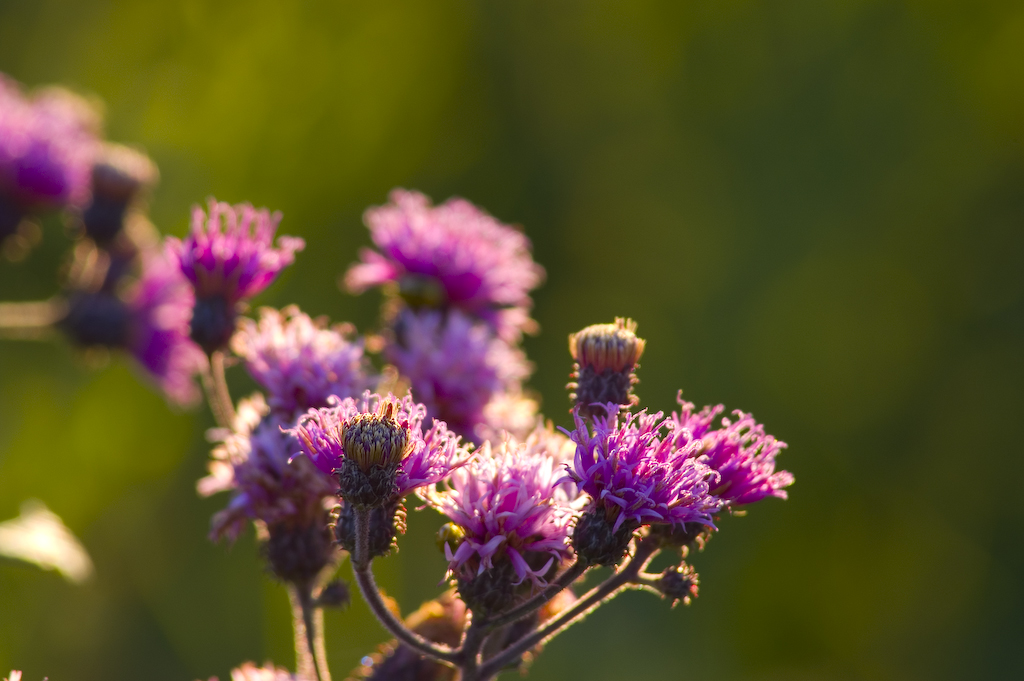
Thistle Poems: A Guide To Famous Poems And Scotland’s Thistle Symbol
The thistle attracts poets because it’s instantly visual-a bloom that refuses to be handled-and it carries centuries of Scottish identity alongside more personal meanings like endurance, pride, and pain.
This page is built to solve the full problem in one go: you’ll get a curated set of famous thistle poems, a clear “what it means” lens for each, and the Scottish historythat makes thistle imagery feel sharper and more specific. Where a poem is under copyright, you’ll see brief, compliant excerpts and a trusted place to read the full text.
What counts as “famous” thistle poems in this guide:
- Poems where the thistle is the titleor the central image(not just a passing plant in one line).
- Poems hosted or referenced by major literary/heritage institutions(e.g., National Trust for Scotland, Poetry Foundation, Academy of American Poets, Poetry By Heart).
- Scottish-canon thistle poemswhere the emblem carries national meaning (MacDiarmid, Dunbar, Burns references).
To start, here’s the fast answer most readers want first.
Key Takeaways
If you only have a minute, these points will help you choose the right poem and understand what thistles usually “stand for.”
- A thistle is a natural paradox: beauty with defenses, which makes it powerful symbolism in poetry.
- In Scotland, the thistle is a longstanding national emblem tied to honour, identity, and “don’t provoke me” defiance-especially through the Order of the Thistle and its motto. (See the National Trust for Scotland’s thistle history and the Royal Family’s Order overview.)
- Ted Hughes’ “Thistles” turns the plant into a hard, historical metaphor-nature’s persistence presented like conflict. (The poem is widely circulated in education settings.)
- Many Scottish poemsuse the thistle as a national “self-portrait”-a way to talk about Scotland’s character, arguments, and resilience. VisitScotland points readers directly to MacDiarmid’s famous thistle poemfor this reason.
- If you’re writing your own thistle poem: start with one concrete detail (spines, shadow, wind-blown seed), choose one meaning, then end on a clean final turn.
If you want thistles as conflict, start with Hughes; if you want quiet endurance, start with Binyon; if you want Scottish identity, start with MacDiarmid.
Next, let’s pin down what the thistle symbol is actually doing-so every poem that follows makes more sense.
The Thistle As A Symbol
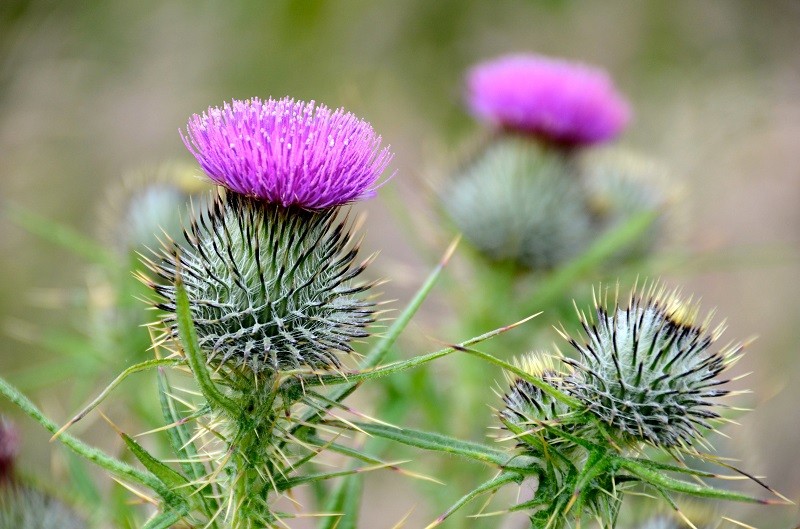
A thistle is hard to sentimentalise. You can admire it from inches away, but you can’t gather it like a soft bouquet. That contradiction is literary gold: poets can move from appearanceto meaningin a single beat.
Britannica notes that “thistle” often refers to prickly-leaved plants (commonly Carduusand Cirsium) with dense heads of pink or purple flowers.
Scotland has severalthistle varieties-National Trust for Scotland notes spear thistle, creeping thistle, and marsh thistle are among the most common. It also states the native spear thistle (Cirsium vulgare) is thought to be the national emblem, while the “Scotch thistle”/cotton thistle (Onopordum acanthium) is non-native.
VisitScotland explicitly says there’s more than one thistle and that it’s not certain which variety is the “true” national thistle-so treat species claims as “likely” rather than absolute.
Thistle varieties:
- Spear thistle (Cirsium vulgare):A native Scottish thistle often considered the original “title-holder” for the emblem.
- Cotton thistle / Scotch thistle (Onopordum acanthium): A dramatic, silver-grey biennial. The Royal Horticultural Society lists its ultimate height as 2.5–4 metres. It’s also widely called “Scotch thistle,” but major Scottish sources caution it’s not the only candidate for the national emblem.
- Melancholy thistle (Cirsium helenioides):Do not describe it as “lacking prickles.” RHS describes it as having “softly-spiny edges.”
An Introduction To Thistle Poetry
The thistle is an architectural marvel of the natural world, possessing a "regal" purple crown supported by a "militant" stalk of thorns.
In the eyes of a writer, the thistle is never just a plant; it is a survivor that thrives where softer flowers wither. By studying these poems, you gain a deeper appreciation for a literary tradition that values strength as much as beauty.
This duality of the "guarded crown" serves as the foundational metaphor for almost every major work in this genre.
Common Meanings: Resilience, Pride, Pain, Protection, Defiance
Most thistle poems circle a familiar set of meanings. The trick is to decide which one the poet is emphasising.
- Resilience:it survives rough ground, weather, neglect.
- Protection:the spines become a literal “boundary” or warning.
- Pride:upright posture, vivid colour, “I’ll stand here anyway.”
- Pain / consequence:you can’t handle it without being reminded.
- Defiance:the plant becomes an emblem of refusing to yield.
You’ll see these meanings echoed in how Scotland talks about its own thistle: the National Trust for Scotland explicitly links the Order of the Thistle’s motto-Nemo me impune lacessit(“No one provokes me with impunity”)-to the plant’s prickly reality.
How Symbolism Changes In Scottish Contexts
In Scottish writing, the thistle isn’t only a plant; it’s a cultural shorthand. VisitScotland describes the thistle as a national symbol with long heraldic use and points to it inspiring major Scottish poetry-specifically naming Hugh MacDiarmid’s A Drunk Man Looks at the Thistle.
That matters because the same image can mean different things:
- In a general nature poem, the thistle may represent individual endurance.
- In a Scottish poem, it can become a whole nation’s temperament-argumentative, proud, hard to “pick,” and still strangely beautiful.
Takeaway: When Scotland is in the frame, the thistle often stops being “a symbol” and becomes “a character.”
Now that the symbol is clear, we can place it in the Scottish history that gave it extra weight.
Thistle In Scottish History And Identity
According to Scottish tradition, the thistle earned its place in history during a night-time raid by Norse invaders. A barefoot Viking soldier stepped on a thistle, and his cry of pain alerted the sleeping Scots, allowing them to repel the attack.
This legend transformed the plant into a "guardian." VisitScotland says there’s “not a shred of evidence” for the story-so treat it as a cultural tradition, not a proven event.
National Trust for Scotland explicitly says no one is truly sure how the thistle became Scotland’s national flower before sharing the legend.
Hard history facts:
- National Trust for Scotland notes thistle imagery appears on Scottish silver coins as early as 1474(James III).
- VisitScotland says the first appearance is 1470on James III silver coins.
- Best practice (credibility): say “late 15th century” and note sources vary (1470 vs 1474).
- It also states James VII and II founded the Order of the Thistle in 1687, with the thistle as its heraldic emblem and the motto “Nemo me impune lacessit.”
The Sleeping Dane And The Cry Of Warning
Poets often revisit the "Sleeping Dane" narrative to emphasize that vigilance is a virtue. This story serves as a reminder that even the smallest, most overlooked elements of the landscape can provide the greatest defense.
Because the story is legendary, it’s safer to frame it as “a popular tradition poets and heritage writers draw on,” rather than implying it’s a verified historical account.
Nemo Me Impune Lacessit: The Motto In Verse
The Latin motto, Nemo me impune lacessit, frequently appears in heraldic poetry. It translates to "No one provokes me with impunity," providing a rhythmic, aggressive undercurrent to the more romanticized descriptions of the Highlands.
Read that motto like a poet and it becomes a miniature poem itself: provoke me and you’ll pay for it. That’s why thistle poems so often carry a hint of warning or consequence, even when the speaker is admiring the flower.
Treat the “Sleeping Dane / Viking cry” as legend, not fact.National Trust for Scotland says no one is truly sure how the thistle became Scotland’s national flower, then shares the Battle of Largs legend; VisitScotland adds there’s “not a shred of evidence” (but it’s a great story).
How This Symbolism Shows Up In Scottish Writing
Scottish writers use the thistle in at least three recurring ways:
- Identity marker(this is “our” flower; this is “our” temperament),
- Argument tool(a way to talk about Scotland’s conflicts and contradictions),
- Allegory(thistle alongside rose, or thistle as crowned “king” among flowers).
You can see that tradition alive in both heritage commentary and canonical texts: VisitScotland highlights MacDiarmid’s thistle poem as a major work in the Scottish literary canon, and Dunbar’s courtly Scots poem makes thistle-and-rose symbolism part of a royal allegory.
Famous Thistle Poems
“Thistles” - Ted Hughes
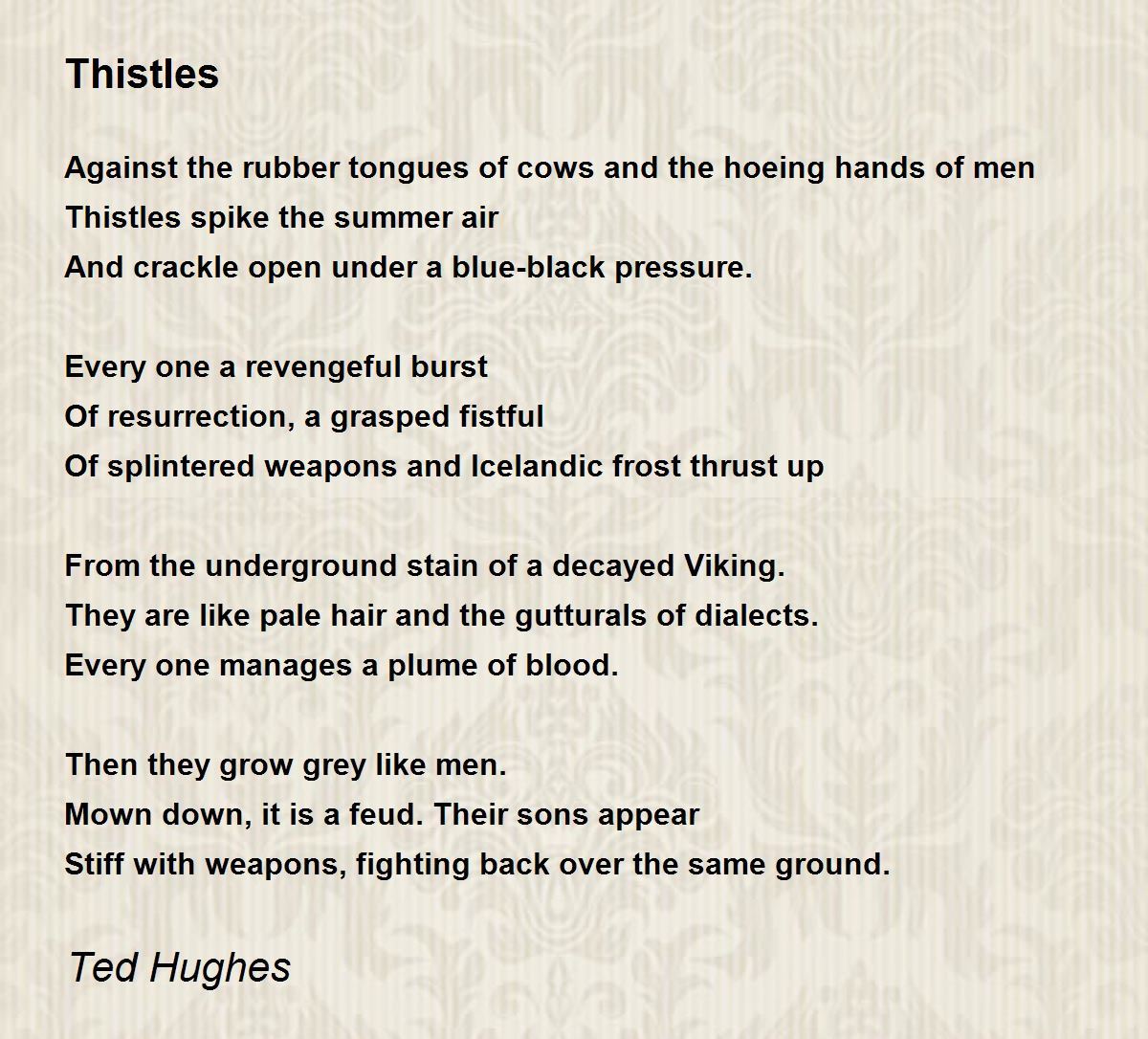
Why it’s included:Most commonly searched modern “thistle poem”; widely taught and heavily excerpted by education poetry sites.
Poem snapshot:Hughes turns thistles into a symbol of violent endurance-cut down and returning-so the plant feels like an old feud that never ends. The poem is commonly dated to 1967 on major education poetry sites.
Themes (3 quick hits):
- Nature as combatant, not decoration
- Cycles of violence and return
- History lingering in the land (via hard, warlike imagery)
What to notice (craft moves):
- Weaponised diction(verbs and nouns that sound like conflict)
- Allusion + ancestry: “Viking” references pull history into the soil
- Compressed pressure: lines push forward like repeated strikes
One famous image (very short quote):“Thistles spike the summer air.”
“The Thistle” - Robert Laurence Binyon (often Credited As Laurence Binyon)
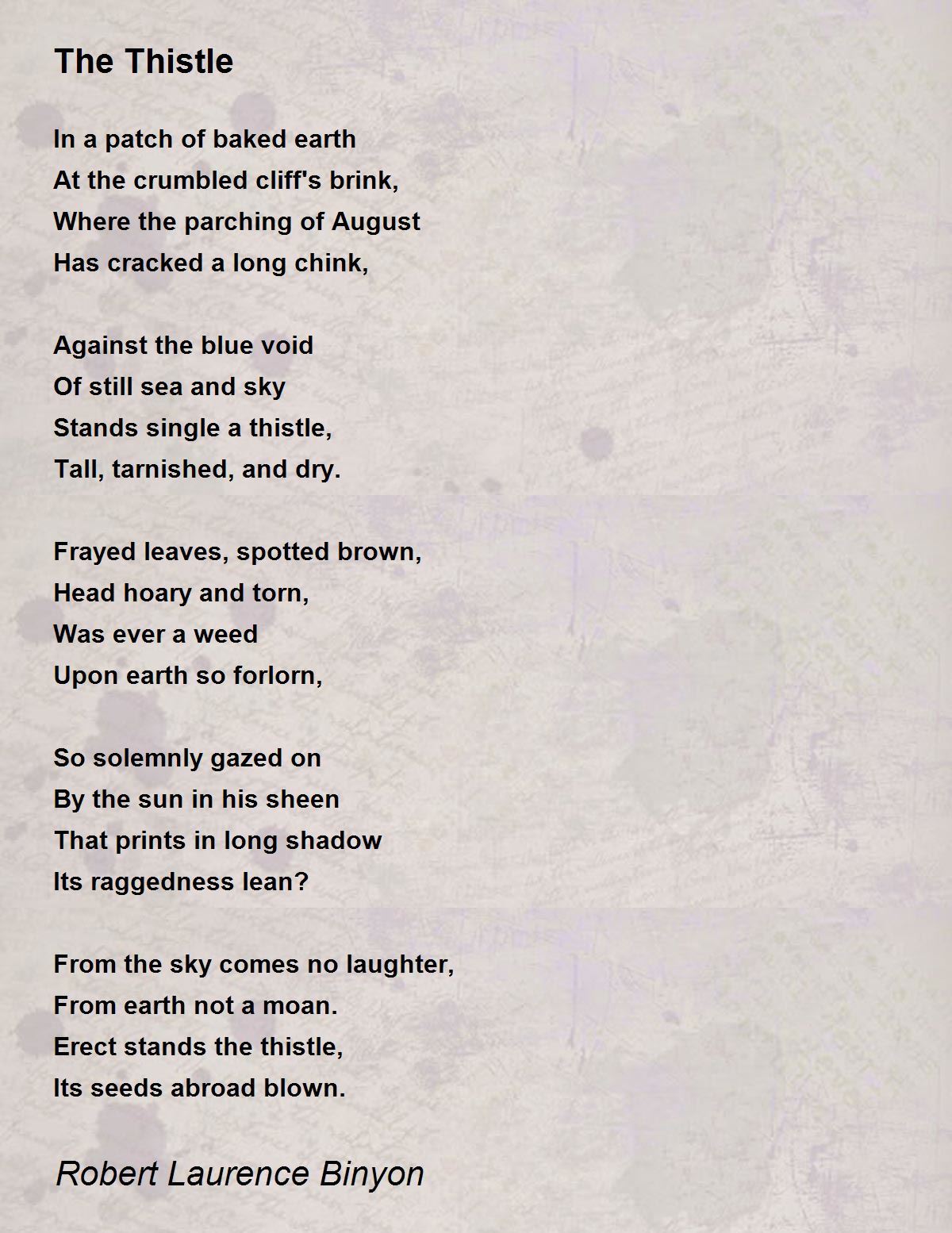
Why it’s included:A clear, focused thistle lyric where the plant is the central “character” in a harsh landscape.
Poem snapshot:A single thistle stands on parched ground at a cliff edge. The poem’s power is its stillness-the thistle becomes a figure of stoic presence in a harsh landscape.
Themes (3 quick hits):
- Solitude and exposure
- Dignity in roughness (“weed” reframed as emblem)
- Endurance without applause
What to notice (craft moves):
- Setting-as-meaning: the cracked earth does half the emotional work
- Contrast: blue void vs dry, “tarnished” plant
- Tone discipline: restrained language keeps it from sentimentality
Anchor line (short quote):“Stands single a thistle, / Tall, tarnished, and dry.”
“Address To A Haggis” - Robert Burns (the Thistle As A Razor-sharp Comparison)
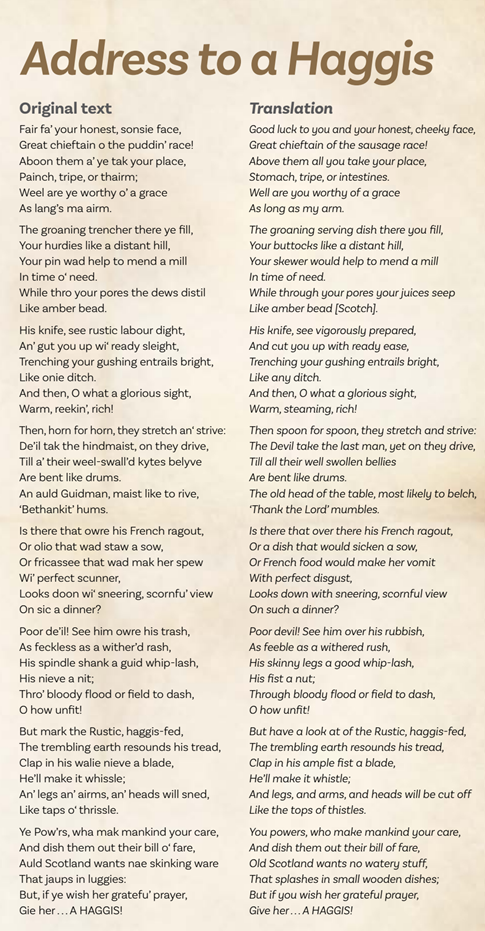
Important clarification:Burns didn’t write a standalone poem titled “The Thistle,”but he does use thistle imagery-famously in this poem-through the Scots word “thrissle.”
Why it’s included: A famous Burns moment where “thrissle” imagery becomes a violent, memorable simile-proof thistles are embedded in Scots cultural speech.
Poem snapshot:In the poem’s high-energy praise of haggis and the common Scot, Burns compares cutting enemies down to slicing “tops of thistle”-a vivid, instantly Scottish-feeling image.
Themes (3 quick hits):
- Working-class strength and pride
- National voice (Scots language + cultural confidence)
- Comedy with a steel edge
What to notice (craft moves):
- Dialect for authority: Scots isn’t decoration; it’s identity
- Simile as shock: the thistle appears at the moment of sharp action
- Speed: tight rhythms carry the bravado
Key line (short quote):“Like taps o’ thrissle.”
“The Thrissill And The Rois” - William Dunbar (1503 Court Allegory)
Why it’s included:A foundational Scottish thistle-and-rose allegory linked to the August 1503 royal marriage.
Where to read:Wikisource hosts the full text.
Poem snapshot:A classic Scots dream-vision written to mark the August 1503wedding of James IV of Scotland and Margaret Tudor of England, using the thistle and rose as political-symbolic figures.
Themes (3 quick hits):
- Nationhood performed through allegory
- Union symbolism (thistle + rose)
- Ceremony, hierarchy, praise-poetry tradition
What to notice (craft moves):
- Allegory mechanics: flowers = nations/royalty, not botany
- Scots texture: sound and diction are part of the authority
- Pageantry: “garden” imagery as political stage
“The Thistle’s Grown Aboon The Rose” - Allan Cunningham
Why it’s included:A classic patriotic thistle-vs-rose piece with a chorus-like refrain; the contrast is the meaning.
Where to read:The poem appears in The Songs of Scotland, Ancient and Modern (Internet Archive full text).
Poem snapshot:A patriotic, song-like poem that positions the thistle above the rose-less a quiet nature lyric, more a refrain-driven anthem. The text appears in public-domain song collections.
Themes (3 quick hits):
- Scotland vs England symbolism (thistle vs rose)
- Military courage and national pride
- Identity reinforced through repetition
What to notice (craft moves):
- Chorus power: repetition turns symbol into rallying cry
- Contrast logic: thistle doesn’t “out-pretty” the rose; it outlasts it
- Direct address: designed for a voice, not silent reading
Refrain line (short quote):“The thistle’s grown aboon the rose.”
“A Drunk Man Looks At The Thistle” - Hugh MacDiarmid
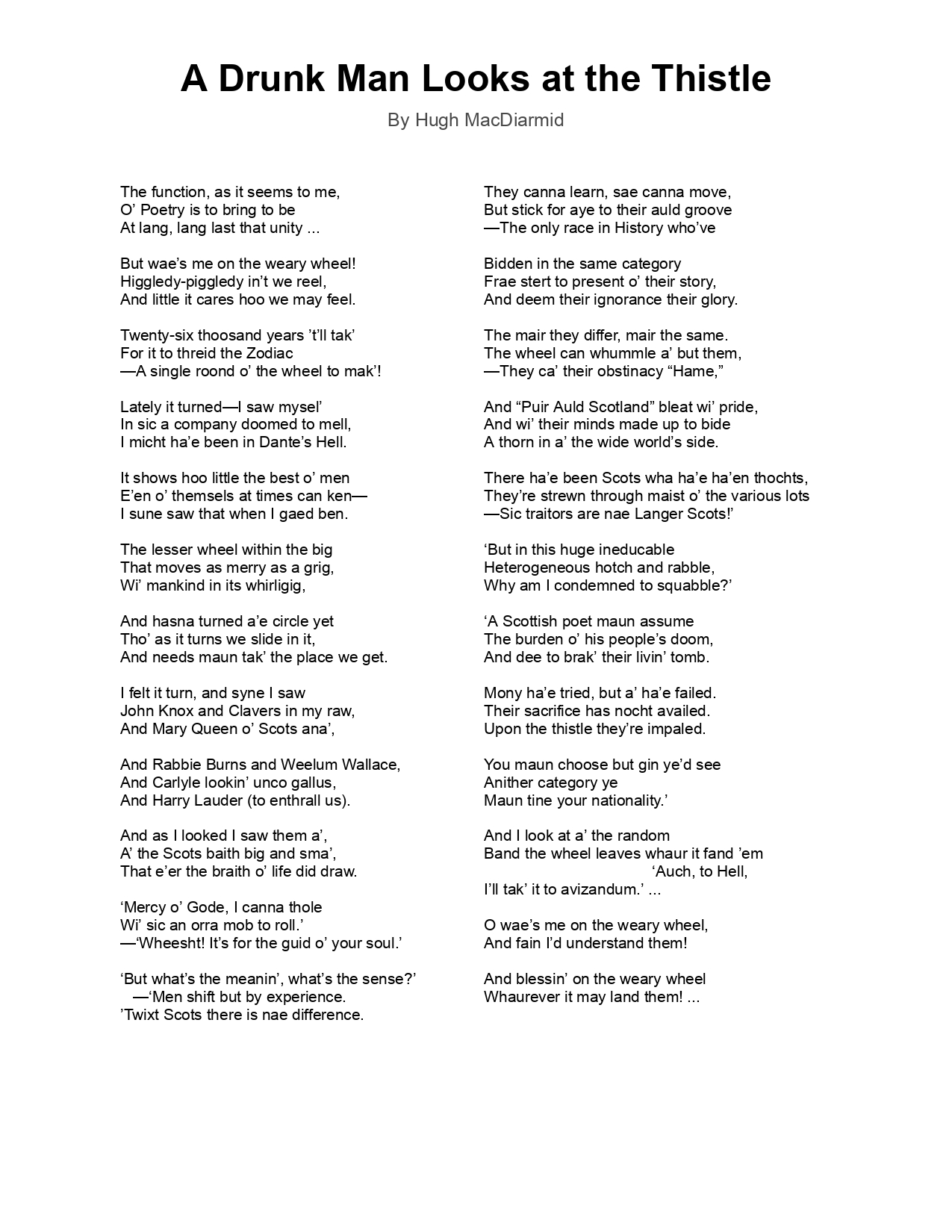
Why it’s included:VisitScotland explicitly calls it a major, influential Scottish thistle poem; it’s also available in public-domain form on Project Gutenberg in some regions.
Poem snapshot:A long modern Scots poem (1926) that uses the thistle as a lens for Scotland’s culture, contradictions, and self-argument-more philosophical and satirical than botanical.
Themes (3 quick hits):
- National identity as tension (pride vs critique)
- Scots language as a cultural engine
- The thistle as a “big metaphor” for Scotland itself
What to notice (craft moves):
- Voice: argumentative, comedic, intellectual-often within the same page
- Cultural roll-call: historical and literary figures appear in the poem’s orbit
- Thistle as pressure point: not scenery-more like a pinned idea
Contemporary Global Thistle Poems
“A Thistle Will Do” - Omar Berrada
Why it’s included:A modern thistle poem hosted by the Academy of American Poets (with audio), showing how thistle imagery travels beyond Scotland into contemporary politics and intimacy.
- Lens:Modern resilience / refusalPoem snapshot: The thistle becomes a “flower that evades capture”-a lesson in choosing the tough, real thing over decorative softness.
- What to notice:Direct address, contemporary diction, and the thistle as ethical instruction rather than scenery.
“Thistles” - Heidy Steidlmayer
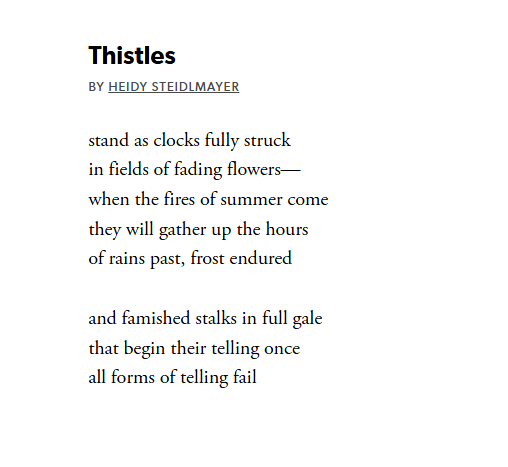
Why it’s included:A short, highly quotable modern poem hosted by Poetry Foundation-great for readers who want a brief “thistle poem” that still feels literary.
- Lens:Time / endurance
- Poem snapshot:Thistles “stand as clocks,” turning weather and hardship into a kind of record-keeping.
Related Reading: Tae A Thistle Poem
Robert Burns Thistle Poem
Many people assume Robert Burns, Scotland’s National Bard wrote a poem called The Thistle, but this isn’t true. Though the thistle is a powerful symbol in Scottish culture, Burns never penned a standalone poem with that exact title.
Instead, he referenced the thistle indirectly in his work, using it to view themes tied to Scottish identity. Clearing up this mix-up helps us better appreciate Burns’ actual writing and the thistle’s deeper meaning.
The “bur-thistle” passage is from Burns’ poem titled “Answer to Verses addressed to the Poet by the Guidwife of Wauchope House”
In his poem "The Guidwife of Wauchope House," Burns recounts a pivotal moment from his youth while working the fields:
"The rough bur-thistle, spreading wide / Amang the bearded bear, / I turn'd the weeding-heuk aside, / An' spar'd the symbol dear."
This act of sparing the "symbol dear" serves as a powerful metaphor for the preservation of Scottish identity. While other farmers saw a weed that hindered the growth of "bear" (barley), Burns recognized a warrior that commanded respect.
For Burns, the thistle represented the rugged, unyielding character of the Scottish peasantry-prickly and defensive, yet possessing a wild, sovereign beauty.
Scots glossary:
- “bur-thistle”= a burr-like thistle (spiky, clinging)
- “bearded bear”= barley with “beards” (awned heads) (your parenthetical“barley” is good-keep it)
- “weeder-clips / weeder-heuk”= a field-weeding tool
Which Thistle Poem Should I Read?
| Your Goal | Start With |
| Understand thistles as harsh, vivid metaphor | Ted Hughes - “Thistles” |
| Read a quiet, image-led thistle poem | Laurence Binyon - “The Thistle” |
| See thistle + rose symbolism in classic Scots tradition | William Dunbar - “The Thrissill and the Rois” |
| Read a patriotic, chorus-like thistle piece | Allan Cunningham - “The Thistle’s Grown Aboon the Rose” |
| Explore the thistle as Scotland’s big cultural metaphor | Hugh MacDiarmid - A Drunk Man Looks at the Thistle |
| Want a modern, non-Scottish thistle poem | Omar Berrada - “A Thistle Will Do” |
| Want a short modern thistle poem | Heidy Steidlmayer - “Thistles” |
How To Analyze Any Thistle Poem
This section gives you a simple approach that works whether you’re a student writing notes or a reader who just wants the poem to “click.”
What The Thistle Is Doing In The Poem (character, Symbol, Setting, Weapon)
Start by naming the thistle’s job. In most famous thistle poems it’s one of these:
- Character:it behaves like a person (upright, defiant, solitary).
- Symbol:it stands for a trait (resilience, pride, protection).
- Setting trigger:it makes the landscape meaningful (harsh coast, battlefield field, garden allegory).
- Weapon:it makes pain and consequence literal.
A student reads Hughes and underlines action verbs (spike, crackle). In that poem, the thistle is clearly weapon. Then the same student reads Binyon and underlines stillness (stands, erect). There, the thistle is character.
Worked mini-example:
- Image:“Thistles spike the summer air.”
- Meaning:The thistle isn’t passive beauty-it acts like a blade, so persistence becomes aggression.
- Emotion:Unease + admiration (the poem makes strength feel dangerous).
FAQs About Thistle Poem
What Does The Thistle Mean In Scotland?
In Scottish symbolism, the thistle commonly represents resilience and protection-beauty that warns you not to handle it carelessly. The National Trust for Scotland connects this to the Order of the Thistle motto: “No one provokes me with impunity.”
Why Is The Thistle Scotland’s National Flower?
The thistle has a long documented history in Scotland’s heraldry and national symbolism, appearing on coins and later becoming linked to major honours like the Order of the Thistle. VisitScotland also notes a popular origin legend while stressing it isn’t proven.
What Is A Thistle?
A “thistle” refers to several prickly flowering plants, often in the daisy family (Asteraceae), especially genera like Carduusand Cirsium, known for spiny leaves and purple-pink flower heads.
What Is Ted Hughes’ “Thistles” About?
Hughes presents thistles as a force of harsh endurance-cut down, returning, and framed in conflict-like language-so the plant becomes a metaphor for persistence that resembles a feud.
What Themes Are In “Thistles” By Ted Hughes?
Key themes include nature as a fierce adversary, cycles of violence and return, and the sense of history embedded in the land (reinforced through the poem’s allusions and diction).
Is “Thistles” By Ted Hughes Free Verse?
It’s commonly presented without a strict end-rhyme scheme, organised in short stanza blocks and driven by strong sentence rhythm and imagery rather than fixed meter. (You can verify formatting in reputable editions such as Poetry By Heart.)
What Does “Nemo Me Impune Lacessit” Mean?
It’s the motto of the Order of the Thistle and is commonly translated as “No one harms/provokes me with impunity,” matching the thistle’s prickly, defensive symbolism.
What Is The Order Of The Thistle?
It’s Scotland’s senior order of chivalry. The Royal Family’s official overview lists its chapel at St Giles’ Cathedral and its motto, with membership limited and appointments made by the sovereign.
Are There Famous Thistle Poems Besides Ted Hughes?
Yes. Major examples include Dunbar’s Scots allegory “The Thrissill and the Rois,” Cunningham’s patriotic “The Thistle’s Grown Aboon the Rose,” and MacDiarmid’s modern classic A Drunk Man Looks at the Thistle.
What Is “The Thrissill And The Rois” About?
It’s a Scots dream-vision poem by William Dunbar written to mark the August 1503 wedding of James IV of Scotland and Margaret Tudor of England, using thistle-and-rose allegory.
Why Do Poems Use Thistles As Symbols?
Because the thistle concentrates contradiction-beauty and danger, pride and pain-in one image. That makes it ideal for fast, memorable metaphor and emotional “turns.”
Can I Write A Short Thistle Poem (haiku/couplet)?
Yes. Focus on one vivid thistle detail, add a single meaning shift (the “turn”), and keep the final line clean-suggest the symbolism rather than explaining it.
Is A Thistle A Flower Or A Weed?
Botanically it’s a flowering plant; culturally many species are treated as weeds. That tension-valued bloom vs unwanted plant-is exactly what poets often exploit.
What Are Good Metaphors For A Thistle?
Try metaphors that match your meaning: “armoured bloom,” “small fortress,” “crowned warning,” or “purple torch.” Choose one and keep images consistent.
What Is Ted Hughes’ Most Famous Poem?
There isn’t a single universally agreed answer, but several poems are widely taught and frequently anthologised, such as “The Thought-Fox,” which appears on major poetry-education sites.
What Does The Thistle Have To Do With Scotland’s History?
The thistle appears across Scotland’s recorded symbolism-coins, heraldry, and the Order of the Thistle-and is also treated as a major cultural metaphor in Scottish literature.
Final Thoughts
If you came here hunting “thistle poems,” the fastest win is to pick your lens: conflict, quiet endurance, or Scottish identity. Hughes gives you the thistle as a fierce, recurring adversary; Binyon gives you a solitary figure of stoic presence; Scottish tradition turns the thistle into a crowned emblem that can carry politics, history, and self-argument.
Also Check Out: The Month O' January - Scottish Winter In Verse

Callum Fraser
Author
Callum Fraser isn't just a writer about Scotland; he's a product of its rugged landscape and rich history. Born and raised in Perthshire, with the Highlands as his backyard, his love for the nation's stories was kindled by local storytellers and long walks through ancient glens.
This passion led him to pursue a degree in Scottish History from the University of Edinburgh. For over 15 years, Callum has dedicated himself to exploring and documenting his homeland, fusing his academic knowledge with essential, on-the-ground experience gained from charting road trips through the Cairngorms, hiking the misty Cuillins of Skye, and uncovering the secrets of traditional recipes in his family's kitchen.
As the Editor-in-Chief and Lead Author for Scotland's Enchanting Kingdom, Callum's mission is simple: to be your most trusted guide. He combines meticulous research with a storyteller's heart to help you discover the authentic magic of Scotland — from its best-kept travel secrets to its most cherished traditional recipes.
Latest Articles
Popular Articles