Dunfermline’s Royal Reign - When Scotland’s Heart Beat Here
Dunfermline city was the heart of Scotland’s power and religion. Find out how this quiet city played a big role in Scotland’s history and why it mattered so much back in the day.
Author:Callum FraserJun 25, 2025
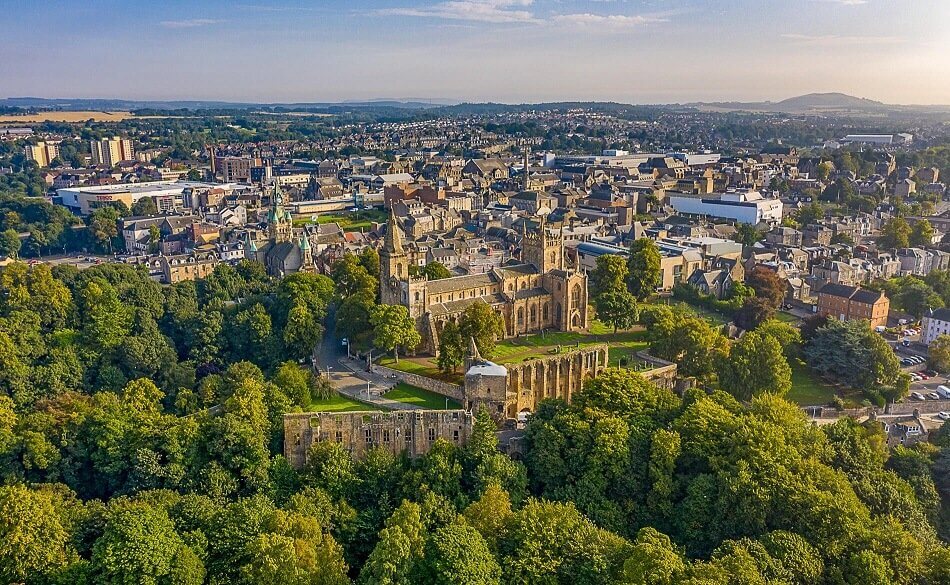
Visiting Dunfermlinetoday, you might not realize this quiet Fife town was once the epicenter of Scotland’s royal might. For centuries, dunfermline wasn’t just an important settlement, it was the lively heart of the Kingdom of Scotland, acting as its unofficial capital.
People often overlook this chapter of Scottish history, but it’s filled with tales of royal ambition, deep religious faith, and changing political fortunes. Let’s see how Dunfermline rose to become Scotland’s ancient capital, why it mattered so much, and what led to its eventual decline.
The Dawn Of Royal Dunfermline
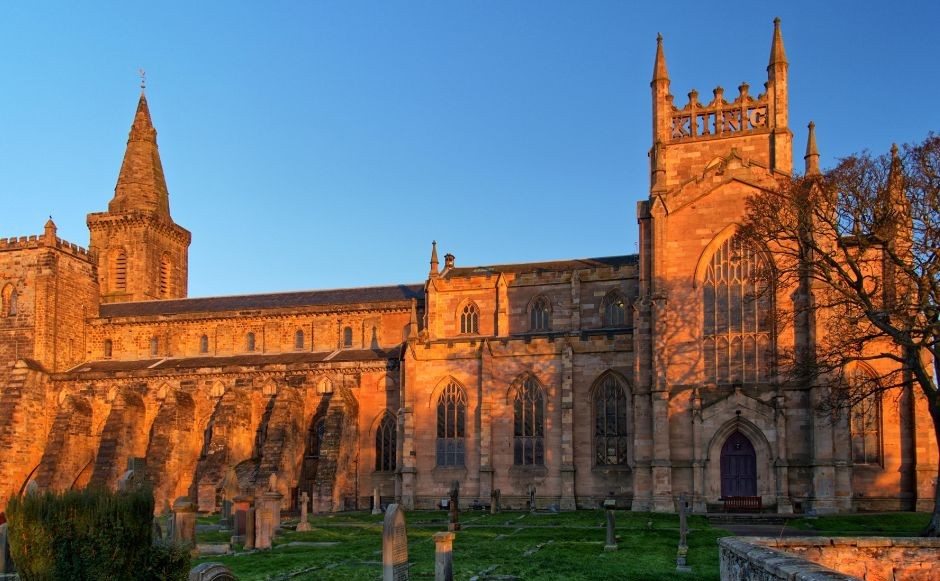
Dunfermline’s name first appeared as "Dunfermelitane" in official documents by King David I in 1128. The modern name "Dunfermline" wasn’t officially used until 1609, though it showed up earlier in royal symbols and seals. King David II later granted it "burgh" status, likely between 1124 and 1147, and it became a royal burgh under James VI in 1588.
In 1396, six gates were built around the town to collect tolls and protect residents. These included the Mill Port (near Bruce Street), Rottenraw Port (South Chapel Street), Crosswynd Port (now a modern street), East Port, Tolbooth Port (at the bottom of Bruce Street), and West Port (on St. Catherine’s Wynd).
The town’s royal connections began long before the Middle Ages. Archaeologists found traces of settlements from the Stone and Bronze Ages, showing people lived there thousands of years ago. Its rise as a royal center started in the 11th century when King Malcolm III (Malcolm Canmore) married Saint Margaret, an Anglo-Hungarian princess, at a local church. This union shifted Scotland’s power center to Dunfermline, making it the king’s main residence and administrative hub.
The name "Dunfermline" likely comes from Gaelic, meaning "the foreigners’ town on the hill." This refers to a wave of English nobles who settled there after fleeing William the Conqueror’s invasion of England. By Malcolm’s time, these newcomers outnumbered locals, leading to the town’s nickname. Queen Margaret encouraged their integration, which also led to expanding the local church into a Benedictine abbey.
Key Moments In Dunfermline’s History
- 11th–15th Century : Home to kings like Malcolm III, Saint Margaret, and Robert the Bruce.
- 1068–1070 : Malcolm and Margaret’s marriage marked Dunfermline’s start as a royal power center.
- 1093 : Margaret’s burial here began its role as a royal burial site.
- 1128 : David I upgraded the church to an abbey.
- 1329 : Robert the Bruce’s burial reinforced its importance.
- 1437 : James I’s death moved royal power to Edinburgh, ending Dunfermline’s era as capital.
Historical Landmarks In Dunfermline
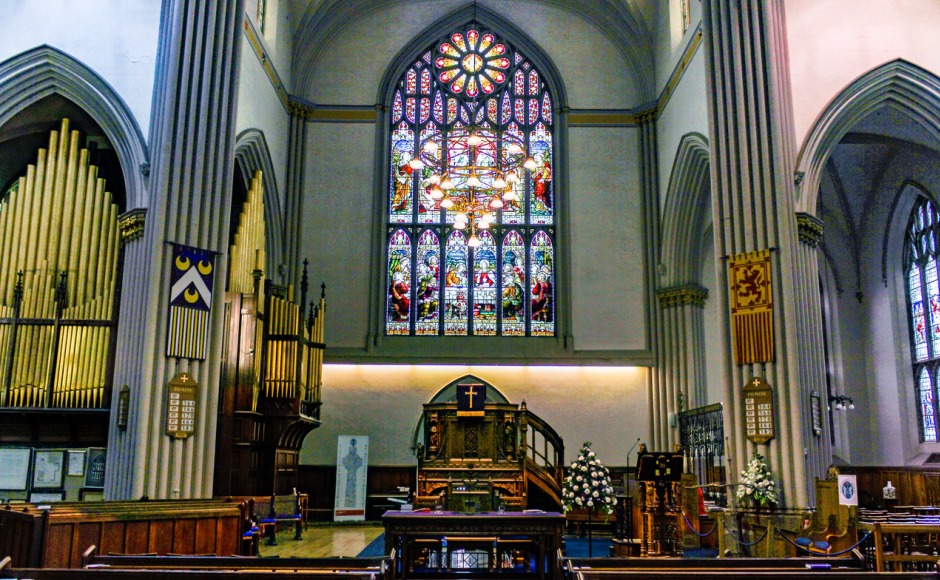
Dunfermline Abbey
At the heart of the town lies Dunfermline Abbey, founded by Queen Margaret in the 11th century. Its medieval architecture and role in Scottish history make it a key site. The abbey houses the remains of kings like Robert the Bruce, whose heart is also interred here. The ruins of the nave and nearby palace offer a vivid look into Scotland’s royal past.
A Royal Resting Place
After Viking raids destroyed Iona, Scotland’s traditional burial site, Dunfermline Abbey became the final resting place for kings and queens. Queen Margaret was buried here in 1093, followed by around 20 royals, including Robert the Bruce. His body lies near the high altar, though his heart was buried elsewhere, a tradition honoring his final wishes. Seven kings, five queens, and other royals were laid to rest here, linking new rulers to Scotland’s past and strengthening their claim to power.
Growth And Community
The abbey helped the town grow. Pilgrims visiting St. Margaret’s shrine brought wealth and trade. As a major landowner, the abbey managed four towns and employed locals during the Middle Ages. Monks worked closely with the community, handling resources and daily tasks. This mix of royal support, religious activity, and commerce turned Dunfermline into a bustling hub, shaping its economy and social life for centuries.
Key Figures Buried At The Abbey
- Queen Margaret, reburied in a grand shrine in 1250.
- Malcolm III, who started Dunfermline’s royal legacy.
- David I, who expanded the abbey and built its iconic church.
- Robert the Bruce, buried here after fighting for Scottish independence.
- Alexander III, whose death led to a royal succession crisis.
- Elizabeth de Burgh, Bruce’s queen, buried near him.
- Robert Stewart, a powerful regent for three Scottish kings.
Abbot House Heritage Centre
This 15th-century building, the oldest in Dunfermline, brings history to life with interactive exhibits. Visitors can see medieval artifacts, period rooms, and displays showing how past residents lived.
Pittencrieff Park (The Glen)
Known locally as "The Glen," this 76-acre park was gifted to the town by Andrew Carnegie in 1903. It features gardens, wooded trails, and wildlife, making it a favorite spot for picnics, walks, and family outings.
Related Reading: Wood Mill Restaurant Dunfermline
Dunfermline Palace
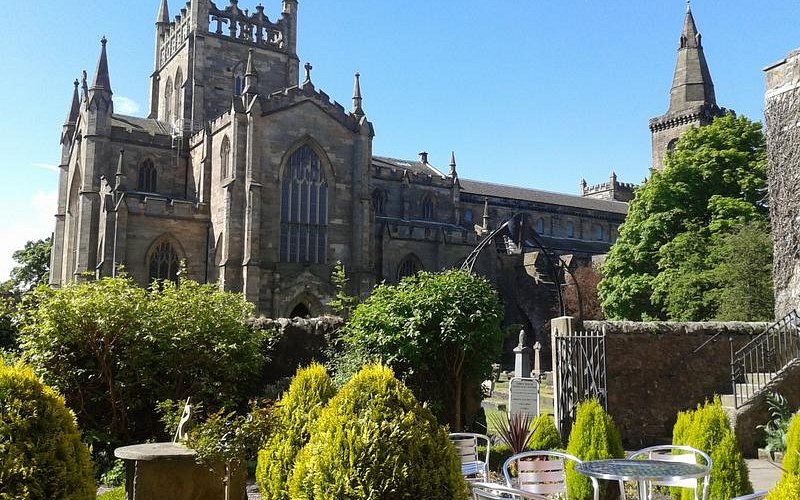
Dunfermline Palace began as part of the Abbey’s guesthouse and grew into a key royal residence. By 1429, timber was bought to build living quarters for Scotland’s kings and queens. Most of what remains today comes from upgrades made by James IV around 1500. The palace shows how Scotland’s rulers turned simple monastic spaces into functional homes fit for a monarchy.
Royalty like James IV, Margaret Tudor, James V, and Mary of Guise often stayed here. It wasn’t just a home, it hosted big decisions, like Mary, Queen of Scots, planning a meeting with England’s Queen Elizabeth I in 1562. The palace’s busiest years were under James IV and Anne of Denmark, who expanded it, adding the “Queen’s House,” a unique building with a driveway through its base.
Life here was lively: staff managed gardens, maintained roofs, and cared for the royal family. A funny mishap in 1602 saw an English visitor, Roger Aston, tumble down stairs near Anne’s bedroom, a reminder that even royals dealt with everyday clumsiness.
A King’s Start And A Palace’s Slow End
In 1600, Charles I was born here, the last monarch born in Scotland. His mother, Anne, upgraded the palace after receiving it as a wedding gift. Charles spent his early years in Dunfermline, using a wooden stool with wheels to learn to walk.
But after James VI moved the royal court to London in 1603, the palace’s importance faded. Though Charles I visited in 1633 and Charles II stayed briefly in 1650, the building fell apart. By 1708, only ruins remained the kitchen, cellars, and a towering south wall overlooking the Firth of Forth.
Dunfermline In Scotland’s Royal Network
Scone - Where Kings Were Crowned
Scone, near Perth, was Scotland’s coronation site. The Stone of Destiny, kept here, symbolized royal power. Monarchs like Robert the Bruce and Charles II were crowned on it. When Edward I stole the stone in 1296, it was a blow to Scottish pride. Scone was sacred for ceremonies but not daily governance.
The Heart Of Royal Life
From 1069 to 1452, Dunfermline acted as Scotland’s unofficial capital. It was where kings lived, treaties like the Auld Alliance were signed, and royals were buried. Over 20 monarchs, including Robert the Bruce, rest here. It combined daily life, politics, and legacy in a way no other site matched.
Fortress And Family Home
Stirling Castle’s steep cliffs made it a military stronghold and royal refuge. Later, it hosted coronations, James V, Mary Queen of Scots and housed royal children, including James VI. Its mix of defense, ceremony, and family life made it vital to Scotland’s rulers.
Edinburgh - The New Center
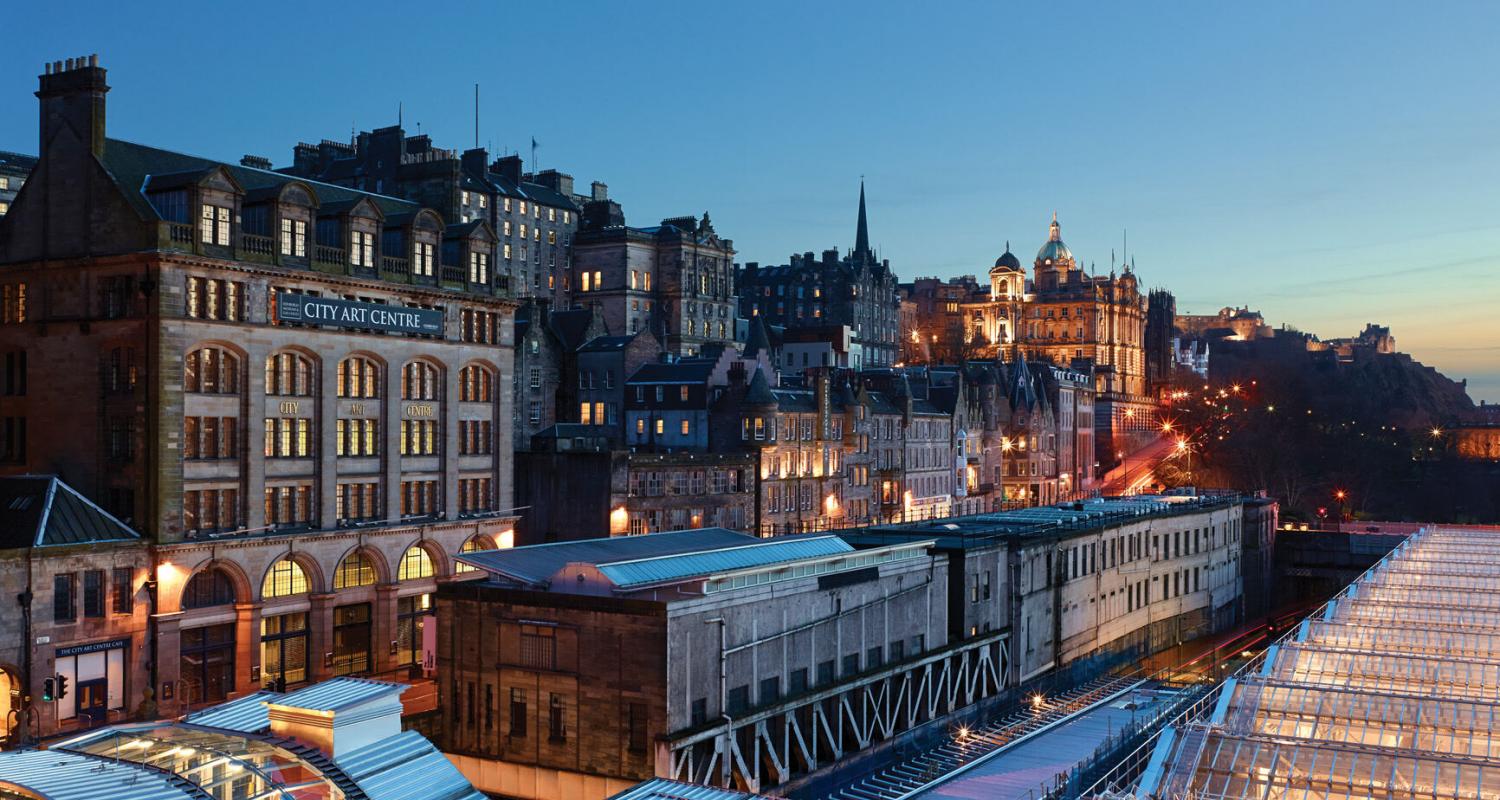
By the 1400s, Edinburgh’s castle and growing trade made it Scotland’s administrative heart. After 1452, it became the permanent seat of government, housing courts and parliament. While Dunfermline faded, Edinburgh’s rise marked the shift from a traveling court to a fixed capital.
These places, Scone for crowns, Dunfermline for life and legacy, Stirling for defense, and Edinburgh for governance show how Scotland’s monarchy adapted over time. Each played its part until power settled in Edinburgh, leaving Dunfermline’s ruins as a quiet reminder of its royal past.
The End Of Dunfermline’s Time As Capital
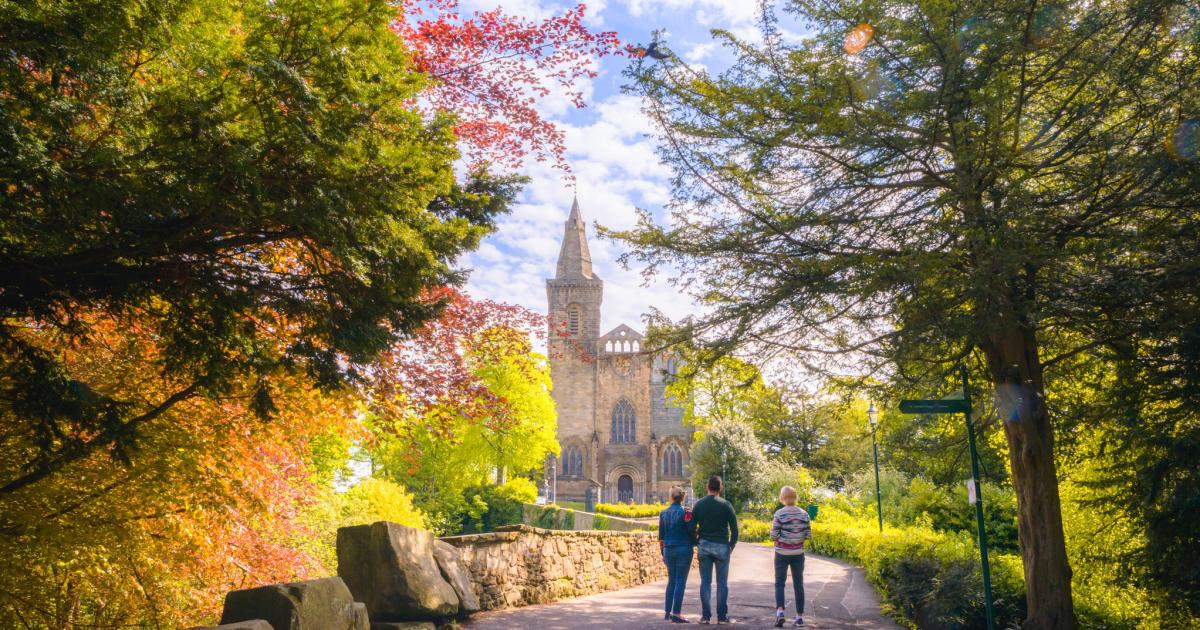
Dunfermline’s long run as Scotland’s unofficial capital ended suddenly in 1437 when King James I was murdered in Perth. His death, fueled by anger over his strict rule and policies, left a gap in leadership. This forced Scotland to find a safer, more central location for its government leading to Edinburgh’s rise.
Why Edinburgh Took Over
After James I’s assassination, his young son James II was crowned in Edinburgh’s Holyrood Abbey. The city’s natural strengths made it the obvious choice:
- Strong Defense : Edinburgh Castle’s high, rocky position made it nearly impossible to attack, vital during unstable times.
- Central Spot : Sitting between the Highlands and Lowlands, it became a natural hub for trade, politics, and travel.
- Growing Economy : After losing Berwick as a key port, Edinburgh became Scotland’s main trading center. Its booming population and royal bureaucracy supported its new role.
By the 1460s, Edinburgh was officially Scotland’s “main town,” housing the government, courts, and parliament. This shift marked a move toward a modern, fixed capital.
When James VI became king of both Scotland and England in 1603, the royal court moved to London. Dunfermline’s palace fell into disrepair, ending its days as a royal home. Edinburgh stayed the capital but lost political clout until Scotland’s parliament returned in 1999. Dunfermline, meanwhile, rebuilt itself. After a fire in 1624, it focused on linen production, later shifting to retail and finance, a sign of its ability to adapt.
Dunfermline Today - A Historical Gem
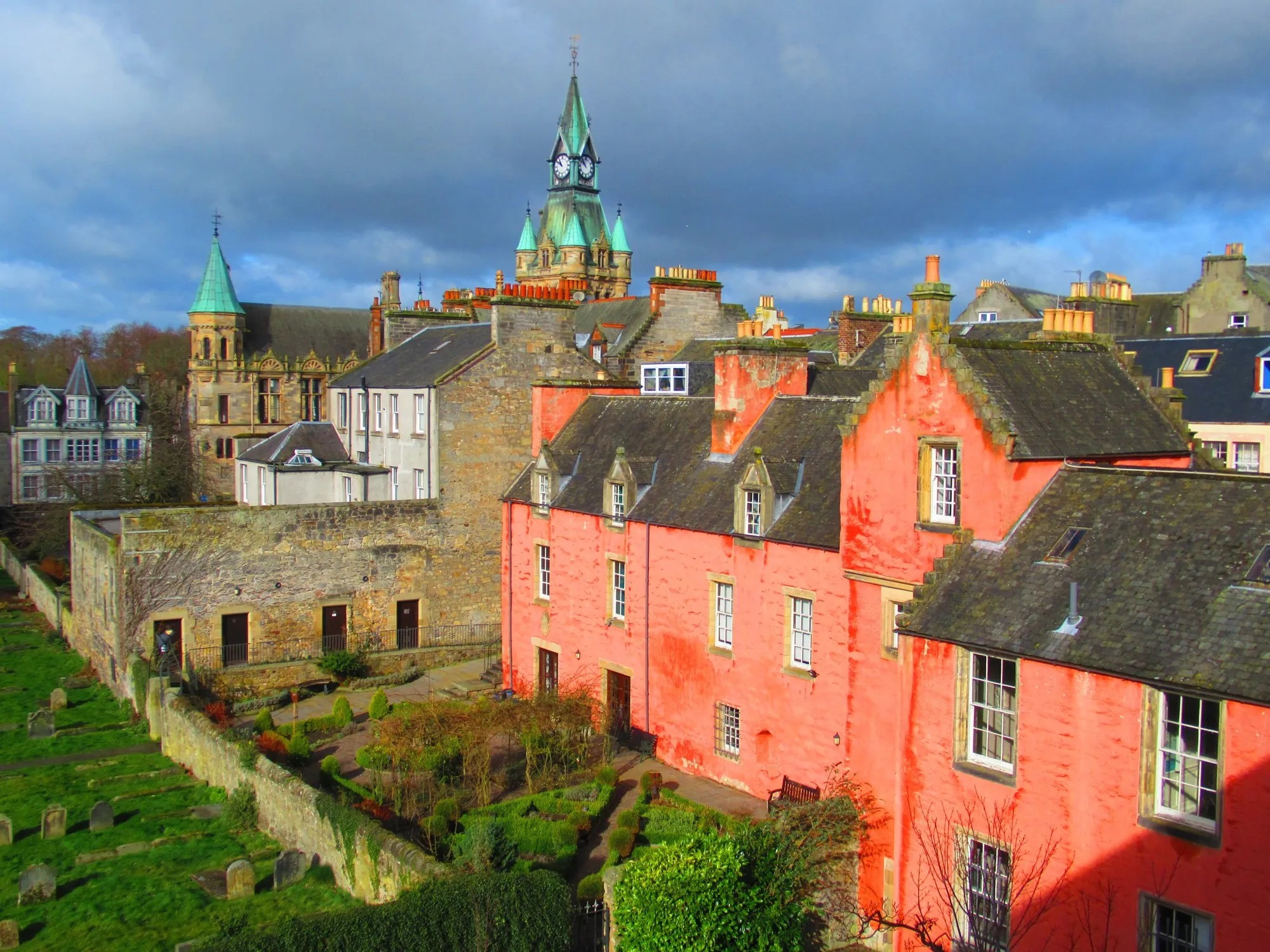
In 2022, Dunfermline earned official city status, a nod to its rich past and modern growth. Its top attraction, Dunfermline Abbey and Palace, lets visitors walk through royal history, including the burial site of Robert the Bruce. The abbey church still hosts services, keeping centuries-old scottish traditionsalive.
Andrew Carnegie’s Legacy
Dunfermline’s story also shines through Andrew Carnegie, born there in 1835. His donations transformed the city: Pittencrieff Park (a gift to the public) and the Carnegie Library & Galleries highlight his impact. These sites blend history with culture, drawing visitors and supporting the local economy.
Hidden History And Modern Life
Beneath the city lies St. Margaret’s Cave, once a quiet prayer spot for the queen. The Fife Pilgrim Way, a walking trail, connects Dunfermline to its medieval roots. Today, it’s a bustling city with easy access to Edinburgh, mixing ancient landmarks with modern shops and services. Its pride in its royal past and ability to evolve keep Dunfermline vibrant for locals and visitors alike.
FAQs About Dunfermline As The Capital Of Scotland
What Does "de Facto Capital" Mean For Dunfermline?
It means Dunfermline acted as Scotland’s working capital in practice, even if it wasn’t officially declared. While kings moved between castles, Dunfermline was their main base for ruling and daily affairs for centuries.
Which Kings And Queens Were Tied To Dunfermline?
Dunfermline’s royal story starts with Malcolm III and his wife Margaret in the 1000s. Robert the Bruce, a key figure in Scottish independence, was buried there in 1329. Charles I, the last monarch born in Scotland, was born in Dunfermline Palace in 1600.
Were Any Kings Crowned In Dunfermline Abbey?
While the abbey was a burial site for royals, coronations happened at Scone Palace, where the Stone of Destiny was kept. There’s no record of a king being crowned in Dunfermline itself.
How Did The Abbey And Royals Shape Dunfermline’s Economy?
The abbey and royal court brought wealth and jobs. Margaret’s ferry service for pilgrims boosted trade, and the abbey’s influence drew visitors and nobles. This created demand for goods and services, shaping the town’s growth.
Why Did Edinburgh Replace Dunfermline As Capital?
After King James I was killed in 1437, Edinburgh’s secure castle, central location, and growing trade made it a better choice. It became home to Scotland’s government and courts, locking its role as the new capital.
Why Was Dunfermline Called "the Foreigners’ Town On The Hill"?
The name comes from the 11th century when Malcolm III married Margaret, a Saxon princess. Many English nobles fleeing Norman rule settled there, leading locals to call it the "town of outsiders on the hill."
Final Thoughts
Dunfermline’s past shows its lasting importance, stretching far beyond its recent return to city status. For over 400 years, it acted as Scotland’s unofficial capital, a busy center where royal power, religion, and community life came together. Starting with the marriage of Malcolm III and Saint Margaret, which set the stage for its rise, to being the final resting place for Scottish kings like Robert the Bruce, the town was central to the nation’s story.
When James I was murdered, power shifted to Edinburgh, ending Dunfermline’s time as a capital. But the town didn’t fade away. It grew through industry and was transformed by Andrew Carnegie’s generosity, whose donations still shape its culture and green spaces today. Now, Dunfermline proudly wears its history, welcoming visitors to walk through its ancient abbey, stand where kings once stood, and feel the energy of a place that helped build Scotland.
Also Check Out: Edinburgh City Centre Map

Callum Fraser
Author
Callum Fraser isn't just a writer about Scotland; he's a product of its rugged landscape and rich history. Born and raised in Perthshire, with the Highlands as his backyard, his love for the nation's stories was kindled by local storytellers and long walks through ancient glens.
This passion led him to pursue a degree in Scottish History from the University of Edinburgh. For over 15 years, Callum has dedicated himself to exploring and documenting his homeland, fusing his academic knowledge with essential, on-the-ground experience gained from charting road trips through the Cairngorms, hiking the misty Cuillins of Skye, and uncovering the secrets of traditional recipes in his family's kitchen.
As the Editor-in-Chief and Lead Author for Scotland's Enchanting Kingdom, Callum's mission is simple: to be your most trusted guide. He combines meticulous research with a storyteller's heart to help you discover the authentic magic of Scotland — from its best-kept travel secrets to its most cherished traditional recipes.
Latest Articles
Popular Articles