Red Castle Lunan Bay | Guide To Ruin, History, Bay And Walks
Red Castle at Lunan Bay is a beautiful, unstable ruin. Learn the geology, Pictish history, and essential safety guidelines for viewing the scheduled monument from the beach.
Author:Callum FraserNov 30, 2025
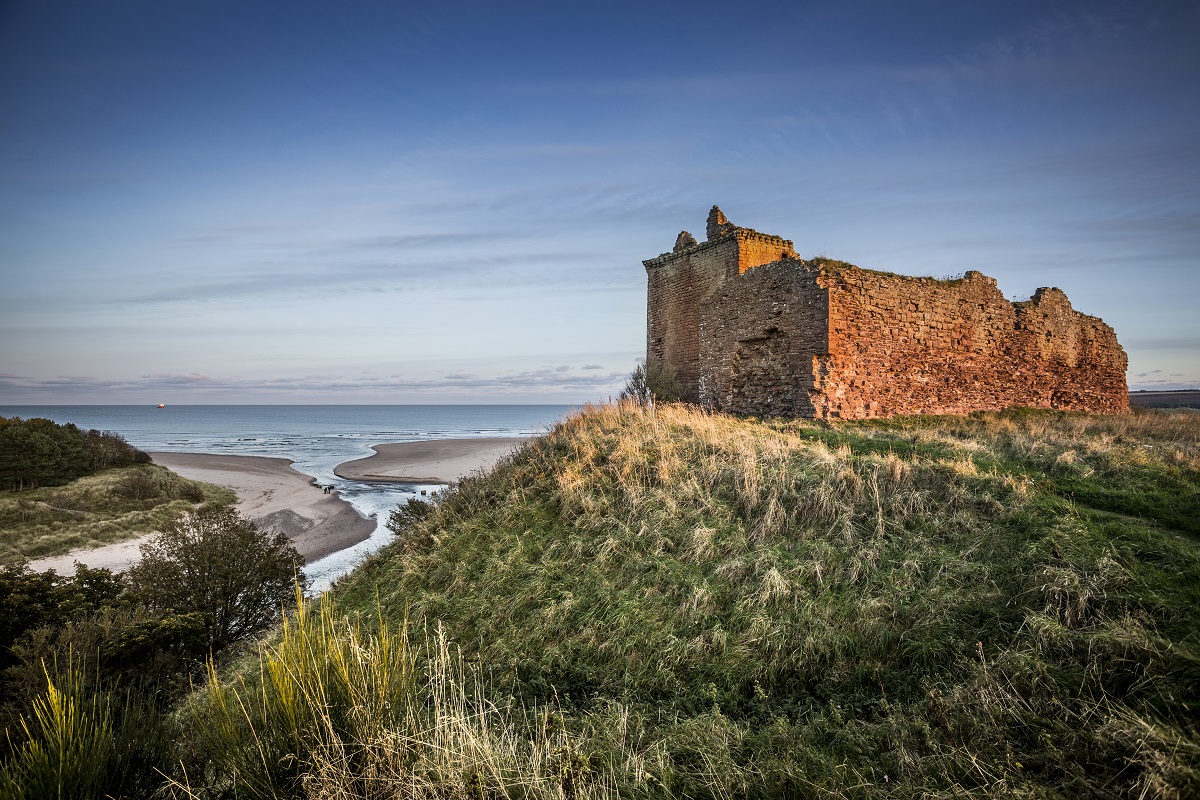
Red Castle Lunan Bay - Scotland’s Forgotten Fortress On The Edge
For those captivated by the romance of Scotland’s ruins, Red Castle at Lunan Bay offers one of the most dramatically situated and historically significant experiences.
However, unlike maintained tourist sites, approaching this ancient, tidal-battered fortress demands respect for its history, architecture, and-most importantly-its unique safety challenges.
This guide, informed by my decades of study on Scotland's East Coast heritage, provides the comprehensive, authoritative knowledge you need to appreciate this majestic ruin safely and deeply.
You will learn not only howto visit this site but also whyit was built here, cementing its place as an essential stop on any tour of Scottish history.
Red Castle Lunan Bay At A Glance
| Fact | Details |
| Official name | Red Castle |
| Location | Angus coast, about 4 miles (6.5 km) south of Montrose, east Scotland. |
| Address | Arbroath DD11 5ST, United Kingdom |
| Type of site | Ruined medieval castle on a bluff, overlooking a two-mile sandy bay and dunes. |
| Protection status | Scheduled monument with associated archaeological remains beneath and around it. |
| Ticketing | No ticket booth or formal “opening” of the ruin; access is informal and external only. |
| Beach facilities | Car park, seasonal facilities and nearby businesses at the back of the bay. |
Red Castle In Four Layers Of History
Here you’ll see how geology, kings, feuds and modern conservation all converge on this one headland. Understanding these layers adds enormous depth to the view you’ll have from the sand.
Layer 1 – The Landscape: Dunes, River And Coastal Bluff
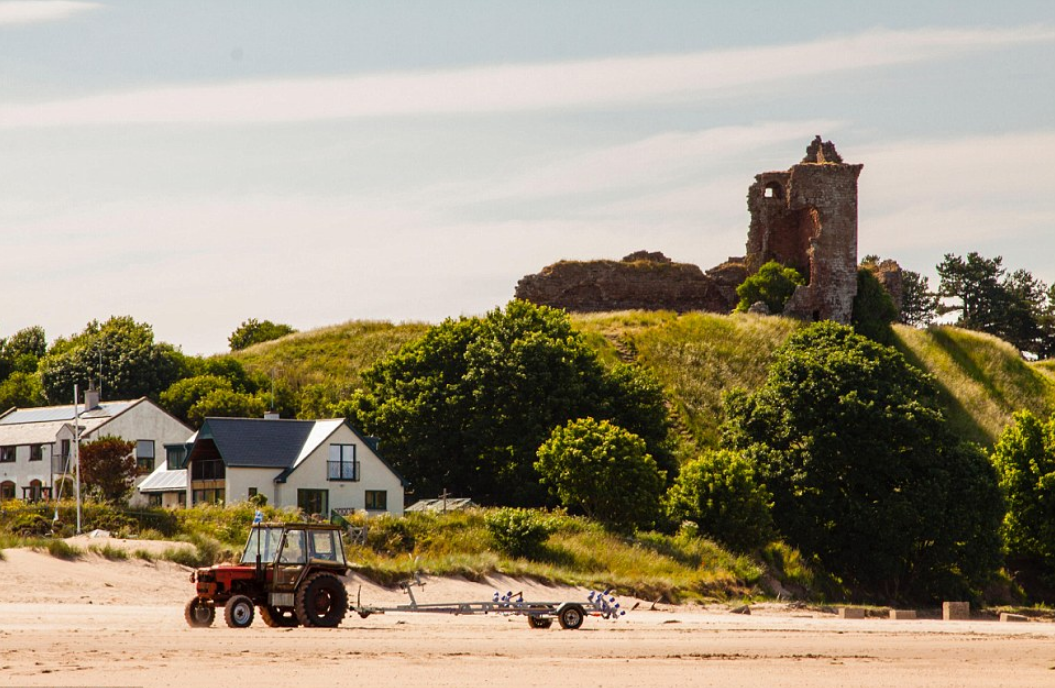
Long before anyone built in stone at Lunan Bay, the landforms were already dramatic. A low river, the Lunan Water, meets the sea at a shallow angle, depositing sand that the wind piles into dunes behind the beach. The castle site itself is on a natural promontory above the river mouth and shore.
From a defensive perspective, this position is ideal: high enough for visibility, close enough to the sea to watch passing ships, and protected on several sides by steep slopes and water. Once you recognise that, the site stops looking “randomly picturesque” and starts looking strategic.
Takeaway:The shape of the coast dictated where power would be projected; Red Castle is almost an inevitable response to this geography.
Layer 2 – Medieval Origins Under King William The Lion
According to Historic Environment Scotlandand standard references like the Castles of Scotlandgazetteer, the earliest castle at Lunan was built in the late 1100s, under King William I (William the Lion).
At that time, Scotland’s eastern seaboard faced real pressure from Norse and Danish raiders. A fortified site here:
- Helped watch the coastbetween the Firth of Tay and the Moray Firth.
- Guarded routes inlandvia the Lunan and South Esk valleys.
- Asserted royal controlover a productive agricultural hinterland.
Contemporary tradition also suggests that William used Red Castle as a coastal hunting lodge, giving it a dual role as frontline stronghold and informal royal retreat.
The original fortification was likely simpler than the later stone tower you see today-perhaps an earth-and-timber structure, then an early stone hall or tower. What matters for a visitor is that Red Castle began its life as a royal instrument of surveillance and defence, not just a picturesque residence.
Takeaway:When you look up at Red Castle, you’re seeing the legacy of a king worried about his coasts as much as his courts.
Layer 3 – Noble Families, Feuds And The 16th-Century Siege
Over the following centuries, the castle passed into the hands of noble families with close ties to royal politics. Sources mention the Balliol/Berkeley connection, then later the Stewarts and the Beatons-names woven through Scottish power struggles of the late medieval and early modern period.
Charter evidence shows the lands and castle passing from Walter de Berkeley to Ingram de Balliol in the 12th–13th centuries, later forfeited and granted by Robert the Bruce to the Earl of Ross, before eventually coming under the Beatons whose story dominates the later history of the site.
The episode that visitors remember most once they hear it is the late 16th-century destruction. In brief:
- Red Castle was associated with Elizabeth Beaton, whose beauty and wealth drew suitors.
- James Gray, a nobleman who had been involved with her, is recorded as leading an attack on the castle after a romantic and political falling out.
- The castle was besieged and burned, leaving it badly damaged.
Estate records and local histories suggest that after this violence, the castle was never fully reoccupied as a high-status residence.
Takeaway:The ruinous state of Red Castle is not just the slow work of time-it’s the result of a specific, very human feud layered over political tension.
Layer 4 – From “Lost House” To Scheduled Monument At Risk

Post-medieval accounts often treat Red Castle as a “lost house” of Angus, a once-grand seat that slipped into decay as power and fashion moved elsewhere. By the 18th and 19th centuries, sketches and early photographs show it already ruinous, used more as a romantic backdrop than a home.
Records indicate that the last resident was James Rait, minister of nearby Inverkeilor, and that parts of the building remained roofed until around 1770 before finally being abandoned to the elements.
In the 20th century, as awareness of archaeological value grew, the site and its underlying remains were designated as a scheduled monument-a status used by the UK and Scottish governments to protect nationally important archaeology.
Historic Environment Scotland’s scheduling entry for the area describes a Pictish barrow cemetery and an Iron Age souterrain (an underground structure) in the fields near the castle, along with associated settlement features uncovered in modern excavation.
Today, conservation concern is as much about erosionas vandalism. Newspaper reports and heritage bodies highlight that the coastal edge is retreating and the castle mound itself is unstable, raising the possibility that parts of the ruin could eventually collapse into the sea.
Takeaway:Red Castle now sits at the intersection of romance and risk-admired, legally protected, but physically vulnerable.
Layers Beneath The Castle: Pictish Barrows And Iron Age Remains
Perhaps the most striking modern realisation is that the medieval castle is not the first human storyon this headland.
Historic Environment Scotland’s scheduling entry for the area describes a Pictish barrow cemeteryand an Iron Age souterrain(an underground structure) in the fields near the castle.
In practice, that means:
- The site formed part of a ritual and burial landscapein the first millennium CE.
- People here had access to trade and agriculturelong before stone towers rose over the bay.
- The castle builders were, knowingly or not, imposing a new layer of authority over a much older sacred and domestic landscape.
As a visitor, you won’t see barrows neatly labelled on the ground, but knowing they exist helps you appreciate the continuity of human connection to this small piece of coast.
If this deeper time-layer interests you, Montrose Museumnearby displays finds from the eroding midden below Red Castle and the surrounding fields, including pottery sherds, animal bone and small objects that bring everyday life at the site into sharper focus.
Takeaway:When you walk beneath Red Castle, you’re not just walking under medieval walls-you’re crossing ground shaped by Pictish and Iron Age communities too.
What Red Castle Looks Like Today

Red Castle, Lunan Bay, Angus, Scotland
This section helps you interpret what you’ll actually see on the bluff and why it looks so precarious. It’s the practical bridge between history and your own visit.
The Surviving Tower, Walls And Red Sandstone Masonry
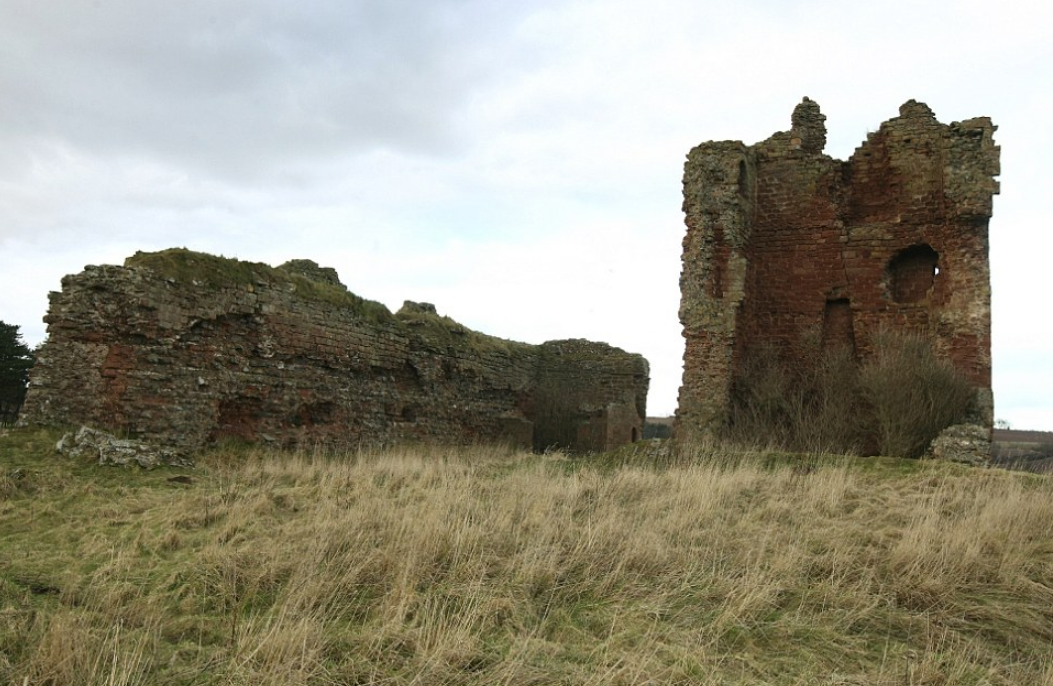
From the beach or dunes, the most obvious feature is a tall, broken tower-essentially the stump of a multi-storey keep. Beside it, fragments of curtain walland other masonry cling to the edge of the mound.
Notable features include:
- Red sandstone blocks, giving the castle its name and making it glow warmly in low light.
- Openings where floors have collapsed, leaving jagged internal walls exposed.
- Remnants of vaulted structures and ancillary buildings, visible as fallen masonry and earthworks.
Guidebooks and castle surveys attribute most of the visible stonework to the 15th century, rebuilt or extended as a more comfortable fortified residence compared with the original 12th-century structure.
Takeaway:Think of what you see as the bare bones of a later medieval residence, stripped back to its structural skeleton.
Why The Ruin Is So Fragile (Erosion, Cracks And Collapse Risk)
Two forces are undermining Red Castle at once: weather and coastal erosion, and structural decayin the masonry itself.
Heritage and news reports emphasise several specific risks:
- The mound beneath the wallsis being eaten away by wind, rain and sea, especially on the seaward side.
- Long-standing cracks in the towerand walls widen each winter as frost and water work into the joints.
- Sections of masonry have already fallen away, and others are visibly leaning.
In conservation terms, this is why the ruin is flagged as being “at risk” or “vulnerable.” It doesn’t mean imminent catastrophic collapse, but it does mean that every extra bit of pressure-from a person climbing or pulling on loose stone-accelerates damage.
In recent years, the risk has become more than theoretical. A significant landslip on the mound in 2021 prompted local authorities to install safety fencing and warning signs, and official guidance now advises visitors to avoid approaching the ruin from the bank of the Lunan Water and to admire it instead from the beach and estuary.
Takeaway:Treat the castle less like an adventure playground and more like a fragile fossil on the edge of the sea.
Safety First: Viewing Red Castle Without Putting Yourself-or The Site-at Risk
The key question most visitors ask is: how close can I get? From a safety and heritage perspective, the answer is: close enough to see it clearly, but notright under the walls.
Coastal erosion, cracks in the masonry and a recent landslip mean that fencing and warning signs are there for a reason, and official advice is to stay behind barriers and use the beach, dunes, river estuary and viewing platform as your main vantage points.
- Stay off the masonry.Climbing the tower or scrambling up loose slopes to touch the walls is dangerous and goes against the protection of this scheduled monument.
- Observe barriers and signs.If there are fences, tape or warning notices, treat them as hard boundaries, not suggestions; access from the Lunan Water bank is specifically discouraged due to landslip risk.
- Choose solid ground.Viewpoints from the beach, dunes and established pathsgive excellent views without tempting fate on the cliff edge.
- Mind undercut edges.Eroded dune or bluff edges can look harmless from above but be unstable underneath.
From a historian’s point of view, one of the most respectful acts a visitor can perform is simply not to contribute to the ruin’s deterioration. That means taking your photos, enjoying the view, and leaving the structure untouched.
Takeaway:The best way to “experience” Red Castle is with your eyes and camera, not your climbing skills.
Also Check Out: 50 Most Beautiful Scottish Castles
Lunan Bay: The Beach Beneath The Castle
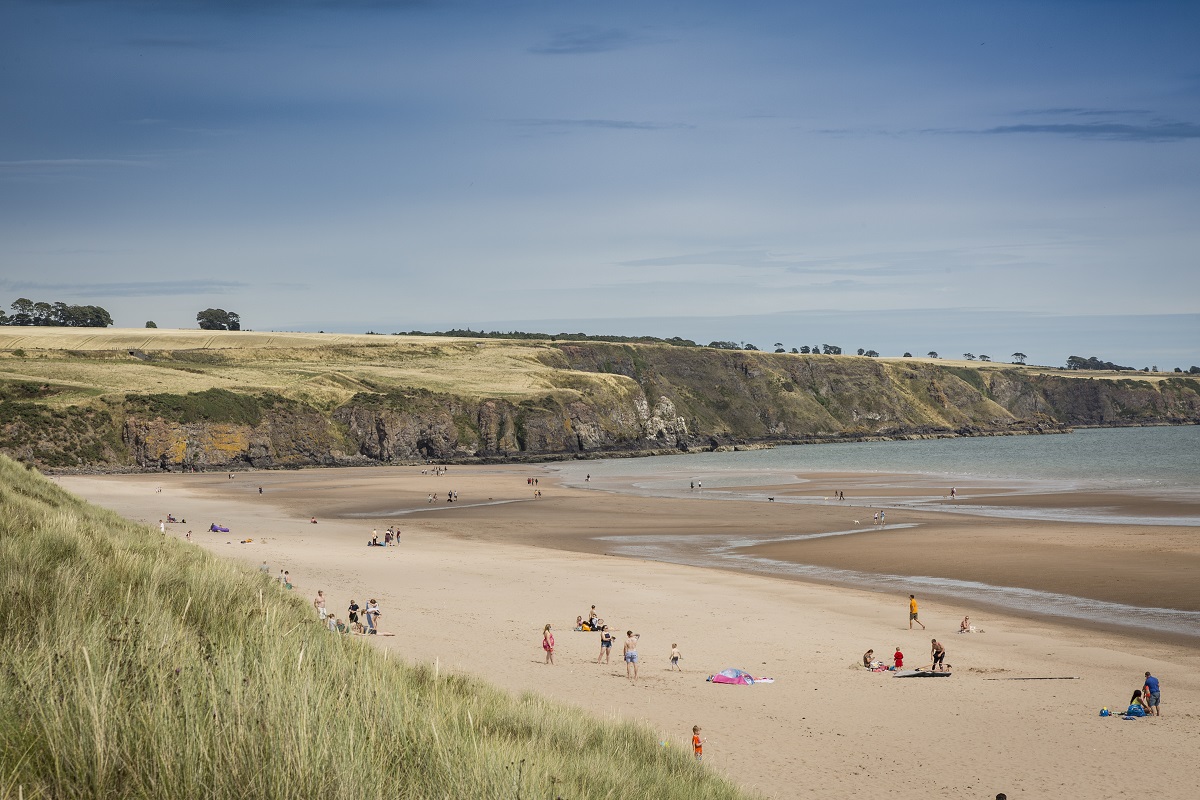
Now we turn to the beach itself-the setting that makes Red Castle feel like something from a painting. This is where most of your time on-site will be spent.
The Shape Of The Bay: Two Miles Of Sand Between Cliffs
Lunan Bay is essentially a broad arc of sand between rocky headlands, with the Lunan Water cutting across the western side. Walking guides describe a beach of roughly two miles (about 3 km), backed by sizeable dunes and low cliffs at either end.
Practically, this gives you:
- Plenty of space to spread out, even on busier days.
- Variety in textures-firm wet sand near the tide line; softer, drier sand higher up.
- Good conditions for long, linear walks, short family potters, or simply sitting and watching the tide.
Takeaway:Think of Lunan Bay as a natural promenade with a castle as your ever-present reference point.
Today the bay is as much lived-in as it is picturesque. You may see riders exercising horses along the firm sand, surfers waiting for clean sets beyond the break, and traditional salmon nets strung between poles when conditions and licensing allow.
After winter storms, dedicated beachcombers comb the upper shore for agates and other distinctive pebbles that sometimes glint among the shingle.
Weather, Tides And When The Bay Feels Most Atmospheric
The east coast of Scotland has its own character. You can expect:
- Brighter, colder lightin winter, with sharp contrasts and bigger seas.
- Long, soft eveningsin late spring and summer, when the sun takes its time sinking along the horizon.
- Periods of haar-coastal mist-that can swallow the castle in cloud and then reveal it again in seconds.
Tides change the experience more than many visitors anticipate. Low tide reveals a wide expanse of flat sand and shallow pools; higher tides can push you closer to the dunes and reduce walking space. Local tide tables or general UK tide apps are worth checking if you want maximum beach.
Takeaway:There isn’t a bad time to see Lunan Bay, but tide and light will strongly colour your impressions.
Wildlife, Birdlife And The Changing Dunes
Lunan Bay is also a living coastal environment. Walkers and local heritage groups note:
- Wading birds, gulls and occasionally sealsoffshore.
- Dune grasses and plants adapted to shifting sand.
- Ongoing movement of the dunes, which can subtly alter paths and views over time.
This dynamism is part of what puts pressure on Red Castle’s mound but also what makes the beach feel alive. When you stick to established paths and avoid trampling fragile dune vegetation, you help that balance.
Takeaway:Watch where your feet go in the dunes; you’re walking through both a habitat and a natural defence line against the sea.
How To Get To Red Castle And Lunan Bay
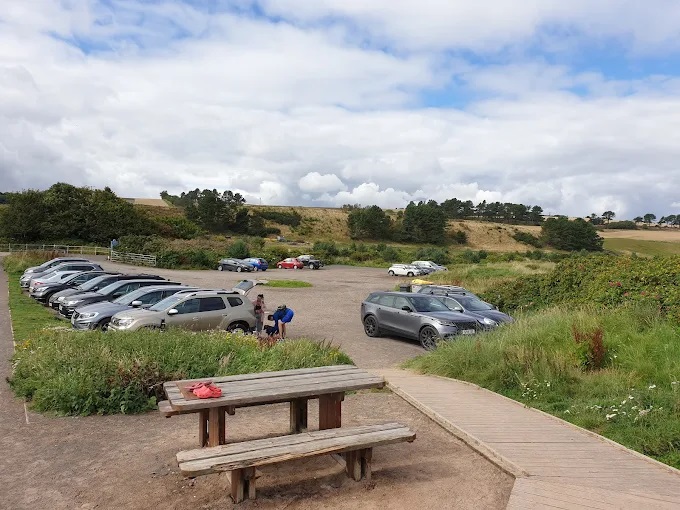
Here we move into logistics-how to actually reach this landscape by car, public transport or on foot, and what to expect underfoot.
Finding Lunan Bay On The Angus Coast (From Dundee, Aberdeen And Beyond)
Lunan Bay sits roughly halfway between Dundee and Aberdeen, slightly closer to Dundee. Most visitors approach via:
- The A92 coastal road, turning off on minor roads near Inverkeilor or between Arbroath and Montrose.
- Local signage indicating Lunan Bayrather than “Red Castle” specifically.
Approximate driving times (without traffic):
- Dundee to Lunan Bay: around 45–60 minutes.
- Aberdeen to Lunan Bay: around 75–90 minutes.
- Edinburgh to Lunan Bay: around 2.5–3 hours, depending on route.
Sat-nav is very helpful, but be prepared for narrow country lanesin the final approach.
Takeaway:Plan your journey to arrive with enough daylight for both the castle views and at least a short beach walk.
Driving And Parking At Lunan Bay Car Park
- Access is via a single-track roadleading to the parking area.
- A private operatormanages the car park, with no overnight parking permitted.
- Opening hours and chargesare posted on-site and may change. Data as of November 2025 (check the latest local signage or official tourism pages before travelling).
From the car park:
- It’s a short walk through dunes to reach the beach.
- Paths lead along the back of the dunes towards the river mouth and castle views.
Takeaway:Think of the car park as your base; once there, everything else is on foot and dictated by tide, light and your energy levels.
Public Transport And Taxi Options From Montrose Or Arbroath
For visitors without a car, the simplest approach is to use train or bus to Montrose or Arbroath, then a taxifor the final leg.
- Both Montrose and Arbroath sit on the mainline rail routebetween Edinburgh, Dundee and Aberdeen.
- Local buses run along the A92, but direct services to the beach are limited, so a short taxi ride is often the most reliable method.
If you’re comfortable with longer walks and navigation, you can also plan coastal hikesthat include Lunan Bay as a leg between settlements, but this is better for experienced walkers with good maps.
Takeaway:Without a car, treat Lunan Bay as a mini-expedition from Montrose or Arbroath, with taxis or long walks completing the journey.
Accessibility Considerations (Boardwalk, Viewing Platform, Terrain)
Accessibility is mixed:
- Tracks from the car park towards the beach include surfaced paths and a wooden boardwalk section through the dunes, leading to an accessible viewing platform that offers a superb panorama over the bay and distant castle.
- The beach itselfoffers firm sand near the water at mid-low tide, but soft sand higher up can be demanding for anyone with mobility challenges.
- There are no formal accessible routesdirectly to the castle ruin; all close views require negotiating slopes or uneven ground.
If step-free access is a priority, the most realistic experience is likely to be staying close to the car park edge of the dunes, using the viewing platform and adjacent paths to enjoy sweeping views of the bay and castle without tackling steep or loose surfaces.
Takeaway:Lunan Bay offers big views for many visitors, but those needing level, surfaced paths should plan carefully and perhaps be content with slightly more distant perspectives.
Walks And Viewpoints Around Red Castle
This section gives you structured options-from an easy family stroll to a more substantial circular walk-plus tips on where the best views tend to be.
Short Stroll: From Car Park To Beach And Castle View (Family-Friendly)
For many, a simple out-and-back walkis enough:
- From the car park, head through the dunes to the beach.
- Turn right (west) towards the Lunan Waterand walk until the castle is clearly visible above the bluff.
- Pick a safe, dry spot on the sand or higher dune slope to stop, look and photograph.
This route:
- Suits families with childrenwho don’t want a full hike.
- Lets you keep the sea and castle in viewalmost the whole time.
- Avoids any need to negotiate steep, eroded or muddy slopes.
Takeaway:If you only have an hour, this short stroll still delivers the essential Red Castle experience.
Red Castle And Lunan Bay Circular Walk (Approximate Distance And Terrain)
Several walking sites outline a Lunan Bay circular route, sometimes under names like “Lunan Bay Circular” or “Red Castle and Lunan Bay.” Distances vary, but many fall in the 3–5 mile (5–8 km)range.
A typical circuit might involve:
- Starting at the car park, walking the length of the beach.
- Climbing into the dunes and low cliffsat one end for elevated views.
- Returning via tracks behind the dunes and fields, closing a loop back to the start.
Expect:
- Mixed surfaces-sand, grassy paths, sometimes muddy or uneven sections.
- Gentle ascents and descents, but nothing technical in dry conditions.
- Extra care in wet, icy or very windy weather, especially near edges.
Takeaway:A circular walk offers the fullest sense of the bay’s shape and the castle’s changing profile from different angles.
Best Viewpoints For Photographers (Dunes, River Mouth, Distant Clifftops)
From a photographer’s perspective, three spots tend to stand out:
- Dune crestsnear the car park, where you can frame the castle against the sea with a foreground of marram grass.
- The river mouth area, especially at lower tides, giving reflections of the bluff and castle in shallow water.
- Higher ground on nearby cliffs(where paths allow), offering distant panoramas of the entire bay with the ruin as only one element.
Late afternoon and evening often produce warm light on the red sandstone, while early mornings can give soft, pastel tones and mist.
Takeaway:Plan your route around the light-walk to the furthest viewpoint first, then amble back as the colours change.
Seasonal Tips: Winter Swell Vs Summer Sunsets
Every season has its charms:
- Summer:Longer days, milder temperatures, easier family logistics, potential for busy car parks in peak holiday weeks.
- Autumn and spring:Quieter, with beautifully angled light and often lively seas without full winter ferocity.
- Winter:Dramatic waves, fewer people and a heightened sense of exposure; an excellent time for photography if you dress properly and respect conditions.
One practical note: storms and heavy raincan accelerate erosion or wash out informal paths. Check recent reports or local news if conditions have been extreme.
Takeaway:Season shapes mood more than access; choose the time of year that fits your tolerance for cold, wind and isolation.
Related Reading: Scotland Castles Map Guide
Responsible Access: Dogs, Drones And Doing The Right Thing
Beautiful places stay beautiful when visitors act with a bit of forethought. This section translates the Scottish Outdoor Access Code into practical decisions at Lunan Bay.
The Scottish Outdoor Access Code In Practice At Lunan Bay
Scotland’s Outdoor Access Code grants broad rights to cross land and enjoy the countryside, provided access is responsible-respecting people, animals and the environment.
At Lunan Bay, that means:
- Using paths and gateswhere possible, rather than forcing new tracks through fences or crops.
- Avoiding disturbance to livestock, wildlife and nesting birds.
- Taking all litter home, including dog waste bags.
In practice, a little courtesy goes a long way with land managers and other visitors.
Takeaway:The same rules that keep hills and glens open also keep places like Red Castle welcoming for future travellers.
Dogs On The Beach And Among The Dunes
Lunan Bay is widely regarded as dog-friendly, and you’ll see plenty of locals walking their dogs along the sand. Tourism sources confirm that dogs are generally welcome, though always subject to local signage.
Responsible dog-walking here means:
- Keeping dogs under close control, especially around other people, livestock, or during lambing and ground-nesting bird seasons.
- Avoiding dogs charging up fragile dune faces, which can destabilise sand and vegetation.
- Bagging and removing waste-not leaving it or hanging bags in bushes.
Takeaway:Dogs are fine; unchecked dog behaviour isn’t.
Drones, Fires And Camping: What’s Appropriate, What’s Not
Because Red Castle and its surrounding archaeology are protected, and Lunan Bay is a living community as well as a beauty spot, some activities deserve extra caution:
- Drones:At Red Castle specifically, drones are not permitted without the landowner’s permission, and they should be avoided during the fulmar nesting season (roughly early January to late September), when disturbance can distress birds protecting their chicks.
- Fires and BBQs:Open fires can damage fragile dune systems and pose a wildfire risk. Use designated areas only, if available, and never light fires near the castle or on dry vegetation.
- Camping:Informal “wild camping” is subject to the same responsible access rules; overnight parking in the car park is not permittedaccording to site signage. Data as of November 2025 (verify latest car park and camping guidance locally).
Takeaway:If an activity feels like it might leave a visible trace or disturb others, reconsider or seek explicit local permission.
Respecting The Scheduled Monument (No Climbing, No Scrambling On The Bluff Edge)
Historic Environment Scotland’s record for Red Castle makes it clear that both the visible structure and the buried remains are of national importance. Scheduled monument status means unauthorised works or damage are illegal.
Responsible behaviour includes:
- Not climbingon the ruin, however tempting the view looks.
- Avoiding scrambling directly up the bluffwhere erosion is evident.
- Not removing stones, artefacts or pottery fragments-if you spot something intriguing, photograph it rather than pocketing it.
In heritage terms, a visitor who leaves no physical trace is the gold standard.
Takeaway:Treat Red Castle with the same respect you would give a fragile object in a museum-because that’s effectively what it is, just on a larger scale.
Facilities, Food And Staying Near Lunan Bay
To round out your planning, this section looks at what’s available nearby in terms of basics, refreshments and overnight stays.
Car Park Rules, Toilets And Basic Facilities
A small café and farm-shop-style business by the car park often provides refreshments and, at times, public toilets, though opening is seasonal and can vary. As of late 2025, the Lunan Bay car parkprovides the core infrastructure:
- Parkingfor cars, with no overnight stays allowed.
- Basic facilities, which may include seasonal toilets or temporary units, depending on management decisions.
- Signage indicating opening hours, charges and local rules.
It’s wise to:
- Carry some change or a cardfor parking payment.
- Bring your own water and snacks, especially outside peak season.
- Assume facilities may be limited or closedin winter.
Takeaway:Don’t rely on extensive infrastructure; think of Lunan Bay as a semi-wild beach with just enough support for a comfortable visit.
Cafes, Farm Shops And Nearby Places To Eat And Drink
Within a short drive you’ll find cafes, pubs and farm shopsin:
- Montrose, with multiple options around the town centre and harbour.
- Arbroath, known for its smokies and traditional fishmongers.
- Smaller villages and rural businesses along the A92 corridor, sometimes with seasonal opening.
Local tourism sites for Angus maintain up-to-date lists of food and drink options.
Takeaway:Plan to eat either before you arrive or after you leave, using nearby towns as your refuelling points.
Campsite, Holiday Lets And Local Accommodation Options
The broader Lunan Bay area offers a mix of:
- Rural campsiteswithin driving distance of the beach.
- Holiday cottages and lodgesscattered around the bay and lower glens.
- Standard B&Bs and hotelsin Montrose, Arbroath and the surrounding countryside.
Accommodation linked directly to Lunan Bay and Red Castle sometimes appears in property listings or holiday portals, but always check:
- How close the property actually is to the beach and castle.
- Access details (roads, parking, walking distances).
- Seasonal availability and any minimum stays.
Takeaway:Treat Lunan Bay as the scenic focus and choose accommodation across Angus that fits your budget and travelstyle.
Simple Overnight Ideas: Lunan Bay, Montrose Or Arbroath
If you’d like to wake up within easy reach of the bay, three simple patterns work well:
- Lunan Bay / immediate surroundings:For those who want to walk from door to sand, using small campsites or nearby lets.
- Montrose:A compact base with rail links, shops and a harbour, ideal if you’re mixing coast with birdwatching at Montrose Basin.
- Arbroath:Good if you’re heading further south or interested in combining Red Castle with abbey visits and traditional coastal towns.
Takeaway:You don’t need to sleep right at Lunan Bay to enjoy it fully-nearby towns make excellent bases.
Red Castle In The Wider Story Of Scottish Castles
To prevent navigational confusion and properly frame the experience, this section compares Red Castle at Lunan Bay to other famous sites and clarifies common name mix-ups. Understanding its place in the wider story of Scottish castlesadds to its unique appreciation.
Red Castle In Scotland Vs. Wales - Don’t Mix Them Up
Searches for “Red Castle” can be confusing, as there are several. It is vital to distinguish this site from other locations:
- Red Castle in Angus, Scotland:This is the historical and strategic ruin at Lunan Bay covered in this guide.
- Redcastle in Highland: This is another ruined tower-house located on the Beauly Firth on the opposite coast of Scotland.
- Red Castle (Castell Coch) in Wales:This is a famous, restored fairy-tale Victorian Gothic confection near Cardiff.
Always check that listings or reviews reference Lunan Bay, Angus before assuming you’re looking at the same place.
Takeaway:When planning, pair “Red Castle” with “Lunan Bay” or “Angus” to stay on the right coast and ensure you find the correct ruin.
How Red Castle Compares To Famous Icons Like Dunnottar Or Eilean Donan
On a Scottish castle “league table,” Red Castle is small, fragile and relatively unsignposted compared with icons like Dunnottar or Eilean Donan. This difference is precisely what makes it special.
Where it differs:
- No big visitor centre or ticket office, and limited interpretation boards.
- No intact great hall or restored rooms-just the bare ruin.
- Much quieter atmosphere, especially outside weekends and holidays.
Where it matches or even exceeds:
- A dramatic coastal setting that feels wild and immediate.
- A strong sense of landscape history, with dunes, river and sea all in view.
- A closer connection to local life, rather than a heavily curated experience.
Takeaway:Red Castle is not a replacement for Scotland’s blockbuster castles; it’s a complementary experience best appreciated by those who enjoy raw, minimally interpreted sites.
Quick Answers: Castle Of Mey, Slains Castle And Dracula Connections
Related questions often arise due to the association of other castles with royalty or popular culture:
- Where was the Queen Mother’s Scottish castle?Her beloved Scottish home was the Castle of Mey in Caithness, on the far north coast-not anywhere near Lunan Bay.
- Which castle inspired Dracula? Slains Castle near Cruden Bay is widely associated with Bram Stoker’s Dracula, based on his visits and descriptions.
These links matter because they show how individual ruins become icons. Red Castle has not (yet) enjoyed that level of fame, which is precisely why it still feels so unspoilt.
Takeaway:Red Castle’s story is quieter than those pop-culture giants, but no less rooted in real history.
Planning Your Perfect Day At Red Castle And Lunan Bay
This section brings everything together into practical micro-itineraries so you can shape a visit that fits your time and energy.
Half-Day Itinerary: Beach Walk And Castle Views
For a half-day visit, a simple plan works well:
- Arrive mid-morning or mid-afternoonto avoid rush-hour traffic on the A92.
- Park at the Lunan Bay car parkand walk through the dunes to the beach.
- Turn towards the castle side of the bayand follow the shoreline until you have your preferred view.
- Spend time photographing, sketching or simply watchingwaves and birds.
- Return via a slightly different line through the dunes, using obvious paths.
This schedule gives you time to appreciate both the bay and the ruin without rushing, and still leaves room to visit Montrose or Arbroath for food.
Takeaway:A focused half-day is enough for most travellers to feel they’ve “got” Red Castle and Lunan Bay.
Full-Day Itinerary: Lunan Bay Plus Montrose Basin Or Arbroath
With a full day and a car, you can broaden your experience:
Morning:
- Arrive at Lunan Bay, giving yourself time for a leisurely beach walk and multiple viewpoints of Red Castle from the sands, dunes and estuary.
- Use the viewing platform above the dunes for a different angle over the bay before returning to the car park.
Afternoon Options:
- Drive to Montrose Basin, a renowned wildlife reserve with hides and visitor facilities.
- Head to Arbroath to see the abbey and sample Arbroath smokies, connecting medieval church power and coastal food traditions.
This combination gives you a full spectrum: wild bay, ruined fortress, organised reserve or historic town, all within manageable driving distances.
Takeaway:Treat Red Castle as the emotional high point of a broader Angus coastal day, not an isolated tick-box.
Wet-Weather Or Short-Trip Alternatives Nearby
If weather, tides or energy levels don’t cooperate, there are still appealing alternatives:
- Montrosetown itself, with its museum, harbourfront and cafes.
- Arbroath Abbey, an indoor–outdoor site with structured interpretation, useful when conditions are changeable.
- Short viewpointsalong the A92, where you can get coastal panoramas from lay-bys without long walks.
Keeping a Plan B or C up your sleeve makes the unpredictability of Scottish weather much easier to handle.
Takeaway:Flexible plans ensure that even if Lunan Bay is wild or misty, your day in Angus remains rewarding.
Frequently Asked Questions About Red Castle Lunan Bay
What Is Red Castle At Lunan Bay?
Red Castle is a ruined medieval fortress of red sandstone on the Angus coast of Scotland, overlooking Lunan Bay’s wide sandy beach and dunes.
Where Is Red Castle Located?
It stands on a coastal bluff above the mouth of the Lunan Water, about four miles (6.5 km) south of Montrose in the county of Angus.
Who Built Red Castle And When?
The first castle here was built for King William the Lion in the late 12th century, with later medieval rebuilding by noble families such as the Balliols.
Can You Go Inside Red Castle?
No. The ruin is extremely unstable and designated as a scheduled monument, so visitors should admire it from safe external viewpoints rather than entering or climbing it.
Why Is The Castle Called Red Castle?
The name derives from the distinctive, locally sourced red sandstone that was used as the primary building material for its construction, giving the structure its signature color, especially vivid in certain lights.
Does The Tide Affect Access To The Castle?
Yes, tides strongly influence how much beach you have for walking and viewing, but they should not be used as an excuse to get close to the ruin. Low tide reveals a broad, flat expanse of sand and easier walking along the estuary, but official guidance is to stay behind safety fencing and avoid approaching directly from the Lunan Water bank because of erosion and landslips.
Is Red Castle Free To Visit?
Yes. There is no admission charge to view Red Castle from public paths and the beach near Lunan Bay, but the structure itself is a scheduled monument on private land, so visitors are expected to respect safety fencing and follow the Scottish Outdoor Access Code.
What Are The Opening Times For Red Castle At Lunan Bay?
There are no formal opening times for the ruin itself, as it’s an unattended scheduled monument, but the Lunan Bay beach car park has posted daily opening hours and is closed overnight, so check on-site signage or local tourism websites for up-to-date car park times before you travel.
What Is The Closest Town To Red Castle Lunan Bay?
The nearest substantial towns providing comprehensive amenities, such as restaurants and accommodation, are Montrose to the north and Arbroath to the south of Lunan Bay.
What Is The Current Condition Of Red Castle?
It is a dramatically situated, unstable ruin of a late medieval castle, with only part of the 15th-century tower and sections of the thick east curtain wall still standing.
What Is Red Castle Known For?
It is known for its vivid red sandstone construction, its commanding position overlooking Lunan Bay, and its foundational association with the early medieval Scottish monarchy under King William the Lion.
How Do I Get To Red Castle Lunan Bay?
Most visitors drive via minor roads off the A92 to the Lunan Bay car park, then walk through dunes and along the beach to viewpoints beneath the castle.
Where Do You Park For Lunan Bay And Red Castle?
Use the signed Lunan Bay beach car park behind the dunes; from there it’s a short walk to the beach and along to the castle side of the bay.
How Long Is The Red Castle And Lunan Bay Walk?
Popular circular walks around the bay and castle are roughly 3–5 miles (5–8 km), mostly on sand, tracks and gentle paths.
What Is The History Of The Red Castle Siege?
In the late 16th century, James Gray attacked and burned the castle after a dispute involving Elizabeth Beaton, leaving the building badly damaged and never fully reoccupied.
Was Red Castle Ever For Sale?
Property listings have mentioned houses and holiday lets near Lunan Bay and beneath the castle, but the protected ruin itself is not a typical residential sale.
Where Is The Queen Mother’s Castle In Scotland?
The Queen Mother’s cherished Scottish home was the Castle of Mey in Caithness, on Scotland’s far north coast, not in Angus.
What Castle In Scotland Inspired Dracula?
Slains Castle near Cruden Bay is widely linked to Bram Stoker’s Dracula, though the degree of influence remains debated among scholars and historians.
Final Words
Red Castle and Lunan Bay won’t give you a ticket booth, costumed guides or polished exhibitions. What they offer instead is something rarer: a stretch of coast where landscape, archaeology and history are still tightly woven togetherin plain sight.
Stand on the sand with the wind in your face, the smell of salt and marram grass in the air, and the red ruin on its crumbling perch, and you’re looking at centuries of human decision-making-where to live, how to defend, what to build and, now, how to care for what’s left.
Treat the site with care, plan your day thoughtfully, and this quiet corner of Angus will give you a memory every bit as strong as Scotland’s headline castles.
Jump to
Red Castle Lunan Bay - Scotland’s Forgotten Fortress On The Edge
Red Castle Lunan Bay At A Glance
Red Castle In Four Layers Of History
What Red Castle Looks Like Today
Lunan Bay: The Beach Beneath The Castle
How To Get To Red Castle And Lunan Bay
Walks And Viewpoints Around Red Castle
Responsible Access: Dogs, Drones And Doing The Right Thing
Facilities, Food And Staying Near Lunan Bay
Red Castle In The Wider Story Of Scottish Castles
Planning Your Perfect Day At Red Castle And Lunan Bay
Frequently Asked Questions About Red Castle Lunan Bay
Final Words

Callum Fraser
Author
Callum Fraser isn't just a writer about Scotland; he's a product of its rugged landscape and rich history. Born and raised in Perthshire, with the Highlands as his backyard, his love for the nation's stories was kindled by local storytellers and long walks through ancient glens.
This passion led him to pursue a degree in Scottish History from the University of Edinburgh. For over 15 years, Callum has dedicated himself to exploring and documenting his homeland, fusing his academic knowledge with essential, on-the-ground experience gained from charting road trips through the Cairngorms, hiking the misty Cuillins of Skye, and uncovering the secrets of traditional recipes in his family's kitchen.
As the Editor-in-Chief and Lead Author for Scotland's Enchanting Kingdom, Callum's mission is simple: to be your most trusted guide. He combines meticulous research with a storyteller's heart to help you discover the authentic magic of Scotland — from its best-kept travel secrets to its most cherished traditional recipes.
Latest Articles
Popular Articles