Scotland Castles Map Guide | 33 Iconic Castles By Region + Travel Tips
Tour Scotland faster with this Scotland castles map guide: 33 iconic castles by region, plus routes, transport tips, and scenic walks.
Author:Callum FraserNov 30, 2025
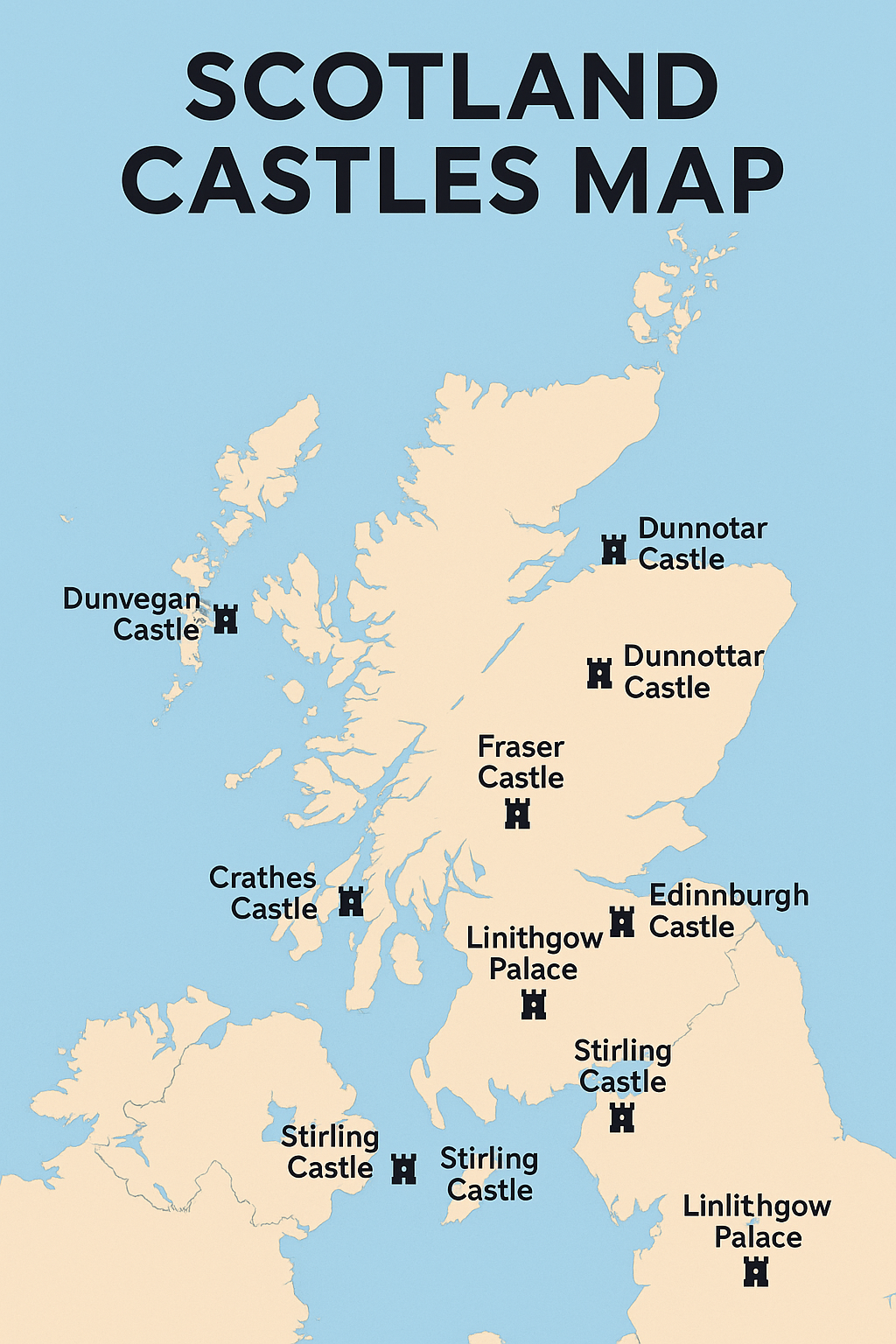
Start Your Castle-Hunting Journey Across Scotland
Scotland is packed with castles, and finding them feels like a real adventure. Some sit on cliffs above wild seas, others hide beside quiet lochs or deep in the hills. From Muness Castle in the far-north Shetland Islands to mighty Edinburgh Castle with its Crown Jewels, every region has a place that looks straight out of a storybook.
This Scotland Castles Mapguide gives you a simple, ready-to-use path to 33 iconic castles by region, plus easy traveltips so you can chase ruins, towers, and legends without getting lost.
Quick Facts About Scotland Castles
- Over 2,000 castles exist across Scotland, from ruins to royal palaces.
- Castles are spread across all regions: Highlands, Lowlands, Borders, and Islands.
- Famous castles include Edinburgh Castle, Stirling Castle, and Eilean Donan Castle.
- Many castles were built for defence during clan wars and invasions.
- Some castles are among the most photographed places in the world.
- Castle routes and trails help tourists visit several castles in one trip.
- Use tools like Google Maps or Historic Environment Scotland to plan your visit.
- Castles date back as early as the 12th century and tell stories of kings, queens, and battles.
- Some castles now offer overnight stays, guided tours, and events.
- Many castles have been used in films and TV shows, including Outlander, Harry Potter, and Braveheart.
Why Scotland Is Famous For Castles
Scotland has over 2,000 castles, more than almost any other country. These castles were built to protect people during wars and to show power and wealth. Many were made between the 12th and 17th centuries.
They came in different shapes and sizes some small and simple, others large with tall towers and thick walls. Many were built on hills or near water for better defence. Today, some are still in good shape, while others are peaceful ruins.
Castles in Scotland are not just old buildings; they are symbols of Scotland’s past. They were homes to famous clans, battlefields during wars, and places where kings and queens ruled the land.
Geographical Overview Of Scotland Castles
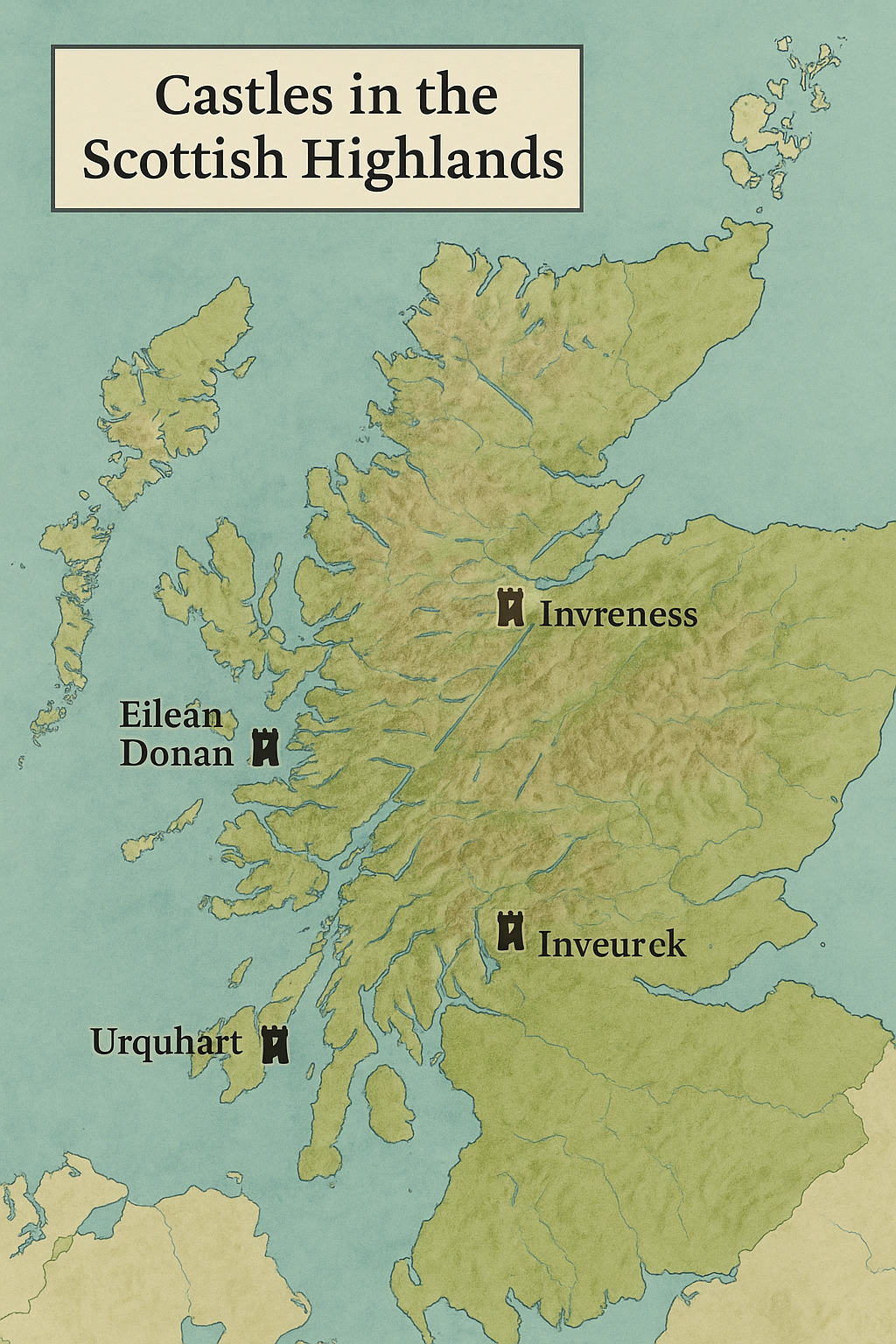
Scotland’s castles are spread across the entire country, from the southern Lowlands to the far northern islands. Their locations often reflect the country’s history, built for protection, royal power, or control over land and sea routes. Each region has its style of castle, shaped by local geography, climate, and historical events.
Castles In The Scottish Highlands
Eilean Donan Castle
Location:Near Kyle of Lochalsh, where three sea lochs meet
Famous for:Its stunning location on a small island, connected by a stone bridge
Eilean Donan Castle is one of the most photographed castles in Scotland. It has appeared in many films and TV shows. The castle sits on a small island where Loch Duich, Loch Long, and Loch Alsh come together. The surrounding water and mountain views make it look like a postcard.
Inside, the rooms are filled with furniture, weapons, and items showing how people lived centuries ago. It’s open to visitors most of the year.
Urquhart Castle
Location:On the western shore of Loch Ness
Famous for:Loch Ness Monster legends and beautiful views over the loch
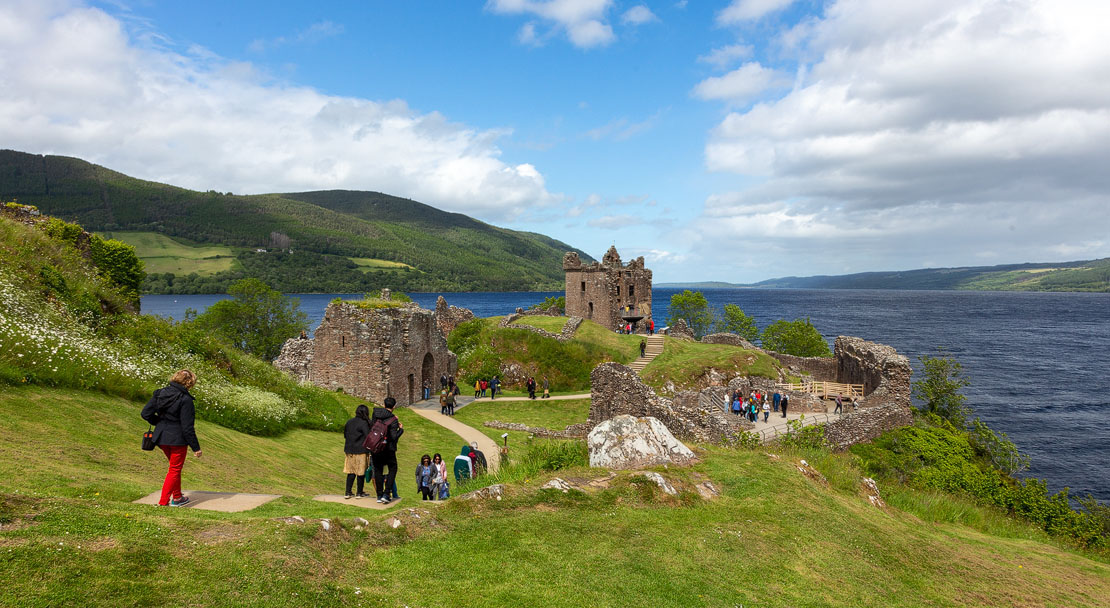
Urquhart Castle is a large ruin with a long and exciting history. It played a big role during the Wars of Scottish Independence. Today, visitors come not only for the castle’s story, but also to try spotting the Loch Ness Monster from its tower.
The castle has a visitor centre, a gift shop, and videos that explain its history. It’s one of the busiest castle sites in the Highlands.
Inverness Castle
Location:In the heart of Inverness, the capital of the Highlands
Famous for:Its hilltop location overlooking the River Ness
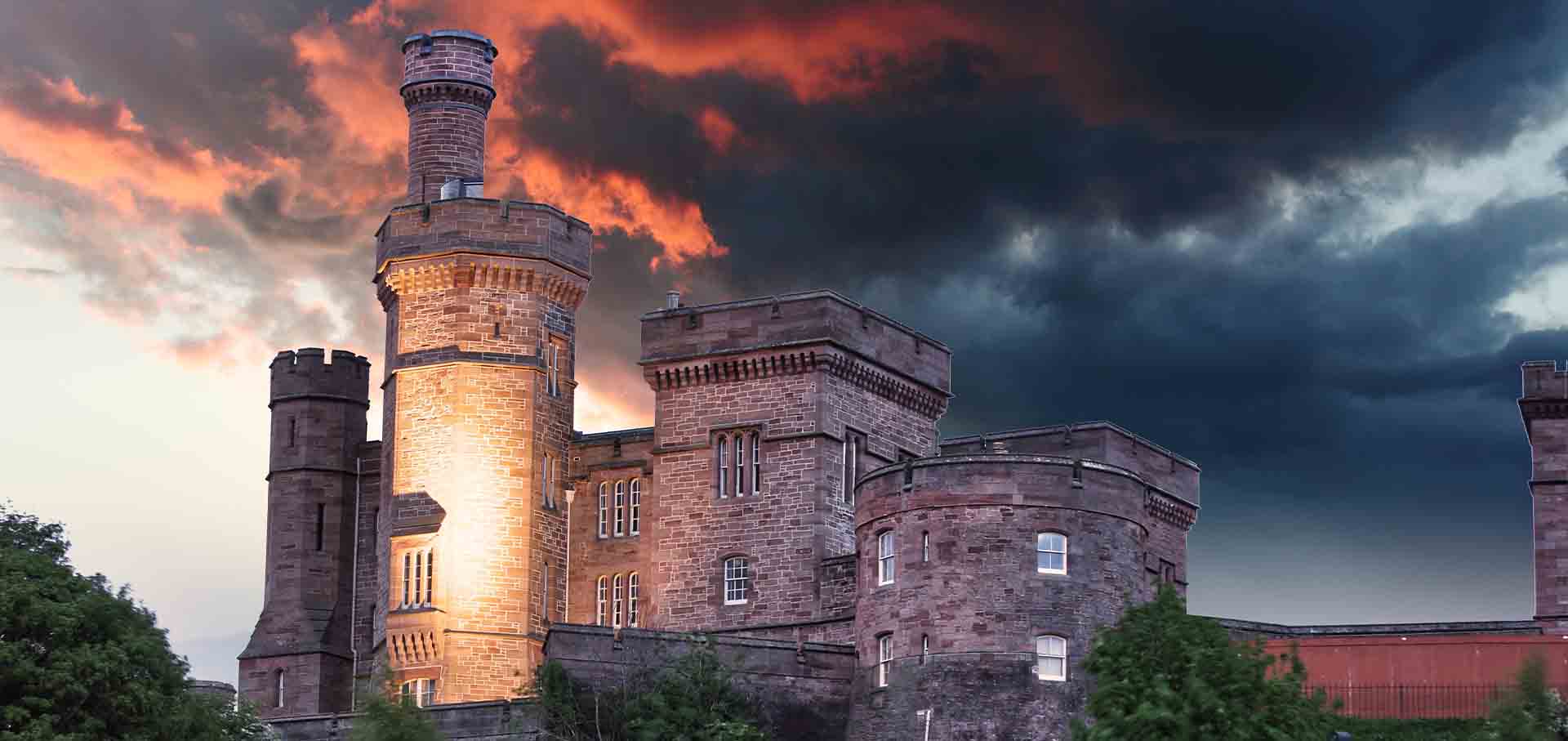
Inverness Castle looks over the city and river below. While it is currently used as a courthouse and not always open inside, visitors can walk around and enjoy the views from nearby paths.
There are plans to open more areas of the castle to the public in the future. Even from the outside, the castle is an important landmark in Inverness and a good stop on your Highland trip.
Castle Stalker
Location:On a small tidal island in Loch Laich, near Port Appin
Famous for:Its peaceful location and appearance in films like Monty Python and the Holy Grail
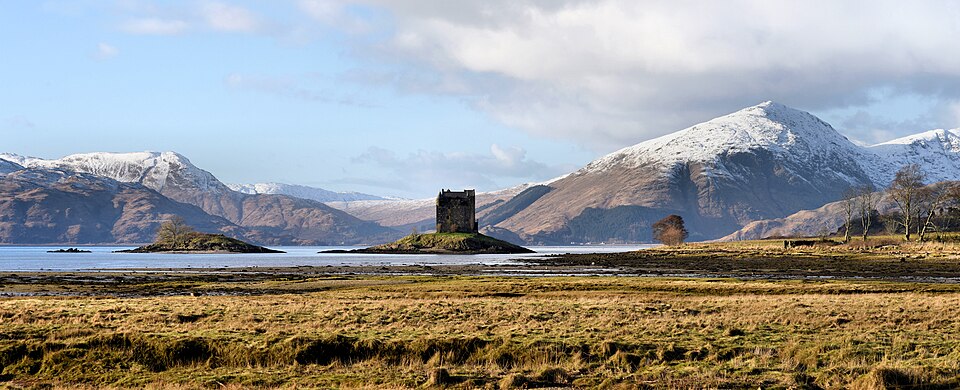
Castle Stalker is a tower house that sits all alone on a small island. It was once home to powerful Scottish clans. Because it is surrounded by water, it looks like something from a fairy tale.
The castle can only be visited by boat during special tours, but you can view it from the shore year-round. The nearby café has a great viewing spot and serves warm drinks with a castle view.
Ardvreck Castle
Location:On the edge of Loch Assynt in Sutherland
Famous for:Its haunting ruins and dramatic Highland setting
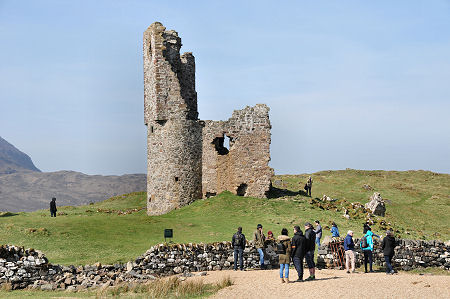
Ardvreck Castle is one of the most atmospheric castles in the Highlands. Built in the 1500s by the MacLeod clan, it has a dark history, including betrayal and ghost stories. Today, only parts of the tower remain, but the location is unforgettable.
Set against steep mountains and next to a calm loch, it’s perfect for photographers and those who love quiet, scenic spots.
Related Reading - Scottish Highlands Map
Castles In The Scottish Lowlands
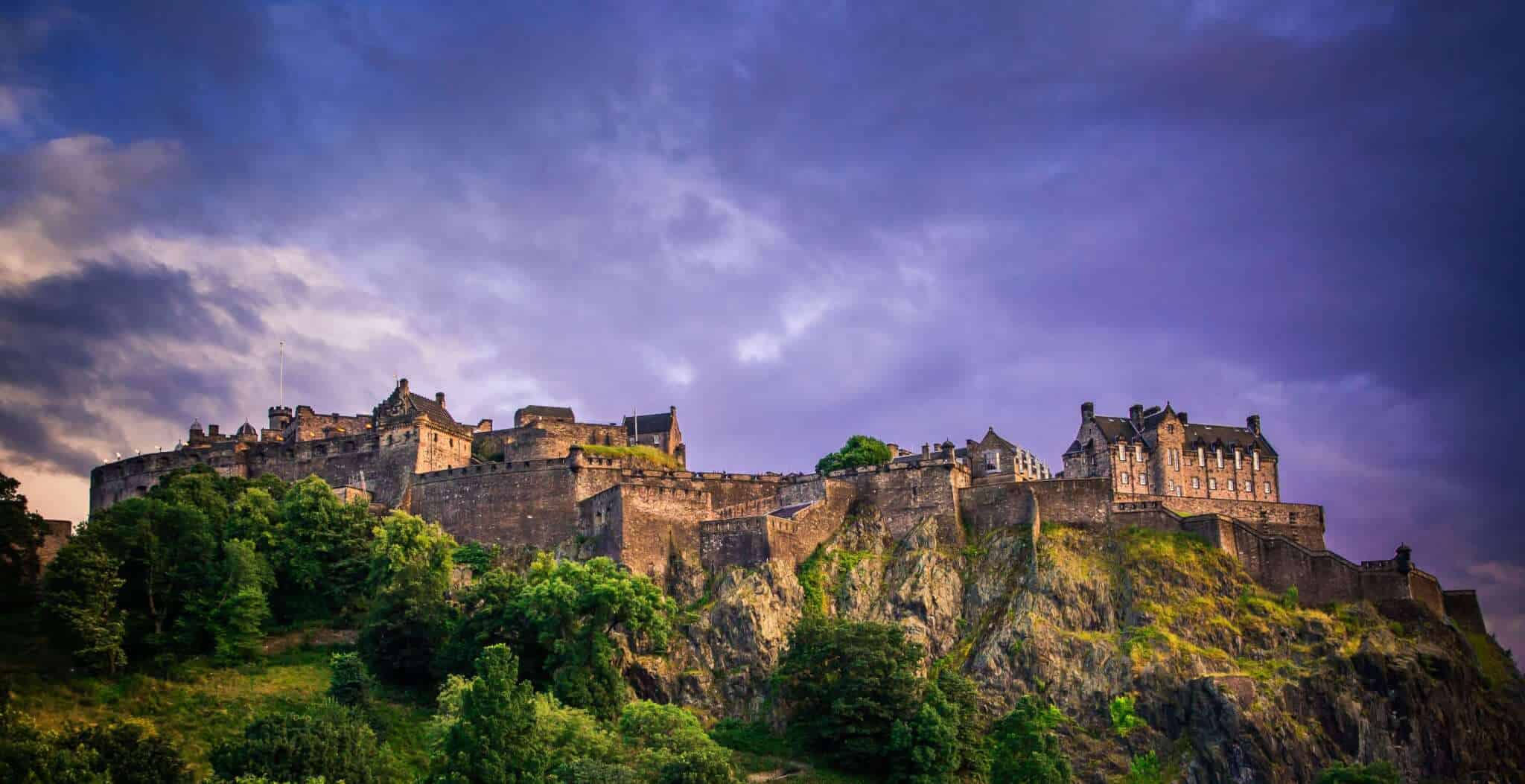
Edinburgh Castle
Location:Castle Rock, Edinburgh city centre
Famous for:Being Scotland’s most visited castle and a powerful national symbol
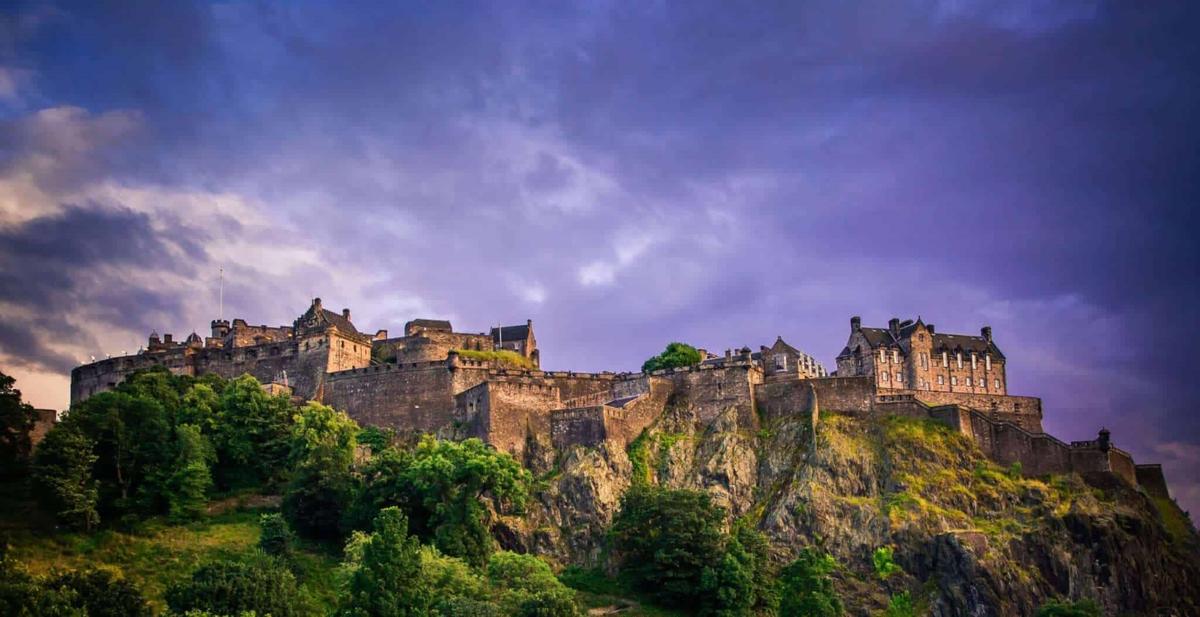
Edinburgh Castle sits high on Castle Rock and can be seen from many parts of the city. It has protected the capital for hundreds of years and was once home to Scottish kings and queens. Inside, visitors can see the Crown Jewels, the Stone of Destiny, and the oldest building in Edinburgh St. Margaret’s Chapel.
The castle also offers stunning views over the city and hosts regular guided tours, exhibitions, and military displays.
Also See - Map Of Edinburgh
Stirling Castle
Location:Overlooking the River Forth, Stirling
Famous for:Its role in battles during the Wars of Scottish Independence
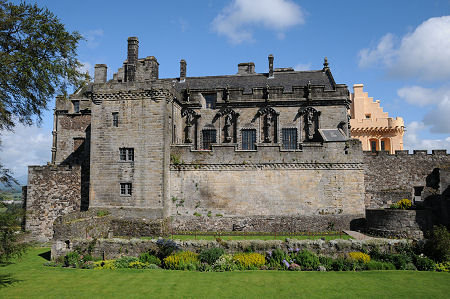
Stirling Castle is one of the most important castles in Scottish history. It was the centre of many major events, including battles led by William Wallace and Robert the Bruce. The castle sits on a rocky hill with wide views of the surrounding area perfect for defence.
Inside, you’ll find beautiful royal halls, a restored palace, and exhibits that tell the story of Scotland’s kings and queens.
Bothwell Castle
Location:Near the River Clyde, south-east of Glasgow
Famous for:Its large red sandstone walls and round tower
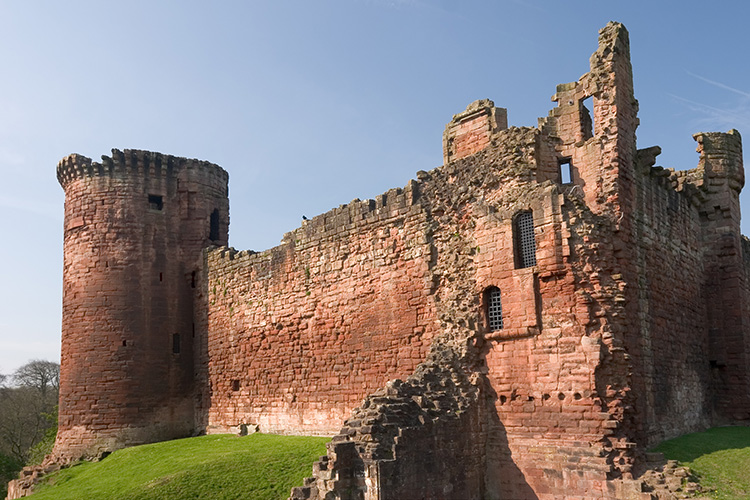
Bothwell Castle is one of the largest medieval ruins in Scotland. It was built in the 1200s and played a part in the Wars of Independence. The round donjon (main tower) is a striking feature, and the red stone gives it a bold, dramatic look.
Although partly ruined, visitors can still explore many sections and enjoy peaceful riverside walks nearby.
Linlithgow Palace
Location:Linlithgow, West Lothian
Famous for:Being the birthplace of Mary, Queen of Scots
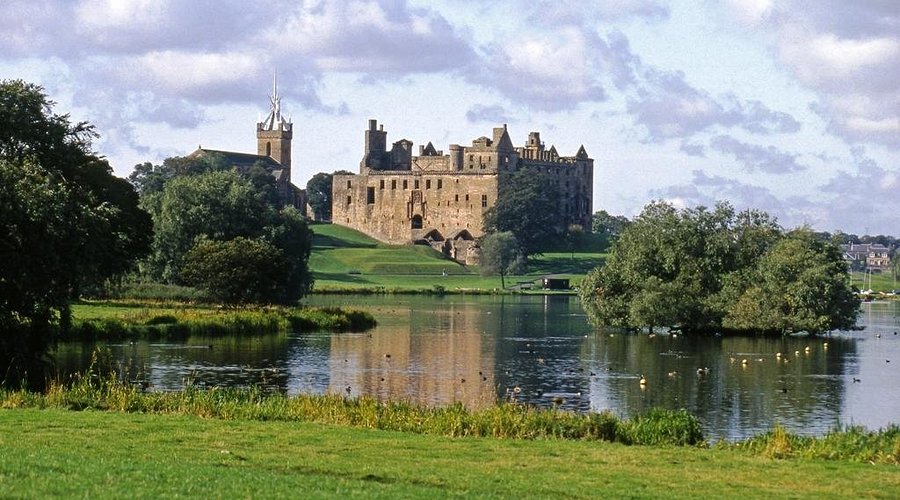
Linlithgow Palace is a grand ruin with tall walls, wide open spaces, and views over Linlithgow Loch. It was a royal residence for centuries and was often used as a stop for the royal family while travelling between Edinburgh and Stirling.
Today, the palace is open to visitors who can walk through its large halls, climb towers, and enjoy the peaceful setting by the water.
Craigmillar Castle
Location:Just a few miles southeast of Edinburgh city centre
Famous for:Being a quiet retreat for Mary, Queen of Scots
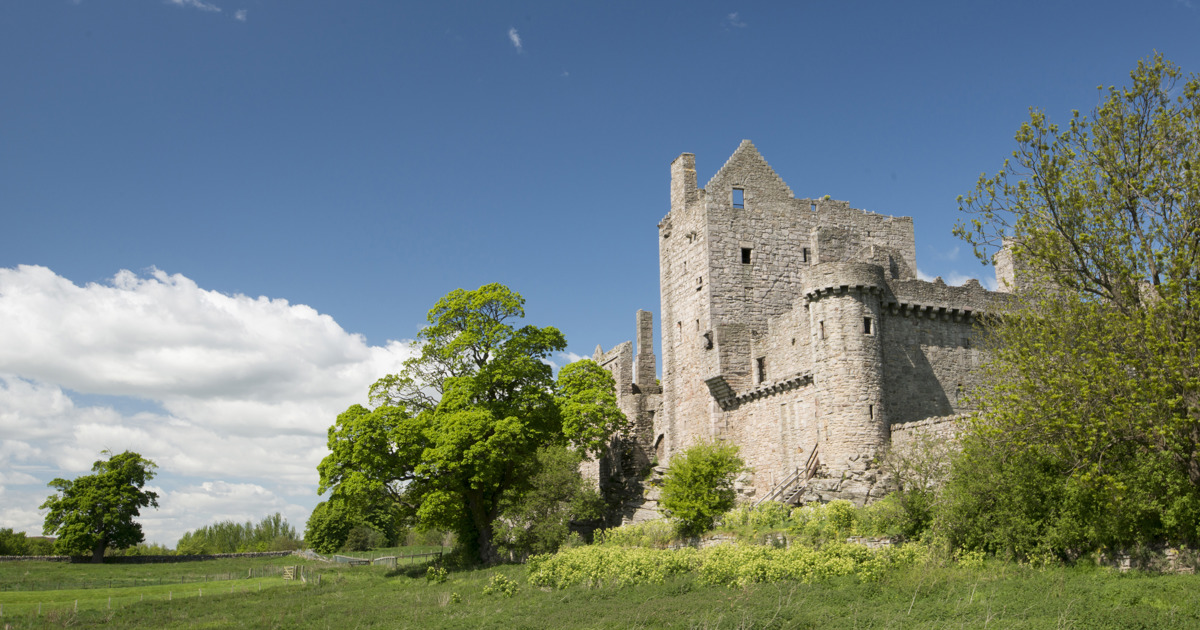
Craigmillar Castle is smaller than Edinburgh Castle but full of charm and mystery. It has thick walls, hidden staircases, and towers to climb. Mary, Queen of Scots stayed here in the 1500s, and it was a safe escape from the noise of royal life.
This castle is often less crowded than others, which makes it a peaceful place to explore with great views over the city.
Castles In The Scottish Islands
Dunvegan Castle
Location:Isle of Skye
Famous for:Being the oldest continuously lived-in castle in Scotland
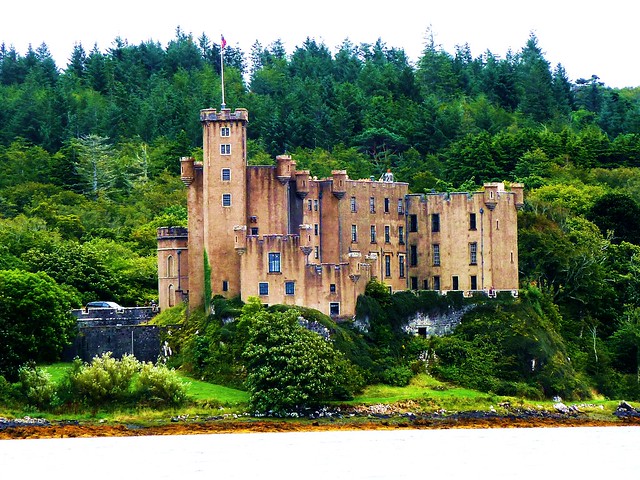
Dunvegan Castlehas been the home of the Clan MacLeod for over 800 years. It sits by the sea on the Isle of Skye and is surrounded by beautiful gardens and woodlands. Inside, you’ll find family treasures, old weapons, and the famous Fairy Flag, which legends say has magical powers.
The castle is well-kept and open to visitors. You can also take boat trips to see seals near the castle shoreline.
Castle Of Mey
Location:Caithness, on the northern mainland near the ferry to Orkney
Famous for:Being the summer home of Queen Elizabeth, The Queen Mother
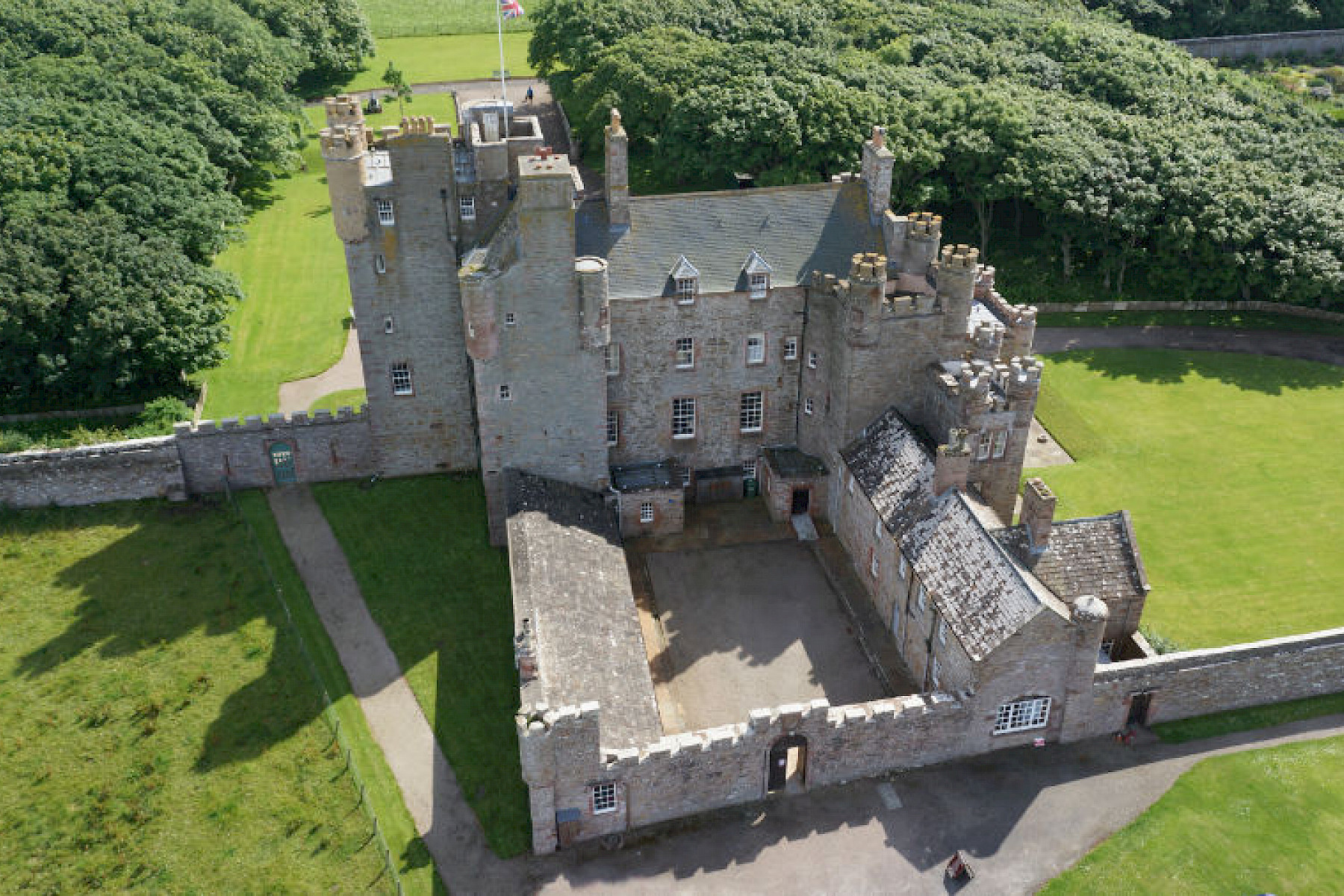
The Castle of Mey stands proudly on the north coast of Scotland, looking out over the sea. The Queen Mother bought and restored the castle in the 1950s, and she often spent her summers there.
Today, the castle is open to the public during certain months. It has lovely gardens, a visitor centre, and personal touches from the royal family. It’s a peaceful stop for those heading to or from the Orkney Islands.
Kisimul Castle
Location:Isle of Barra, Outer Hebrides
Famous for:Its sea fortress setting completely surrounded by water
Kisimul Castle sits on a small rocky island just off the coast of Barra. It can only be reached by a short boat ride, which adds to the adventure. The castle was the seat of the Clan MacNeil and has strong stone walls and towers rising out of the sea.
The trip to Kisimul feels like stepping into the past. It’s quiet, remote, and full of atmosphere. Many visitors say the journey is just as special as the destination.
Castles In The Southern Uplands
Caerlaverock Castle
Location:Near Dumfries, Dumfries and Galloway
Famous for:Its rare triangular shape and wide moat
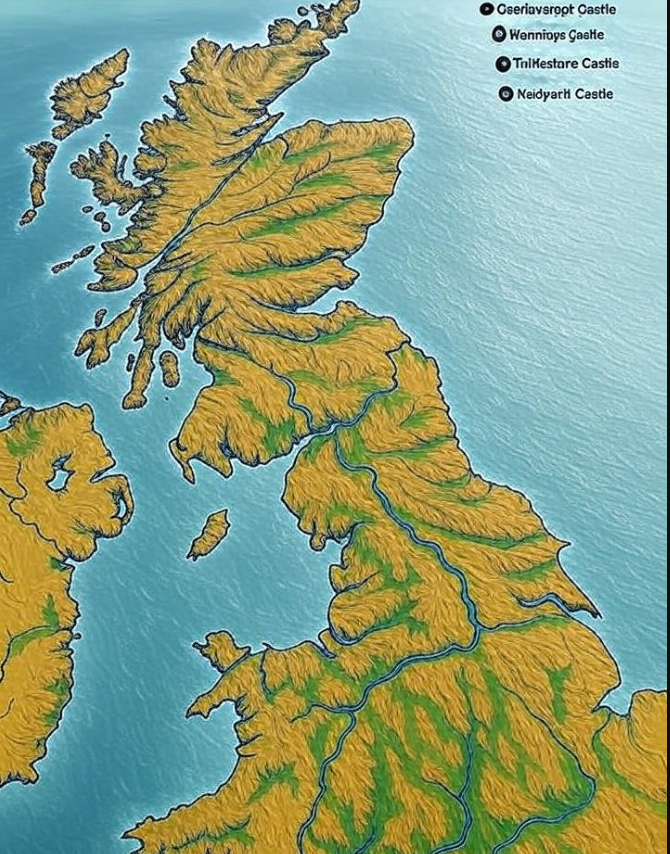
Caerlaverock Castle is one of the most unique castles in Scotland. It was built in the 1200s and has a strong, triangular design with towers at each corner. The castle is surrounded by a water-filled moat and has been the site of many battles. Today, visitors can walk through the ruins, explore the grounds, and learn about medieval warfare in the visitor centre.
Hermitage Castle
Location:Near Newcastleton, Scottish Borders
Famous for:Dark stories, powerful walls, and links to Mary, Queen of Scots
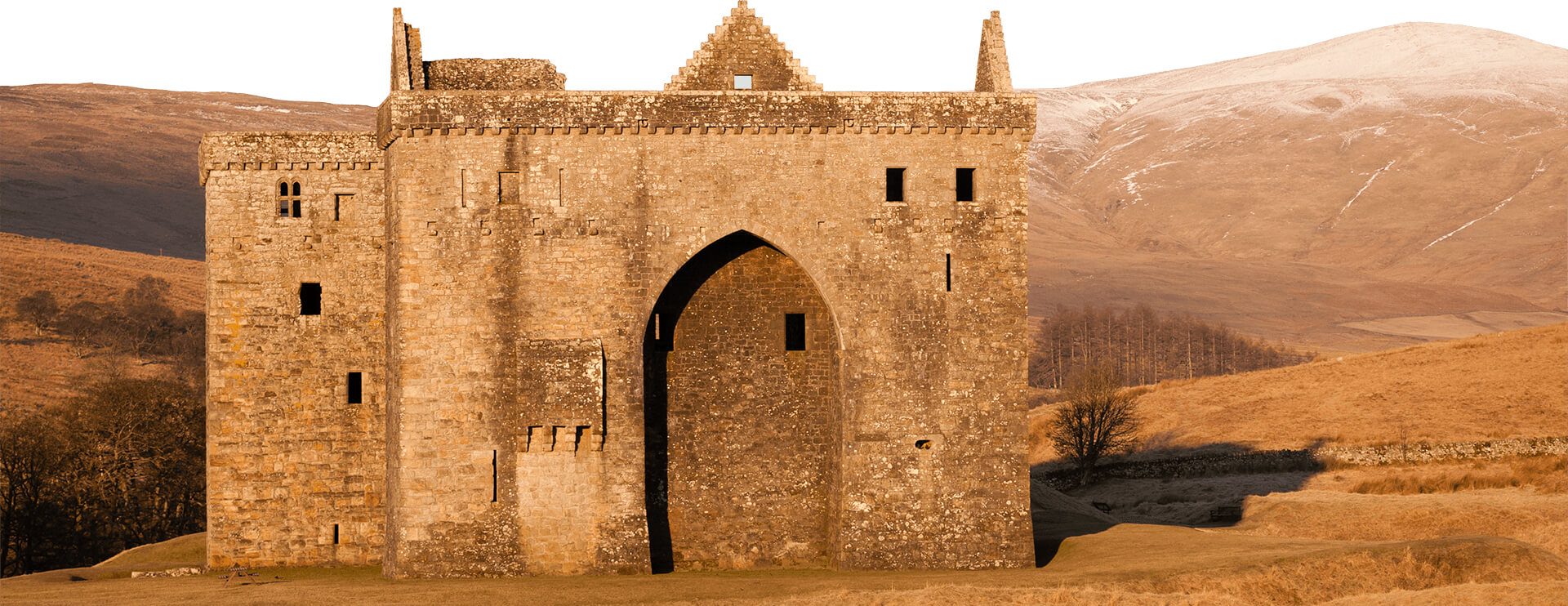
Hermitage Castle is one of Scotland’s most mysterious and atmospheric castles. It was built in a remote valley to guard the border and control land in the region. The thick stone walls and empty surroundings give it a haunting feel. Mary, Queen of Scotsonce visited the castle to see her lover, the Earl of Bothwell, who was seriously ill there.
Thirlestane Castle
Location:Lauder, Scottish Borders
Famous for:Being one of the oldest lived-in castles in Scotland
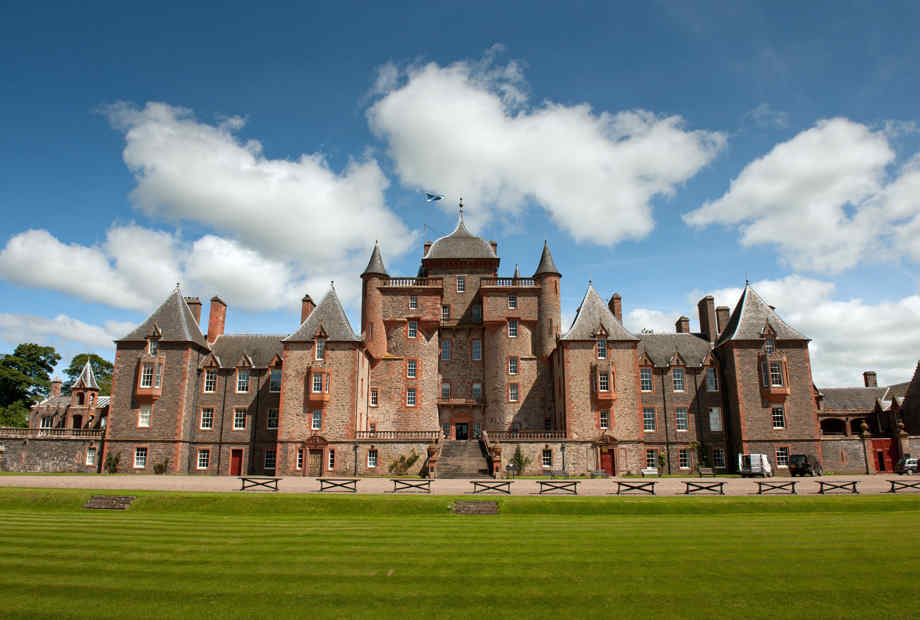
Thirlestane Castle is a large, elegant castle with grand rooms and rich decoration. It has belonged to the Maitland family since the 1500s and is still lived in today. Visitors can explore the beautifully furnished rooms, see royal portraits, and enjoy the peaceful parkland around the estate.
Traquair House
Location:Near Innerleithen, Scottish Borders
Famous for:Being Scotland’s oldest inhabited house with royal connections
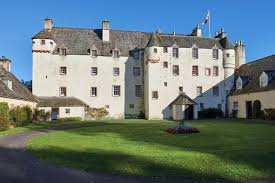
While not a castle in the traditional sense, Traquair House is a grand estate with deep roots in Scottish history. It has welcomed 27 Scottish kings and queens and still has many original items on display. There’s also a chapel, maze, brewery, and woodland walks on the grounds. It offers a peaceful but meaningful look into Scotland’s past.
Gilnockie Tower
Location:Near Canonbie, Dumfries and Galloway
Famous for:Being the ancestral home of the Armstrong clan
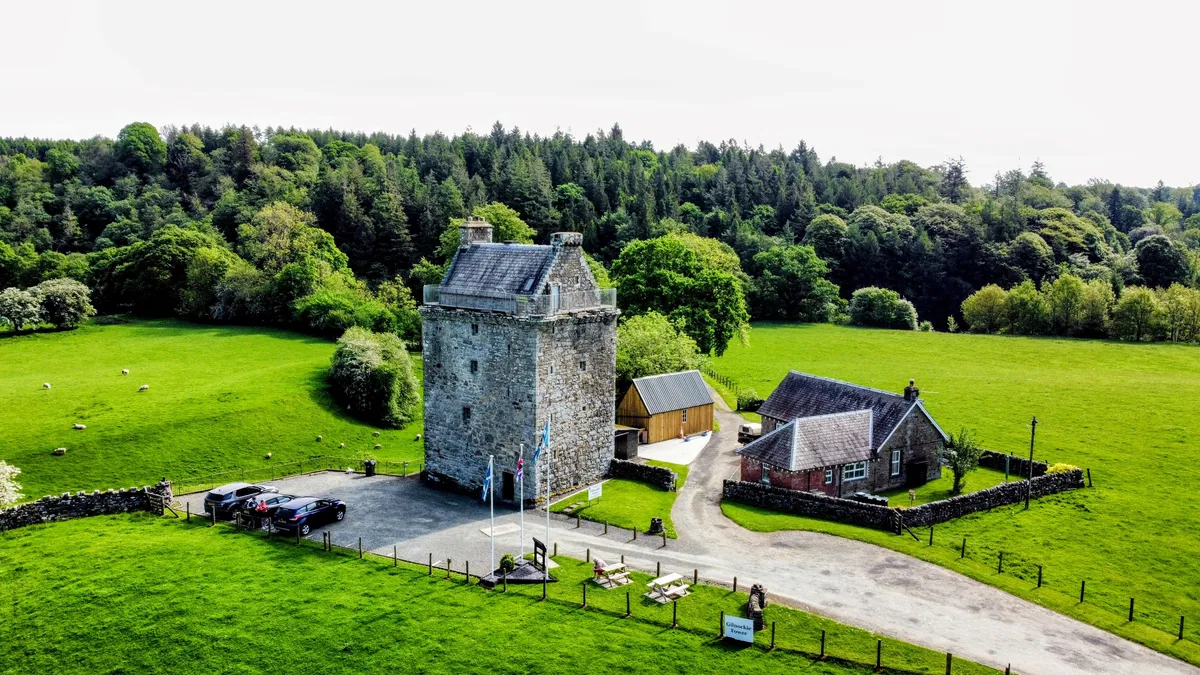
Gilnockie Tower is a restored tower house that belonged to the Armstrongs, one of the Border Reiver families who ruled the area in the 1500s. The tower has been carefully rebuilt and is now open to visitors. Inside, you’ll find clan history, artefacts, and impressive views from the top.
Neidpath Castle
Location:Near Peebles, Scottish Borders
Famous for:Its riverside setting and connections to Scottish royalty
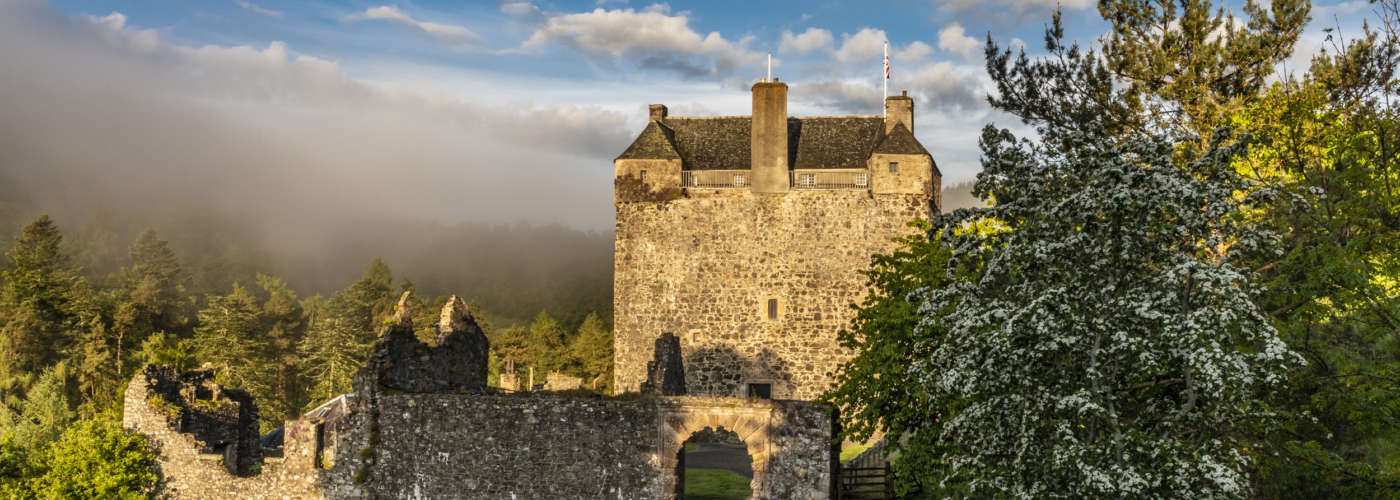
Neidpath Castle sits above the River Tweed and has a strong, solid shape. It was visited by Mary, Queen of Scots and Bonnie Prince Charlie. The castle is still privately owned but can be visited by appointment. It offers a quiet, historic experience for those interested in old Scottish families and royal visits.
Castles In The Northeast Of Scotland
Dunnottar Castle
Location:Near Stonehaven, Aberdeenshire
Famous for:Cliffside views and hidden Crown Jewels
Dunnottar Castle sits on a dramatic cliff overlooking the North Sea. It played a key role in Scottish history, including hiding the Crown Jewels from English forces in the 1600s. Today, the ruins are open to the public, and the walk up offers incredible ocean views. It’s one of the most iconic castles in Scotland.
Crathes Castle
Location:Near Banchory, Aberdeenshire
Famous for:Its tall turrets and walled garden
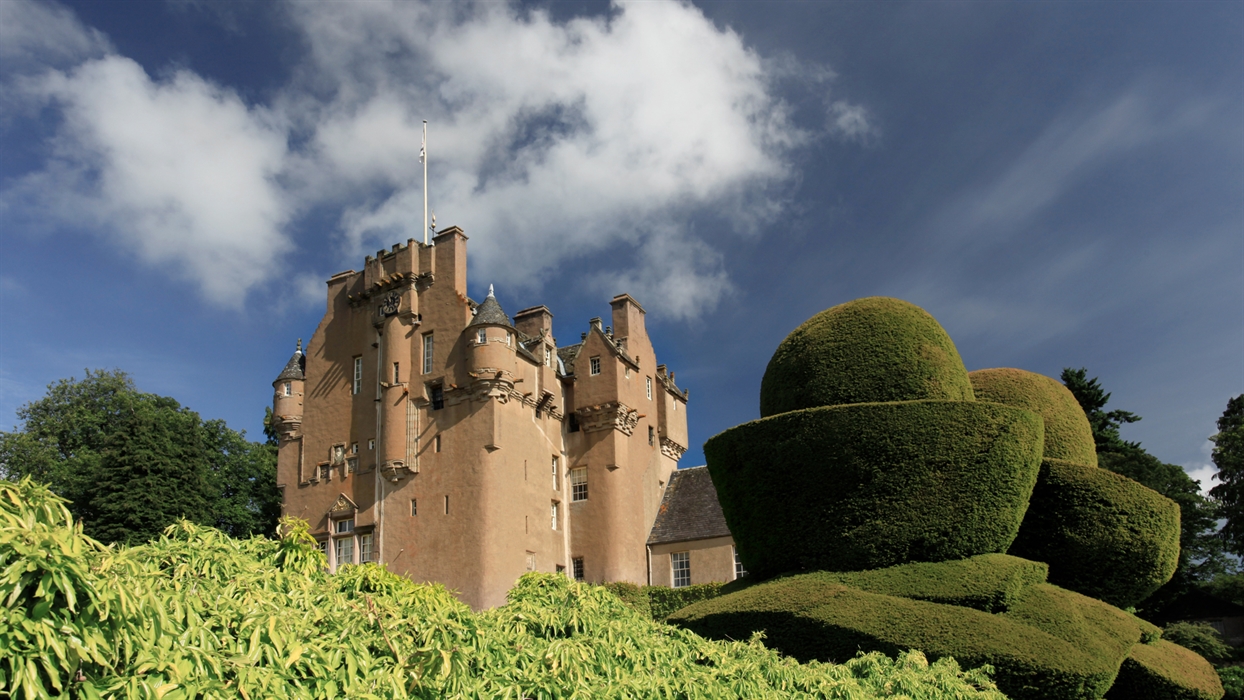
Crathes Castle is a fine example of a 16th-century tower house. Inside, you'll find painted ceilings, antique furniture, and stories from the Burnett family who lived there. Outside, the large garden is full of colorful flowers and carefully shaped hedges. It’s a peaceful and family-friendly place to visit.
Fraser Castle (Castle Fraser)
Location:Near Inverurie, Aberdeenshire
Famous for:Large towers and hidden staircases
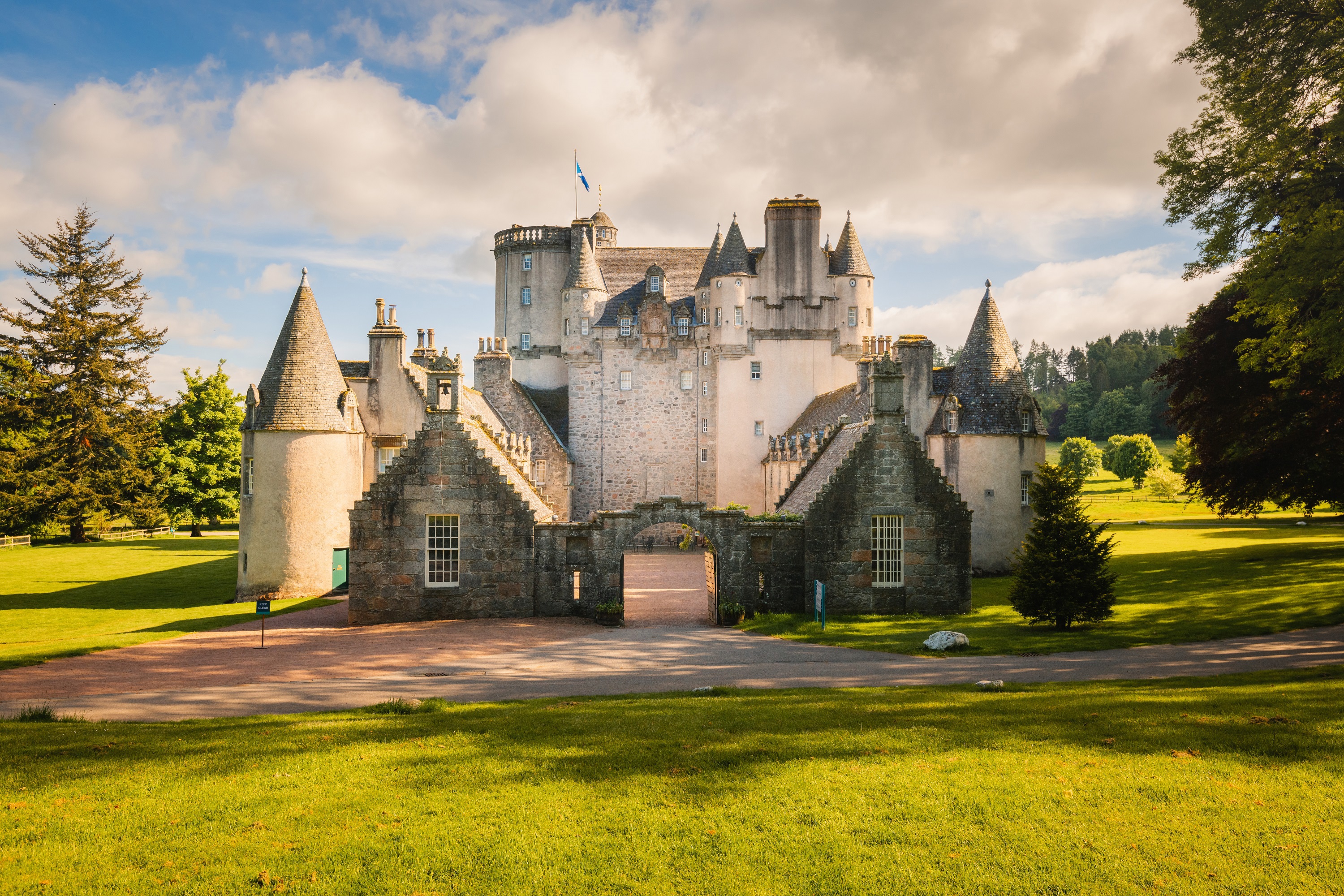
Castle Fraser looks like a castle from a fairy tale, with round towers, secret rooms, and beautiful grounds. Visitors can explore the inside of the castle, walk through the surrounding woodlands, and climb to the top for wide views of the countryside. It’s one of the largest tower houses in Scotland.
Fyvie Castle
Location:Near Turriff, Aberdeenshire
Famous for:Rich interiors and ghost legends
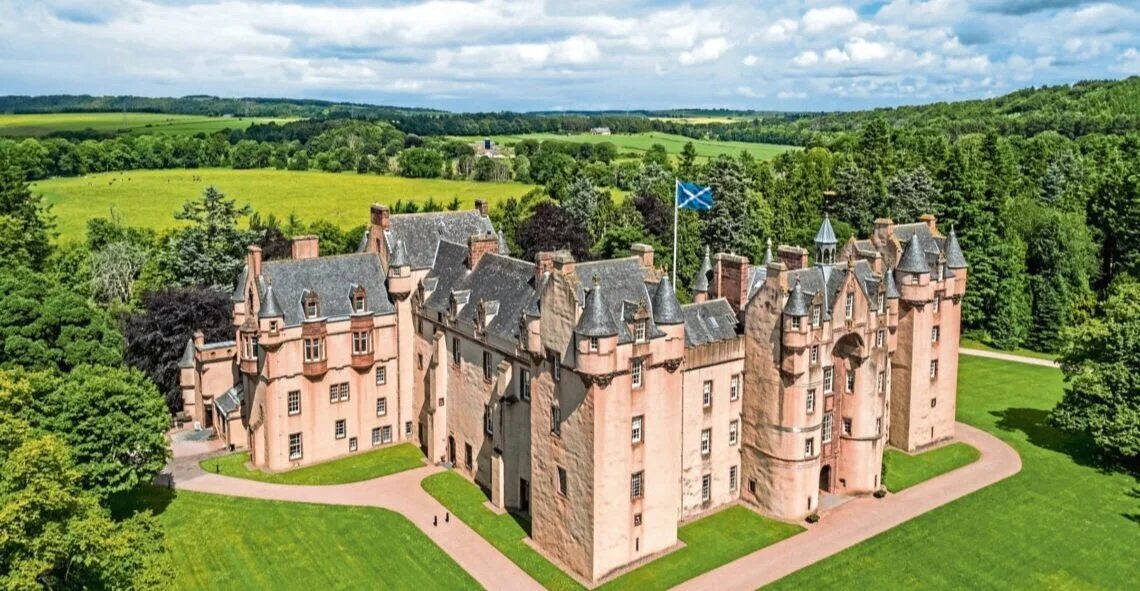
Fyvie Castle is full of Scottish history and mystery. It was once a royal stronghold and later became a noble family home. Inside, it’s richly decorated with portraits and antique furniture. Some visitors say the castle is haunted, adding to its unique charm.
Huntly Castle
Location:Huntly, Aberdeenshire
Famous for:Noble carvings and grand ruins
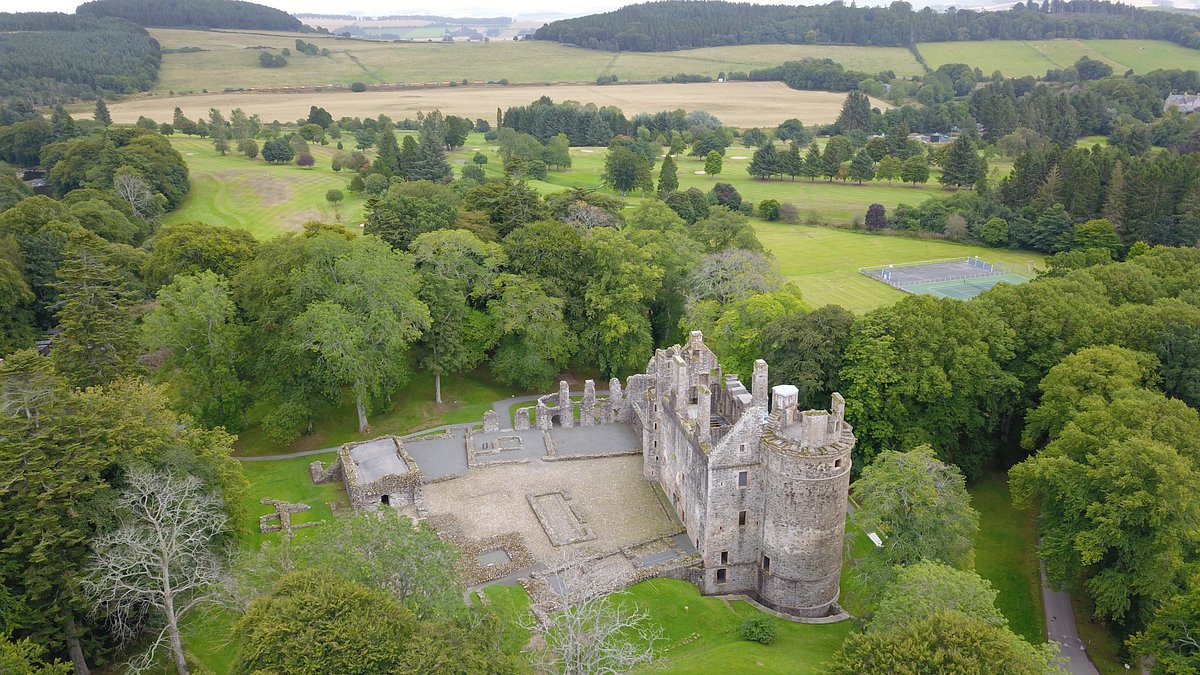
Huntly Castle was the seat of the powerful Gordon family. Although now a ruin, it still shows off impressive stonework, including family symbols carved into the walls. The castle played a part in many key moments of Scottish history and is a must-see for history lovers.
Balmoral Castle
Location:Royal Deeside, Aberdeenshire
Famous for:Being the royal family's summer home
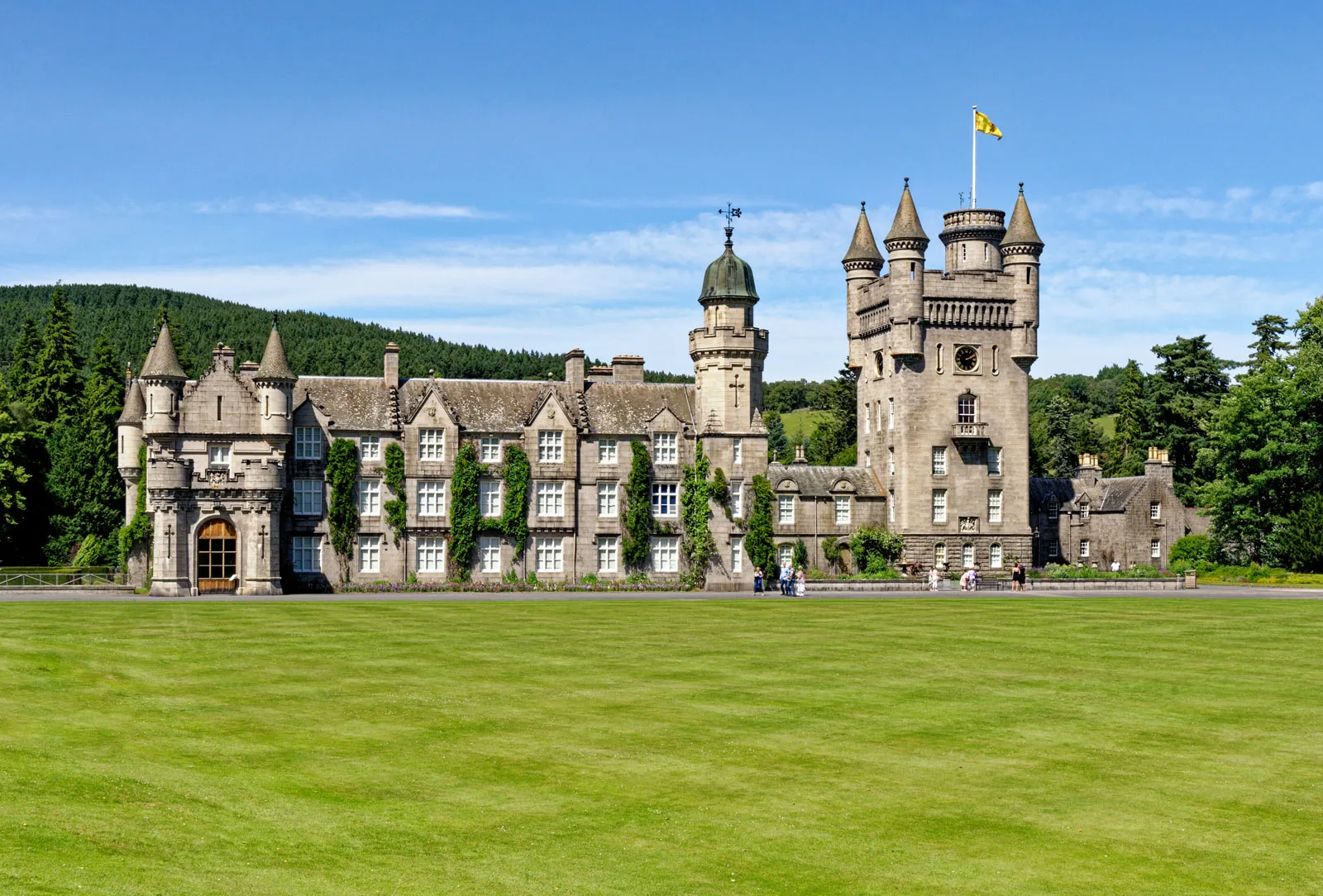
Balmoral Castle has been a private retreat for the British royal family since the time of Queen Victoria. While the full estate isn’t open to the public, visitors can explore the gardens, ballroom, and grounds during certain months. It’s set in one of the most beautiful parts of Scotland, near forests and hills.
Drum Castle
Location:Near Banchory, Aberdeenshire
Famous for:Mixing medieval and Victorian styles
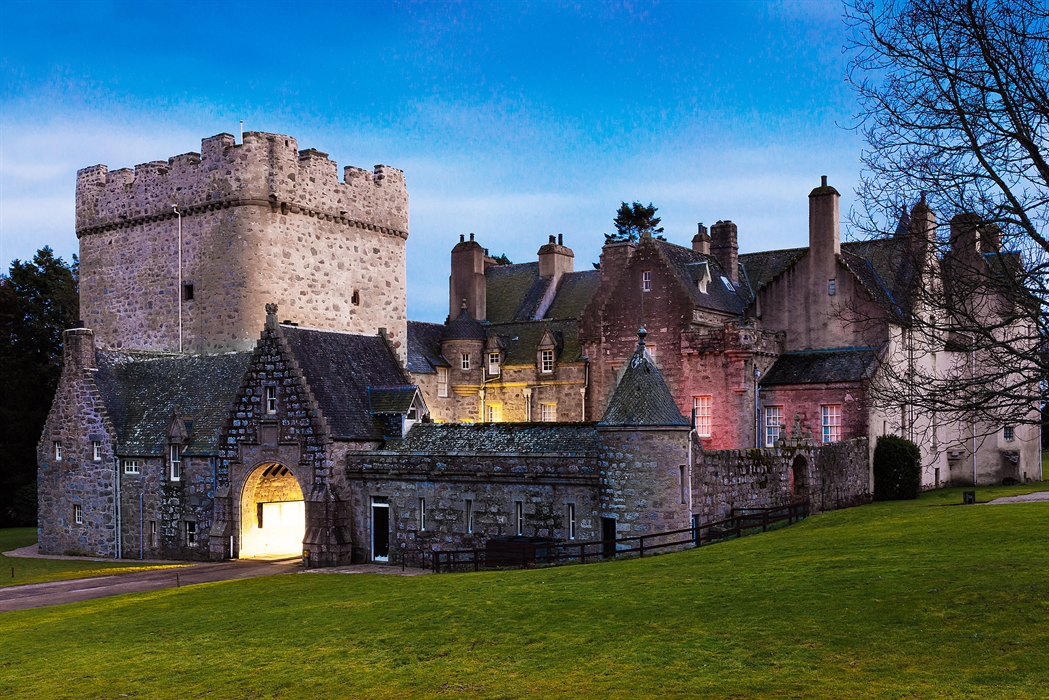
Drum Castle is one of the oldest tower houses in Scotland. The original tower dates back to the 1200s, but the rest of the building was added over time. Inside, you can see how castle life changed through the centuries. The castle also has a rose garden and ancient oak woodland.
Delgatie Castle
Location:Near Turriff, Aberdeenshire
Famous for:Painted ceilings and peaceful setting
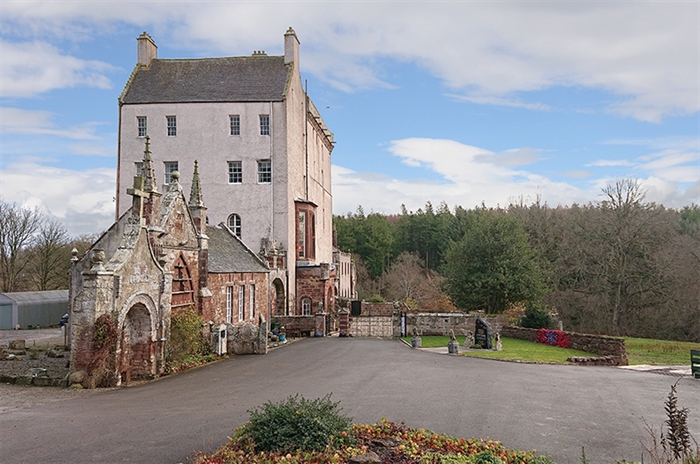
Delgatie Castle is less well-known but full of charm. It’s known for its painted ceilings from the 1500s, its warm atmosphere, and a friendly café. The castle is still lived in and offers a more relaxed visit compared to larger sites.
Other Notable Castles In Scotland
Glamis Castle
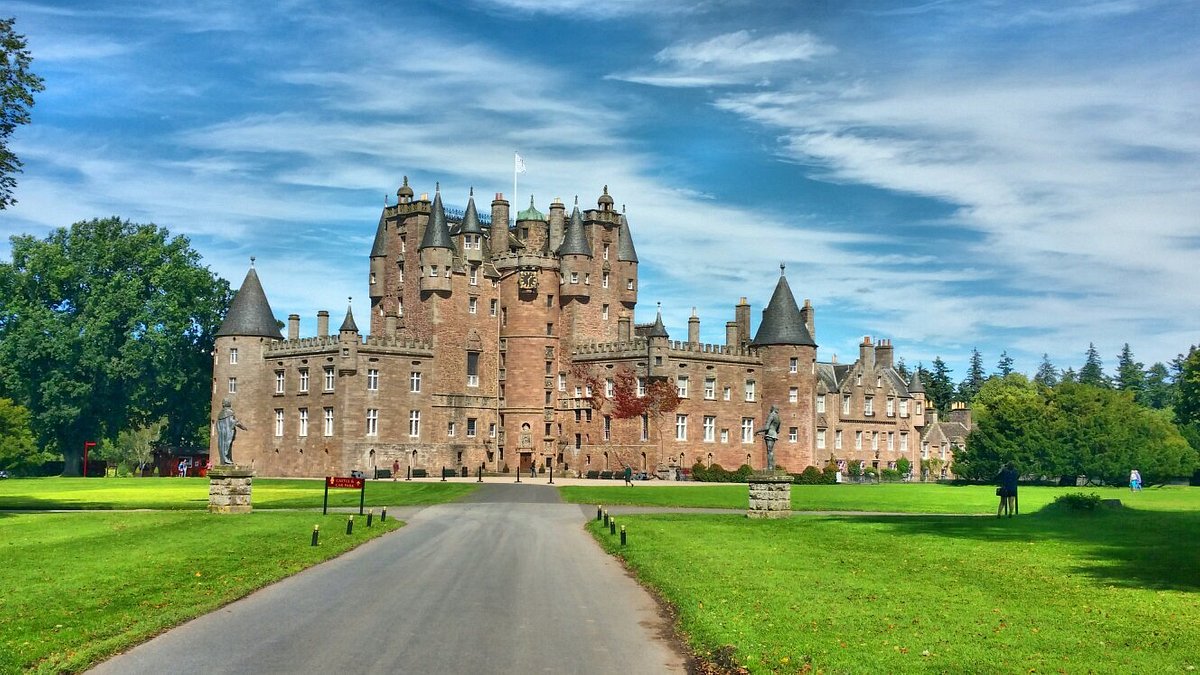
Location:Angus, Eastern Scotland
Famous for:Royal history and ghost stories
Glamis Castle is one of the most beautiful and historic castles in Scotland. It was the childhood home of Queen Elizabeth, The Queen Mother, and is known for its grand rooms and long history. It’s also connected to Shakespeare’s Macbeth. Many visitors come for the stunning gardens, royal stories, and the tales of ghosts that are said to haunt its halls.
Culzean Castle
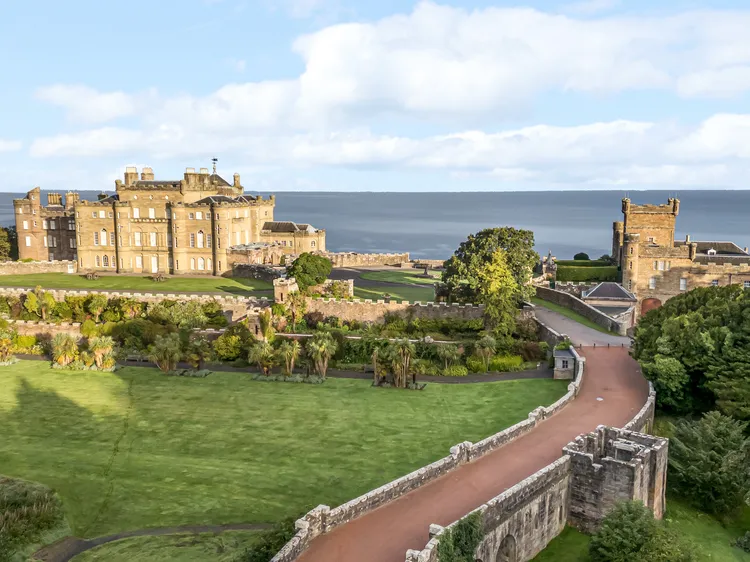
Location:Ayrshire, Southwest Scotland
Famous for:Clifftop setting and elegant design
Culzean Castle stands on a cliff above the sea, offering breathtaking views. The castle was designed by Robert Adam, a famous Scottish architect. Inside, you’ll find grand rooms and antique collections. Outside, there are large gardens, woodland trails, and a beach. It’s one of the best castles in Scotland for a full-day visit.
Drummond Castle
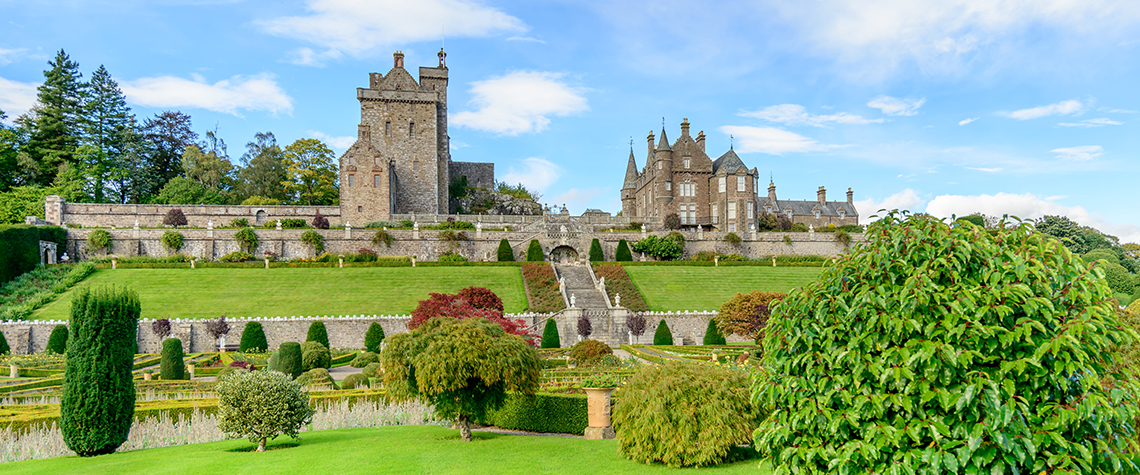
Location:Perthshire, Central Scotland
Famous for:Formal gardens and film locations
While the castle itself is not always open to the public, the gardens at Drummond Castle are world-famous. The layout is beautiful and carefully designed, often called the finest formal gardens in Europe. The castle and gardens were also used in the TV series Outlander.
Tantallon Castle
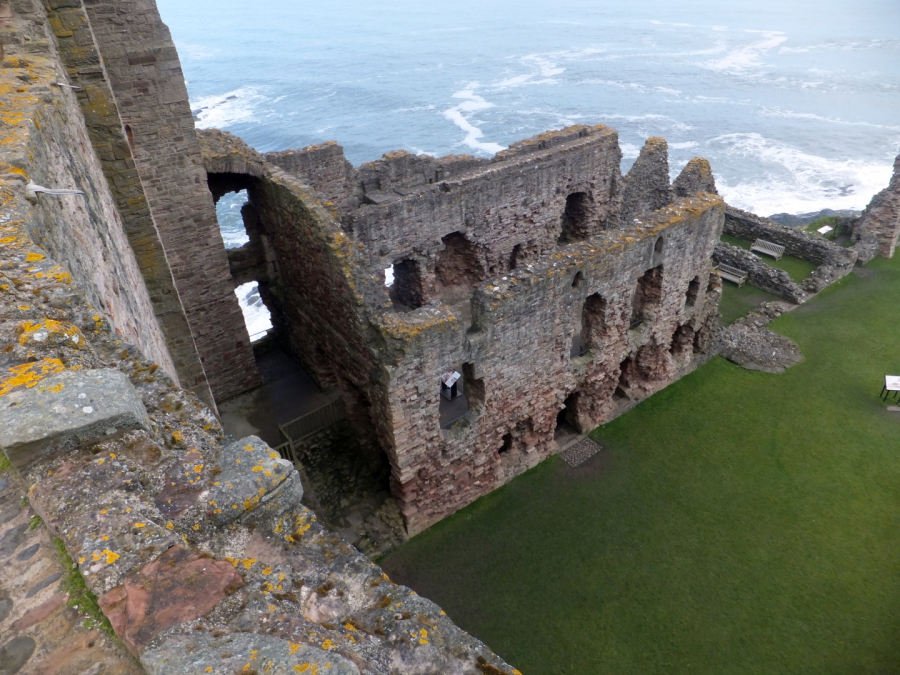
Location:East Lothian, Southeast Scotland
Famous for:Clifftop views and military history
Tantallon Castle is a large medieval fortress that sits high on a cliff facing the North Sea. It was once the stronghold of the powerful Douglas family. Today, visitors can walk through the ruins and enjoy stunning sea views. It’s a great place for history lovers and photographers.
Blackness Castle
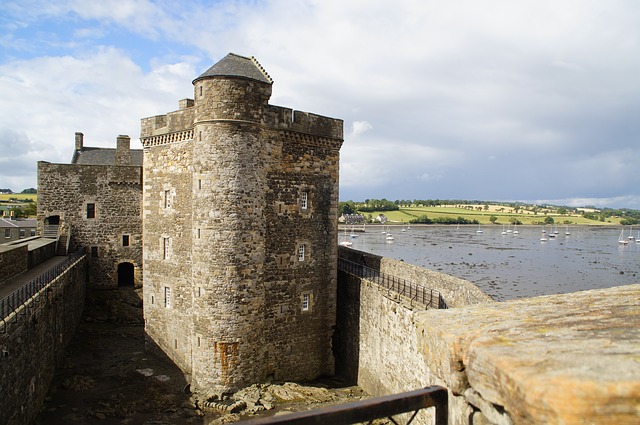
Location:West Lothian, near Edinburgh
Famous for:Unique shape and film scenes
Blackness Castle is shaped like a ship and is known as “the ship that never sailed.” It has served as a fortress, prison, and army base. It was also used in films like Outlander and Mary Queen of Scots. The castle sits right on the water and has great views across the Firth of Forth.
Dirleton Castle
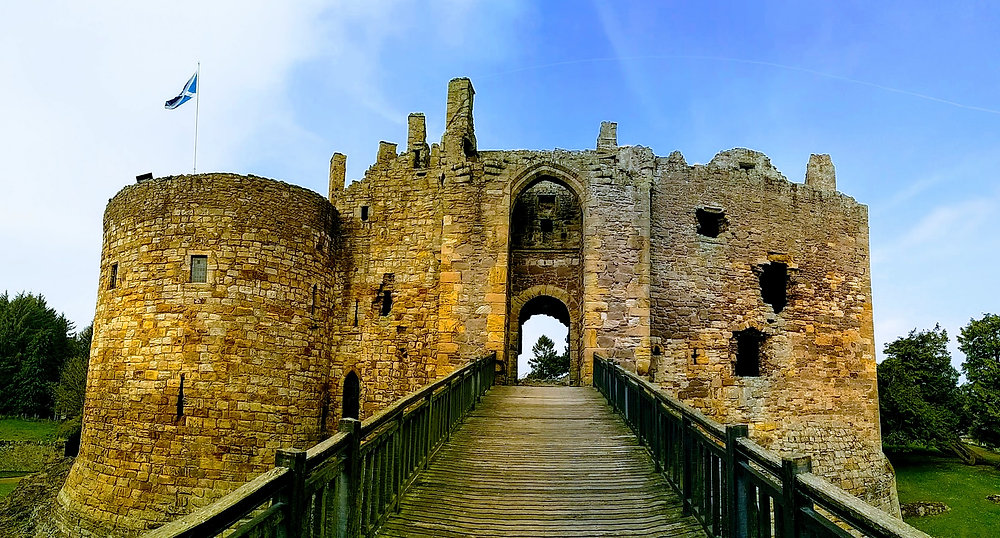
Location:East Lothian
Famous for:Peaceful gardens and medieval design
Dirleton Castle is a charming ruin surrounded by flower gardens and green lawns. It was used in both Scottish and English wars over the centuries. The castle has towers, tunnels, and thick stone walls that show what life was like in medieval times.
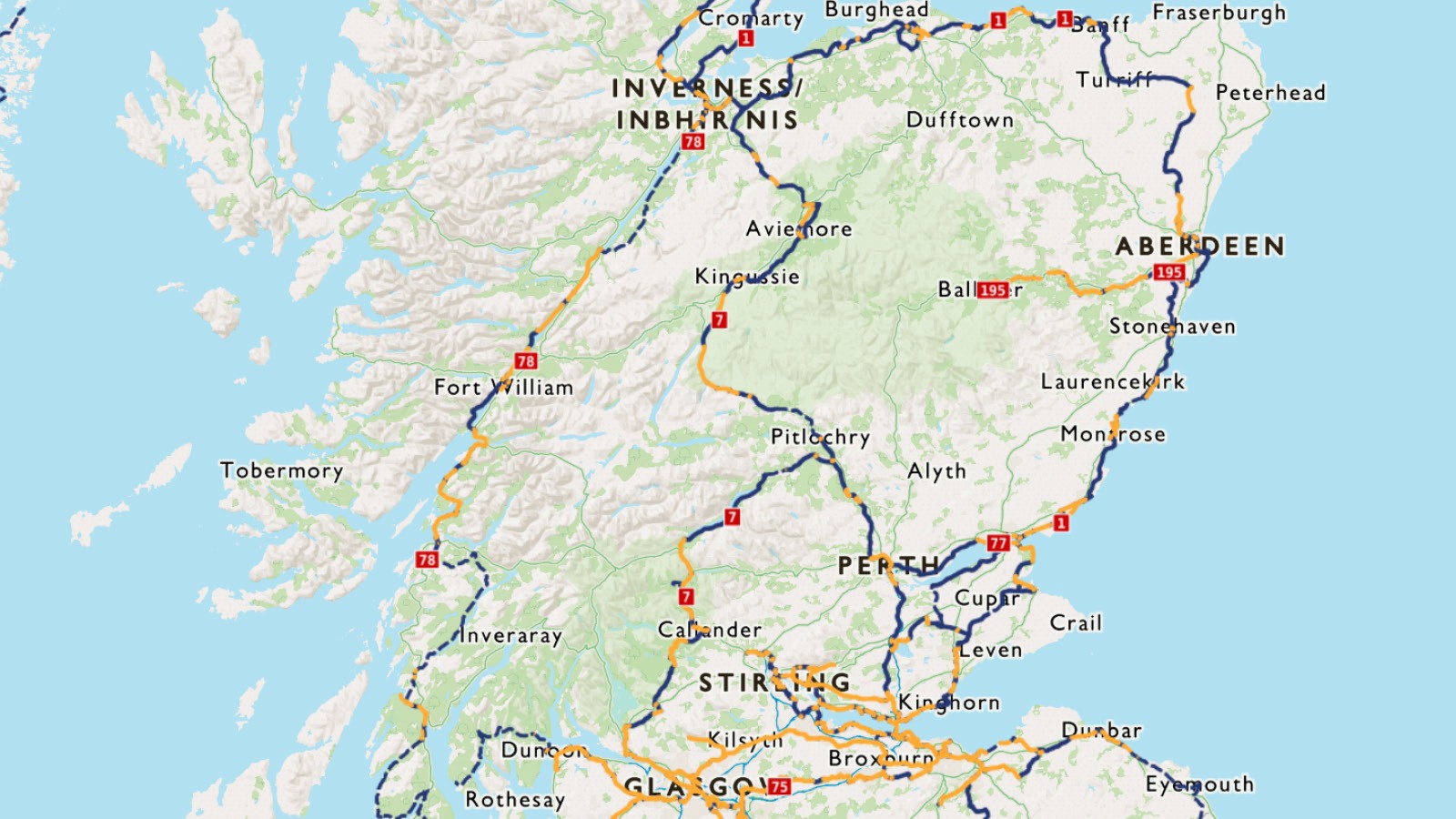
Types Of Scotland Castles Map
1. Regional Castle Maps
These maps show castles by region such as the Highlands, Lowlands, Islands, Central Belt, or Borders. They help you focus on castles in one area and are great for shorter trips or day tours.
- Useful for: Local planning
- Example: “Castles in Aberdeenshire” or “Lowlands Castle Map”
- Benefits: Easy to follow, saves travel time, highlights nearby sites
2. Interactive Online Maps
These are digital maps that you can use on your phone, tablet, or computer. They often include clickable points showing castle names, photos, opening times, and directions.
- Useful for: On-the-go navigation
- Platforms: Google Maps, VisitScotland.com, or tourism apps
- Benefits: Real-time updates, GPS support, user reviews
3. Themed Castle Trail Maps
These maps group castles based on themes such as “Haunted Castles,” “Royal Castles,” or “Outlander Filming Locations.” They are perfect for people who want to follow a specific interest.
- Useful for: Themed experiences or storytelling tours
- Benefits: Unique travel experience, fun for families and fans of history or TV series
- Example: “Mary, Queen of Scots Castle Trail”
4. Printable Road Trip Maps
These are ideal for driving tours across Scotland. They usually cover large areas and show major roads, castle stops, and travel distances.
- Useful for: Road trips and self-drive holidays
- Benefits: Easy to carry, no internet required, custom route planning
- Often includes: Fuel stops, nearby towns, and accommodation info
5. Historical Maps Of Castles
These maps show how castles were placed in relation to old kingdoms, battle routes, or clan territories. They’re often found in books or museums and give great context to the history of Scotland.
- Useful for: History lovers and researchers
- Benefits: Shows how geography influenced wars, trade, and royal power
- May include: Clan lands, old names, or castle ruins
6. Castle Density Maps
These maps highlight areas in Scotland with the highest number of castles per square mile. For example, Aberdeenshire is known as “Castle Country” because it has over 260 castles more than anywhere else in the UK.
- Useful for: Choosing where to focus your trip
- Benefits: Helps maximise the number of castles visited in a short time
7. Walking Or Cycling Castle Route Maps
These maps are designed for people who want to visit castles on foot or by bicycle. They show paths, distances, and nearby nature trails.
- Useful for: Eco-travelers, hikers, or outdoor lovers
- Benefits: Healthy travel option, scenic routes, access to hidden gems
- Often found through: Local councils, tourism offices, or castle trail websites
8. Castle Ruins Map
Some maps focus on castle ruins only. These maps are great for photographers or people who enjoy exploring forgotten places.
- Useful for: Adventurous visitors or history buffs
- Benefits: Less crowded sites, dramatic landscapes, unique photo spots
- Includes: Partly collapsed castles, historic towers, and hilltop ruins
Best Ways To Explore Scottish Castles By Region
By Car
Driving is one of the easiest and most flexible ways to explore castles in Scotland. Many castles, especially in the Highlands or on islands, are far from cities and don’t have public transport nearby. A car lets you reach these remote places and visit several castles in one day.
You can also follow castle routes, like the Aberdeenshire Castle Trail, which connects over a dozen castles by road. Renting a car gives you the freedom to stop anytime for photos or to enjoy the scenery.
Tip:Use GPS or a Scotland Castles Map app to plan your route and check for parking near each castle.
By Train
Scotland’s rail system connects many towns and cities, and some castles are just a short walk or taxi ride from train stations. For example, Stirling Castle and Edinburgh Castle are both close to major railway stations.
Trains are comfortable and offer great views of the countryside. This is a good choice if you don’t want to drive or prefer a relaxing way to travel.
Tip:Book train tickets in advance and check the train stop closest to each castle you plan to visit.
Castle Trails
Some areas of Scotland have special castle trails. These are routes that connect several castles in one region, often with signs and visitor information. One famous example is the Aberdeenshire Castle Trail, which includes castles like Crathes, Drum, and Fraser.
Castle trails are great for learning local history while seeing more than one site. They are often promoted by local tourism boards and can be followed by car, bike, or even walking in some cases.
Tip:Pick up a printed map or download a trail guide from local websites to follow the full trail.
By Bike Or Foot
If you enjoy outdoor activities, biking or walking to castles can be a fun and healthy way to travel. Many castles are connected by country paths or quiet roads, especially in the Borders and the Lowlands.
Some castles are just a few miles apart, making it easy to visit more than one in a single day. This is also a great way to enjoy Scotland’s beautiful landscapes.
Tip:Wear comfortable shoes or cycling gear, and carry a map or mobile app with offline access in case of poor signal in rural areas.
Tour Buses
If you prefer a guided experience, there are many tour companies that run day trips and longer tours to Scotland’s castles. These often leave from major cities like Edinburgh, Glasgow, or Inverness.
Tour buses are good for people who don’t want to drive or plan their own routes. You’ll get background stories from guides and have your transport arranged for you.
Tip:Look for castle-themed tours or multi-day passes that cover entrance fees and transport in one price.
Walking Routes Around Scotland Castles
1. Edinburgh Castle To Holyrood Palace (The Royal Mile Walk)
Location:Edinburgh
Distance:Around 1 mile (1.6 km)
Time:30-60 minutes (depending on stops)
This is one of the most famous walking routes in Scotland. It runs downhill from Edinburgh Castle through the Old Town to the Palace of Holyroodhouse. Along the way, you pass historic buildings, museums, churches, and shops.
- Great for: First-time visitors, history lovers, and photographers
- Terrain: Paved streets, suitable for all fitness levels
2. Stirling Castle And Gowan Hill Walk
Location:Stirling
Distance:Around 2.5 miles (4 km) round trip
Time:1.5-2 hours
Starting from Stirling Castle, this walking route leads to Gowan Hill, where you can see the Beheading Stone and enjoy views over the River Forth. It’s a peaceful, scenic trail that connects history and nature.
- Great for: Views, light exercise, and castle surroundings
- Terrain: Some slopes, but well-marked paths
3. Dunnottar Castle Coastal Walk
Location:Near Stonehaven, Aberdeenshire
Distance:1.5 miles (2.4 km) one way
Time:45 minutes - 1 hour each way
This stunning coastal route leads from Stonehaven Harbour to the dramatic ruins of Dunnottar Castle. You’ll walk along cliffs, grassy paths, and enjoy wide sea views.
- Great for: Adventure, sea views, and photography
- Terrain: Uneven and steep in places, good footwear needed
4. Craigmillar Castle Woodland Walk
Location:Edinburgh (just outside city centre)
Distance:2-3 miles (3-5 km)
Time:1-1.5 hours
Craigmillar Castle sits within a peaceful green area known as Craigmillar Castle Park. There are several walking trails through woodlands, fields, and open parkland.
- Great for: A quiet break from the city
- Terrain: Mostly flat with gentle paths
5. Linlithgow Loch Circular Walk
Location:Linlithgow, West Lothian
Distance:2.3 miles (3.7 km) loop
Time:1-1.5 hours
This easy, flat trail circles Linlithgow Loch with great views of Linlithgow Palace. The path is well-maintained and perfect for families or casual walkers.
- Great for: Relaxed strolls, swan watching, and lakeside views
- Terrain: Smooth and suitable for all levels
6. Eilean Donan Castle View Walk
Location:Dornie, near Isle of Skye
Distance:Varies (castle itself is small; nearby walks up to 2 miles)
Time:30 mins - 1 hour for photo stops
Though Eilean Donan Castle is not part of a long trail, there are short walking paths around the lochside and nearby hills that offer perfect photo opportunities.
- Great for: Scenic walks, short hikes, and photos
- Terrain: Short uphill areas, lochside paths
7. Caerlaverock Castle Nature Trail
Location:Near Dumfries, Southern Scotland
Distance:1.5 miles (2.4 km) loop
Time:1 hour
This walk combines castle ruins and a nature reserve. Visitors can explore the wetlands, look for birds, and learn about the natural environment around the moated Caerlaverock Castle.
- Great for: Wildlife lovers, kids, and nature fans
- Terrain: Flat trails through marshes and meadows
8. Balmoral Castle Estate Walks
Location:Royal Deeside, Aberdeenshire
Distance:Multiple trails (from 1 mile to 6 miles)
Time:30 mins to 3 hours depending on the trail
The Balmoral Estate has several marked walking routes through forests, gardens, and hills. The trails vary in difficulty and include lovely viewpoints.
- Great for: Longer walks, royal history, and natural beauty
- Terrain: Mixed woodland, gravel, and hill paths
Tips For Using A Scotland Castles Map For Travel
A good map helps you make the most of your trip. Here’s how to use one well:
- Use a digital map with GPS if you’re driving
- Download an offline map in case of no signal
- Look for castle clusters to visit multiple places in one day
- Use filter tools to find open castles, ruins, or those with tours
- Follow official guides like Historic Scotland’s castle planner
Mark your must-see spots and group castles by location for easy planning.
People Also Ask
What Is The Best Way To Use A Scotland Castles Map?
The best way is to use an online interactive map or a printed map that shows castle locations by region. Grouping nearby castles can help you plan a smooth route.
Which Castles In Scotland Are Free To Visit?
Many castle ruins are free to visit, such as Dunnideer Castle and Ardvreck Castle. Larger sites like Edinburgh Castle often require a ticket. Always check online before visiting.
What Is The Oldest Castle In Scotland?
Castle Sween in Argyll is often called the oldest. It was likely built in the late 1100s and is now a quiet ruin near the coast.
Final Thoughts
Scotland’s castles are adventure stops scattered across mountains, coasts, islands, and cities. With this Scotland Castles Map guide, you can choose a region, follow a trail, and plan a smooth trip without stress.
From famous giants to quiet ruins by lonely lochs, every castle adds a new story to your journey. Take your time, enjoy the views, and let Scotland’s castles turn your trip into a lasting memory.
Jump to
Start Your Castle-Hunting Journey Across Scotland
Quick Facts About Scotland Castles
Why Scotland Is Famous For Castles
Geographical Overview Of Scotland Castles
Castles In The Scottish Highlands
Castles In The Scottish Lowlands
Castles In The Scottish Islands
Castles In The Southern Uplands
Castles In The Northeast Of Scotland
Other Notable Castles In Scotland
Types Of Scotland Castles Map
Best Ways To Explore Scottish Castles By Region
Walking Routes Around Scotland Castles
Tips For Using A Scotland Castles Map For Travel
People Also Ask
Final Thoughts

Callum Fraser
Author
Callum Fraser isn't just a writer about Scotland; he's a product of its rugged landscape and rich history. Born and raised in Perthshire, with the Highlands as his backyard, his love for the nation's stories was kindled by local storytellers and long walks through ancient glens.
This passion led him to pursue a degree in Scottish History from the University of Edinburgh. For over 15 years, Callum has dedicated himself to exploring and documenting his homeland, fusing his academic knowledge with essential, on-the-ground experience gained from charting road trips through the Cairngorms, hiking the misty Cuillins of Skye, and uncovering the secrets of traditional recipes in his family's kitchen.
As the Editor-in-Chief and Lead Author for Scotland's Enchanting Kingdom, Callum's mission is simple: to be your most trusted guide. He combines meticulous research with a storyteller's heart to help you discover the authentic magic of Scotland — from its best-kept travel secrets to its most cherished traditional recipes.
Latest Articles
Popular Articles