Robert Burns - Life, Poems, Key Works, Burns Night & Legacy
Robert Burns was the farmer-poet who became Scotland's Bard. Explore his life, decipher his Scots language, and learn the history of his enduring legacy.
Author:Callum FraserDec 04, 202510.4K Shares233.2K Views
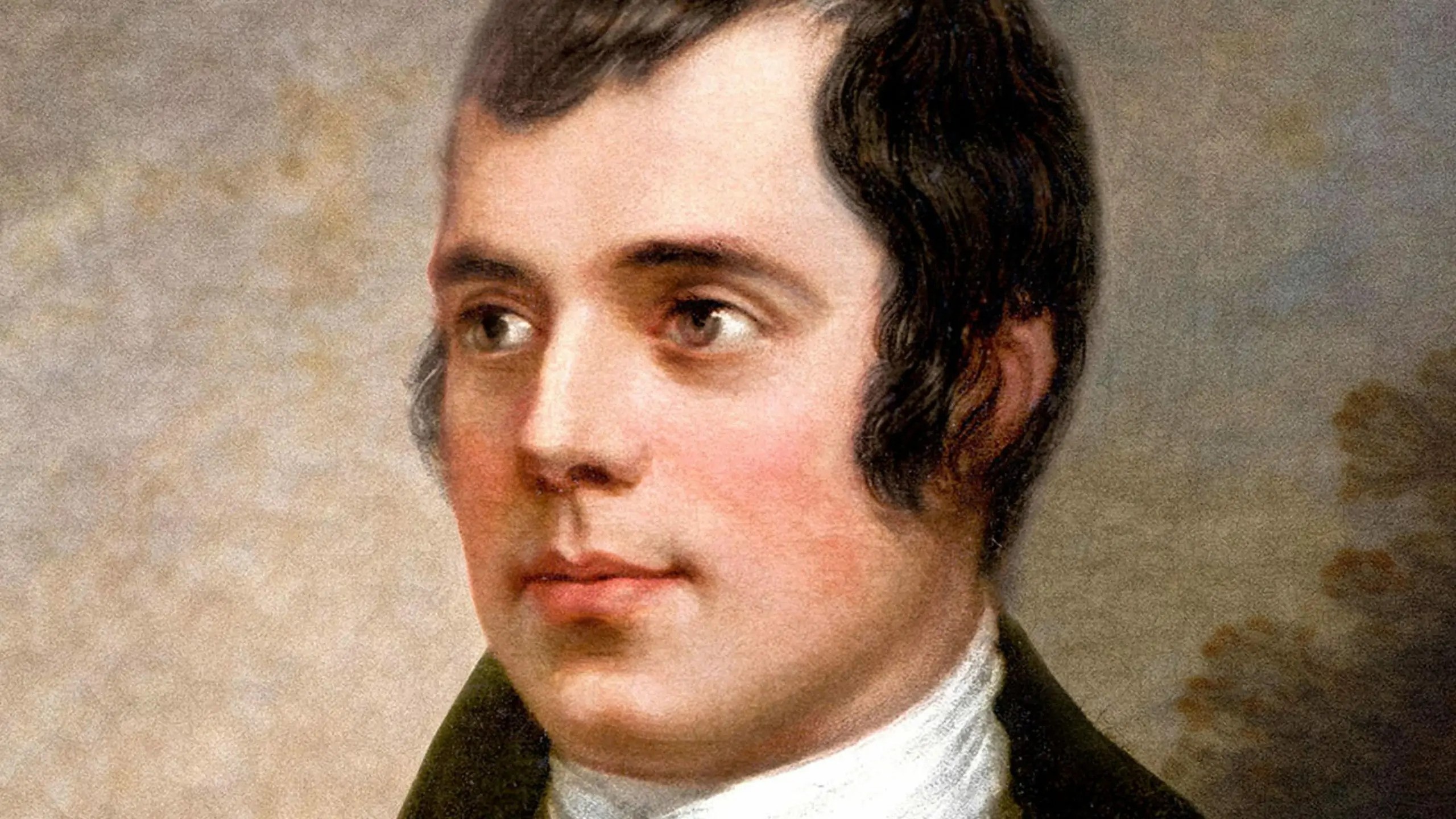
Robert Burns: Who He Was, What He Wrote, Why He Matters
If you know the tune of “Auld Lang Syne” but not the man behind it, you’re not alone. Many people arrive at Robert Burnsthrough New Year’s Eve or Burns Nightand then discover there’s an entire world of poetry, song and Scottish cultureattached to his name.
This guide is designed as a one-stop resource. You’ll find a clear biography, a small set of essential poems to start with, an explanation of his Scots language, and a practical walkthrough of Burns Night so you can actually experience his legacy, not just read about it.
Robert Burns At A Glance (Quick Facts)
| Name | Robert Burns |
| Nickname | Rabbie Burns |
| Born | January 25, 1759, Alloway, United Kingdom |
| Died | 21 July 1796 (aged 37) Dumfries, Scotland |
| Resting place | Burns Mausoleum, Dumfries |
| Occupation | Poet, lyricist, farmer, excise-man |
| Spouse | Jean Armour |
| Children | 12 |
| Parents | William Burnes, Agnes Broun |
| Notable works | “Auld Lang Syne,” “To a Mouse,” “Tam o’ Shanter,” and “A Red, Red Rose. |
| Annual Celebration | Burns Night is held globally on his birthday, January 25th. |
| National role | Scotland’s national bard (often called the national poet of Scotland) |
| Literary period | Early Romantic era / Scottish Enlightenment context |
| Global monuments | Over 50 statues and memorials worldwide, making him one of the most |
Life Of Robert Burns: From Alloway To Dumfries
Early Life In Alloway And Mount Oliphant
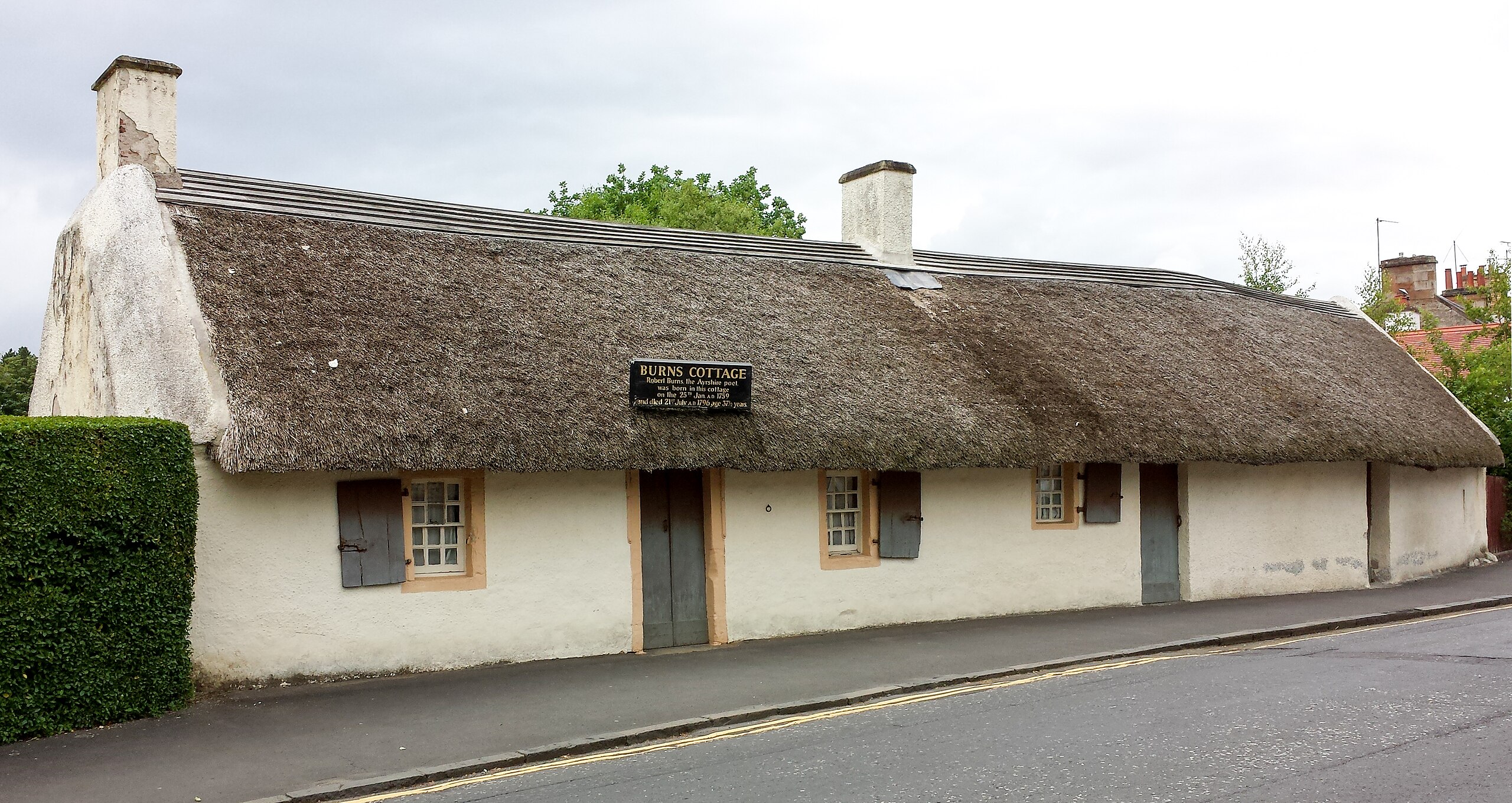
Robert Burns was born on 25 January 1759in a simple clay-built cottage in Alloway, Ayrshire. His father William was an educated but financially struggling tenant farmer who moved the family to the harsher land of Mount Oliphant when Robert was still a boy.
Despite long hours of labour, Burns received more education than many of his contemporaries. He studied reading, writing, arithmetic and even some French under local teachers, along with the Bible, Shakespeare and Scottish poetslike Allan Ramsay and Robert Fergusson.
These years fixed two things in him: a deep sympathy for people living close to the breadline and a passion for language that would later blossom into poetry and song.
He also grew up during the Scottish Enlightenment, when new ideas about reason, liberty and human nature were circulating in Scotland’s towns and universities, helping to shape his democratic impulses.
The Ploughman Poet Emerges
As a young man, Burns worked on the family farms at Lochlea and Mossgiel, where he began writing seriously. He wrote about neighbours, church ministers, courtship disasters and the realities of rural life, mixing humour and sharp criticism.
His first collection, Poems, Chiefly in the Scottish Dialect-often called the Kilmarnock Edition-was published in 1786. It included major works such as “The Twa Dogs,” “The Holy Fair” and “To a Mouse” and was an immediate success, praised for its energy, satire and use of Scots.
The volume transformed him from a struggling farmer considering emigration to Jamaica into a recognised literary figure.
This “ploughman poet” image helped make Burns famous, but it also risked pigeonholing him as a rustic curiosity rather than a serious writer. His focus on emotional truth and the lives of common people made him an early, vital influence on the coming Romantic literary movement, inspiring poets like Wordsworth and Coleridge.
During these years he also joined local Freemasons’ lodges, which widened his circle of companions, gave him regular platforms to perform his work, and deepened his sense of fellowship across class lines.
Edinburgh And The Making Of A Celebrity
On the strength of the Kilmarnock Edition, Burns travelled to Edinburghin late 1786. There he moved in literary and social circles that included lawyers, professors and aristocrats. A new, expanded Edinburgh Editionof his poems appeared in 1787, bringing him further acclaim and financial reward.
It was during this period that the artist Alexander Nasmyth painted the famous portrait of Burns in profile, giving us the iconic image that still appears on statues and souvenirs today.
Yet Edinburgh fame was mixed. While he enjoyed admiration and company, he bristled at being treated as a novelty. He remained uneasy with class snobbery, an experience that informed his continuing commitment to equality in his writing.
Ellisland Farm, Exciseman Work And Creative Peak
In 1788 Burns married Jean Armour, after a complex and sometimes painful courtship that involved opposition from her parents and legal complications.
The couple eventually settled at Ellisland Farmnear the River Nith in Dumfriesshire, where Burns attempted to combine farming with a post as an exciseman(tax officer).
The farming venture struggled, but these years were some of his most creative. He worked intensively on songs for James Johnson’s Scots Musical Museumand later for George Thomson’s song collections, contributing or refining hundreds of texts, including “Auld Lang Syne”and **“A Red, Red Rose.”
Balancing family responsibilities, demanding excise work and songwriting put strain on his health but greatly expanded his influence, shifting him from poet to national songsmith.
In total, he contributed over 300 songs to major collections such as the Scots Musical Museum and George Thomson’s series, often reworking traditional airs for little or no payment, which cemented his role as a key guardian of Scotland’s musical heritage.
Final Years In Dumfries And Early Death
By 1791, Burns moved with his family into the town of Dumfries, where his excise duties increased but his health began to deteriorate. He continued to write, but recurring illness, likely linked to earlier bouts of rheumatic fever and the physical toll of farm work, weakened him.
He also served in the Royal Dumfries Volunteers, a local militia unit, reflecting both his sense of civic duty and the tense political climate of the 1790s.
His political sympathies for the French Revolutionand earlier for the American cause made some contemporaries uneasy at a time when Britain feared radicalism. Combined with rumours about his drinking, these controversies complicated his reputation even before his death.
Contemporary accounts also describe periods of pain, exhaustion and what he called his “blue devils”, suggesting that chronic illness and low mood affected both his body and his outlook in these final years.
How Did Robert Burns Die?
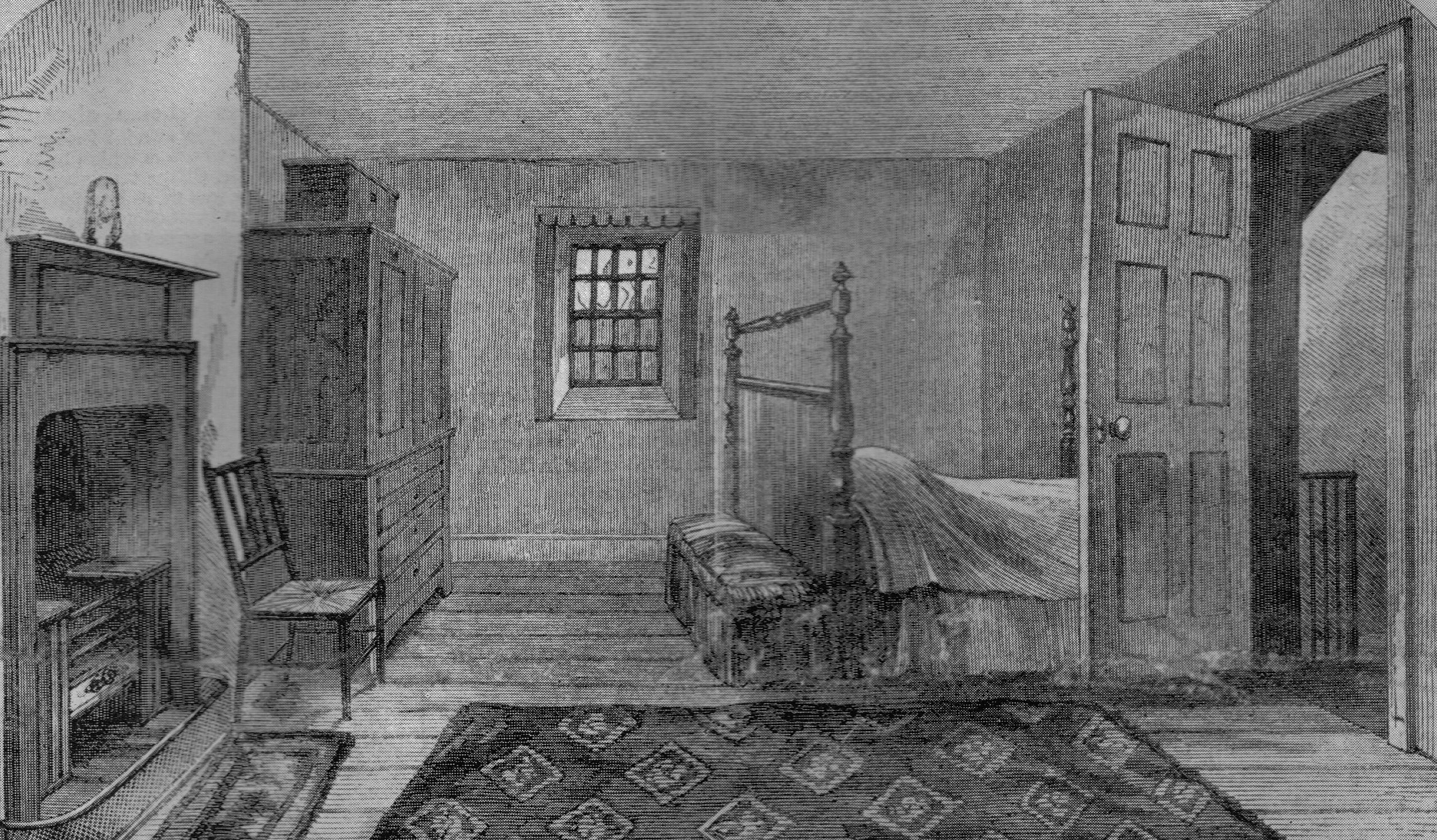
Burns died on 21 July 1796, aged 37, and was buried in Dumfries. For many years popular accounts blamed heavy drinking or general “dissipation.” Modern medical historians, using descriptions of his symptoms, suggest he likely died from rheumatic heart disease or endocarditis-long-term consequences of earlier rheumatic fever episodes.
While alcohol may not have helped, current evidence indicates his early death was primarily due to chronic heart problems rather than a simple morality tale about excess.
Specialists associated with institutions such as the Royal College of Physicians of Edinburgh have argued that his described symptoms fit rheumatic heart disease far better than a simple narrative of “drink-related death,” adding medical weight to this reinterpretation.
Understanding Burns’s Language, Style And Themes
To help you get comfortable with the Scots words, rhythms, and ideas that make Burns distinctive, we'll ensure his poems feel less intimidating and more enjoyable.
Scots And Scottish English In Burns’s Work
Burns wrote in a mix of Scotsand Scottish English, sometimes within the same poem. Scots is closely related to English but has its own vocabulary, spellings and sounds, shaped by centuries of history.
You’ll see words like:
- “wee”– small
- “bairn”– child
- “ken”– know
- “lass” / “lassie”– girl or young woman
- “kirk”– church
Burns used Scots partly because it was the language of his community and partly as a deliberate artistic choice, giving his speakers authenticity and musicality. He could, and did, write in polished English when he wished, especially in letters and some songs.
For many modern readers, a short gloss or translation beside the poem is enough to unlock the meaning and rhythm.
Main Themes: Love, Humour, Politics, Faith And Nature
Across his poems and songs, a handful of themes appear again and again:
- Love and desire:From the tender “A Red, Red Rose” to the bittersweet “Ae Fond Kiss,” Burns explores romantic passion in both joyful and painful guises.
- Humour and satire:Works like “Tam o’ Shanter” and “Holy Willie’s Prayer” poke fun at hypocrisy, superstition and human folly.
- Politics and equality:“A Man’s a Man for A’ That” speaks for human dignity against class privilege, reflecting his interest in radical ideas of liberty.
- Faith and doubt:Burns grew up in a deeply religious environment but often questioned rigid church attitudes, as seen in “The Holy Fair” and “Address to the Unco Guid.”
- Nature and rural life:Poems like “To a Mouse” and “To a Mountain Daisy” show his eye for detail and his sense of kinship with the natural world.
Taken together, these themes give his work its emotional range-from broad comedy to fierce indignation and quiet tenderness.
Literary Style And Poetic Techniques
Burns often uses lively stanza patterns such as the “standard Habbie” (a six-line form with alternating rhymes) and ballad metre, which suit oral performance and song.
Because so many of his works were written for specific tunes in the Scots Musical Museum and later collections, rhythm, refrain and singable phrasing are as important as imagery.
He shifts register according to purpose: broad, earthy Scots for satire and comic storytelling, lighter Scots mixed with English for everyday speech, and smoother, more standard English in some love songs and reflective lyrics.
How To Read Robert Burns If You’re New To Scots
If you’ve ever opened a Burns poem and felt lost in unfamiliar spellings, you’re exactly the reader this section is for.
Step 1: Start With Translations, Then Return To The Original
Begin by reading a modern-English gloss or translationalongside the original Scots. Many editions and reputable online resources place the gloss in footnotes or parallel columns.
Use the gloss to get the gist of the poem first. Then read the original aloud, using the notes only when needed. You’ll quickly notice patterns and recognise recurring words.
Step 2: Read Aloud To Feel Rhythm And Rhyme
Burns was as much a songwriter as a poet, and many pieces were written for existing or adapted tunes. Reading aloud helps you:
- Hear the music of the languageand the rhyme patterns.
- Feel the humour or pathos more clearly through rhythm.
- Become less self-conscious about Scots spellings because you’re focused on sound, not on silent decoding.
Step 3: Focus On A Few Key Poems, Not The Whole Canon
It’s tempting to dive into every poem at once, but you’ll gain more by choosing a small, curated starting set.
The Essential Poems And Songs Of Robert Burns
“Auld Lang Syne”: Friendship, Memory And Hogmanay
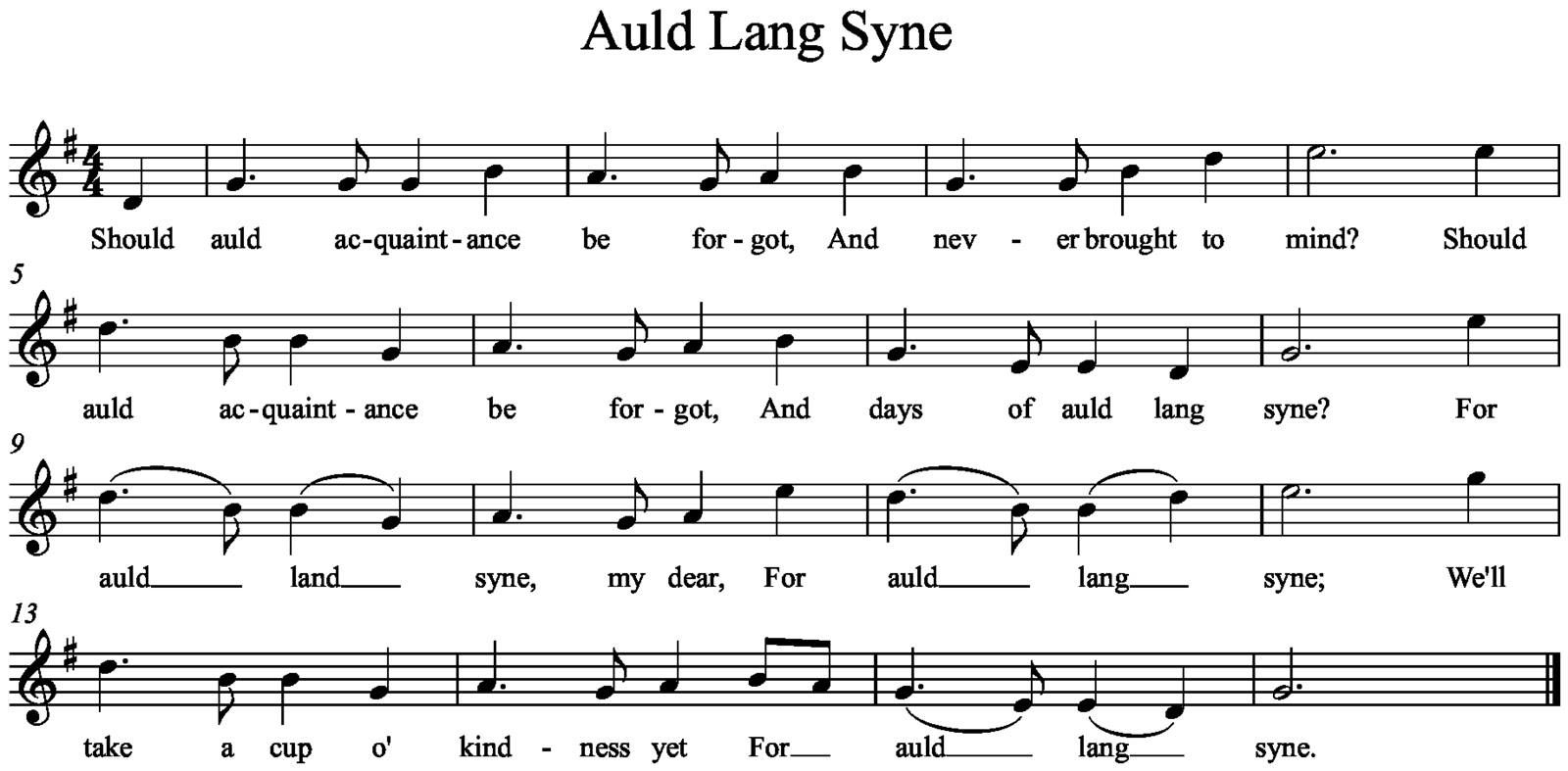
“Auld Lang Syne” is based on an older song that Burns collected and reshaped, adding his own touches. The Scots phrase roughly means “old long since”or “days gone by.”
The song invites people to raise a glass to past friendships and shared experiences, asking whether “auld acquaintance” should be forgotten. It’s sentimental, but in a way that encourages community singing and shared emotion rather than private brooding.
This combination of nostalgia and togetherness explains why it has become the default soundtrack for seeing out the old year around the world.
“To A Mouse”: Empathy, Nature And “the Best Laid Schemes”
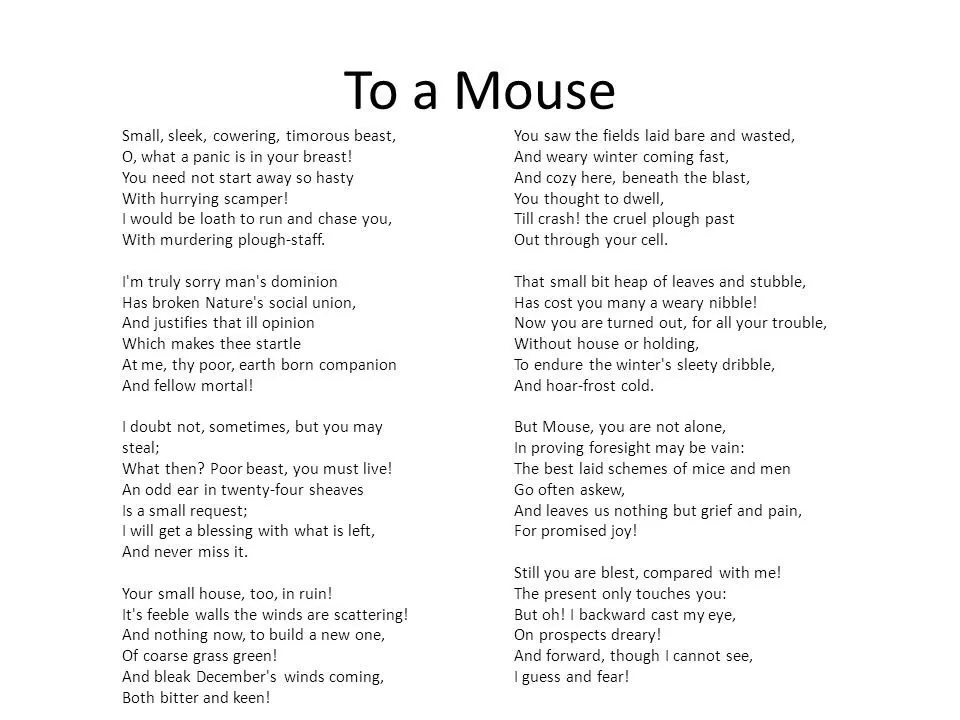
Burns wrote “To a Mouse” after literally turning up a mouse’s nest while ploughing. In the poem he apologises to the mouse, recognising that both human and animal plans can be destroyed by forces beyond their control.
Its most famous lines-“The best laid schemes o’ mice an’ men / Gang aft agley”-have entered common speech and inspired later works, including John Steinbeck’s novel Of Mice and Men.
The poem is a good example of Burns’s ability to mix everyday incident, philosophical reflection and memorable phrasing in a very short space.
“Tam O’ Shanter”: Storytelling, Humour And The Supernatural
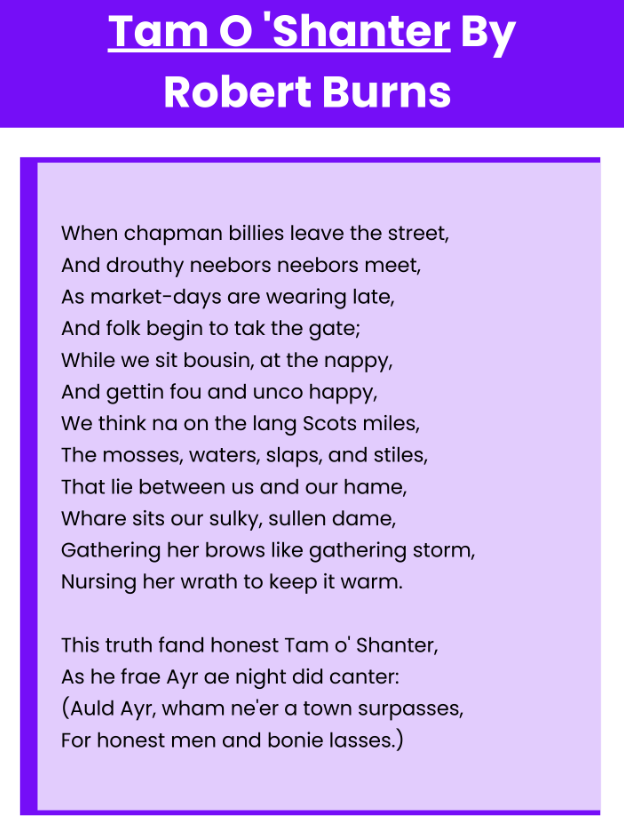
“Tam o’ Shanter” tells the story of a man who lingers too long drinking in Ayr, then rides home drunk through a storm. He passes the haunted Alloway Kirk, where he sees witches and warlocks dancing, and barely escapes with his life (and horse) as they chase him.
The poem is richly descriptive, full of Scots vocabulary and comic exaggeration. While it warns about overindulgence, it also treats Tam with affection, acknowledging human weakness. Its vivid scenes have inspired paintings, statues and even pub names.
“A Red, Red Rose”: Love As Song
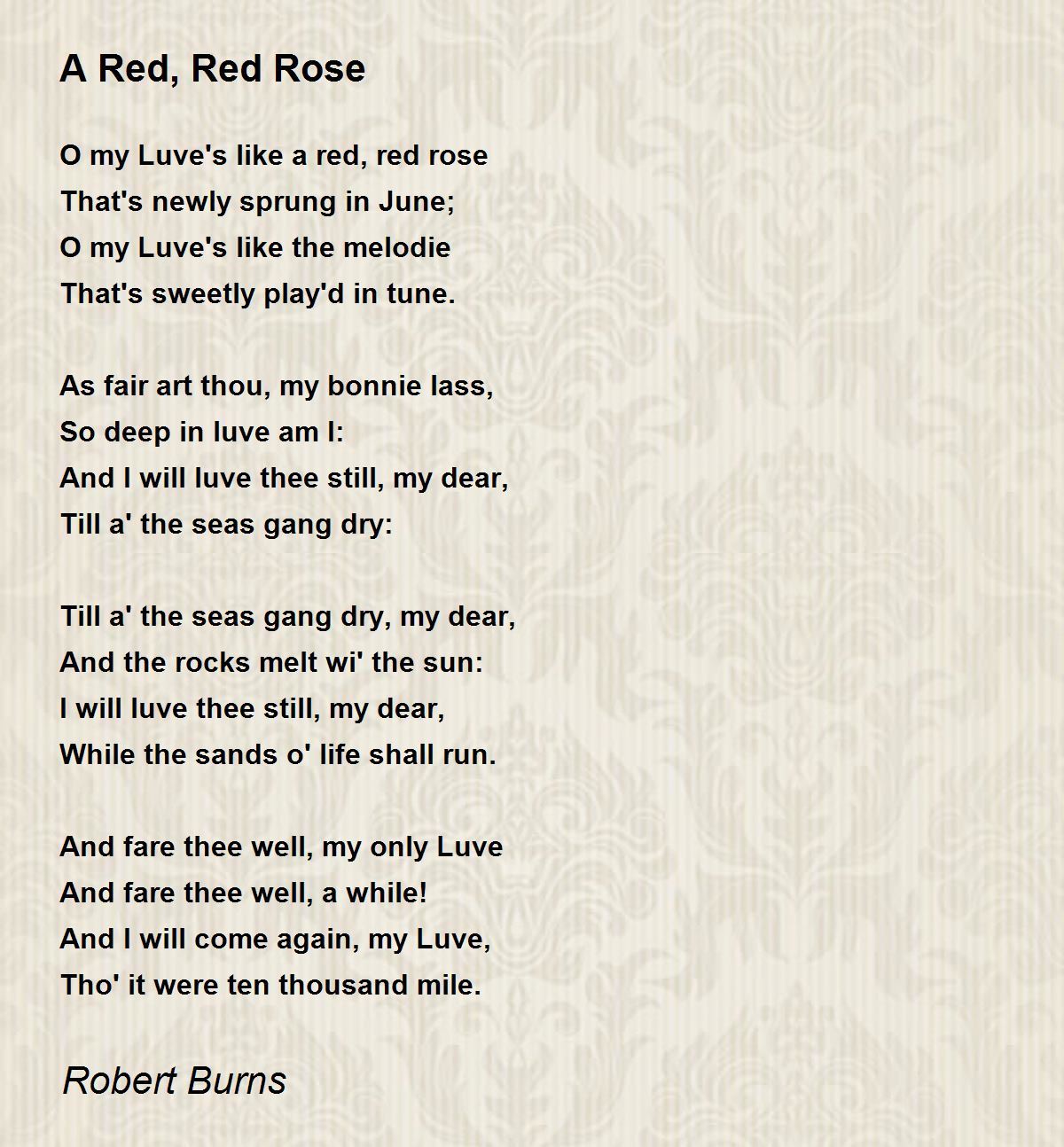
This short lyric opens with the well-known line “O my Luve’s like a red, red rose / That’s newly sprung in June.” It draws on existing song material and folk imagery, reshaped by Burns into a simple but powerful declaration of love.
The poem’s strength lies in its clarity and rhythm. It doesn’t rely on complex metaphors; instead, it repeats promises in musical, songlike phrasing, making it easy to set and remember.
“A Man’s A Man For A’ That”: Equality And Human Dignity

A Man's a Man for A' That Rabbie Burns.
Written in the 1790s, this song expresses a strong belief in inner worth over outward status. Burns contrasts “honest poverty” with the empty show of people who rely on titles and money.
The refrain insists that genuine worth and intellect will eventually be recognised and that a future time will come when “Man to Man, the world o’er / Shall brothers be for a’ that.” Many readers hear in it an early democratic anthem.
Other Beloved Pieces To Explore
Once you’re comfortable with the core poems above, you might move on to:
- “Address to a Haggis”- the comic, exuberant poem recited at Burns Suppers.
- “Scots Wha Hae”- a stirring song voiced as a speech by Robert the Bruce, often treated as an unofficial Scottish anthem.
- “Ae Fond Kiss”- a moving farewell to a lover, usually associated with “Clarinda.”
- “My Heart’s in the Highlands”- a lyrical expression of homesickness and landscape love.
Understanding the poems is only part of knowing Burns; his relationships, family life and reputation shape how people have read him for more than two centuries.
Robert Burns’s Relationships, Family And Controversies
Jean Armour And The Burns Household
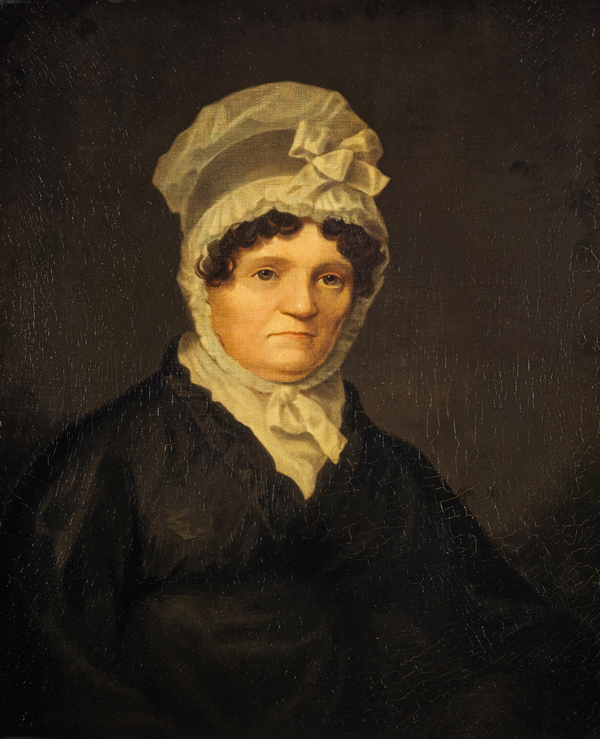
Jean Armourwas the daughter of a stonemason in Mauchline and ultimately became Burns’s wife and the mother of many of his children. Their relationship was complicated by social and economic pressures; at one point Jean’s parents were strongly opposed, and legal documents were destroyed.
Despite these difficulties, Jean and Robert eventually married, and she survived him by many years, playing an important role in preserving his memory. Modern reassessments, including events like the Jean Armour Supper, have encouraged people to see her not just as “Burns’s wife” but as a key figure in his story in her own right (Data as of December 2025).
Highland Mary, Clarinda And Other Loves
Two of Burns’s most famous romantic connections beyond Jean Armour are Mary Campbell(often called Highland Mary) and Agnes McLehose, known by the pen name Clarinda.
- Highland Mary is associated with a brief but intense relationship and with poems like “To Mary in Heaven.” She died young, and later readers often romanticised the story.
- Clarinda was a married woman in Edinburgh; she and Burns exchanged a rich series of letters, inspiring poems such as “Ae Fond Kiss.”
Burns also had relationships with other women, some of whom bore his children. Historians stress that while he certainly had a complex romantic life, stories have sometimes been exaggerated into simple caricatures.
How Many Children Did Robert Burns Have?
Most modern researchers agree that Burns fathered twelve children by four women, including several born outside his marriage to Jean Armour.
At the time, such situations were not unheard of, especially in rural communities, but Burns’s fame has brought extra scrutiny. Rather than treating the children as footnotes, recent family-history work has traced many of their descendants and explored how his legacy played out in later generations.
Politics, Religion And Reputation
Burns lived during a period of intellectual and political ferment, sometimes called the Scottish Enlightenment, and he was attracted to ideas of liberty and equality associated with the American and French revolutions.
At the same time, he wrestled with the strict Calvinist religious culture around him. His satirical poems about church elders and self-righteous believers made him controversial in some quarters and have continued to spark debate about his own beliefs.
This combination-radical sympathies, sharp satire, a civil-service job as an exciseman and a public image as a heavy drinker-created a mixed reputation in his own lifetime and in later biographies.
Burns And Slavery: Jamaica Job Offer
Before the success of the Kilmarnock Edition, Burns had seriously considered taking a job as a book-keeper on a Jamaican sugar plantation, a role that would have made him part of the slave-based economy he later lived to see criticised.
When his poems brought in unexpected income and acclaim, that plan was abandoned and he stayed in Scotland, but the episode has led modern scholars to examine the tension between his democratic ideals and the realities of 18th-century colonial life.
“The Slave’s Lament” and a handful of related texts are now read in this context, with historians debating how far they show genuine anti-slavery feeling and how far they reflect a more complicated, evolving outlook.
Was Burns Really A Drunk And Womaniser?
There is no doubt that Burns enjoyed alcohol and companyand that he had multiple romantic relationships. However, recent scholarship has pushed back against the cartoon image of him as nothing more than a hard-drinking womaniser.
Evidence from his letters, excise records and neighbours’ accounts suggests a man who also worked hard at his official duties, cared deeply for his family and often worried about money and health. The reality seems to be a complex, sometimes self-destructive individual rather than a one-dimensional rake.
Section close:With the man and his relationships in view, we can now turn to the yearly celebration that keeps his name on calendars around the world: Burns Night.
Burns Night: How The World Celebrates Robert Burns
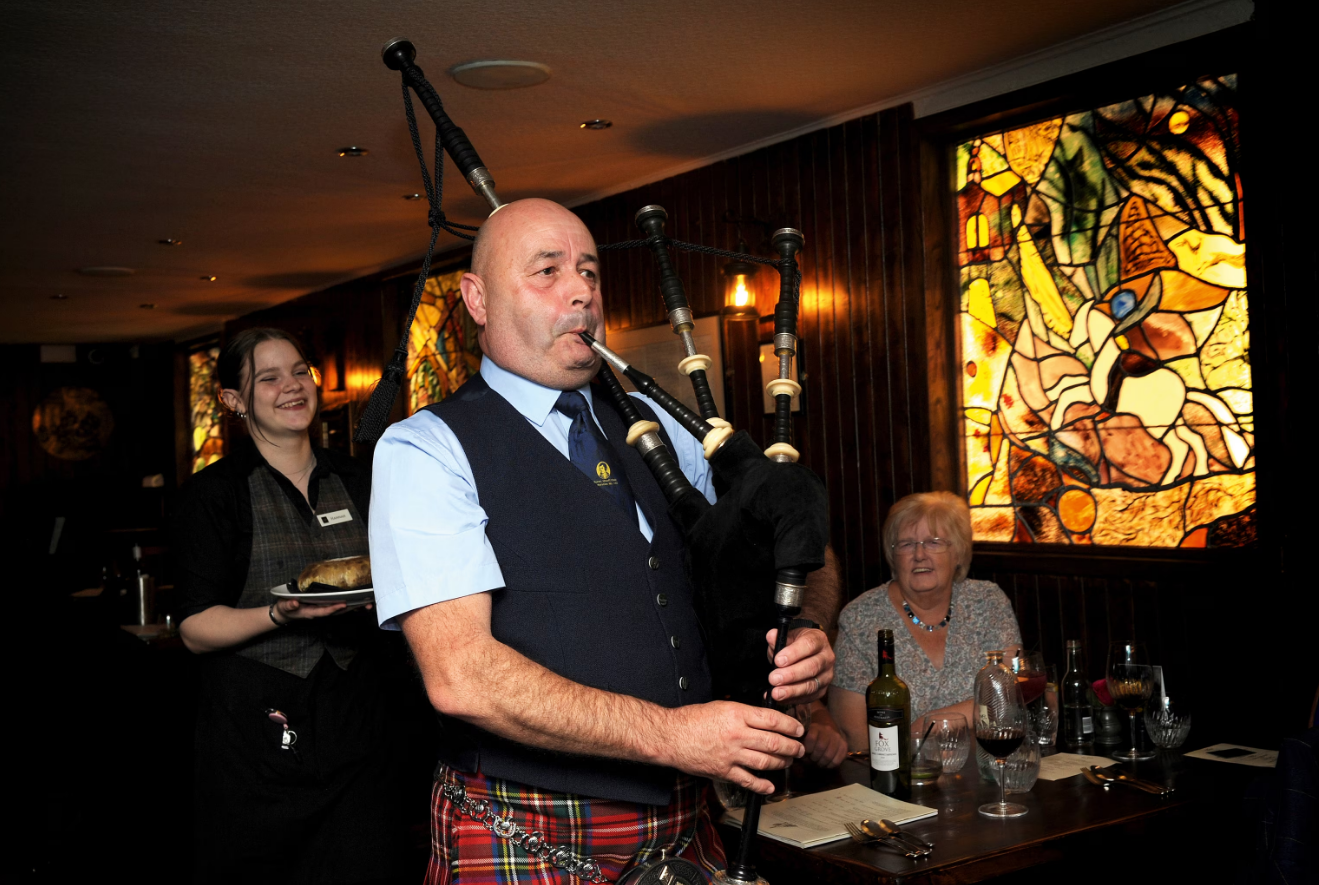
You'll discover what Burns Night is, the step-by-step running order of a traditional Burns Supper, and how to host your own celebration in a way that suits your context.
What Is Burns Night And Where Did It Begin?
Burns Nightis held on or around 25 January, the poet’s birthday. The tradition began in the early 19th century when friends and admirers gathered to remember him, and it evolved into the more formal Burns Supper.
Today, Burns Night is marked not only in Scotland but also wherever Scottish communities and fans of his work are found, from Canada and the United States to Australia and beyond. Events range from black-tie dinners to informal gatherings in homes.
A University of Glasgow study estimated that Burns contributes around £200–203 million a year to Scotland’s economy, with roughly £155 million coming from Burns-related tourism alone and millions of people attending Burns Suppers worldwide (Data as of January 2025).
For More Details:Burns Night Explained
Traditional Burns Supper Running Order (step-by-step)
A classic Burns Supper usually follows a loose order that combines food, speeches and song.
A typical sequence is:
- Piping in the guests (optional):Guests arrive to bagpipe music or recorded Scottish tunes.
- Host’s welcome:The organiser thanks everyone for coming and briefly explains the evening.
- The Selkirk Grace:A short, traditional grace often attributed to Burns is recited before the meal.
- Piping in the haggis:The haggis is carried in with ceremony, sometimes led by a piper.
- “Address to a Haggis”:A guest recites Burns’s poem, theatrically cutting the haggis at the right line.
- Meal – haggis, neeps and tatties:Guests eat the main course, often followed by a Scottish dessert.
- Immortal Memory:A speech about Burns’s life and work, sometimes humorous, sometimes serious.
- Toast to the Lassies and Reply:Light-hearted speeches celebrating women and responding in kind, increasingly handled in inclusive ways.
- Songs and readings:Guests share poems and songs by Burns.
- Closing with “Auld Lang Syne”:Everyone joins hands and sings to end the evening.
Not every supper includes every step, but this pattern is widely recognised and easy to adapt.
Hosting Your Own Burns Night At Home
You don’t need bagpipes or a hall full of people to enjoy Burns Night. A small home gathering can be just as meaningful.
Simple Menu: Haggis, Neeps And Tatties Plus Dessert
A straightforward menu keeps things accessible:
- Haggis(traditional or vegetarian), warmed and served as the centrepiece.
- Neeps and tatties-mashed turnip/swede and potatoes-served on the side.
- A dessertwith a Scottish twist, such as cranachan (oats, cream, raspberries and whisky) or even shortbread with berries.
If you cannot find haggis locally, you can use a well-seasoned meatloaf or lentil-based dish as a symbolic stand-in and still read “Address to a Haggis.”
Picking Poems And Songs For A Small Group
For a smaller supper, choose three or four piecesrather than a long programme:
- A short, funny poem like “Address to a Haggis” or an excerpt from “Tam o’ Shanter.”
- A love lyric such as “A Red, Red Rose.”
- A more reflective or political song such as “A Man’s a Man for A’ That.”
- “Auld Lang Syne” at the end, if the mood feels right.
Encourage guests to share the reading duties; Burns’s work often comes alive when different voices take part.
Toast Ideas That Respect Everyone At The Table
Traditional “Toast to the Lassies” and “Reply” speeches have sometimes slipped into stereotypes. At home, you can keep the spirit of humour while ensuring everyone feels respected:
- Toast the qualities you admire in your guests, regardless of gender.
- Use Burns’s emphasis on equality and kindness as inspiration.
- Keep jokes inclusive rather than targeting particular groups.
Framing the toasts this way keeps them true to Burns’s better impulses rather than outdated attitudes.
Burns Supper Checklist - For First-time Hosts
Use this quick checklist while planning:
- Set a date close to 25 January.
- Decide your guest list and dress code (casual, tartan, smart).
- Plan a simple menu: haggis (or alternative), neeps, tatties, dessert.
- Print or save copies of your chosen poems and songs.
- Assign roles: host, haggis reader, “Immortal Memory” speaker, toast-givers.
- Prepare a short explanation of Burns for guests new to him.
- Make a playlist of Scottish music for the background.
- End the night with a communal song, ideally “Auld Lang Syne.”
This structured element helps you turn admiration into action-Burns Night becomes something you can confidently host, not just read about.
Modern Variations: Family-friendly, International And Feminist Burns Suppers
Many groups now adapt Burns Night to their contexts (Data as of December 2025):
- Family-friendly suppers:Shorter events with simpler food, fewer speeches and perhaps illustrated story versions of “Tam o’ Shanter.”
- International takes:Menus that blend Scottish dishes with local flavours, or translations of poems into other languages alongside the original Scots.
- Feminist and inclusive suppers:Events like the Jean Armour Supper highlight women’s perspectives, question old stereotypes and select readings that reflect Burns’s more egalitarian side.
Once you’ve celebrated Burns at the table, you might be inspired to explore the actual places in Scotland where he lived and wrote.
Visiting Robert Burns Sites In Scotland
Robert Burns Birthplace Museum, Alloway
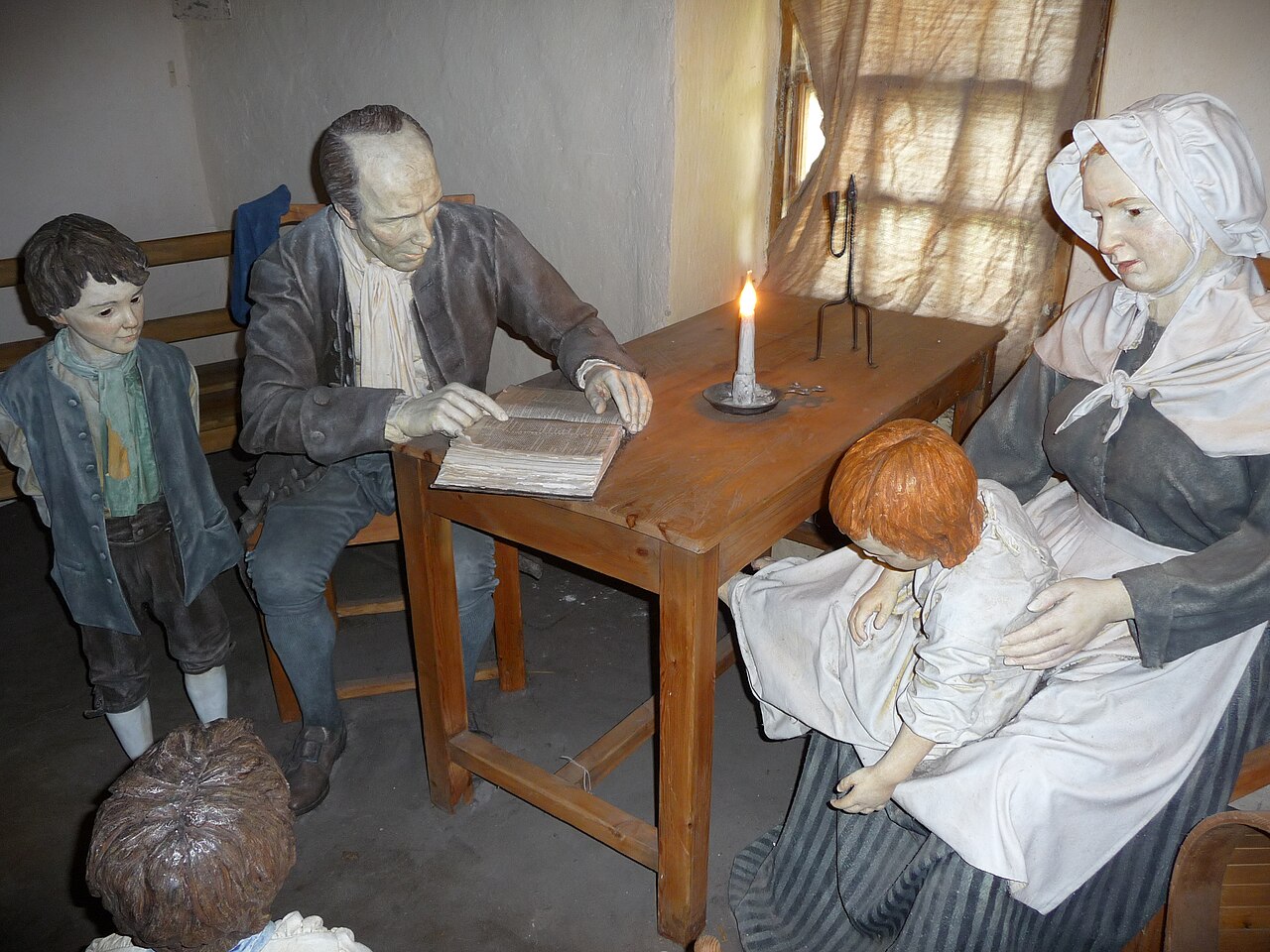
In Alloway, near Ayr, the Robert Burns Birthplace Museumbrings together several important sites: his restored thatched cottage, the churchyard of Alloway Kirk, the Brig o’ Doon and a modern museum building displaying manuscripts and artefacts.
Walking this compact area gives a vivid sense of the world that shaped his early imagination and later works like “Tam o’ Shanter.”
The modern museum, run by the National Trust for Scotland, holds thousands of manuscripts and artefacts and is among the most visited literary museums in the UK, second only to Shakespeare’s in some visitor rankings (Data as of 2024).
Ellisland Farm On The River Nith
Ellisland Farm, near Dumfries, is where Burns lived with Jean Armour and their children for several crucial years. The farmhouse and surroundings show the mixture of beauty and hardship in his life as farmer, exciseman and poet.
Local tradition associates Ellisland with the composition of “Tam o’ Shanter” and various songs; whether or not every anecdote is exact, it’s clear that the River Nith landscape fed his imagination.
Dumfries: Final Home And Mausoleum
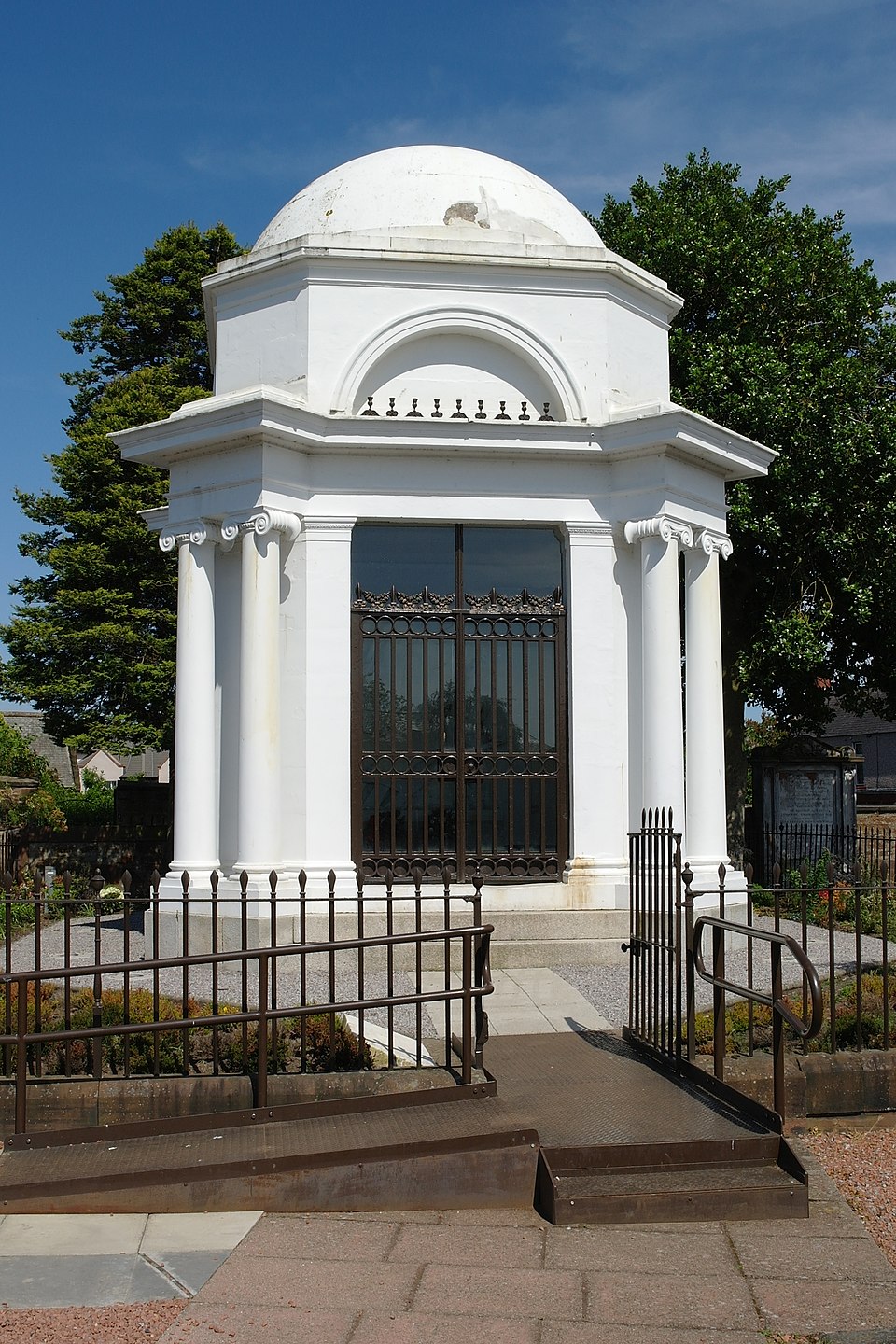
In Dumfries, you can visit the house where Burns spent his final years, as well as the Mausoleumwhere he is buried in St Michael’s kirkyard. The town also preserves connections such as the Globe Inn, where he was known to drink and socialise.
The proximity of his home, workplace and resting place makes Dumfries a poignant stop on any Burns itinerary.
Burns Statues And Festivals Around The World (brief Overview)
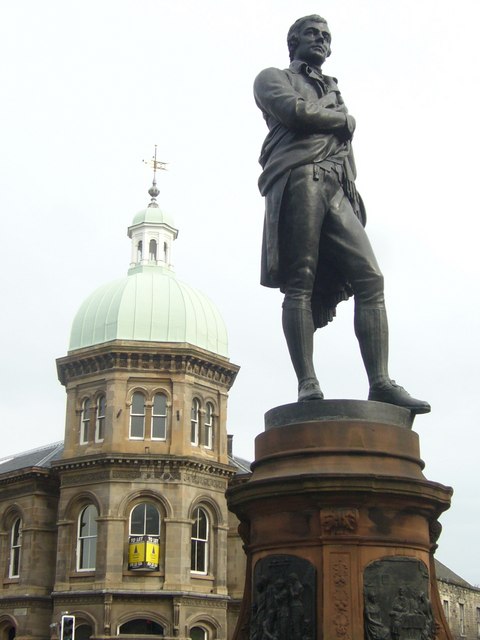
Statues of Burns stand in cities from Glasgow and Edinburgh to London, New York, Dunedin and beyond. Many were erected by 19th-century Scottish emigrant communities who saw him as a symbol of home and democratic spirit.
With over 50 statues and memorials worldwide, Burns is said to have more monuments than almost any other non-religious figure apart from Queen Victoria and Christopher Columbus (Data as of 2024).
While this article focuses on Scottish sites, knowing that Burns monuments circle the globe underscores how widely his words have travelled.
Why Robert Burns Still Matters Today
From Farm Fields To New Year’s Eve Worldwide
Robert Burns was born in a thatched cottage at Alloway in 1759, the son of tenant farmers William and Agnes Burnes. His early life was hard, filled with long days on the land and fragile finances, but his parents valued education and hired tutor John Murdoch to teach their children. That combination of physical labour and serious reading shaped both his sympathy for ordinary folk and his love of language.
Fast-forward to today and his words travelfar beyond those fields. The song “Auld Lang Syne,” which he collected and refined from older material, is now sung at midnight on Hogmanayand New Year celebrations around the globe.
Even people who have never heard of “Rabbie” Burns recognise the tune and the feeling of looking back over friendships and years gone by.
The takeaway: Burns’s journey-from a struggling farming family to a global New Year’s anthem-captures how powerfully his work speaks to shared human experience, not just to literary specialists.
Themes That Feel Modern: Equality, Empathy And Ordinary Lives
Burns wrote about farm work, mice, drunken nights out and local church politics, but he also wrote about human dignityand the value of every person.
- In “A Man’s a Man for A’ That,”he attacks snobbery and insists that what matters is a person’s character, not their wealth or title.
- In “To a Mouse,”he apologises to a mouse whose home he has destroyed, recognising that both mouse and man are vulnerable to plans going wrong.
- His love songs, like “A Red, Red Rose,”show intense feeling in language that is simple, musical and deeply memorable.
These themes-respect, empathy, emotional honesty-still feel current. Readers and listeners today hear in Burns an early voice for equality and a refusal to flatter the powerful.
This focus on dignity and shared humanity makes Burns a useful companion when we think about class, nationalism and social justice in a 21st-century context.
Burns’s Global Cultural Footprint
Burns’s influence stretches far beyond literature classrooms: Romantic poets such as Wordsworth admired his focus on common life, Bob Dylan has cited “A Red, Red Rose” as a key inspiration, J.D. Salinger took the title of The Catcher in the Ryefrom a Burns song, “A Man’s a Man for A’ That” was sung at the opening of the Scottish Parliamentin 1999, and “Auld Lang Syne” is now embedded in New Year, graduation and farewell rituals from Scotland to East Asia.
Robert Burns In Today’s Scotland And Beyond
In Scotland, Burns is woven into everyday culture. Schoolchildren learn his poems, statues of him stand in towns and cities, and Burns Nightis a firm fixture of the winter calendar.
Beyond Scotland, his image and words appear in communities from North America to Australasia, often where Scottish migrants settled. There are Burns clubs, annual suppers and festivals, as well as more recent innovations like the Jean Armour Supper, which re-centres his wife and explores his legacy from a feminist angle.
The shift to more inclusive Burns celebrations underlines a key point: his work is no longer just frozen in school anthologies; it is constantly being reinterpreted and used to talk about who Scots are-and who they want to be-today.
FAQs About Robert Burns
Who Was Robert Burns?
Robert Burns (1759–1796) was a Scottish poet and songwriter whose Scots and English works earned him the title of Scotland’s national bard.
What Is Robert Burns Famous For?
He is famous for his Scots-language poems and songs such as “Auld Lang Syne,” “To a Mouse” and “Tam o’ Shanter,” which celebrate love, friendship and ordinary lives.
When And Where Was Robert Burns Born?
He was born on 25 January 1759in a thatched clay cottage at Alloway in Ayrshire, Scotland.
When Did Robert Burns Die And How Old Was He?
Burns died on 21 July 1796in Dumfries, at the age of 37.
What Is Robert Burns’ Most Famous Poem Or Song?
Internationally, his most famous work is “Auld Lang Syne,”the New Year song sung at midnight around the world.
What Is Robert Burns’ Most Famous Quote?
A widely cited line is “The best laid schemes o’ mice an’ men / Gang aft agley”from his poem “To a Mouse.”
What Language Did Robert Burns Write In?
He wrote mainly in Scotsand Scottish English, often mixing them in one poem or song for expressive effect.
How Many Children Did Robert Burns Have, Including Illegitimate Ones?
Most historians agree he fathered twelve children by four women, including several born outside his marriage to Jean Armour.
What Did Robert Burns Die Of?
Modern medical analysis suggests he died from heart problems linked to rheumatic fever, rather than solely from alcohol-related disease.
What Is Burns Night?
Burns Night, on or around 25 January, is an annual celebration of Robert Burns featuring a haggis supper, whisky, toasts and readings of his work.
What Happens At A Burns Supper?
Guests share a meal-traditionally haggis, neeps and tatties-listen to “Address to a Haggis,” enjoy speeches, songs and poems, and often end by singing “Auld Lang Syne.”
Why Is Robert Burns Important Today?
He remains important because his writing champions love, empathy and equality, and because Burns Night keeps his work alive in community gatherings worldwide.
Where Is Robert Burns Buried?
He is buried in St Michael’s kirkyard in Dumfries, Scotland, in the Burns Mausoleum, a grand memorial built after his death that still attracts visitors today.
How Many Poems And Songs Did Robert Burns Write?
Modern catalogues list around 700 surviving works by Burns, including roughly 346 songs and the remainder mostly stand-alone poems and shorter pieces (Data as of 2024).
Which Robert Burns Poems Should I Read First?
Good starting points include “Auld Lang Syne,” “To a Mouse,” “A Red, Red Rose,” “Tam o’ Shanter” and “A Man’s a Man for A’ That.”
Where Can I Visit Robert Burns Sites In Scotland?
Key places are the Robert Burns Birthplace Museum in Alloway, Ellisland Farm near Dumfries and his house and mausoleum in Dumfries.
How Did Burns Influence Later Writers And Culture?
His democratic themes and musical language influenced Romantic poets and songwriters and shaped global traditions such as singing “Auld Lang Syne” at New Year.
Conclusion
Robert Burns remains relevant not because he was a perfect man, but because he was a perfectly human one: flawed, passionate, and driven by a fierce sense of justice.
He was the farmer who spoke truth to power, the lover who wrote with unmatched tenderness, and the Scot who gave his nation an eternal, authentic voice.
By celebrating his life and work, especially through the traditions of Burns Night, we are not merely honoring the past; we are reaffirming the enduring worth of the common person and the universal power of poetry. The Robert Burns legacy is, quite simply, the voice of the people.
Jump to
Robert Burns: Who He Was, What He Wrote, Why He Matters
Robert Burns At A Glance (Quick Facts)
Life Of Robert Burns: From Alloway To Dumfries
Understanding Burns’s Language, Style And Themes
The Essential Poems And Songs Of Robert Burns
Robert Burns’s Relationships, Family And Controversies
Burns Night: How The World Celebrates Robert Burns
Visiting Robert Burns Sites In Scotland
Why Robert Burns Still Matters Today
FAQs About Robert Burns
Conclusion
Callum Fraser
Author
Callum Fraser isn't just a writer about Scotland; he's a product of its rugged landscape and rich history. Born and raised in Perthshire, with the Highlands as his backyard, his love for the nation's stories was kindled by local storytellers and long walks through ancient glens.
This passion led him to pursue a degree in Scottish History from the University of Edinburgh. For over 15 years, Callum has dedicated himself to exploring and documenting his homeland, fusing his academic knowledge with essential, on-the-ground experience gained from charting road trips through the Cairngorms, hiking the misty Cuillins of Skye, and uncovering the secrets of traditional recipes in his family's kitchen.
As the Editor-in-Chief and Lead Author for Scotland's Enchanting Kingdom, Callum's mission is simple: to be your most trusted guide. He combines meticulous research with a storyteller's heart to help you discover the authentic magic of Scotland — from its best-kept travel secrets to its most cherished traditional recipes.
Latest Articles
Popular Articles